
Ancona Chickens: Breed Profile and Care Guide
 By John Walker · Backyard chicken keeper in Dallas, Texas since 2017
Ancona chickens are a Mediterranean white-egg layer from Italy, with striking mottled black-and-white plumage and a reputation as one of the best winter layers. They lay around 180 to 220 white eggs a year and forage superbly. They are listed as Watch by the Livestock Conservancy, and they suit keepers who want eggs and activity rather than a lap bird.
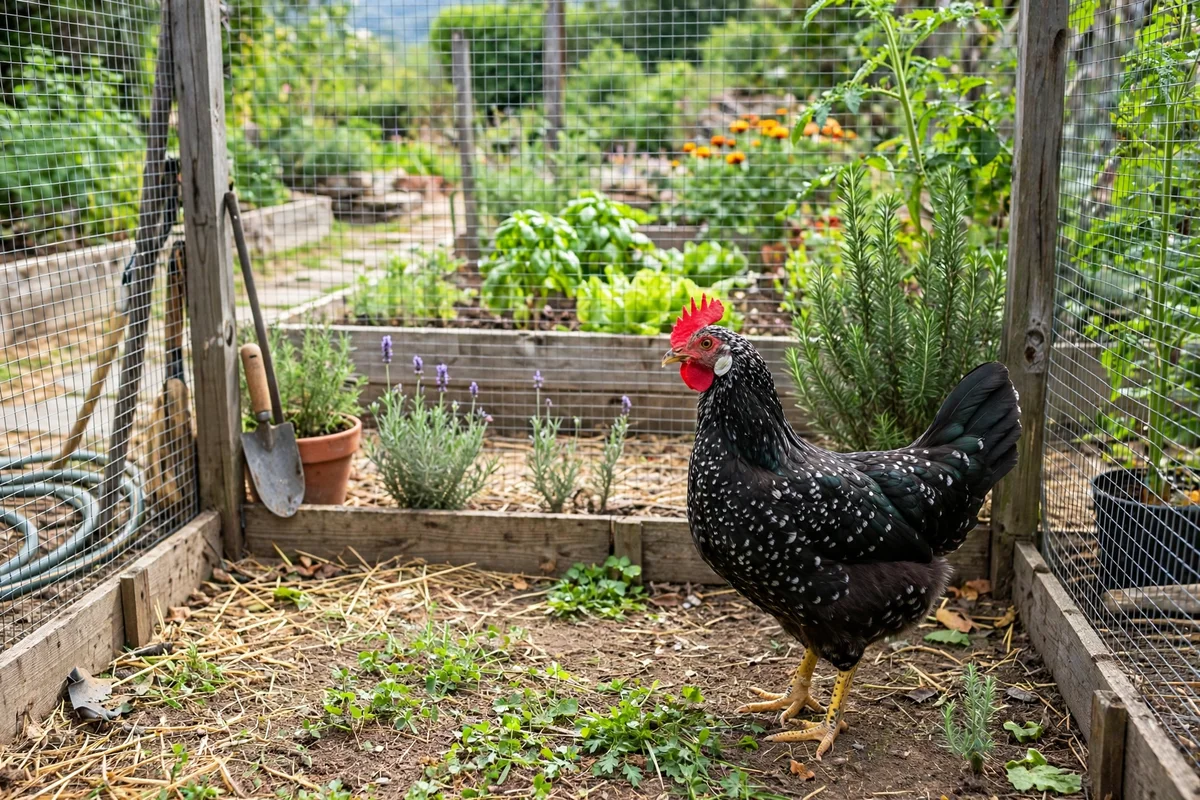
What is an Ancona chicken?
An Ancona chicken is a Mediterranean layer from the province of Ancona in Italy, where the breed was developed as a hardy farm bird that could lay well, forage for much of its own food, and thrive in a warm climate.
The breed arrived in Britain and America in the late 1800s, and the American Poultry Association recognised the single comb variety in 1898 and the rose comb in 1914.
Anconas are easy to recognise: a mottled black-and-white plumage, with every feather tipped in white, a large single comb or rose comb, white earlobes, and yellow shanks and skin. The mottling is the breed's defining feature, and no two birds look quite the same, because the white tips vary from bird to bird. They are a light, active bird, with hens weighing about 4.5 lb and roosters about 6 lb.
The breed is listed as Watch by the Livestock Conservancy, which means the population is small and the breed needs keepers to survive. Anconas are not a rare ornamental bird, though: they are a practical layer, and they are kept by people who want a hardy, active bird that lays well and forages for its food.
Ancona temperament
Ancona chickens are active, alert and flighty birds that are always busy, always foraging, and always on the move. They are not a lap bird, and they do not enjoy being handled, but they are not aggressive, and they are good with other active breeds that can keep up with them.
They are a bird for keepers who like watching chickens be chickens.
They are high in the pecking order, because they are confident and quick, and they can bully slower, more docile breeds if the run is crowded. Keep them with other active Mediterranean breeds, such as Leghorns or Minorcas, or give them enough space that the slower birds can escape. They are not a good choice for a mixed flock with Silkies or other gentle birds.
Broodiness is rare in Anconas, because they have been selected for laying rather than for sitting, and a hen that does go broody is the exception rather than the rule. This is good news for egg production, because a hen that never goes broody lays more eggs, but it means you cannot rely on an Ancona to hatch eggs for you.
Eggs and laying: how many eggs do Anconas lay?
Ancona hens lay around 180 to 220 white eggs a year, which is a good total for a Mediterranean layer, and they are known as one of the best winter layers, because they keep laying through the cold months when other breeds slow down.
The eggs are medium to large, with white shells, and the hens lay consistently, with few breaks outside the annual moult.
Pullets usually start laying at about five months old, which is early for a heritage breed, and the hens keep laying well into their third and fourth years. Use the Egg Production Calculator to work out how many hens your household needs, and remember that a white-egg layer is a good choice if you want eggs that are easy to tell apart from brown eggs in the nest box.
Anconas are not the heaviest layers, and a production hybrid such as a Golden Comet will lay more eggs, but Anconas lay better in winter and they forage for much of their own food, which makes them economical. Our guide on how many eggs per week by breed shows how Anconas compare with the laying breeds.
Housing and care for Anconas
Anconas need the standard space for a light, active breed: about 4 square feet of coop floor per bird and 10 square feet of run, with roosts set at a comfortable height and nest boxes that are dark and private.
They tolerate confinement, but they are happier and lay better with room to forage, and they are strong foragers that will find a good share of their own food on free range.
They handle cold well, despite their Mediterranean origins, because they are active birds that keep moving, and they are known as good winter layers. The large single comb can suffer frostbite in bitter weather, so keep the coop dry and draught-free rather than heated, and consider the rose comb variety if you live in a very cold climate, because the rose comb is less vulnerable to frostbite.
A run fence needs to be high for Anconas, because they are light, active birds and strong fliers, and a fence of 1.8 metres may not be enough. Clip one wing if a hen keeps flying out, or cover the run with netting, because an Ancona that gets out may not come back. Our guide on can chickens fly explains which breeds fly best and how wing clipping works.
Feeding Ancona chickens
Ancona chickens do well on a standard layer feed of about 16 percent protein once they start laying, with grower feed before that and chick starter for the first six to eight weeks. They are efficient foragers and will find a good share of their own food on free range, which helps keep feed costs down.
And they eat less than a heavy breed of the same age.
Offer oyster shell free choice in a separate dish, so each hen can take the calcium she needs for shells, and keep grit available, because a foraging bird needs grit to grind the seeds and insects she finds. Treats should stay within the 10 percent rule, and the chicken treats calculator can help you work out a sensible daily treat allowance for your flock size.
Anconas are active birds that burn energy quickly, so make sure they have enough feed, especially in winter, when they are laying and foraging in cold weather. A hen that is short of feed will stop laying, and a hen that is short of protein will lay smaller eggs, so keep the feeder full and the feed fresh, and check that every bird is getting a share.
Are Ancona chickens right for you?
Ancona chickens are right for a keeper who wants a hardy, active white-egg layer that lays well in winter, forages superbly, and thrives with room to roam. They suit keepers who like watching chickens, who have space for an active bird.
And Who want a breed that is a little different from the usual brown-egg layers. They also suit keepers who want to support a breed listed as Watch by the Livestock Conservancy.
They are not right for a keeper who wants a calm, friendly lap bird, because Anconas are flighty and do not enjoy handling, and they are not right for a keeper with a small run or a low fence, because they need space and they can fly. They are also not right for a mixed flock with very gentle breeds, because they can be pushy when the run is crowded.
If you decide on Anconas, buy from a reputable breeder, choose the rose comb variety if you live in a very cold climate, and give them a high fence, room to forage, and a good layer feed. Do that, and you will have a hardy, active flock that lays white eggs through the winter and asks for very little in return.
Ancona breed facts at a glance
| Trait | Ancona |
|---|---|
| Origin | Province of Ancona, Italy |
| APA recognition | Single comb 1898; rose comb 1914 |
| Livestock Conservancy | Watch |
| Purpose | Egg laying |
| Temperament | Active, alert, flighty; not a lap bird |
| Egg colour | White |
| Eggs per year | Around 180–220 |
| Egg size | Medium to large |
| Hen weight | About 4.5 lb (2 kg) |
| Rooster weight | About 6 lb (2.7 kg) |
| Broodiness | Rare |
| Hardiness | Good in cold; excellent winter layer; large comb can frostbite |
| Good for beginners | Yes, with a high fence and room to range |
Ancona egg figures are consistent across sources, at around 180 to 220 white eggs a year, with the breed noted as an excellent winter layer. The mottled plumage varies from bird to bird, because the white feather tips differ in size and number.
Sources: breed facts on this page are drawn from the breed profiles published by the Livestock Conservancy and from university extension poultry guidance, including the University of Minnesota Extension and poultry.extension.org. Where sources give different figures for eggs per year, this page shows the range and says so, rather than presenting one number as settled.
Related tools and guides
For more on Mediterranean layers and white eggs, see the guides below.
Frequently asked questions
How many eggs do Ancona chickens lay a year?
Around 180 to 220 white eggs a year. They are known as one of the best winter layers, because they keep laying through the cold months when other breeds slow down.
What colour eggs do Ancona chickens lay?
White eggs, medium to large in size. Pullets usually start laying at about five months old, which is early for a heritage breed.
Are Ancona chickens friendly?
They are active and alert rather than friendly in the lap-bird sense. They do not enjoy handling, but they are not aggressive, and they are good with other active breeds that can keep up with them.
Can Ancona chickens fly?
Yes. They are light, active birds and strong fliers, so the run fence needs to be high, or the run needs to be covered with netting. Clip one wing if a hen keeps flying out.
Are Ancona chickens rare?
They are listed as Watch by the Livestock Conservancy, which means the population is small and the breed needs keepers to survive. They are a practical layer, not a rare ornamental bird.
About the author
John Walker is the founder of PeckCalc and has kept backyard chickens in Dallas, Texas since 2017. He started PeckCalc to give backyard keepers free calculators and guides with every figure traced to a university extension source.