
Automatic Chicken Waterer
 By John Walker · Backyard chicken keeper in Dallas, Texas since 2017
An automatic chicken waterer keeps fresh water available without daily refilling, and it can save you time and keep your flock healthier. The main types are nipple drinkers, cups and float-valve systems, and each suits a different setup. This guide compares them, explains how to set one up, and covers cleaning and winter care.
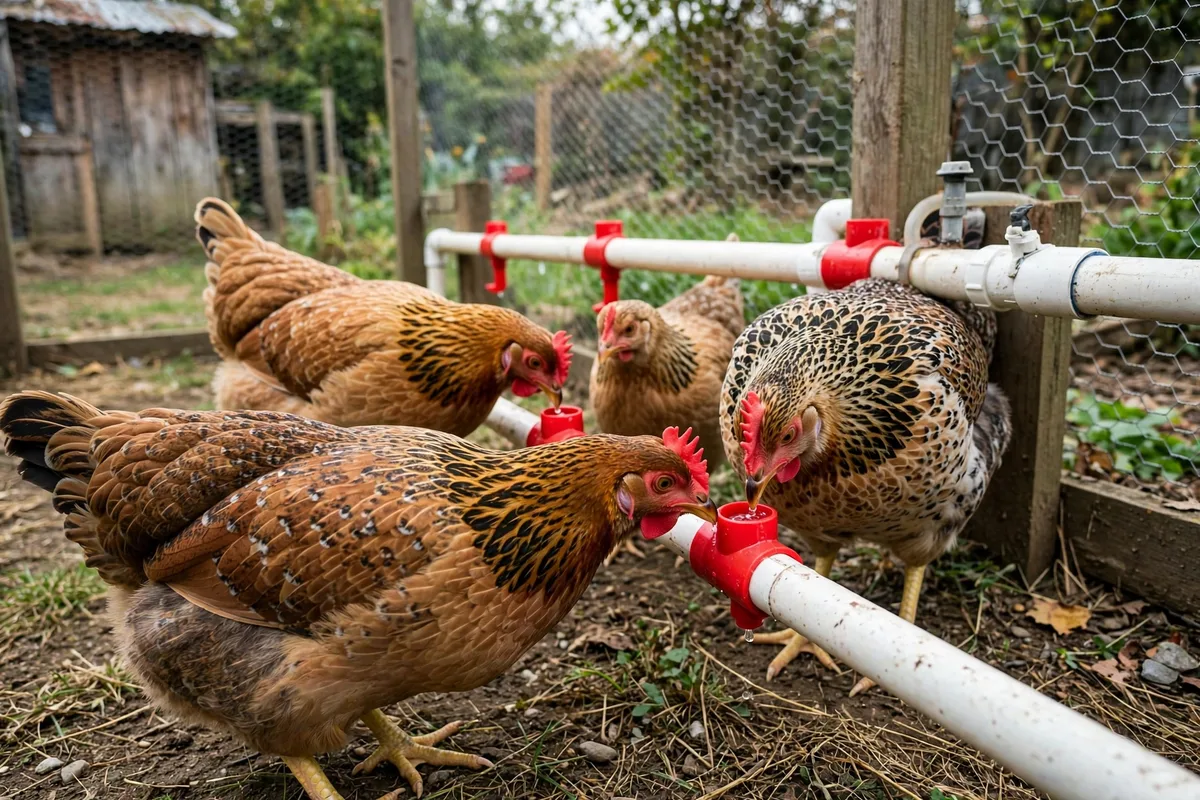
What is an automatic chicken waterer?
An automatic chicken waterer is a watering system that refills itself, so birds always have fresh water without you having to fill a drinker every day. The most common types are nipple drinkers, which release water when a bird pecks the nipple, cup drinkers, which fill a small cup when a bird presses a lever, and float-valve systems, which keep a trough or a bucket at a set level from a mains or a tank supply.
The point of an automatic waterer is reliability. A flock without water will stop laying within a day, and birds can become ill quickly in hot weather, so a system that keeps water available even when you are away is worth having. An automatic waterer does not remove the need to check water daily, but it does mean the flock will not run dry if you are late.
Automatic waterers suit any flock size, from a small backyard flock to a larger smallholding, and they are especially useful if you work away from home or go away for a weekend. They are not a substitute for daily checks, because any system can block or leak, but they are a big improvement on a drinker that runs dry.
Nipple drinkers
Nipple drinkers are the most common automatic waterer for backyard flocks, and they work by releasing a drop of water when a bird pecks the metal nipple. They are usually fitted to a bucket or a pipe, and they keep water clean because the supply is enclosed and birds cannot step in it, foul it or tip it over.
That makes them the cleanest option, and the one least likely to spread disease.
Chickens learn to use nipple drinkers quickly, usually within a day, if you show them by tapping the nipple so water drips. Chicks can use small nipples from a few weeks old, and adult birds use standard nipples without trouble. If you switch a flock from an open drinker to nipples, leave the old drinker in place for a day or two while birds learn, then remove it.
The main drawback of nipple drinkers is that they can drip, and a dripping nipple will wet the bedding below it, so put a drip tray or a dry area under the drinker. They can also block with grit or limescale, so check them regularly and clean them if the flow slows. In freezing weather, nipples can freeze, which is covered in the winter section below.
Cup drinkers
Cup drinkers give birds a small cup of water to drink from, and the cup refills when a bird presses a lever or a float. They are easier for birds to learn than nipples, because the water is visible, and they suit chicks and young birds well.
They are also a good choice for keepers who worry that their birds will not learn nipples.
The drawback of cups is that they get dirty. Birds step in them, drop bedding in them and foul them, so cups need cleaning more often than nipples. A cup that is full of bedding will not refill properly, and a dirty cup can spread disease, so check cups daily and clean them when they are dirty. Cups also hold a small amount of water, so they can run dry if the supply is interrupted.
Cups work well in a small flock where you can check them daily, and they are a good stepping stone from an open drinker to a nipple system. If you use cups, fit enough of them so every bird can drink without queuing, and use our chicken water calculator to work out how much water your flock needs.
Float-valve and gravity systems
Float-valve systems keep a trough or a bucket at a set water level, using a float valve connected to a mains supply or a header tank. When birds drink and the level falls, the valve opens and refills the container, and when the level rises, the valve closes.
They are simple, reliable and easy to understand, and they suit a larger flock or a smallholding with a mains supply.
Gravity systems use a header tank or a large bucket placed higher than the drinkers, with water flowing down by gravity to nipples or cups. They need no mains connection, which makes them useful where there is no tap near the coop, but the tank must be refilled, so they are semi-automatic rather than fully automatic. A large tank can last a flock several days, which is useful if you go away.
Both systems need a clean water supply, because dirt in the water will block valves and nipples. Fit a filter if your water is dirty, and clean the tank and the trough regularly. A float valve that sticks open will flood the run, so check it daily, and fit an overflow that carries water away from the coop if the valve fails.
Automatic waterer types compared
The table below compares the main automatic waterer types, so you can choose the one that fits your flock and your setup.
| Type | Water stays clean | Easy to learn | Needs cleaning |
|---|---|---|---|
| Nipple drinkers | Best, enclosed supply | Most birds learn in a day | Least, check for drips and blocks |
| Cup drinkers | Fair, cups get dirty | Easiest, water is visible | Most, clean cups daily |
| Float-valve trough | Fair, open trough fouls | Easy, open water | Regular, clean trough often |
| Gravity tank and nipples | Best, enclosed supply | Most birds learn in a day | Least, refill tank regularly |
| Gravity tank and cups | Fair, cups get dirty | Easiest, water is visible | Most, clean cups daily |
Setting up an automatic waterer
Start by working out how much water your flock needs, because the system must supply enough for the hottest day, not just an average day. A laying hen drinks more in hot weather, and a flock that runs out of water will stop laying.
Use our chicken water calculator to work out daily needs, and size the tank or the supply to cover at least two days.
Put the waterer where birds can reach it easily, at a height that suits the flock, and where it will stay clean. Nipples should sit at about beak height, so birds reach slightly up to drink, and cups should sit at a height where birds can drink without stepping in them. Put the waterer in the shade if you can, because water in full sun gets warm and grows algae faster.
Provide enough drinkers so every bird can drink without queuing. A good rule is one nipple for every four to five birds, and one cup for every three to four birds, though more is better. If you have a large flock, spread drinkers around the run so a dominant bird cannot guard them all.
Cleaning and maintenance
An automatic waterer still needs cleaning, because any water system will grow algae, collect dirt and block over time. Clean the tank, the pipes and the drinkers regularly, and more often in hot weather, when algae grows fast. A brush and clean water are usually enough, and a mild disinfectant can be used if you rinse well afterwards.
Check nipples and cups daily, and watch for drips, blocks and slow flow. A nipple that drips will wet the bedding, and a nipple that is blocked will leave birds without water, so both problems need fixing quickly. Keep a spare nipple or two, because a blocked nipple is easier to replace than to clean in place.
Check the whole system for leaks, because a leak will waste water and wet the run. A float valve that sticks, a cracked pipe or a loose fitting can all cause a flood, so walk the system weekly and fix what you find. A system that is checked regularly will last for years, and one that is ignored will fail when you need it most.
Automatic waterers in winter
Winter is the hardest season for an automatic waterer, because water freezes, and a frozen nipple or a frozen pipe leaves the flock without water. If you live in a climate with hard winters, plan for freezing from the start, because a system that works in summer may fail in the first cold snap.
A heated base under a bucket, a heated hose, or a submersible heater in a tank can keep water liquid, but each needs power, and power near water needs care. Use a heater designed for poultry waterers, keep cables away from birds, and check the system daily in cold weather. A daily check is essential in winter, because a heater that fails will leave birds without water.
If you cannot heat the waterer, switch to a simple open drinker in winter and change the water twice a day, because a drinker you can carry inside and refill is more reliable than a frozen automatic system. Our guide on how to keep chickens warm in winter covers winter water in more detail.
Sources: University of Minnesota Extension poultry pages and poultry.extension.org.
Related tools and guides
For more on the same topic, see How High Should a Chicken Feeder Be?.
Frequently asked questions
What is the best automatic chicken waterer?
Nipple drinkers are the best choice for most backyard flocks, because they keep water clean, they are enclosed so birds cannot foul them, and they waste little water. Cup drinkers are easier for birds to learn but need cleaning more often.
How many nipple drinkers do I need?
Allow one nipple for every four to five birds as a minimum, and more is better. Spread drinkers around the run so a dominant bird cannot guard them all, and check daily that each nipple flows.
Do chickens learn to use nipple drinkers?
Yes, most chickens learn within a day if you show them by tapping the nipple so water drips. Leave the old drinker in place for a day or two while birds learn, then remove it.
Can an automatic waterer freeze in winter?
Yes, nipples and pipes can freeze in a hard winter, leaving the flock without water. Use a heater designed for poultry waterers, or switch to a simple open drinker that you refill twice a day.
Do I still need to check an automatic waterer daily?
Yes, any system can block, leak or run dry, so check water daily. An automatic waterer means the flock will not run dry if you are late, but it does not remove the need for a daily check.
About the author
John Walker is the founder of PeckCalc and has kept backyard chickens in Dallas, Texas since 2017. He started PeckCalc to give backyard keepers free calculators and guides with every figure traced to a university extension source.