
Bantam vs Standard Chickens
 By John Walker · Backyard chicken keeper in Dallas, Texas since 2017
Bantam chickens are miniature birds weighing about 1 to 2 lb, while standard chickens weigh about 5 to 6 lb, and that size gap changes everything: bantams need half the coop space and half the feed, lay smaller eggs, and are easier to house in a small garden, while standard birds lay far more egg by weight.
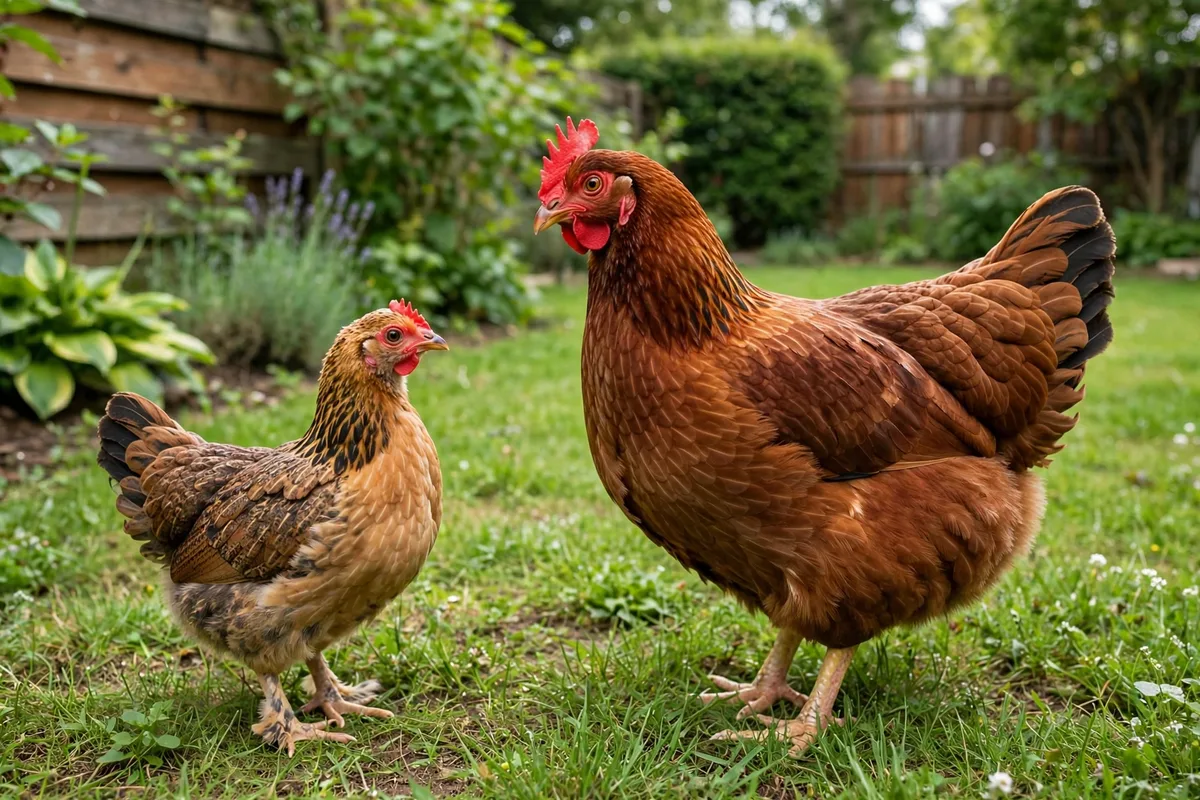
Bantam vs standard chickens: the key differences
Bantams and standard chickens are the same species, kept at two different sizes, and the practical differences come down to weight, space, feed and eggs. A bantam hen weighs roughly 1 to 2 lb (0.5 to 1 kg) and a standard hen roughly 5 to 6 lb (2.3 to 2.7 kg), so.
A standard bird is about three times the weight of a bantam. That single fact explains why bantams need about 2 sq ft of coop space per bird against 4 sq ft for a standard bird, and why they eat roughly half as much feed.
| Trait | Bantam | Standard |
|---|---|---|
| Hen weight | 1–2 lb (0.5–1 kg) | 5–6 lb (2.3–2.7 kg) |
| Coop space per bird | 2 sq ft | 4 sq ft |
| Run space per bird | 5 sq ft | 10 sq ft |
| Roost length per bird | 6 in | 8 in |
| Nest box size | 10 × 10 in | 12 × 12 in |
| Feed per day (layer) | About 0.12 lb | About 0.25 lb |
| Eggs per year (typical) | About 120 | 200–280 |
| Egg size | Small, about half a standard egg | Standard to large |
| Point of lay | 22–24 weeks | 18–24 weeks |
| Flight ability | Strong fliers, need taller fencing | Poor fliers, low fencing usually enough |
The table makes the trade-off clear. Bantams win on space, feed and garden impact; standard birds win on egg output. A bantam flock of six fits in a 12 sq ft coop with a 30 sq ft run, while six standard birds need a 24 sq ft coop and a 60 sq ft run. But those six bantams will give you roughly 14 small eggs a week against about 29 standard eggs from six Rhode Island Reds. If eggs are the goal, standard birds are the better buy; if space is the limit, bantams are the answer.
What is a bantam chicken?
A bantam is a miniature chicken, and there are two kinds. True bantams, such as Silkies and Sebrights, are naturally small breeds with no full-sized version. Miniature bantams are small versions of standard breeds — bantam Plymouth Rocks, bantam Wyandottes, bantam Cochins and bantam Orpingtons are all bred-down copies of familiar large fowl.
Both kinds are classed as bantam, both weigh around a quarter to a third of a standard bird, and both lay small eggs.
Bantams are not young or stunted standard chickens. A bantam chick grows into a small adult and stays small for life, and bantam hens lay small eggs from the start — the eggs do not grow to standard size. Bantams are fully feathered, fully capable birds, and many are excellent broodies: Silkies and bantam Cochins are famous for going broody and hatching eggs, which is why keepers often keep one or two bantams in a standard flock specifically to hatch chicks.
Temperament varies by breed rather than by size, but bantams are often described as tame, friendly and easy to handle, partly because they are light enough to pick up with one hand. Children usually find bantams less intimidating than a 6 lb hen. That said, some bantam roosters are notably feisty for their size, and bantams of both sexes tend to be better fliers than standard birds, so a bantam flock needs taller fencing or clipped wings if you want them to stay put.
Coop and run space: bantam vs standard
Space is where bantams earn their keep. The standard planning figures are 2 sq ft of coop per bantam against 4 sq ft per standard bird, and 5 sq ft of run per bantam against 10 sq ft per standard bird.
That means a small prefab coop rated for four standard birds can comfortably hold six to eight bantams — but check the manufacturer's rating rather than assuming, because prefab coop ratings are often optimistic and the figures count only floor space, not roosts, nest boxes or feeder space.
Roosts and nest boxes scale down too. Bantams need 6 inches of roost bar each against 8 inches for a standard bird, and a 10 by 10 inch nest box against 12 by 12 inches. Bantams also roost higher and fly better, so give them roosts at a height they can reach easily and a ramp or ladder if the roost is high. The chicken coop size calculator lets you pick bantam, standard or large and works out coop, run, roost and nest box figures for your flock.
One caution: do not pack bantams in at the minimum just because the numbers allow it. Bantams still need ventilation, dry bedding, room to move away from a bully, and space at the feeder and waterer. The minimum figures are planning floors, not targets. If your run is small or your birds are confined for much of the day, build to the comfortable tier — 3 sq ft of coop per bantam instead of 2 — and your flock will be calmer and healthier for it.
Eggs and feed: bantam vs standard
Egg output is the biggest difference after size. A typical bantam lays about 120 eggs a year, while a standard layer such as a White Leghorn lays about 280 and a Rhode Island Red about 250. That is partly fewer eggs and partly smaller eggs: a bantam egg weighs roughly half a standard egg, so.
The total egg weight from a bantam is about a quarter of what a good standard layer produces. If your household uses two dozen eggs a week, you would need around 14 bantams but only five Leghorns.
Feed follows the same pattern in your favour. A bantam layer eats about 0.12 lb of feed a day, roughly half the 0.25 lb a standard layer eats. So per bird, bantams are cheaper to keep, but per dozen eggs they are more expensive, because the feed saving does not match the egg shortfall. That is the honest trade-off: bantams cost less per bird and more per egg. If you keep chickens mainly as pets and garden companions, bantams are excellent value; if eggs are the point, standard birds win.
Point of lay is similar for both sizes, with bantams starting at about 22 to 24 weeks and most standard breeds at 18 to 24 weeks. Silkies are the exception among bantams, starting late at 24 to 28 weeks. Bantams also tend to go broody more often, and a broody hen stops laying for weeks, which cuts the yearly total further. If you want steady eggs from bantams, choose a breed selected for laying, such as bantam Leghorns, and be ready to break broodiness promptly.
Which size is right for your backyard?
Choose bantams if space is your limiting factor. A small urban garden, a balcony-free courtyard, or a council rule that limits coop size all favour bantams: you can keep a real flock in a footprint that would hold only two or three standard birds.
Bantams also do less damage to lawns and flower beds, eat less, and are easier for children to handle. They are the right choice when the chickens are pets first and egg producers second.
Choose standard birds if eggs, meat or dual-purpose use is the goal. Five standard layers give a family a steady supply of full-sized eggs, and the feed cost per dozen is far lower. Standard birds are also hardier in cold weather, less likely to fly over a fence, and less vulnerable to small predators such as rats and magpies — a bantam is small enough to be at risk from predators that would leave a standard hen alone.
Many keepers end up with a mixed flock, and that can work well if you plan for it. Give the flock the standard-sized coop, roosts and nest boxes, because the standard birds set the minimum, and make sure the bantams can reach the roosts and are not bullied away from feed. Feed the flock a layer ration suited to the standard birds, and accept that the bantams will lay their small eggs alongside. A mixed flock is also a good way to keep a broody bantam hen for hatching while the standard birds do the laying.
Can bantams and standard chickens live together?
Yes, bantams and standard chickens can live together, and many mixed flocks do well, but you need to manage the size gap. The main risks are bullying at the feeder and roosting, and the fact that a standard rooster mating a bantam hen can injure her.
If you keep a mixed flock, provide two feeders and two waterers so a bantam that is chased off one can use the other, and give the bantams a roost or a sheltered corner where they can get away from larger birds.
Introduce new birds slowly, whatever their size. Keep newcomers where the flock can see them but not reach them for a week, then let them mix at dusk when the flock is settling to roost. Watch for a few days: some pecking is normal while the pecking order settles, but blood, bare patches or a bird that will not eat means you need to separate them and try again. The coop size calculator and the coop size by flock size guide will help you check that your housing fits the whole mixed flock, not just the bantams.
Finally, check your local rules before choosing either size. Some councils limit flock size or ban roosters regardless of the birds' size, and a bantam counts as a chicken under most ordinances. Read the backyard chicken laws guide and the permit guide before you buy, so the size you choose is one you are actually allowed to keep.
For more on the same topic, see Chicken Breed Size Chart and How Many Eggs Per Week by Breed.
Frequently asked questions
Are bantam chickens good layers?
Bantams lay fewer and smaller eggs than standard birds — about 120 small eggs a year against 200 to 280 standard eggs from a good layer. They suit keepers who value pets and small-space keeping over egg output, or who want a broody hen for hatching.
How much coop space does a bantam need?
A bantam needs 2 sq ft of coop space and 5 sq ft of run space per bird, against 4 sq ft of coop and 10 sq ft of run for a standard bird. Roost length is 6 inches per bantam against 8 inches per standard bird.
Do bantams eat less than standard chickens?
Yes. A bantam layer eats about 0.12 lb of feed a day, roughly half the 0.25 lb a standard layer eats. Per dozen eggs, though, bantams cost more to feed, because their egg output is much lower than their feed saving.
Can bantams fly over a fence?
Yes, bantams fly much better than standard chickens and can clear a fence that would contain a standard bird. Use taller fencing, cover the run, or clip one wing if you need to keep bantams in a small garden.
What is the friendliest bantam breed?
Silkies are widely regarded as the friendliest bantam breed, known for their calm, tame nature and their habit of going broody. Bantam Cochins and bantam Orpingtons are also known for being gentle and easy to handle.
How many bantam eggs equal one large egg in a recipe?
Two to three bantam eggs replace one large standard egg in most recipes. A large egg weighs about 2 ounces, while most bantam eggs weigh about 1.25 to 1.7 ounces, in the Peewee to Small range. Use two bantam eggs for one large egg when they are on the large side and three when they are very small, and weigh the eggs when a recipe needs precision, such as a cake or custard.
Do bantam eggs take the same time to hatch?
Yes. Bantam eggs hatch in about 21 days, the same incubation period as standard chicken eggs. Strain, season and incubator conditions can move a bantam hatch by about one day, so bantam and standard eggs can be set in the same incubator on the same date.
Which bantam breed lays the most eggs?
Bantam versions of productive standard breeds lay the most: bantam Leghorns, bantam Plymouth Rocks, bantam Wyandottes and bantam Brahmas can reach about 150 to 200 eggs a year. Ornamental bantams lay far fewer — Silkies about 100 to 120 a year and Sebrights about 50 to 100 — so choose a productive bantam breed if eggs are the goal.
About the author
John Walker is the founder of PeckCalc and has kept backyard chickens in Dallas, Texas since 2017. He started PeckCalc to give backyard keepers free calculators and guides with every figure traced to a university extension source.