
Black Sex Link Chickens: Breed Profile and Care Guide
 By John Walker · Backyard chicken keeper in Dallas, Texas since 2017
Black Sex Link chickens are a hardy production hybrid, a Barred Rock cross laying around 250 to 300 large brown eggs a year. Chicks can be sexed by colour at hatch, and the hens are black with copper leakage. They are friendly and easy to keep, but they are a hybrid, not a breed, and they do not breed true.
What is a Black Sex Link chicken?
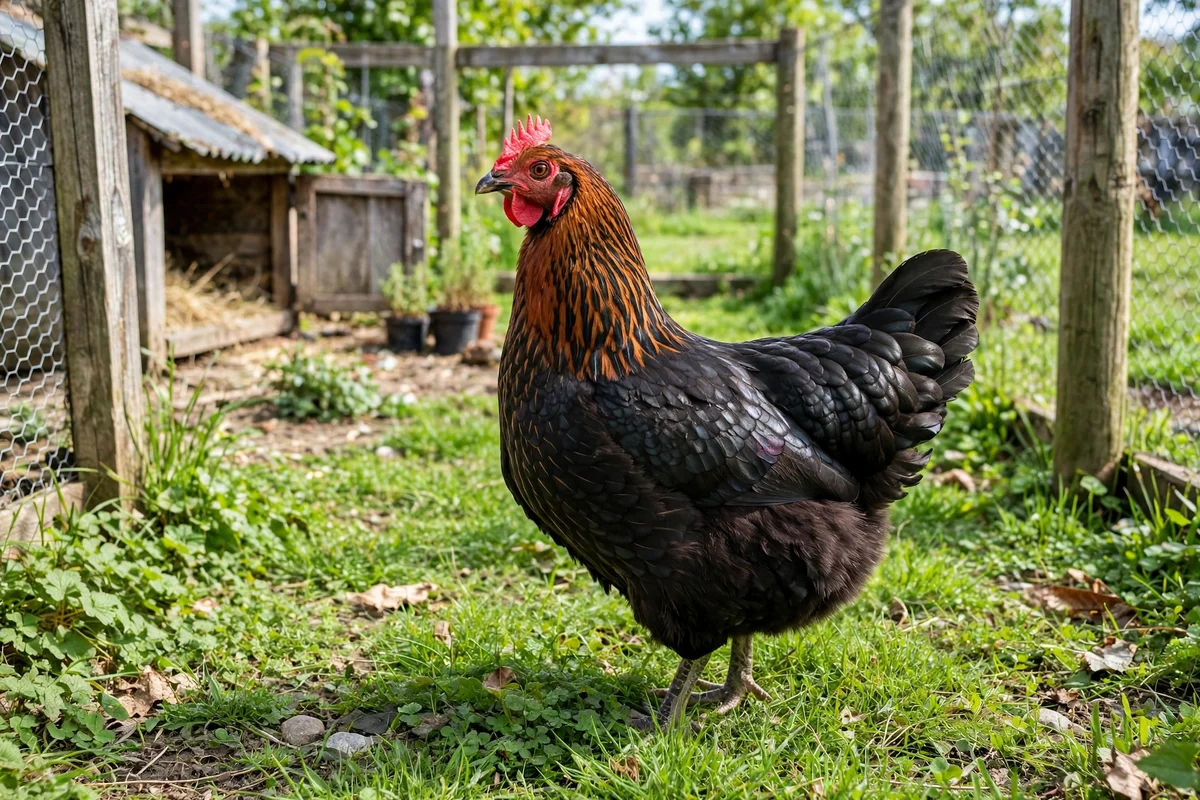
A Black Sex Link chicken is a hybrid produced by crossing a Barred Rock hen with a Rhode Island Red or New Hampshire rooster. The cross is designed so that the chicks can be sexed by colour at hatch: the pullets are black with a small amount of copper or red leakage.
And the cockerels are barred, with a white spot on the head, which means hatcheries can sell sexed pullets with confidence.
Black Sex Link is a type rather than a single trade name, and the same type of bird is sold under names such as Black Star, and it is distinct from the Golden Comet, which is a red sex-link hybrid from a different cross. The two hybrids are often confused, but they are different birds: the Black Sex Link is black with copper leakage, while the Golden Comet is golden-red, and the parent crosses are different.
Black Sex Links are not a breed in the American Poultry Association standard, and they do not breed true, which means the chicks of two Black Sex Links will not look or lay like their parents. If you want more Black Sex Links, you need to buy them from a hatchery, because breeding them at home will not reproduce the hybrid. Our guide on heritage vs hybrid chickens explains the difference in detail.
Black Sex Link temperament
Black Sex Link hens are friendly, calm and hardy birds that tolerate handling well and are often recommended for beginners and for families with children. They are active foragers that like to range, and they are curious without being flighty, which makes them easy to manage in a backyard flock.
They sit in the middle of the pecking order and mix well with most other breeds, though they can be assertive when they need to be, and they are less likely to be bullied than a very gentle breed such as a Silkie. They are not aggressive, and they rarely start fights, but they will stand their ground if they are pecked at, which makes them a good choice for a mixed flock.
Broodiness is uncommon in Black Sex Links, because they have been selected for laying rather than for sitting, and a hen that does go broody is the exception rather than the rule. This is good news for egg production, because a hen that never goes broody lays more eggs, but it means you cannot rely on a Black Sex Link to hatch eggs for you.
Eggs and laying: how many eggs do Black Sex Links lay?
Black Sex Link hens lay around 250 to 300 large brown eggs a year, which is a high total for a backyard bird, and they start laying at about five to six months old. The eggs are large, with rich brown shells.
And the hens lay consistently, with few breaks outside the annual moult. Use the Egg Production Calculator to work out how many hens your household needs.
The egg total is a little lower than the Golden Comet's, but the Black Sex Link is often described as hardier and longer-lived, and many keepers find that the birds keep laying well into their third and fourth years. The trade-off between the two hybrids is a real one: the Golden Comet lays more eggs in the first two years, while the Black Sex Link may lay for longer.
As with any high-production hybrid, the risk of reproductive problems, including egg binding, prolapse and egg yolk peritonitis, is higher than in a heritage breed, and it rises as the hens age. A Black Sex Link that lays heavily for two years is working hard, and her body pays for it. Our guide on egg yolk peritonitis in chickens explains one of the risks.
Housing and care for Black Sex Links
Black Sex Links need the standard space for a medium to large layer: about 4 square feet of coop floor per bird and 10 square feet of run, with roosts set at a comfortable height and nest boxes that are dark and private.
They tolerate confinement well, but they are happier and lay better with room to forage, and they are strong foragers that will find a share of their own food.
They handle cold well, thanks to their dense plumage and sturdy build, and they handle heat well too, provided they have shade and cool water. They are one of the hardiest hybrids, and they keep laying on rough feed and in rough housing where fussier breeds quit. Our guide on chicken coop size calculator will help you plan the housing.
A run fence of about 1.8 metres is usually enough, because Black Sex Links are medium to large birds and do not fly well, though young birds can clear a lower fence. The chicken breed size chart compares their size with other breeds, and it is worth checking before you plan roost height and nest box size.
Feeding Black Sex Link chickens
Black Sex Link chickens do well on a standard layer feed of about 16 percent protein once they start laying, with grower feed before that and chick starter for the first six to eight weeks. Because they lay heavily, they need a good layer feed and oyster shell free choice.
So they have enough calcium for strong shells and enough protein for egg production.
Do not overfeed treats, because a Black Sex Link that fills up on scratch grains and kitchen scraps will eat less layer feed, and her laying will suffer. Treats should stay within the 10 percent rule, and the chicken treats calculator can help you work out a sensible daily treat allowance for your flock size. A hen that is overweight is also more likely to have reproductive problems.
Watch body condition as the hens age, because a Black Sex Link that has laid heavily for two years may lose condition, and she may need a higher-protein feed or a rest from laying. Some keepers switch older hens to a grower feed with oyster shell on the side, which gives them more protein and less calcium than a layer feed, and that can help a hen that is no longer laying heavily.
Are Black Sex Link chickens right for you?
Black Sex Link chickens are right for a keeper who wants a high number of large brown eggs, who wants hens that are hardy, friendly and easy to keep, and who wants to know they are getting pullets, because the chicks are sexable at hatch.
They are a good choice for beginners, for families, and for keepers who want a reliable layer without the fragility of a more specialised breed.
They are not right for a keeper who wants a long-lived heritage bird, who wants to breed their own replacements, or who wants a bird that will lay steadily for five or six years. Black Sex Links lay hard and their productive life is shorter than a heritage breed's, with a higher risk of reproductive problems in later life. They are also not right for a keeper who wants a broody hen.
If you decide on Black Sex Links, buy sexed pullets from a reputable hatchery, plan for high production in the first two to three years, and be ready to replace the flock sooner than you would a heritage breed. Give them a good layer feed, oyster shell free choice, and room to forage, and they will reward you with a steady supply of large brown eggs.
Black Sex Link breed facts at a glance
| Trait | Black Sex Link |
|---|---|
| Origin | Hybrid: Barred Rock hen x Rhode Island Red or New Hampshire rooster |
| APA recognition | Not a breed; hybrid, not recognised |
| Purpose | Egg laying |
| Temperament | Friendly, calm, hardy; good with children |
| Egg colour | Brown |
| Eggs per year | Around 250–300 |
| Egg size | Large |
| Hen weight | About 5 lb (2.3 kg) |
| Rooster weight | About 6–7 lb (2.7–3.2 kg) |
| First eggs | About 5–6 months old |
| Broodiness | Uncommon |
| Hardiness | Very hardy in cold and heat |
| Breeds true | No — chicks of two Black Sex Links will not match their parents |
| Good for beginners | Yes |
Black Sex Link is a type of hybrid, not a single trade name, and it is distinct from the Golden Comet, which is a red sex-link hybrid from a different cross. The hens are black with copper leakage on the neck and breast, and the chicks are colour-sexable at hatch.
Sources: breed facts on this page are drawn from hatchery listings and from university extension poultry guidance, including the University of Minnesota Extension and poultry.extension.org. Where sources give different figures for eggs per year, this page shows the range and says so, rather than presenting one number as settled.
Related tools and guides
For more on hybrids and high-production layers, see the guides below.
Frequently asked questions
How many eggs do Black Sex Link chickens lay a year?
Around 250 to 300 large brown eggs a year. They start laying at about five to six months old, and they lay consistently, with few breaks outside the annual moult.
Are Black Sex Link chickens a breed?
No. Black Sex Link is a hybrid, produced by crossing a Barred Rock hen with a Rhode Island Red or New Hampshire rooster. They do not breed true, so you need to buy replacements from a hatchery.
What is the difference between Black Sex Link and Golden Comet?
They are different hybrids from different crosses. Black Sex Link hens are black with copper leakage, from a Barred Rock hen, while Golden Comet hens are golden-red, from a red sex-link cross. Golden Comets usually lay a few more eggs, while Black Sex Links are often described as hardier.
Are Black Sex Link chickens friendly?
Yes. They are friendly, calm and hardy birds that tolerate handling well and are often recommended for beginners and for families with children. They mix well with most other breeds.
Can you tell Black Sex Link chicks apart at hatch?
Yes. The chicks are colour-sexable at hatch: pullets are black with copper leakage, and cockerels are barred with a white spot on the head. That is why hatcheries can sell sexed pullets with confidence.
About the author
John Walker is the founder of PeckCalc and has kept backyard chickens in Dallas, Texas since 2017. He started PeckCalc to give backyard keepers free calculators and guides with every figure traced to a university extension source.