
Can Baby Chicks Live in a Garage? Safe Setup
 By John Walker · Backyard chicken keeper in Dallas, Texas since 2017
Can baby chicks live in a garage? Yes, baby chicks can live in a garage, and a garage is one of the most common places to brood chicks, because it is sheltered, dry, and close to power for a heat lamp or heat plate. A garage brooder works well as long as the chicks are warm, dry, ventilated, and safe from predators, fumes, and draughts. The risks are real: a garage can be cold at night, hot in summer, dusty, and full of chemicals, cars, and rodents, so the setup matters more than the location. This guide explains how to set up a safe garage brooder, what temperature the chicks need, and what to watch out for.
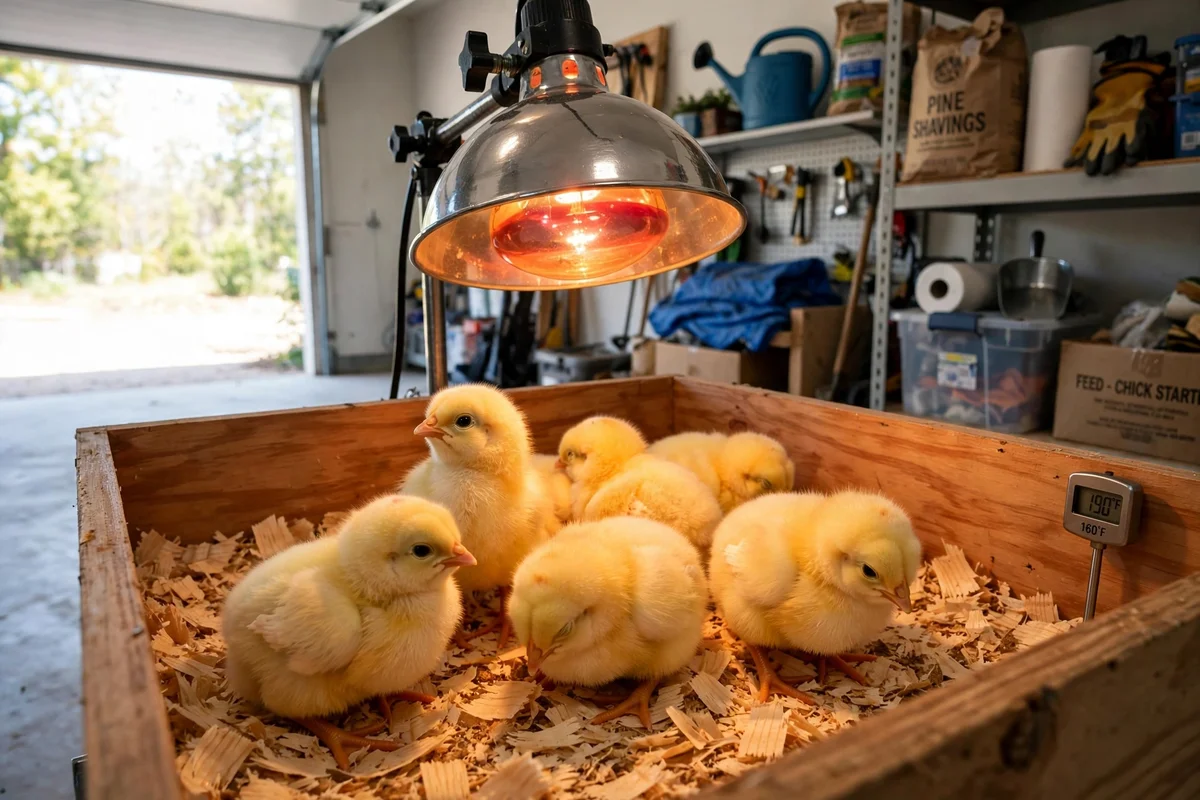
Can baby chicks live in a garage?
Yes, baby chicks can live in a garage, and it is a practical choice for many keepers, because a garage is sheltered from wind and rain, close to power, and easy to keep clean. A garage brooder works well for the first few weeks of a chick's life, until the birds are feathered and ready to move outside.
The key is that the garage itself is not the brooder, and the chicks need a proper brooder box inside the garage, with a heat source, bedding, feed, and water. A garage that is cold, damp, dusty, or full of fumes is not suitable, but a clean, dry garage with good ventilation is a good place to raise chicks.
Chicks need warmth most of all, because they cannot regulate their own body temperature for the first few weeks, and a garage can be cold at night, especially in winter. A heat lamp or a heat plate in the brooder solves this, as long as it is set up safely and the temperature is checked daily.
The garage should be used for brooding only, not as a permanent home, and the chicks should move to a proper coop and run once they are feathered at about six weeks old. A garage is a nursery, not a coop, and the birds will outgrow it quickly.
Setting up a brooder in the garage
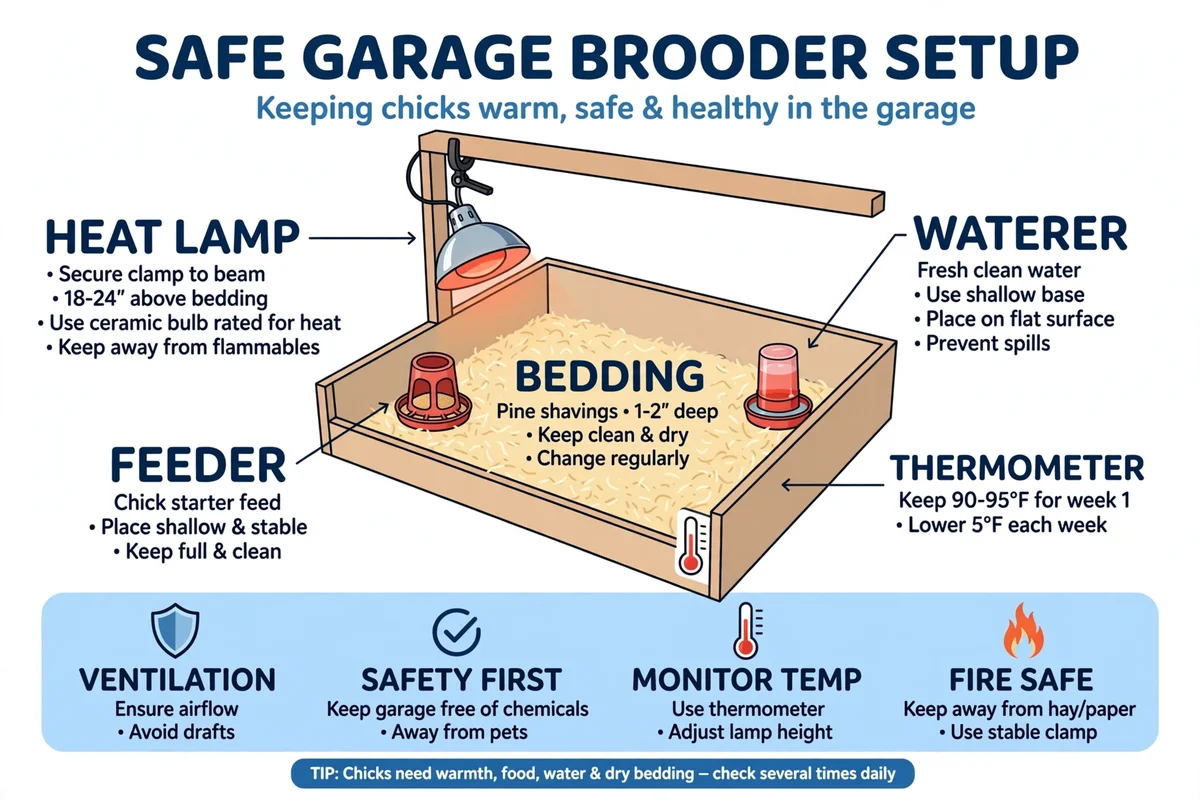
Choose a clean, dry corner of the garage, away from the car, chemicals, and draughts, and set up a brooder box there. A large plastic tub, a wooden box, or a stock tank all work, and the box should be big enough for the chicks to move away from the heat if they get too warm.
Line the brooder with pine shavings or paper towels for the first few days, and avoid newspaper, which is slippery and can cause leg problems, and avoid cedar shavings, which give off fumes that can harm chicks. Change the bedding often, because wet bedding chills chicks and breeds disease.
Hang a heat lamp securely above one end of the brooder, or use a heat plate that the chicks can huddle under, and make sure the heat source cannot fall into the bedding. A heat lamp should be secured with a chain or clamp, not just a clip, and it should be kept away from flammable bedding.
Place the feeder and waterer at the cool end of the brooder, away from the heat, so the chicks have to move to eat and drink, and so the water does not get too warm. Our chick brooder size calculator can help you work out how big the brooder needs to be for your chicks.
Temperature and ventilation in a garage brooder
Chicks need a brooder temperature of about 35 degrees Celsius in the first week, dropping by about 3 degrees each week until they are feathered at six weeks old. The heat source should warm one end of the brooder, while the other end stays cooler, so the chicks can move to the temperature they prefer.
Watch the chicks to judge the temperature, because their behaviour tells you more than a thermometer. Chicks that huddle under the heat source are cold, chicks that spread out to the edges and pant are too hot, and chicks that move around freely and sleep in small groups are comfortable.
Ventilation matters in a garage, because a closed garage can become stuffy and damp, and ammonia from droppings can build up quickly. Open a window or a door slightly for fresh air, but avoid a draught blowing directly onto the brooder, because a cold draught can chill chicks even when the brooder is warm.
Our brooder temperature calculator can help you work out the right temperature for your chicks' age, and a thermometer in the brooder is a useful check. Check the temperature twice a day, and adjust the heat lamp height or the heat plate setting as the chicks grow.
Garage dangers: fumes, cars, and predators
The main dangers in a garage are fumes, cars, and predators, and all three need to be managed before the chicks move in. Car exhaust, paint, solvents, and pesticides all give off fumes that can harm chicks, so the brooder should be well away from these, and the garage should not be used to store chemicals near the birds.
Never run a car engine in a closed garage with chicks inside, because exhaust fumes can kill them quickly, and even a car that is parked can leak oil or fuel that the chicks might peck at. If the car must be in the garage, keep it at the far end and make sure the brooder is covered and ventilated.
Rodents are a common garage visitor, and rats and mice will eat chick feed, spread disease, and can kill young chicks. Keep feed in a sealed metal container, clean up spilled feed, and make sure the brooder has a secure lid or wire cover that a rat cannot push aside.
Cats and dogs are another risk, and a garage that is open to pets should have the brooder covered with wire mesh. A cat can kill a chick in seconds, and a dog can knock a brooder over, so the brooder should be secure and the garage door should be kept closed when pets are around.
How long can chicks stay in the garage?
Chicks can stay in a garage brooder for about six weeks, until they are fully feathered and can regulate their own body temperature. By six weeks, most chicks have their adult feathers, they no longer need extra heat, and they are ready to move to a coop and run outside.
The exact timing depends on the weather and the breed, because a chick raised in winter will need heat for longer than one raised in summer, and a slow feathering breed will need more time than a fast feathering one. Watch the birds, not the calendar, and move them when they are feathered and the weather is mild.
Before moving the chicks outside, harden them off by turning the heat down gradually and letting them spend time outside on warm days. A sudden move from a warm garage to a cold coop can shock the birds, so a gradual transition over a week is best.
Once the chicks move out, clean the brooder and the garage thoroughly, because chick dust and droppings can carry disease, and the garage should be clean before it is used for anything else. Our guide on how to raise baby chicks covers the full first six weeks in detail.
Garage brooder checklist
Before the chicks arrive, check the garage for safety, cleanliness, and power. Clean the floor, remove chemicals and clutter, check that the power outlet works, and make sure the brooder is set up, warm, and ready before the chicks come home, because they need heat from the moment they arrive.
Stock up on chick starter feed, a chick waterer, a feeder, bedding, and a thermometer, and have a spare bulb or heat plate ready in case the first one fails. A brooder that goes cold overnight can kill chicks, so a backup heat source is worth having, especially in winter.
Check the chicks twice a day for the first week, and look for signs of chilling, such as huddling and peeping, or overheating, such as panting and spreading out. Check the water daily, because chicks drink a lot and a dry waterer can kill them quickly.
Keep a record of the chicks' age, temperature, and any problems, so you can spot a pattern early and act on it. A garage brooder is a good setup when it is done well, and the checklist above is the difference between a safe brooder and a risky one.
Sources: University of Georgia Cooperative Extension, brooding chicks and poultry.extension.org.
Related tools and guides
For more on the same topic, see How to Raise Baby Chicks.
Frequently asked questions
Can baby chicks live in a garage?
Yes, with a proper brooder box, a heat source, bedding, feed, and water inside a clean, dry, ventilated garage. The garage should be free from car fumes, chemicals, and draughts, and the brooder should be secure from pets and rodents.
How warm should a garage brooder be?
About 35 degrees Celsius in the first week, dropping by about 3 degrees each week until the chicks are feathered at six weeks. Watch the chicks: huddling means cold, panting and spreading out means too hot.
How long can chicks stay in the garage?
About six weeks, until they are fully feathered and can regulate their own body temperature. Harden them off gradually before moving them to a coop outside, especially in cold weather.
Is a garage safe for baby chicks?
Yes, if it is clean, dry, and ventilated, and if the brooder is kept away from car exhaust, chemicals, and predators. Never run a car engine in a closed garage with chicks inside, and keep feed in sealed containers to avoid rodents.
Do baby chicks need light in the garage?
Yes, chicks need light to find food and water, and a heat lamp provides both heat and light. Once the chicks are older, a regular day and night cycle is best, with the heat source providing warmth but not constant bright light.
About the author
John Walker is the founder of PeckCalc and has kept backyard chickens in Dallas, Texas since 2017. He started PeckCalc to give backyard keepers free calculators and guides with every figure traced to a university extension source.