
Can chickens eat walnuts
 By John Walker · Backyard chicken keeper in Dallas, Texas since 2017
Can chickens eat walnuts? Yes, chickens can eat walnuts, but only the shelled kernel, only unsalted, and only in very small amounts. Walnuts are about two-thirds fat, which makes them one of the richest treats you can offer a chicken, and that richness is the problem. A little walnut is a fine occasional treat, but too much can push a hen toward fatty liver disease, a condition where fat builds up in the liver and can kill a bird without warning. Black walnuts are a separate case and should be avoided altogether. This guide explains the safe way to feed walnuts and the warnings that matter most.
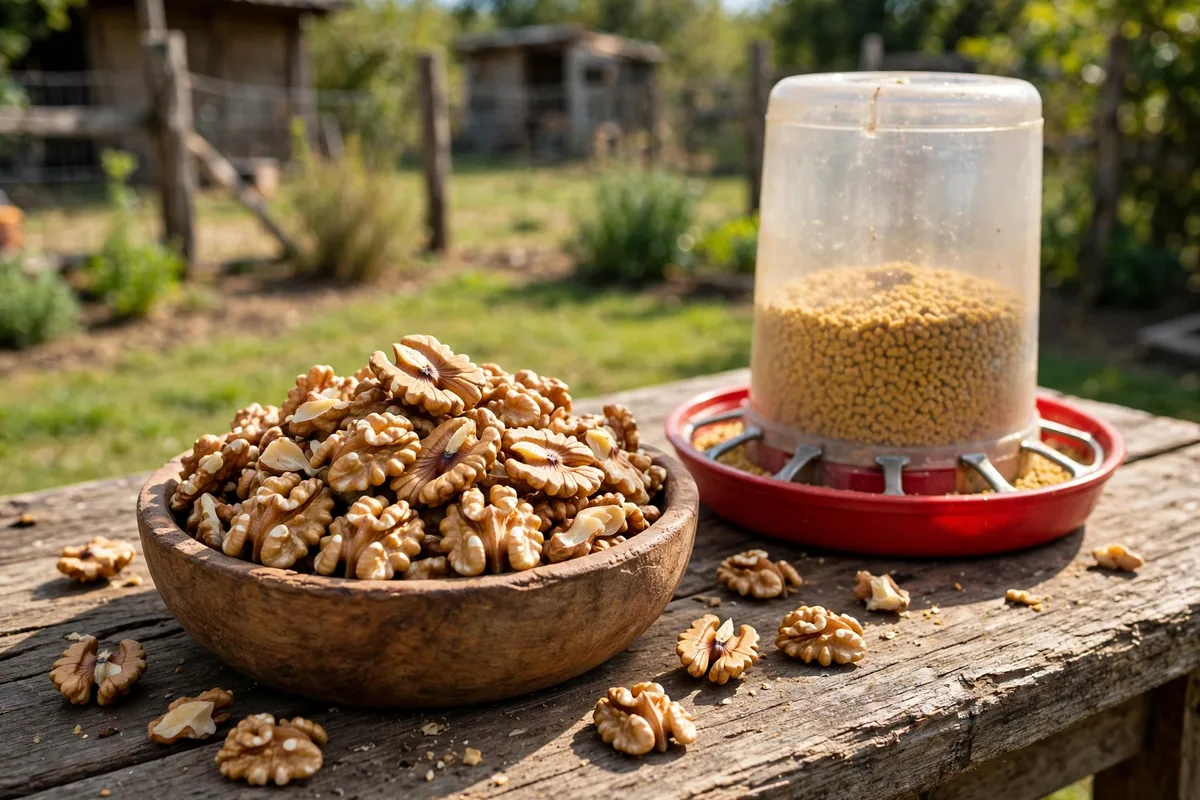
Can chickens eat walnuts? The short answer
Can chickens eat walnuts? Yes, in small amounts. The kernel, which is the soft nut meat inside the shell, is safe for chickens when it is shelled, unsalted, and fresh. Chickens will eat walnut pieces eagerly, and the nuts contain healthy fats, protein, and minerals.
But walnuts are very high in fat, about two-thirds fat by weight, so the amount matters more than with most treats.
The rule is simple: walnuts are an occasional treat, not a regular feed. A few small pieces per bird, once in a while, is fine. A handful every day is not. The ten percent rule applies to all treats together, and walnuts should be a small part of that ten percent, because their fat content is so high. If your hens are already overweight or have stopped laying, skip walnuts altogether.
Why walnuts are risky: fat and fatty liver
Fatty liver disease, also called fatty liver haemorrhagic syndrome, is a condition where fat builds up in the liver of a laying hen. The liver becomes enlarged, fragile, and pale, and it can bleed without warning, killing a bird that looked healthy the day before.
Overweight hens and hens fed a high-energy diet are most at risk, and a diet rich in fat is one of the main causes.
Walnuts are one of the fattiest foods you can give a chicken, so they add to that risk fast. A hen that eats walnuts often, along with other fatty treats such as sunflower seeds and scratch grain, can take in far more energy than she needs. The extra energy is stored as fat, and the liver is where it shows up first. Keep walnuts rare, keep the flock at a healthy weight, and make sure the main diet is a balanced layer feed, not treats.
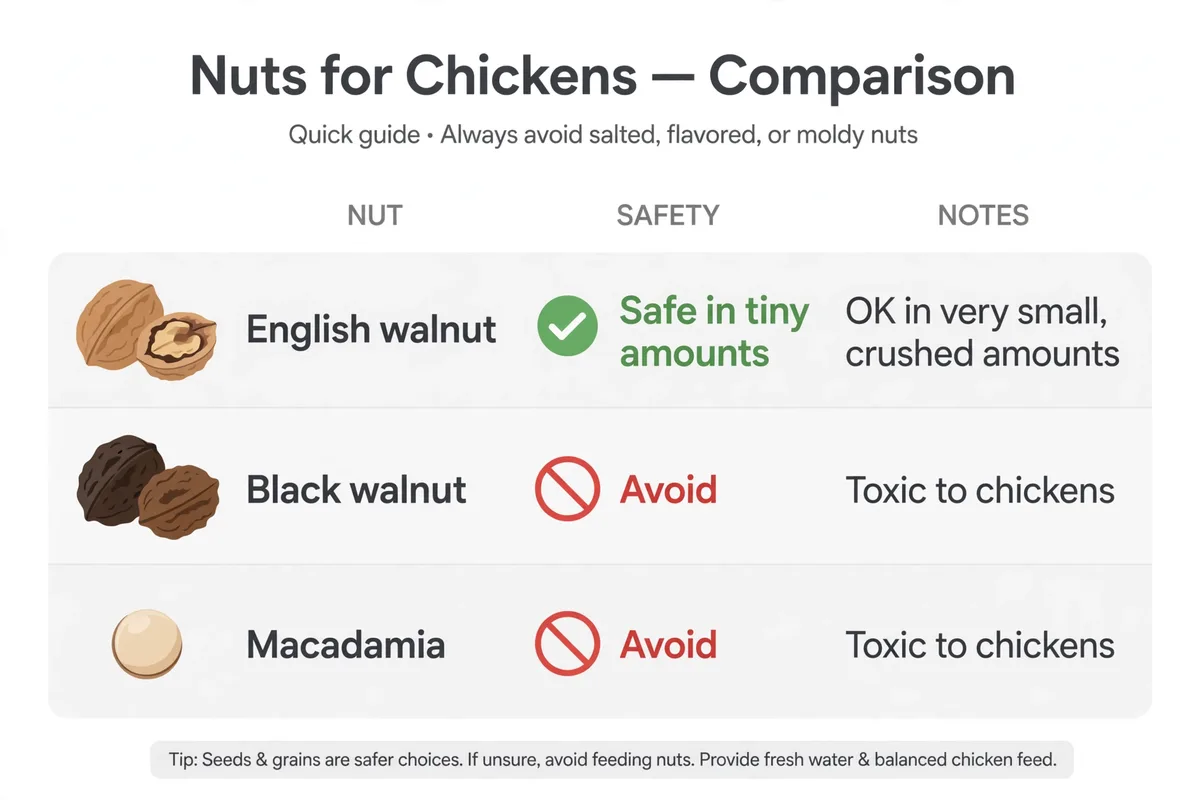
| Nut | Safe? | Notes |
|---|---|---|
| English walnut, shelled | Yes, tiny amounts | Very high in fat, rare treat only |
| Black walnut | No | Contains juglone, toxic |
| Almond, shelled | Yes, tiny amounts | Unsalted, fresh only |
| Peanut, shelled | Yes, tiny amounts | Unsalted, watch for mould |
| Macadamia | No | Best avoided, toxic to many animals |
Black walnuts: avoid them
Black walnuts are different from the common English walnuts sold in shops, and they should not be fed to chickens. Black walnuts contain juglone, a natural chemical that the tree makes to stop other plants growing near it. Juglone is toxic to many animals and plants, and it can harm chickens.
The husks and shells of black walnuts are the most concentrated source, but the kernels are best avoided too.
If you have a black walnut tree in your garden, keep chickens away from the fallen nuts and husks, and do not let them eat the kernels. The same caution applies to walnut wood shavings, which should never be used as coop bedding, because the juglone in the shavings can harm chickens through contact and through the dust. Use pine shavings or another safe bedding instead.
Mould and rancidity: the strongest warning
The strongest warning about walnuts is mould and rancidity. Walnuts are high in oil, and that oil goes rancid, which means stale and spoiled, when the nuts are stored badly or kept too long. Rancid nuts taste bad and can upset a chicken's digestion.
Worse, walnuts that have gone mouldy can contain mycotoxins, which are poisons made by mould, and those can make chickens seriously ill.
Only feed walnuts that are fresh, dry, and smell sweet and nutty. Throw away any nuts that smell stale, look shrivelled, or have any mould on them. Store walnuts in a cool, dry, closed container, and use them within a few months. Never feed walnuts from a bag that has been open for a long time in a damp shed, and never feed nuts that have been on the ground and gone damp.
How to serve walnuts to chickens
Shell the walnuts first, and throw the shells away. Walnut shells are hard and sharp, and they can hurt a chicken's crop, which is the pouch in the throat where food is stored before digestion. Chop the kernels into small pieces, about the size of a pea.
So every bird gets a share and no bird chokes on a large piece.
Use plain, unsalted walnuts, and never give salted, honey-roasted, or flavoured nuts.
Scatter the pieces in the run so the birds have to scratch for them, which keeps them active. Give walnuts no more than once a week, and only a few pieces per bird. On the same day, skip other fatty treats, so the total fat stays low. If you have chicks, wait until they are at least eight weeks old before offering walnut, and chop it very fine.
Walnuts vs other nuts for chickens
Walnuts are not the only nut that chickens can eat, but they are one of the fattiest. Almonds and hazelnuts are also safe in small amounts when shelled and unsalted, and peanuts, which are legumes rather than true nuts, are a popular treat. Cashews are safe too, but they are also high in fat.
The same rules apply to all nuts: shelled, unsalted, fresh, and in small amounts.
Some nuts should never be given. Macadamia nuts are toxic to many animals and are best avoided, and bitter almonds contain a toxin and should not be fed. Chestnuts are lower in fat and safer than most nuts, but they still need to be shelled and chopped. The safest approach is to keep nuts as a rare treat, and to rely on the main feed for the bulk of the diet.
Signs of trouble after eating walnuts
If a bird eats too many walnuts, the first sign is often loose, greasy droppings, because the gut cannot handle the extra fat. The bird may also go off its feed or look dull for a day. Those signs usually pass if you stop the treats and go back to plain feed and clean water.
If the bird stays dull, stops eating, or has bloody droppings, call a vet, because those signs point to something more serious than a rich treat.
Watch the flock's weight over time. Hens that are getting heavy, with a thick pad of fat around the vent, are at risk of fatty liver disease, and the fix is to cut treats, especially fatty ones, and make sure the birds get exercise. A hen that is too fat will also lay fewer eggs, and she may have trouble laying at all. Prevention is easier than treatment, and it starts with the treat bowl.
Walnuts are safe for chickens in very small amounts, but they are one of the richest treats you can offer, and that richness is the reason to be careful. A few small pieces of shelled, unsalted, fresh walnut once a week is fine, but a daily handful is not, because the fat can push a hen towards fatty liver disease. Avoid black walnuts altogether, throw away any nut that smells stale or shows mould, and never feed the shells. Used rarely and in small amounts, walnuts are a fine occasional treat.
Sources: poultry.extension.org and University of Georgia Extension, poultry resources.
Related tools and guides
For more on the same topic, see Can Chickens Eat Sunflower Seeds?. You can also browse the full list in our guides hub.
Frequently asked questions
Can chickens eat walnuts?
Yes, shelled English walnut kernels in very small amounts. They are about two-thirds fat, so they are a rare treat only, a few small pieces per bird once a week at most.
Can chickens eat black walnuts?
No. Black walnuts contain juglone, a natural toxin, and should not be fed to chickens. Keep birds away from fallen black walnuts and never use walnut shavings as bedding.
Can chickens eat walnut shells?
No. Walnut shells are hard and sharp and can hurt the crop. Always shell walnuts and chop the kernels into small pieces before feeding.
How much walnut can I give my chickens?
A few pea-sized pieces per bird, no more than once a week. Skip other fatty treats on the same day to keep the total fat low.
Can walnuts make chickens ill?
Too many can lead to fatty liver disease over time, and mouldy or rancid walnuts can contain toxins. Only feed fresh, dry, unsalted kernels and throw away any that smell stale or show mould.
About the author
John Walker is the founder of PeckCalc and has kept backyard chickens in Dallas, Texas since 2017. He started PeckCalc to give backyard keepers free calculators and guides with every figure traced to a university extension source.