
Can You Eat Eggs From a Broody Hen? Safety
 By John Walker · Backyard chicken keeper in Dallas, Texas since 2017
Can you eat eggs from a broody hen? Yes, if the eggs are fresh, unfertilized, and collected promptly — an egg laid by a broody hen is the same as an egg laid by any other hen. The question gets complicated because a broody hen sits on her eggs and keeps them warm, and an egg that has been kept warm for days is not the same as an egg that has been collected and refrigerated. This guide explains when a broody hen's eggs are safe to eat, when they are not, how to tell the difference, and what to do with the eggs you take from under her.
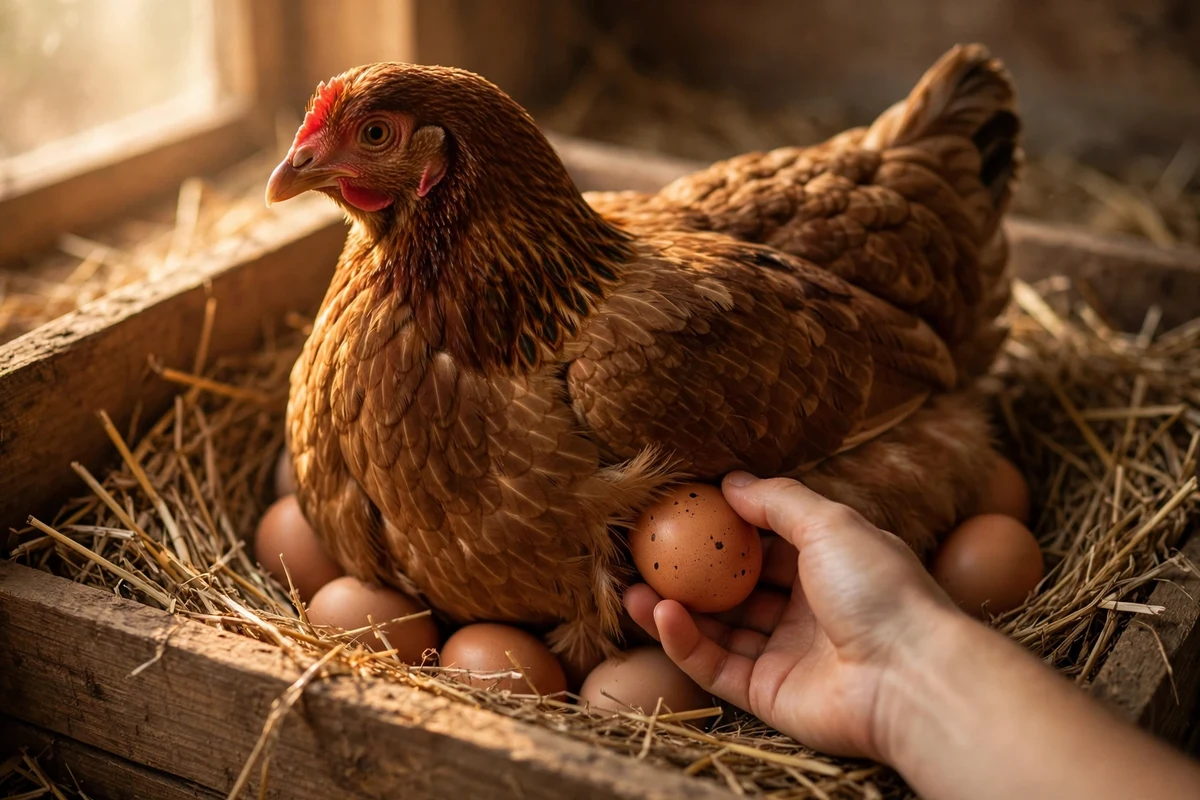
Can you eat eggs from a broody hen?
Can you eat eggs from a broody hen? Yes, if the egg is fresh and has not been incubated. An egg laid by a broody hen is the same as an egg laid by any other hen, and it is safe to eat if it is collected promptly and stored properly.
The problem is not the hen, but the time the egg spends under her: a broody hen keeps her eggs at about body temperature, and an egg kept warm for days will develop, spoil, or grow bacteria, depending on whether it is fertilized and how long it has been there. The rule is simple: an egg collected the same day it was laid is fine, and an egg that has been under a broody hen for days is not.
A broody hen is a hen that has decided to sit on eggs and hatch them. She stops laying, she sits in the nest box all day, and she keeps the eggs warm with her body. She will sit on any eggs that are in the nest, including eggs laid by other hens that day, and she will also sit on eggs that are not fertilized, or on no eggs at all. That is why a broody hen's nest is a mixed bag: some eggs are fresh, some have been there for days, and some may have started to develop.
The key question is whether the egg is fertilized, and how long it has been under the hen. An unfertilized egg cannot develop into a chick, but it can still go bad if it is kept warm for days, because warmth speeds up the growth of bacteria. A fertilized egg that has been kept warm for a few days will start to develop, and it will have a blood spot, a tiny embryo, or a bad smell when it is cracked open. Neither kind should be eaten after days under a broody hen.
If you have a broody hen, the practical step is to collect the eggs every day, and to mark the eggs she is sitting on so that you do not mix them up with fresh ones. A pencil mark on the shell, or a different coloured egg, will tell you which eggs are hers and which are new. Collect the new eggs daily, and leave the marked eggs alone until you decide whether to let her hatch them or to break her broodiness.
Fresh eggs vs eggs that have been sat on
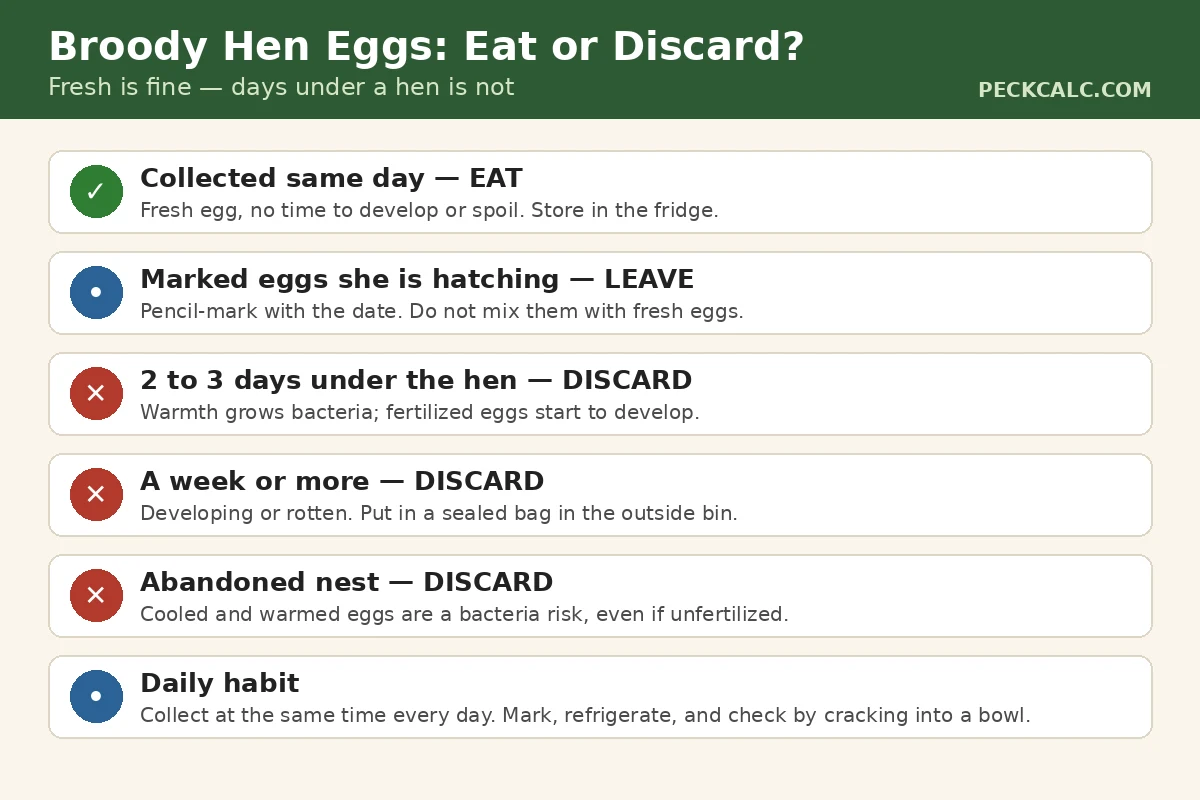
A fresh egg, collected the same day it was laid, is safe to eat, whether it was laid by a broody hen or by any other hen. The egg has not had time to develop, and it has not been kept warm long enough for bacteria to grow.
Collect it, store it in the fridge, and use it as you would any other egg. The broody hen does not change the egg in any way on the first day.
An egg that has been under a broody hen for two or three days is a different matter. If it is fertilized, it will have started to develop, and it may have a blood spot or a small embryo when it is cracked open. If it is unfertilized, it will not have developed, but it will have been kept warm for days, and warmth speeds up the growth of bacteria. Either way, the egg is not one to eat. The safest choice is to discard any egg that has been under a broody hen for more than a day, unless you know it was laid that day.
An egg that has been under a broody hen for a week or more should never be eaten. A fertilized egg will have a visible embryo, and an unfertilized egg will have gone bad, with a smell that is obvious when the egg is cracked open. A rotten egg can make you ill, and a developing egg is not food. If you are unsure how long an egg has been under the hen, do not eat it: the risk is not worth the price of an egg.
The best way to avoid the problem is to mark the eggs. Use a pencil to mark the eggs the broody hen is sitting on, with the date, and collect any unmarked eggs every day. A pencil mark is safe, because pencil lead does not pass through the shell, and it will not wash off in the nest. A felt-tip pen should not be used, because the ink can pass through the shell. Marking the eggs is a small job that saves a lot of confusion.
Fertilized vs unfertilized: does it matter?
A fertilized egg is safe to eat if it is fresh and has not been incubated. The fertilized egg contains a tiny cluster of cells that will only develop into a chick if the egg is kept warm for days, and a fresh fertilized egg that is collected and refrigerated will never develop.
The egg looks and tastes the same as an unfertilized egg, and it is safe to eat. Our guide on can you eat fertilized eggs explains this in detail, and it is worth reading if you keep a rooster.
An unfertilized egg cannot develop into a chick, but it can still go bad if it is kept warm. The warmth speeds up the growth of bacteria, and an unfertilized egg that has been under a broody hen for days will spoil just as surely as a fertilized one. The difference is that the fertilized egg will also develop, while the unfertilized egg will simply go bad. Either way, the egg should not be eaten after days under a broody hen.
The presence of a rooster does not change the rule. A flock with a rooster will lay fertilized eggs, and a flock without a rooster will lay unfertilized eggs, but the safety rule is the same for both: collect the eggs daily, and do not eat any egg that has been kept warm for days. A rooster makes the question of development more likely, but it does not make a fresh egg unsafe, and it does not make an old egg safe.
If you crack open an egg and find a blood spot, a dark ring, or a tiny embryo, discard it. A blood spot in a fresh egg is usually harmless and is covered in our guide on are blood spots in eggs safe to eat, but a blood spot in an egg that has been under a broody hen for days is a sign that the egg has started to develop, and it should not be eaten. When in doubt, throw it out: an egg is cheap, and a stomach bug is not.
| Egg | Safe to eat? | Why |
|---|---|---|
| Fresh, collected same day | Yes | No time to develop or spoil |
| Unfertilized, 2 to 3 days under hen | No | Warmth speeds bacterial growth |
| Fertilized, 2 to 3 days under hen | No | Embryo starting to develop |
| A week or more under hen | No | Developing or rotten, discard |
| From an abandoned nest | No | Cooled and warmed, bacteria risk |
How to collect eggs from a broody hen safely
A broody hen will defend her nest, and she may peck, growl, or puff up when you reach under her. Wear gloves, move slowly, and talk to her quietly before you reach in. Lift her gently from the side, or reach under her from the front, and take the eggs quickly.
Do not pull an egg out from under a hen that is gripping it, because you may crack it, and a cracked egg in the nest can spoil the other eggs.
Collect the eggs every day, at the same time, so that no egg is left under the hen for more than a day. Mark the eggs she is sitting on with a pencil, and collect any unmarked eggs. If the hen is sitting on eggs you want her to hatch, leave the marked eggs alone, and check them by candling after a week to see which are developing. Our guide on how to candle chicken eggs explains how to do that.
Store the collected eggs in the fridge, in a carton, with the pointed end down. Do not wash them unless they are dirty, because washing removes the bloom, the natural coating that protects the egg. If an egg is dirty, wipe it with a dry cloth, or wash it in warm water and use it promptly. Our guide on how to store fresh eggs explains the right way to keep eggs fresh.
If the hen is broody and you do not want her to hatch, the best step is to break her broodiness, so that she starts laying again and stops sitting on eggs. Our guide on how to break a broody hen explains the method, which involves cooling her underside and keeping her away from the nest for a few days. A hen that is not broody will not sit on eggs, and the problem of eggs under a hen will not arise.
How long can a broody hen leave her eggs?
A broody hen leaves the nest for short periods each day, to eat, drink, and dust bathe, and she usually comes back within twenty to thirty minutes. The eggs cool slightly while she is away, but they do not cool enough to stop development, and they warm up again when she returns.
An egg that has been left for an hour or two is still fine, as long as the hen comes back and the egg is not cracked.
If a broody hen leaves her eggs for several hours, or if she abandons the nest, the eggs will cool too much and the embryos will die. A fertilized egg that has been cold for hours will not develop, and it should not be eaten either, because it has been kept warm and then cooled, which is a good condition for bacteria to grow. An egg from an abandoned nest should be discarded, not eaten.
Our guide on how long can a broody hen leave her eggs explains this in detail, including the signs that a hen has abandoned the nest and what to do with the eggs. The short version is that a short break is normal, a long break is a problem, and an abandoned nest means the eggs are no longer good for hatching or for eating.
What to do with eggs you cannot eat
Eggs that have been under a broody hen for days should be discarded, not eaten, and not fed to the flock. A rotten egg can make a bird ill just as it can make a person ill, and a developing egg is not a suitable food for a chicken.
Put the eggs in a sealed bag and put them in the outside bin, or bury them deep in the compost, where they will break down without attracting pests.
Do not crack a bad egg into the compost in the open, because the smell will attract flies and rats, and the bacteria in the egg can spread. A sealed bag in the bin is the cleanest way to dispose of them. If you have a lot of bad eggs, because a hen has been sitting on a large clutch, dispose of them in batches, and clean the nest box afterwards, because a broken rotten egg in the nest can contaminate the other eggs.
To prevent the problem, mark the eggs, collect daily, and decide early whether to let the hen hatch or to break her broodiness. A hen that is allowed to sit on eggs for weeks will accumulate a nest full of eggs of different ages, and the older ones will be bad. A hen that is broken promptly, or a hen that is given a set number of marked eggs to hatch, will not have that problem. The work is in the daily check, not in the disposal.
Sources: USDA Food Safety and Inspection Service, shell eggs from farm to table and poultry.extension.org
Related tools and guides
For more on the same topic, see Can You Eat Fertilized Eggs?.
Frequently asked questions
Can you eat eggs from a broody hen?
Yes, if the egg is fresh and collected the same day it was laid. An egg that has been under a broody hen for days is not safe to eat, whether it is fertilized or not, because warmth speeds up bacterial growth and a fertilized egg will start to develop.
Can you eat fertilized eggs from a broody hen?
Yes, if they are fresh and have not been incubated. A fresh fertilized egg that is collected and refrigerated will never develop, and it looks and tastes the same as an unfertilized egg. A fertilized egg kept warm under a broody hen for days will start to develop and should not be eaten.
How do I know if an egg has been under a broody hen too long?
Mark the eggs she is sitting on with a pencil and the date, and collect any unmarked eggs daily. Any egg that has been under the hen for more than a day should not be eaten. If you are unsure how long an egg has been there, do not eat it.
What does a bad egg from a broody hen look like?
It may have a blood spot, a dark ring, or a tiny embryo when cracked open, or it may smell bad. A rotten egg smells obvious when cracked. Discard any egg that looks or smells unusual, and crack each egg into a bowl before adding it to a recipe.
Should I take eggs away from a broody hen?
Yes, collect unmarked eggs daily, and leave only the marked eggs she is sitting on if you want her to hatch. If you do not want her to hatch, break her broodiness so she stops sitting and starts laying again.
About the author
John Walker is the founder of PeckCalc and has kept backyard chickens in Dallas, Texas since 2017. He started PeckCalc to give backyard keepers free calculators and guides with every figure traced to a university extension source.