
Capillary Worms in Chickens: Signs, Diagnosis, and Prevention
 By John Walker · Backyard chicken keeper in Dallas, Texas since 2017
Capillary worms are thin, hair-like worms that live in the crop, throat, and intestines of chickens. A light infection may show no signs, but a heavy one causes weight loss, a drop in laying, and a bird that eats well yet stays thin. Diagnosis needs a vet and a dropping test, because the worms are too small to see.
Vet note: This guide is general information, not veterinary advice. A sick or injured bird can go downhill fast, so if symptoms are severe, spreading, or not improving within a day, contact a poultry vet. Never give medication meant for people or other animals without a vet's guidance.
What are capillary worms in chickens?
Capillary worms are a group of thin, hair-like roundworms, mostly from the Capillaria genus, that live in the crop, the oesophagus, and the intestines of chickens. They are much thinner than roundworms, and they are so small that they are hard to see without a microscope.
Different species live in different parts of the gut, and each one causes slightly different signs.
The worms lay eggs that pass out in the droppings, and the eggs are picked up by earthworms, which act as intermediate hosts. A chicken that eats an infected earthworm, or that pecks at droppings containing worm eggs, becomes infected. Birds that free-range on damp ground, where earthworms are common, are at higher risk.
A light infection may cause no signs at all, and the bird may look perfectly healthy. A heavy infection causes weight loss, a drop in egg laying, and a bird that eats well but stays thin. Worms in the crop and throat can cause difficulty swallowing, while worms in the intestines cause diarrhoea and poor absorption of food.
Signs of capillary worms in chickens
The main signs are gradual weight loss, a drop in egg laying, and a bird that eats normally but stays thin. The comb may turn pale, the feathers may look rough, and the bird may be less active than its flockmates. Some birds develop diarrhoea, and the droppings may be loose and smelly.
Worms in the crop and throat can cause the bird to stretch its neck, shake its head, or have difficulty swallowing. The crop may feel slow or full, and the bird may regurgitate food. These signs overlap with gapeworm, which also affects the throat, so the two are often confused. Our guide on gapeworm in chickens covers the windpipe worm.
Because the signs are gradual and vague, capillary worms are often missed until the infection is heavy. A bird that is losing weight despite eating well, or a flock that is laying poorly with no clear reason, is worth testing. A vet can confirm the diagnosis with a dropping test, which is the only reliable way to tell.
How a vet diagnoses capillary worms
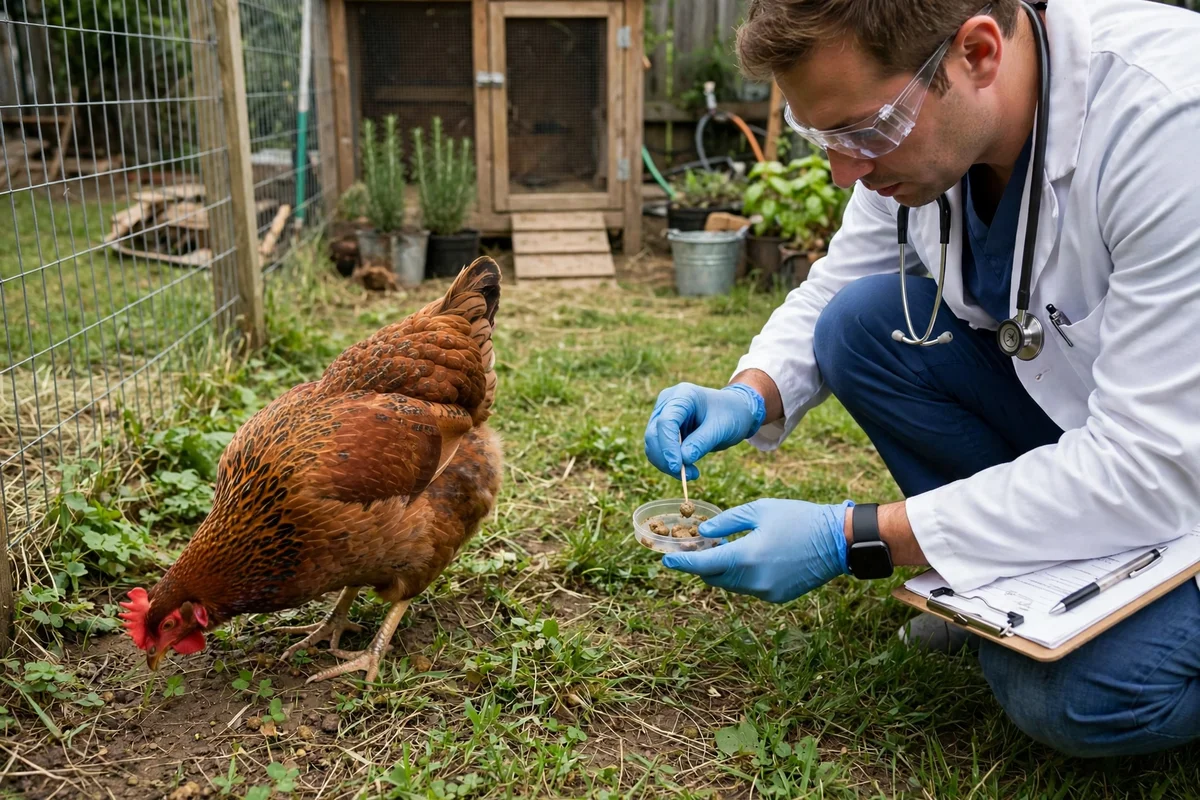
A vet diagnoses capillary worms with a faecal float test, where a dropping sample is mixed with a solution that makes the worm eggs float to the top so they can be seen under a microscope. The eggs are small and distinctive, and an experienced vet can tell them apart from roundworm, tapeworm, and gapeworm eggs.
Collect a fresh dropping sample from the bird, or a mixed sample from the flock, and take it to the vet the same day. Keep the sample cool and in a sealed container, and note which bird it came from and what symptoms you have seen. A single test can miss a light infection, so the vet may ask for more than one sample.
The vet will also check the bird's weight, comb colour, and general condition, and may ask about the flock's worming history and whether the birds free-range. A regular worming programme, based on dropping tests rather than guesswork, is the best way to keep capillary worms under control.
How capillary worms are treated
Capillary worms are treated with a wormer prescribed by a vet, usually a fenbendazole-based product given over several days. The exact drug, dose, and length of treatment depend on the species of worm and the severity of the infection, so do not guess the dose or use a wormer meant for another animal.
Use the Chicken Worming Dosage Calculator only with a vet's prescription and the product label.
A single dose is rarely enough, because the wormer kills the adult worms but not the eggs, and the eggs hatch over the following days. The vet will usually advise repeating the treatment after a week or two, and may ask for a follow-up dropping test to confirm the worms have cleared. Keep the bird isolated during treatment if the vet advises it.
Support the bird during treatment with fresh water, a complete feed, and a clean, dry pen. A bird that has lost weight needs time to recover, and it may take several weeks before laying returns to normal. Do not eat the eggs during the withdrawal period the vet advises, and follow the label instructions exactly.
Capillary worms or another worm?
Capillary worms are often confused with other worms, and the treatments differ, so it matters to tell them apart. Roundworms are thick, white, and visible in the droppings, and they live in the intestines. Tapeworms are flat and segmented, and they need an intermediate host such as a fly or a slug.
Gapeworms live in the windpipe and cause gasping and head shaking.
Capillary worms are thin and hair-like, and they live in the crop, the throat, and the intestines. They are too small to see in the droppings without a microscope, which is why a dropping test is needed. Our guides on roundworms in chickens and tapeworms in chickens cover the other common gut worms.
When the diagnosis is unclear, a dropping test is the answer. It is quick, inexpensive, and it tells you exactly which worms are present and how heavy the infection is. Guessing the worm type and treating blindly wastes time and can leave the real problem untreated.
Preventing capillary worms in chickens
Preventing capillary worms starts with the range. Rotate the run or the free-range area regularly, so the birds are not pecking at the same ground where worm eggs have built up. Keep the run dry, because worm eggs survive longer in damp soil, and remove droppings from the run and the coop regularly.
Control earthworms in the run by keeping the ground dry and by not overwatering, because earthworms are the intermediate host for capillary worms. That does not mean removing all earthworms, which are good for the soil, but it does mean not letting the birds gorge on them in a damp, worm-rich patch. Offer grit and a complete feed, so the birds are not eating soil to make up for a poor diet.
Test the droppings regularly, at least twice a year, and worm only when the test shows worms are present. Routine worming without testing builds resistance and wastes money. A vet can set up a testing schedule for your flock, and can advise on the right wormer and the right timing for your area.
Capillary worms or another worm
| Worm | Where it lives | Main signs |
|---|---|---|
| Capillary worm | Crop, throat, intestines | Weight loss, poor laying, hard to see |
| Roundworm | Intestines | Weight loss, visible white worms in droppings |
| Tapeworm | Intestines | Weight loss, flat segments in droppings |
| Gapeworm | Windpipe | Gasping, head shaking, stretching neck |
| Caecal worm | Caeca (blind gut) | Often no signs, carries blackhead |
Capillary worms are too small to see without a microscope. A dropping test is the only reliable way to confirm them and to tell them apart from other worms.
Sources: the worm identification and treatment guidance on this page follows the poultry parasite information published by the poultry.extension.org network and the University of Minnesota Extension poultry pages.
Related tools and guides
For more on gut worms, see Roundworms in Chickens and Tapeworms in Chickens.
Frequently asked questions
What are capillary worms in chickens?
Capillary worms are thin, hair-like roundworms that live in the crop, throat, and intestines of chickens. They are too small to see without a microscope. A light infection may show no signs, but a heavy one causes weight loss, a drop in laying, and a bird that eats well yet stays thin.
How do I know if my chicken has capillary worms?
The signs are gradual weight loss, a drop in egg laying, a pale comb, and a bird that eats normally but stays thin. Some birds develop diarrhoea or difficulty swallowing. The only reliable diagnosis is a dropping test by a vet, because the worms are too small to see.
How are capillary worms in chickens treated?
With a wormer prescribed by a vet, usually a fenbendazole-based product given over several days. The treatment is usually repeated after a week or two, because the wormer kills adult worms but not eggs. Do not guess the dose or use a wormer meant for another animal.
How do chickens get capillary worms?
By eating infected earthworms, which act as intermediate hosts, or by pecking at droppings containing worm eggs. Birds that free-range on damp ground, where earthworms are common, are at higher risk. Rotating the range and keeping the run dry helps prevent infection.
Can capillary worms kill a chicken?
A heavy infection can kill a bird, especially a young or weak one, through weight loss, poor absorption of food, and damage to the crop and intestines. Most infections are caught before that stage, because the bird loses weight and stops laying first. Regular dropping tests catch worms early.
About the author
John Walker is the founder of PeckCalc and has kept backyard chickens in Dallas, Texas since 2017. He started PeckCalc to give backyard keepers free calculators and guides with every figure traced to a university extension source.