
Chicken Blindness
 By John Walker · Backyard chicken keeper in Dallas, Texas since 2017
Chicken blindness means a bird has lost sight in one or both eyes, and it is more common than many keepers realise. The causes range from Marek's disease, which can turn the eye grey and destroy the iris, to ammonia fumes in a dirty coop, a peck to the eye, a vitamin A deficiency, and a respiratory infection that spreads to the eye. A blind chicken can still live a good life if its pen stays the same, its food and water stay in the same place, and it has a calm flock mate. This guide explains the causes, the signs that tell them apart, what a vet can do, and how to care for a blind bird.
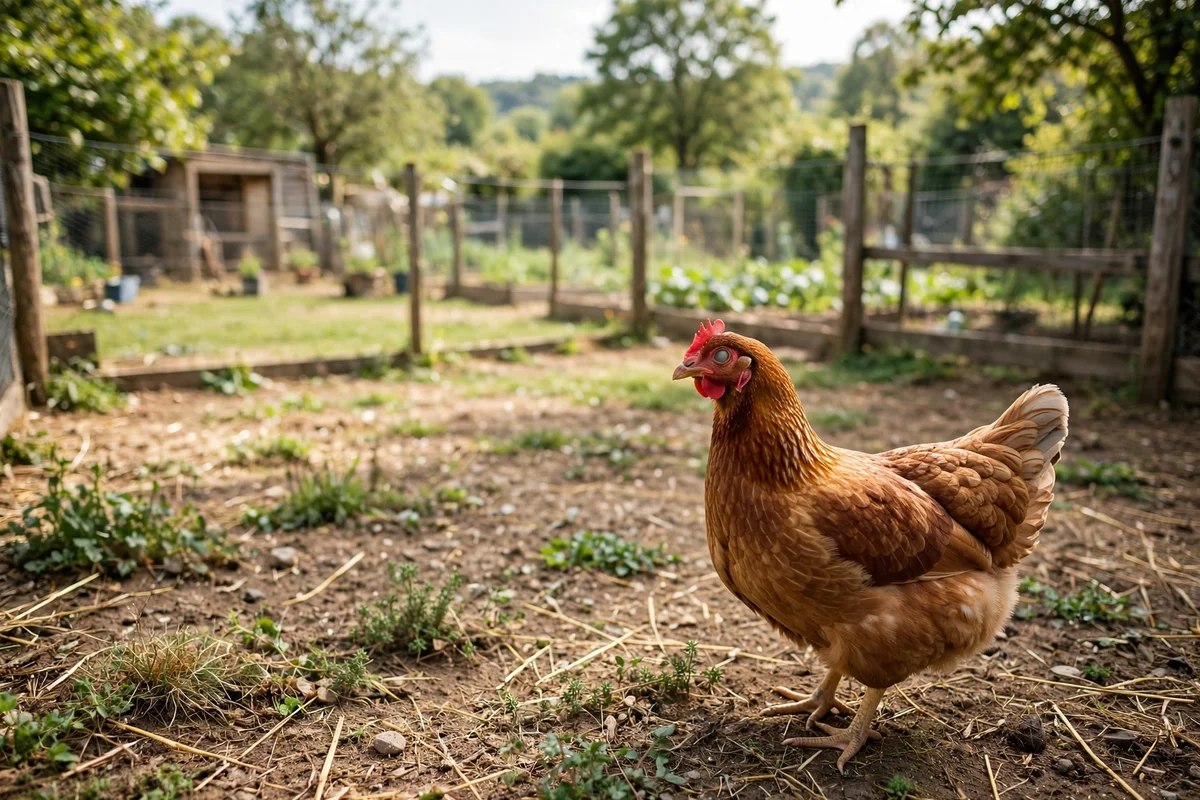
What causes chicken blindness?
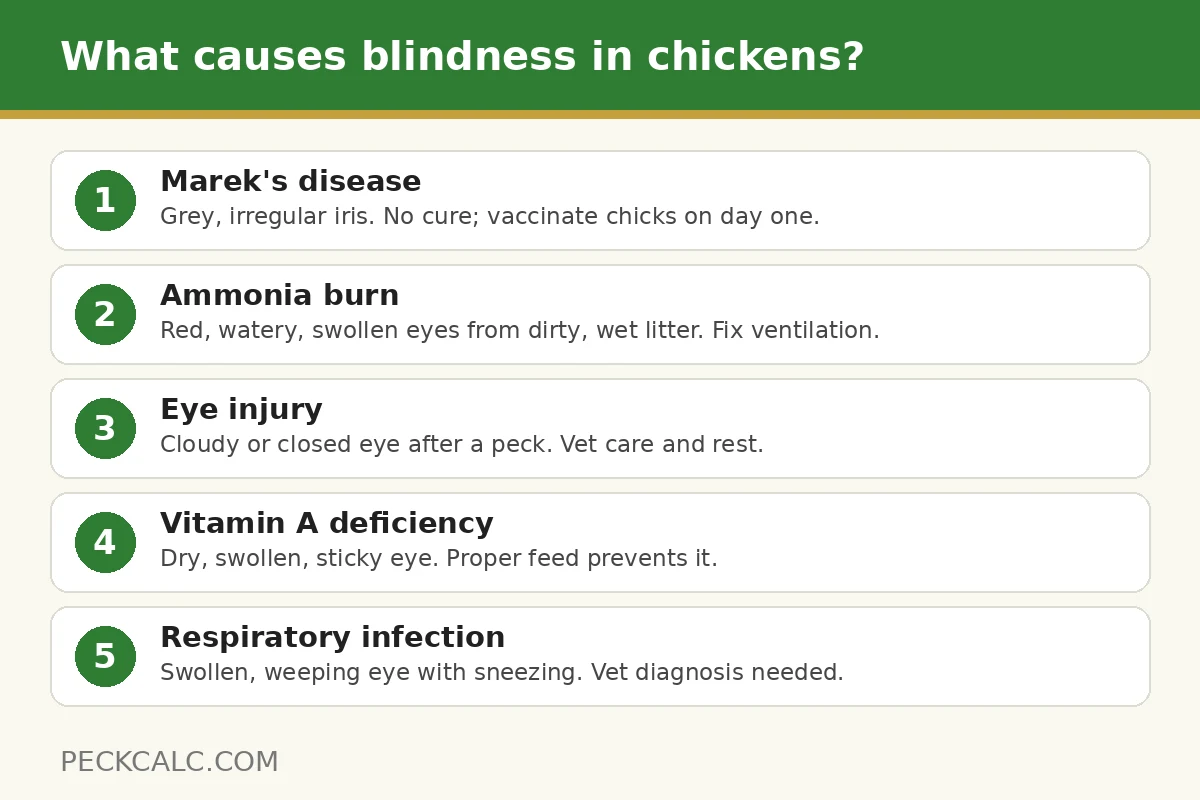
Blindness in chickens has five main causes, and each one leaves different clues. Marek's disease, a virus that attacks nerves and the eye, turns the iris grey and is the most common cause. Ammonia fumes from dirty, wet litter burn the eyes and the airways.
Injury, often a peck from another bird, can damage the eye directly. Vitamin A deficiency dries out the eye and the lining of the airways. And a respiratory infection can spread to the eye and close it with swelling.
Marek's disease is the cause a vet will think of first, because it is common and its eye sign is so clear: the coloured part of the eye, the iris, turns grey and the pupil becomes irregular. This is often called grey eye, and it usually affects one eye first, then the other. There is no cure for Marek's disease, but vaccination of chicks on day one prevents most cases.
Ammonia is a gas that builds up in a coop when droppings and wet litter are left to rot, and it burns the eyes, the throat, and the lungs. A coop that makes your eyes water when you open the door is already too high in ammonia for the birds, and chicks are more at risk than adults. Good ventilation and dry litter are the fix, not medicine.
Vitamin A deficiency is rare in birds fed a proper feed, but it can appear in flocks fed only scratch grains or table scraps. Vitamin A keeps the lining of the eye moist and healthy, and without it the eye dries out, swells, and can become infected. A varied diet with a proper layer feed and some greens prevents it.
How can I tell if my chicken is blind?
A blind chicken bumps into objects, misses food when it pecks, startles when you touch it, and walks slowly with its head held low. A bird that is blind in one eye will turn its good eye towards food and people, and may walk in circles or hold its head at an angle to see better.
Check each eye separately by holding the bird gently and looking at the eyes in good light. A healthy eye is bright, clear, and has a round pupil that shrinks in bright light. A grey or cloudy iris, a pupil that does not shrink, a swollen eyelid, or a discharge from the eye are all signs that something is wrong.
Watch how the bird behaves at feeding time. A blind bird may peck at the air above the feeder, miss the food, or wait until another bird starts eating and then follow the sound. A bird that is blind in both eyes will often stand still and call, waiting for a flock mate to guide it.
Do not confuse blindness with a simple eye infection. An infected eye is usually swollen, red, and weeping, and it may improve with treatment, while a blind eye from Marek's disease looks grey and quiet, with no swelling at all. The difference matters, because the treatment is completely different, and a vet can tell them apart.
Marek's disease and the grey eye
Marek's disease is a virus that spreads through dust and dander from infected birds, and it attacks the nerves, the organs, and the eye. In the eye it destroys the iris, turning it grey and irregular, and the pupil loses its round shape. This form is called ocular Marek's disease, and it is usually permanent.
A bird with grey eye may still see a little at first, but the sight usually fades over weeks, and the bird may also develop leg weakness or paralysis, because the same virus attacks the leg nerves. Not every bird with Marek's disease shows eye signs, and not every bird with eye signs has Marek's disease, so a vet should confirm the diagnosis.
There is no treatment for Marek's disease once a bird is infected. The defence is vaccination on the first day of life, before the chick meets the virus, and strict biosecurity, because the virus survives for months in dust and litter. Buy chicks from a hatchery that vaccinates, and keep new birds separate from older birds.
If you have a bird with a grey eye, separate it from the flock, because it may be shedding the virus in its dander. The bird can live with a grey eye if it is otherwise well, but it should not be bred from, and the coop should be cleaned and disinfected. Our guide on Marek's disease in chickens explains the disease in full.
| Cause | Key eye sign | Other signs | Can it be treated |
|---|---|---|---|
| Marek's disease | Grey, irregular iris | Leg weakness, weight loss | No, vaccinate chicks to prevent it |
| Ammonia burn | Red, watery, swollen eyes | Coughing, poor growth | Yes, fix ventilation and litter |
| Eye injury | Cloudy or closed eye, bleeding | Wound on the head or face | Yes, vet care and rest |
| Vitamin A deficiency | Dry, swollen, sticky eye | Pale comb, poor laying | Yes, proper feed and vet advice |
| Respiratory infection | Swollen, weeping eye | Sneezing, rattling breath | Yes, vet diagnosis and treatment |
Ammonia, injury and vitamin A deficiency
Ammonia is the most preventable cause of eye damage in chickens, and it comes from wet litter and droppings left in a poorly ventilated coop. The gas burns the eye surface and makes the bird blink, tear, and hold its eyes closed, and over time it can cause permanent damage.
If you can smell ammonia when you open the coop, the level is already too high for the birds.
Fix ammonia by cleaning out wet litter, adding fresh dry bedding, and opening vents so fresh air flows through the coop without a draught on the birds. Do not seal the coop tight in winter, because the birds need fresh air more than they need warmth, and a well-ventilated coop is a healthy coop.
An eye injury is usually a peck, and it often happens when a bird is bullied or when crested birds cannot see a peck coming. The eye may be cloudy, closed, or bleeding, and the bird will hold it shut. Separate the bird, keep the eye clean with plain water, and call a vet, because an injured eye can become infected fast.
Vitamin A deficiency dries out the eye and the airways, and it shows up as a swollen, sticky eye with a cheesy discharge. It is rare in birds fed a proper layer feed, but common in flocks fed only grains or scraps. A vet can confirm it and advise on a feed change, and our guide on vitamin deficiency in chickens covers the signs and the fix.
Eye infections and respiratory disease
A swollen, closed, or weeping eye is often an eye infection, and it can be caused by bacteria, a virus, or a respiratory disease that has spread to the eye. The bird may also sneeze, have a runny nose, or breathe with a rattle, and the eye may be crusted shut in the morning.
Do not try to treat an eye infection with human eye drops, because they may not be safe for birds and they may not treat the cause. A vet can look at the eye, test for the germ, and prescribe the right treatment, which may be eye drops made for animals, or medicine in the water for the whole flock.
Separate a bird with a weeping eye from the flock, because respiratory diseases spread fast through a flock, and a bird with a swollen eye may be shedding germs. Keep the bird warm and dry, offer water and soft food, and clean the eye gently with plain warm water and a soft cloth, wiping from the inner corner outwards.
Our guide on chicken eye infection treatment explains the first steps in detail, and our guide on why is my chicken's eye swollen helps you work out the likely cause. Both are worth reading before you decide what to do next.
How to care for a blind chicken
A blind chicken can live well if its world stays the same, so keep the pen layout fixed and put food and water in the same place every day. Do not move feeders, add new obstacles, or change the pen, because a blind bird builds a map of its pen in its head and relies on it.
Use feeders and drinkers the bird can find by touch and sound, and tap the feeder or call the bird at feeding time so it can follow the sound. A shallow dish on the ground is easier for a blind bird than a hanging feeder, and a nipple drinker is harder to find than an open dish.
Keep a calm flock mate with the blind bird, because chickens learn from each other and a calm friend will guide a blind bird to food and water. Avoid aggressive flock mates, which may peck a blind bird that cannot see them coming, and avoid moving the blind bird to a new pen, where it will be lost.
Check the bird daily for weight loss, because a blind bird may eat less than it needs. Offer tempting food such as scrambled egg, and watch that it is actually eating. A blind bird that keeps its weight, lays, and moves around its pen confidently is doing well, and it deserves the same care as any other member of the flock.
A note on health: this guide covers general flock behaviour and management only. If a bird shows signs of illness or injury, separate it, keep it warm and dry, and consult a veterinarian — ideally one experienced with poultry — before treating it.
Sources: poultry.extension.org and University of Minnesota Extension, poultry resources.
Related tools and guides
For more on the same topic, see Marek's Disease in Chickens.
Frequently asked questions
What is the most common cause of blindness in chickens?
Marek's disease is the most common cause of blindness in chickens, because it can turn the eye grey and destroy the iris. Ammonia fumes, injury, vitamin A deficiency, and respiratory infection can also blind a bird.
Can a blind chicken live a normal life?
A blind chicken can live well in a familiar pen if food and water stay in the same place every day. Keep the layout fixed, use a calm flock mate, and avoid moving the bird to a new pen.
What does Marek's disease do to a chicken's eyes?
A grey or cloudy eye, often in only one eye, is the classic sign of Marek's disease. It is often called grey eye, and it is usually permanent.
Is a swollen eye a sign of blindness?
Yes, a swollen, closed, or weeping eye can be an eye infection or a respiratory infection, and it needs a vet. Our guide on chicken eye infection treatment covers the first steps.
How do I care for a blind chicken?
Keep the pen layout fixed, put food and water in the same spot every day, use feeders the bird can find by touch and sound, and keep a calm flock mate with it. Avoid sudden changes and new obstacles.
About the author
John Walker is the founder of PeckCalc and has kept backyard chickens in Dallas, Texas since 2017. He started PeckCalc to give backyard keepers free calculators and guides with every figure traced to a university extension source.