
Chicken Broken Toe Treatment: Splinting and Recovery
 By John Walker · Backyard chicken keeper in Dallas, Texas since 2017
A broken toe in a chicken shows up as a toe that bends at an odd angle, swells, or will not bear weight. Many broken toes heal well with a simple tape splint, rest, and a dry pen, as long as the break is caught early. A toe that is badly bent, cold, or not improving needs a poultry vet.
Vet note: This guide is general information, not veterinary advice. A sick or injured bird can go downhill fast, so if symptoms are severe, spreading, or not improving within a day, contact a poultry vet. Never give medication meant for people or other animals without a vet's guidance.
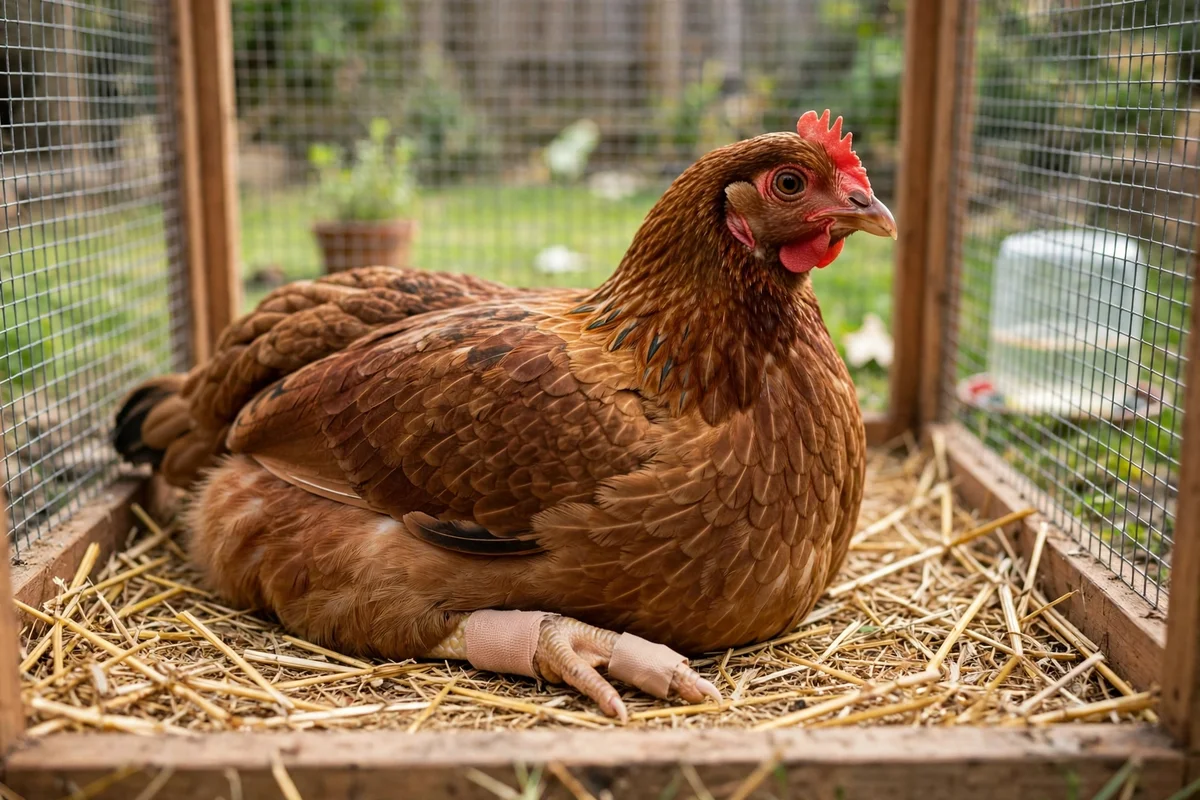
How to tell if a chicken has a broken toe
A broken toe usually looks swollen, bent at an unusual angle, or floppy compared with the other toes. The bird will limp, hold the foot up, or refuse to put weight on it. Sometimes the toe is only slightly crooked and the main sign is a limp that does not improve over a day or two.
Feel the toe gently with your thumb and forefinger, comparing it with the same toe on the other foot. A break often feels like a small bump or a step in the bone, and the bird will flinch when you touch the sore spot. A toe that is hot and swollen all over is more likely infected or sprained, while a single bent joint points toward a break.
Broken toes happen when a bird jumps from a high roost onto a hard floor, gets a toe caught in wire or a gap, or is stepped on by a larger bird. Chicks are at risk too, especially in brooders with wire floors or gaps between boards. Check the floor and roost for hazards once you have found the injury, so it does not happen again.
How to splint a broken chicken toe
A simple tape splint works well for most broken toes. Straighten the toe gently into its normal position, then tape it to the toe beside it with a narrow strip of medical tape, or tape a small flat splint such as a trimmed popsicle stick or a piece of stiff card along the underside of the toe.
The tape should be snug, not tight.
Wrap the tape around the toe and its neighbour two or three times, leaving the tip of the toe visible so you can check the colour. The toe tip should stay warm and pink. If it turns cold, blue, or swollen, the tape is too tight and must come off at once. A light wrap of vet wrap over the tape can keep it clean, but do not wrap the whole foot.
Change the splint every three to four days, or sooner if it gets wet or dirty. Each time you change it, check the toe for swelling, smell, or sores where the tape sat. Most broken toes need the splint for two to three weeks. Keep the bird in a small, dry pen with food and water close by while it heals.
Caring for a chicken with a broken toe
Rest is the main treatment after splinting. Keep the bird in a small pen with soft, dry bedding and no roost to jump from, so the toe is not loaded while it heals. A low-sided box or a dog crate works well, with the feeder and drinker within a few steps of where the bird rests.
Check the splint daily, even if you only change it every few days. Tape slips, gets wet, and gets pecked at, and a slipped splint can rub a sore or let the toe heal crooked. If the bird is pecking at the tape, a light sock or a small piece of vet wrap over the foot can help, but remove it daily to check the skin underneath.
Watch the bird's appetite and droppings, because a bird that stops eating is in more pain than a simple toe break explains. Offer the usual layer feed and fresh water, and keep the pen clean and dry. Our guide on chicken broken leg treatment covers the same rest-and-splint approach for a more serious leg injury.
Broken toe or something else?
Not every limping bird has a broken toe. A sprain looks similar but the toe is straight and the swelling is spread through the foot rather than focused on one joint. Bumblefoot causes a dark scab or swelling on the sole of the foot, and scaly leg mites cause raised, crusty scales up the leg rather than a bent toe.
Marek's disease can cause a leg to go limp, but it usually affects the whole leg rather than one toe, and the bird may show other signs such as a drooping wing or a grey eye. A vitamin deficiency can cause weak legs in chicks, but it usually affects both legs at once. If the problem is in one toe only, a break or a sprain is the most likely cause.
When the diagnosis is unclear, rest and a splint are still a reasonable first step for a bent toe, but do not wait more than a few days if the bird is not improving. A vet can take an X-ray and tell you in one visit whether the bone is broken, and whether the splint is in the right place.
How long does a broken toe take to heal?
Most broken toes in adult chickens heal in two to three weeks with a splint and rest. The bird should start putting weight on the foot within a few days, even with the splint on, and the limp should fade steadily.
If the limp is worse after a week, or the toe still looks bent when the splint comes off, the break may need a vet to reset it.
Chicks heal faster than adults, often in ten days to two weeks, because their bones are still growing. Older hens heal more slowly, especially if they are underweight or laying heavily. Keep the bird on a complete layer feed during recovery, because protein and calcium support bone healing just as they support egg laying.
After the splint comes off, give the bird a few more days in a small pen before it rejoins the flock, and watch it walk on flat ground first. A toe that heals slightly crooked is usually fine as long as the bird walks normally and can roost. If the bird keeps favouring the foot, put the splint back on for another week and ask a vet.
When a broken toe needs a vet
A broken toe needs a vet when the toe is badly bent or pointing the wrong way, when the skin is broken over the fracture, when the toe is cold or blue, or when the bird will not eat or drink.
An open fracture can become infected quickly, and a toe that has lost its blood supply will not heal with a splint alone.
A vet can X-ray the foot, reset the bone properly, and splint it so it heals straight. They can also prescribe pain relief and antibiotics if there is an open wound or infection. Birds hide pain well, so a bird that is hunched, fluffed up, and off its food is telling you it needs help.
If the toe does not improve after a week of home care, or the swelling spreads up the foot or leg, book a vet visit rather than waiting longer. A week of rest will not harm the bird, but a break that heals in the wrong position is much harder to fix later than one that is reset early.
Broken toe or a lookalike problem
| Problem | What you see | What to do |
|---|---|---|
| Broken toe | Toe bent at an angle, swollen at one joint | Splint with tape, rest, check in a week |
| Sprained toe | Toe straight, foot swollen all over | Rest, no splint needed, improves in days |
| Bumblefoot | Dark scab or swelling on the sole | Soak, clean, vet advice, see bumblefoot guide |
| Scaly leg mites | Raised crusty scales up the leg | Treat for mites, oil the legs |
| Marek's disease | Whole leg limp, often with other signs | Vet visit, isolate the bird |
| Vitamin deficiency | Both legs weak, often in chicks | Check feed, vet advice |
One bent toe usually means a break or a sprain. A whole limp leg, or both legs affected at once, points to a different problem.
Sources: the splinting and rest guidance on this page follows the poultry injury care published by the poultry.extension.org network and the University of Minnesota Extension poultry pages.
Related tools and guides
For more on leg injuries, see Chicken Broken Leg Treatment and Why Is My Chicken Limping?.
Frequently asked questions
How do you splint a chicken's broken toe?
Straighten the toe gently, then tape it to the neighbouring toe with a narrow strip of medical tape, or tape a small flat splint along its underside. Keep the tape snug, not tight, and leave the toe tip visible so you can check it stays warm and pink. Change the splint every three to four days.
How long does a broken chicken toe take to heal?
Most broken toes heal in two to three weeks with a splint and rest. Chicks often heal faster, in ten days to two weeks. The bird should start putting weight on the foot within a few days, and the limp should fade steadily. If it is worse after a week, see a vet.
Can a chicken walk with a broken toe?
Many chickens will walk on a splinted foot, though they limp at first. Keep the bird in a small pen with soft bedding, food and water close by, and no high roost to jump from. A bird that refuses to stand at all may have a more serious injury and needs a vet.
Should I tape a chicken's broken toe to another toe?
Yes, taping the broken toe to the healthy toe beside it is a simple and effective splint. It holds the toe straight while it heals and still lets the bird walk. Make sure the tape is not tight, and check the toe tip daily for colour and warmth.
What happens if a chicken's broken toe heals crooked?
A slightly crooked toe is usually fine if the bird walks normally and can roost. If the toe is badly bent, the bird keeps limping, or the foot swells again, a vet can reassess it. A break that heals in the wrong position is harder to fix later, so get vet advice early if the angle looks wrong.
About the author
John Walker is the founder of PeckCalc and has kept backyard chickens in Dallas, Texas since 2017. He started PeckCalc to give backyard keepers free calculators and guides with every figure traced to a university extension source.