
Chicken Comb Bleeding: First Aid & Causes
 By John Walker · Backyard chicken keeper in Dallas, Texas since 2017
Chicken comb bleeding looks alarming because a comb is full of tiny blood vessels, so even a small nick can throw a surprising amount of blood across the coop. The good news is that most comb bleeds stop on their own with steady pressure, and the bird is usually in far less danger than the scene suggests. This guide walks through first aid step by step, explains why combs bleed so freely, lists the common causes from pecking order fights to frostbite, and sets out the warning signs that mean a vet visit rather than a home fix.
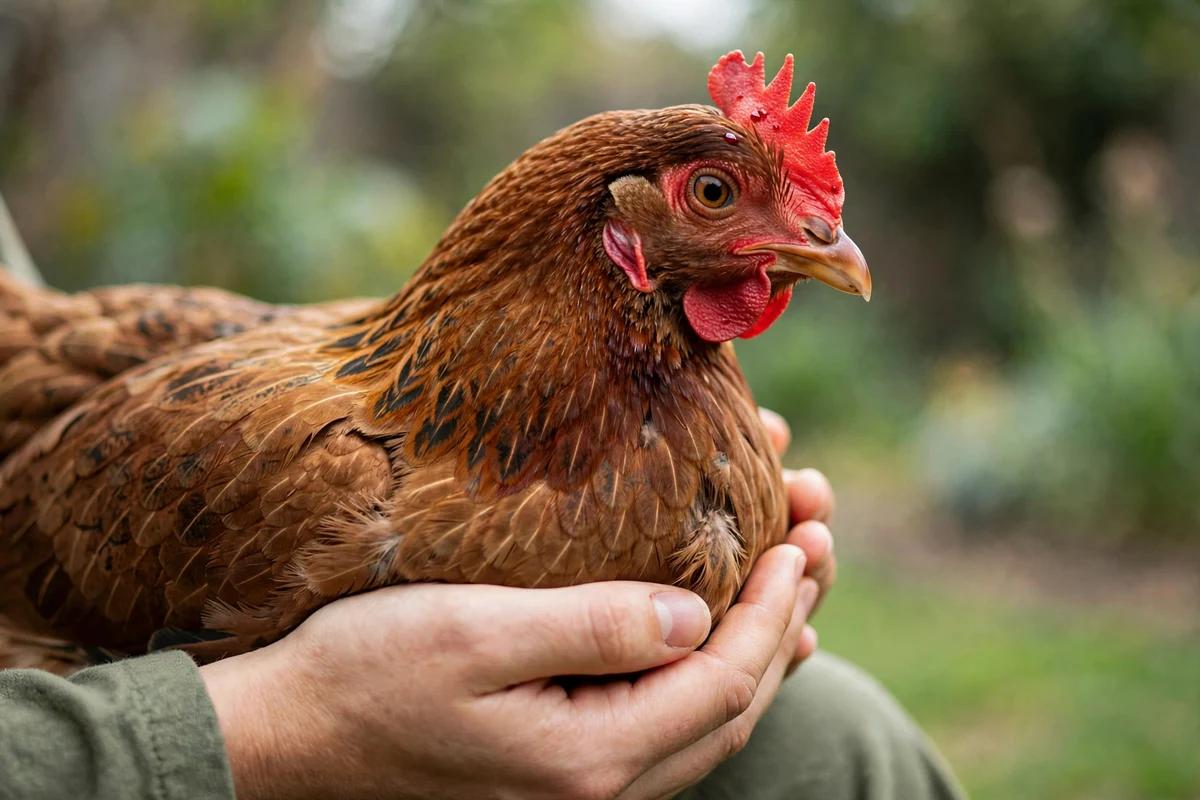
Chicken comb bleeding: what to do first
Chicken comb bleeding is usually stopped by holding clean gauze or a cloth firmly against the comb for five to ten minutes without lifting it to peek. A comb bleeds heavily because it is packed with small blood vessels close to the surface, so the amount of blood looks far worse than the injury usually is.
Keep the bird calm and still, apply steady pressure, and only then check whether the bleeding has stopped.
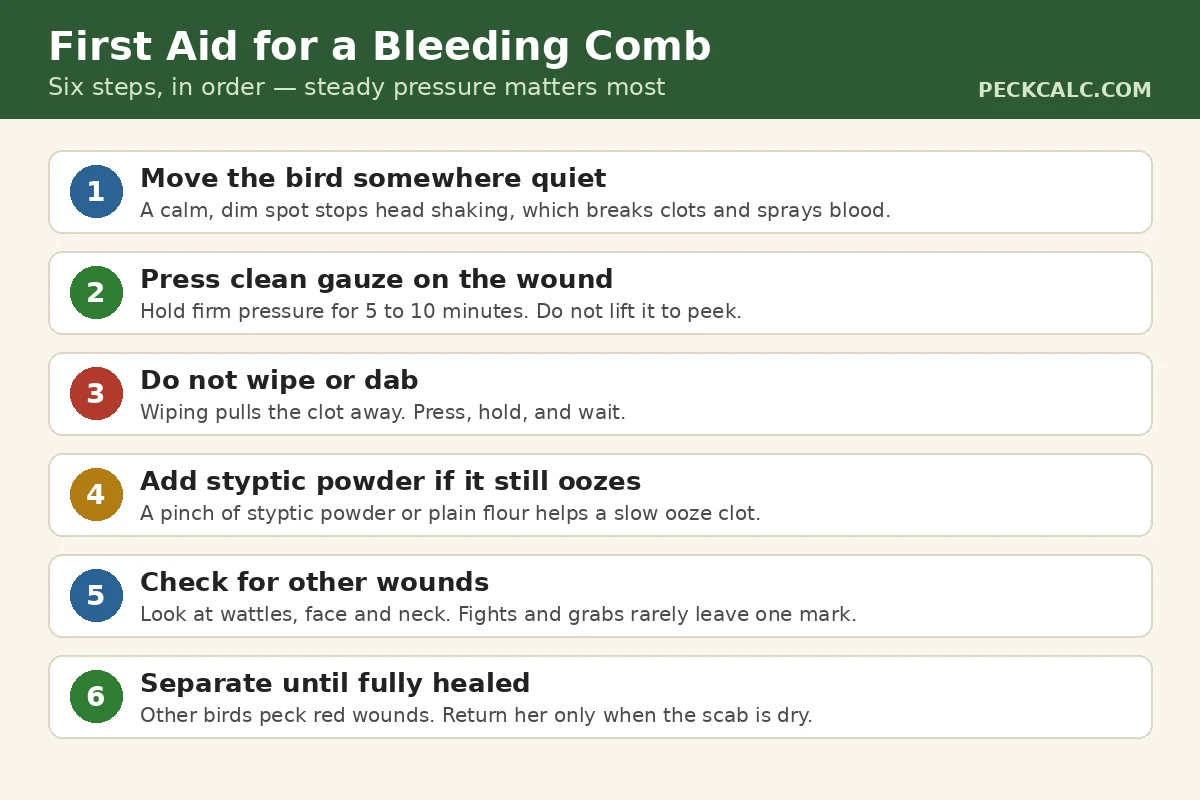
Move the bird to a quiet, dim place before you start. A stressed hen will shake her head and spray blood, which makes the injury look worse and can restart a clot that was forming. Wrap her loosely in a towel if she struggles, with her head free, and work with a helper if one is available. Wash your hands first, and gather gauze, clean cloth, styptic powder or plain flour, and a small bowl of clean water before you touch the bird.
Press the gauze against the wound and hold it there. Do not dab or wipe, because wiping pulls away the clot that is trying to form. After five minutes, lift the gauze slowly. If blood is still flowing, press a fresh piece of gauze in place for another five to ten minutes. A pinch of styptic powder or plain flour pressed onto a slow ooze can help it clot. Once the bleeding stops, leave the comb alone and keep the bird somewhere clean and dry for a few hours.
Check the rest of the bird while you have her in hand. Look for other wounds on the wattles, face, and neck, because a fight or a predator grab rarely leaves a single mark. Feel the comb for heat or swelling, and look at the colour of the rest of the comb: a pale comb can mean the bird has lost more blood than expected, while a dark or black tip points to frostbite rather than a fresh cut.
Why do chicken combs bleed so much?
A chicken comb bleeds so much because it is a thin flap of skin filled with a dense network of blood vessels. The comb helps a chicken shed heat, and to do that job it needs a rich blood supply near the surface.
That design is useful in summer, but it means there is very little tissue between a scratch and a blood vessel. Even a peck that barely breaks the skin can open a vessel and bleed freely.
The comb has no thick layer of muscle or fat to press a vessel closed from inside, the way a cut on a leg might close. Blood has to clot at the surface, and a hen shaking her head can break that clot again and again. That is why a comb injury can bleed on and off for an hour even when the cut itself is tiny. It is also why pressure and stillness matter more than any powder or spray.
Breed and comb type change how bad a bleed looks. Large single combs, the tall upright combs on Leghorns and Rhode Island Reds, catch on wire, perches, and other birds more easily than small pea combs or rose combs. Roosters bleed more often than hens because they fight, and their combs are larger. Cold weather makes the problem worse: a frostbitten comb tip turns dark, dries out, and then bleeds when the dead tissue cracks or is pecked.
Despite the drama, a healthy adult chicken can lose a small amount of blood from a comb and recover fully. The risk is not usually the volume of blood from one cut. It is the bird being pecked again once she goes back to the flock, because other chickens are drawn to blood and will peck a red wound. That is the main reason to separate a bleeding bird until the wound has sealed.
Common causes of a bleeding comb
Pecking order fights are the most common cause of a bleeding comb. When a new bird joins the flock, or when two hens contest the top spot, they peck at the head and comb. The comb is the easiest target because it stands up and moves.
A fight that lasts a minute can leave several small cuts, and the loser often comes away with a torn comb edge that bleeds for a while. Fights get worse in a crowded coop, in winter when birds are shut in, and when feeders or drinkers are too few.
Wire and sharp edges are the second common cause. A comb can catch on a torn piece of hardware cloth, a bent fence wire, or a rough perch edge. Check the coop for sharp points, exposed screw tips, and rusted wire after any unexplained comb bleed. Roosts made from rough-sawn timber with splinters can do the same damage night after night. A comb that bleeds every few days without any fighting is often a housing problem, not a flock problem.
Frostbite causes comb bleeding in cold weather. The tips of a large comb freeze first, turning pale, then dark and dry. The dead tissue cracks, and the crack bleeds. Frostbite is common in damp, poorly ventilated coops, because moisture in the air makes the cold bite harder. A light smear of petroleum jelly on a large comb before a cold snap can reduce the risk, but ventilation matters more: dry air at a low temperature is safer than damp air at a milder one.
Disease can also make a comb bleed. Fowl pox leaves scabs on the comb that bleed when pecked or knocked. Favus, a fungal infection, leaves pale crusts on the comb that can crack and bleed. Mites and lice make birds scratch and peck at their own heads. If a comb bleed comes with scabs, crusts, or a bird that seems unwell in other ways, the cause may be illness rather than injury, and the bird needs a closer look.
| Bleeding | What you see | What to do |
|---|---|---|
| Light ooze | Slow drips, bird calm | Pressure 5 minutes, then watch |
| Steady flow | Blood runs down the face | Pressure 10 minutes, styptic powder if needed |
| Won't stop in 20 minutes | Flow continues despite pressure | Vet: stitch or cautery needed |
| Bird pale or weak | Pale comb, sitting, eyes closed | Keep warm, vet urgently |
| Dark, dry comb tip | Black tip, cracking | Frostbite: protect from cold, vet if infected |
When to call a vet for a bleeding comb
Call a vet if the bleeding does not stop after twenty minutes of steady pressure. A bleed that keeps flowing despite pressure can mean a deeper tear, a clotting problem, or a cut through a larger vessel at the base of the comb.
A vet can place a stitch or use a cautery tool to seal the vessel, which is quick and far kinder than letting the bird keep bleeding. Do not wait for the bird to go pale or weak before calling.
Call a vet if the bird is weak, pale, or unsteady after the bleed. A pale comb and wattles, a bird that sits with her eyes closed, or a bird that will not eat or drink suggests she has lost more blood than a comb nick should cause, or that something else is wrong. Young birds and small bantams have less blood to spare, so they need help sooner. Keep the bird warm and offer water with a little sugar while you arrange the visit.
Get vet help if the wound looks infected after a day or two. Signs of infection are swelling, heat, a bad smell, or yellow discharge around the cut. A comb wound can also form an abscess if dirt was driven into it. A vet can clean the wound properly and prescribe an antibiotic if one is needed. Never start a leftover antibiotic from another animal, because the dose and the drug may be wrong for a chicken, and some drugs have egg withdrawal rules.
Any comb injury caused by a predator needs a vet even if the bleeding stops, because predator bites drive bacteria deep into tissue. A bird that was grabbed by a dog, cat, or raccoon can look fine and then die within a day or two from infection. Our guide on raccoon attack chicken injuries explains the shock and puncture wound protocol in full.
How to prevent comb injuries
Give the flock enough space and enough feeders. Crowding is the main driver of pecking, and a coop that meets the minimum space per bird still produces fights if the birds are bored or competing for food. Our Chicken Coop Size Calculator works out the space your flock needs.
Add a second feeder and drinker so a dominant hen cannot guard the only food source, and give the birds something to peck at, such as a hanging cabbage or a pile of leaves.
Remove sharp edges from the coop and run. Run a hand along every perch, nest box edge, and wire joint, and file or cover anything sharp. Replace torn hardware cloth rather than patching it with twisted wire ends. Use smooth, rounded perches about two inches wide, and avoid chicken wire for the run, because its thin wire and large gaps catch combs and let predators reach through. Welded wire or hardware cloth with small openings is safer.
Protect large combs in winter. Improve ventilation so moist air leaves the coop, and keep the roost area free of draughts at bird level. A thin smear of petroleum jelly on a big single comb before a hard freeze helps, but it is a small extra, not a fix for a damp coop. Birds that have already suffered frostbite will have a rounded, scarred comb tip, and they are more likely to bleed again in the next cold snap.
Separate a bird whose comb is still healing. Other chickens peck at red wounds, and a healed-looking scab can be reopened in seconds. Keep the bird where she can see and hear the flock but cannot be pecked, until the wound is fully closed and the red colour has faded. A blue or purple wound spray can hide the red and reduce pecking, but it is not a substitute for separation when the flock is aggressive.
What not to do with a bleeding comb
Do not use hydrogen peroxide on a comb wound. It damages the new tissue that is trying to close the cut, and it slows healing. Clean water or a mild saline rinse is enough. Do not use alcohol either, because it stings, stresses the bird, and damages tissue.
If the wound is dirty, rinse it gently with clean water and pat it dry before applying pressure.
Do not put the bird straight back with the flock while the wound is still red and wet. The other birds will peck at it, and a small cut can become a serious wound in minutes. Even a calm flock will investigate blood. Wait until the bleeding has fully stopped and a dry scab has formed, and watch the bird for an hour after she goes back. If she is pecked, separate her again.
Do not cut off a torn piece of comb yourself. A flap of comb that is still attached will often heal back in place, and cutting it off creates a bigger wound and more bleeding. If a large flap is hanging or the comb is badly torn, a vet can trim it cleanly and stop the bleeding properly. At home, your job is pressure, cleanliness, and patience, not surgery.
Sources: poultry.extension.org
Related tools and guides
For more on the same topic, see Chicken First Aid Kit & Common Injuries.
Frequently asked questions
How do I stop a chicken comb from bleeding?
Hold clean gauze firmly against the comb for five to ten minutes without lifting it to check. Do not wipe the wound, because wiping removes the clot. A pinch of styptic powder or plain flour on a slow ooze can help. If it still bleeds after twenty minutes of pressure, the bird needs a vet.
Why is my chicken's comb bleeding so much?
A comb is a thin flap of skin packed with small blood vessels near the surface, so even a tiny nick bleeds freely. Head shaking breaks the clot again, which makes the bleeding last longer. The amount of blood usually looks far worse than the injury is, but keep the bird still and apply pressure.
Will a bleeding comb heal on its own?
Yes, most small comb cuts heal on their own once the bleeding stops and the bird is kept away from flockmates that would peck the wound. A dry scab should form within a day. If the wound swells, smells bad, or leaks yellow discharge, it is infected and needs a vet.
Can I put Neosporin on a chicken's comb?
A plain triple antibiotic ointment without pain relief can be used thinly on a clean comb cut, but avoid products with painkillers such as lidocaine or pramoxine, which are not safe for birds. In most cases pressure and cleanliness are enough, and ointment is not needed.
Does frostbite make a chicken's comb bleed?
Yes. Frostbite kills the comb tip, which turns dark and dry, then cracks and bleeds. It happens most in damp, poorly ventilated coops. Improve ventilation, keep the roost free of draughts, and protect large combs with a thin smear of petroleum jelly before hard freezes.
About the author
John Walker is the founder of PeckCalc and has kept backyard chickens in Dallas, Texas since 2017. He started PeckCalc to give backyard keepers free calculators and guides with every figure traced to a university extension source.