
Easter Egger Chickens: Breed Profile and Care Guide
 By John Walker · Backyard chicken keeper in Dallas, Texas since 2017
Easter Egger chickens are the backyard flock's wildcard: friendly, hardy hybrid hens that lay blue, green or olive eggs, typically 200–250 a year, and look different from bird to bird. They are not a recognised breed at all, but a type of chicken carrying the blue-egg gene, which is exactly why they are so popular: every hen is a surprise, and almost every one is a sweet, easygoing bird.
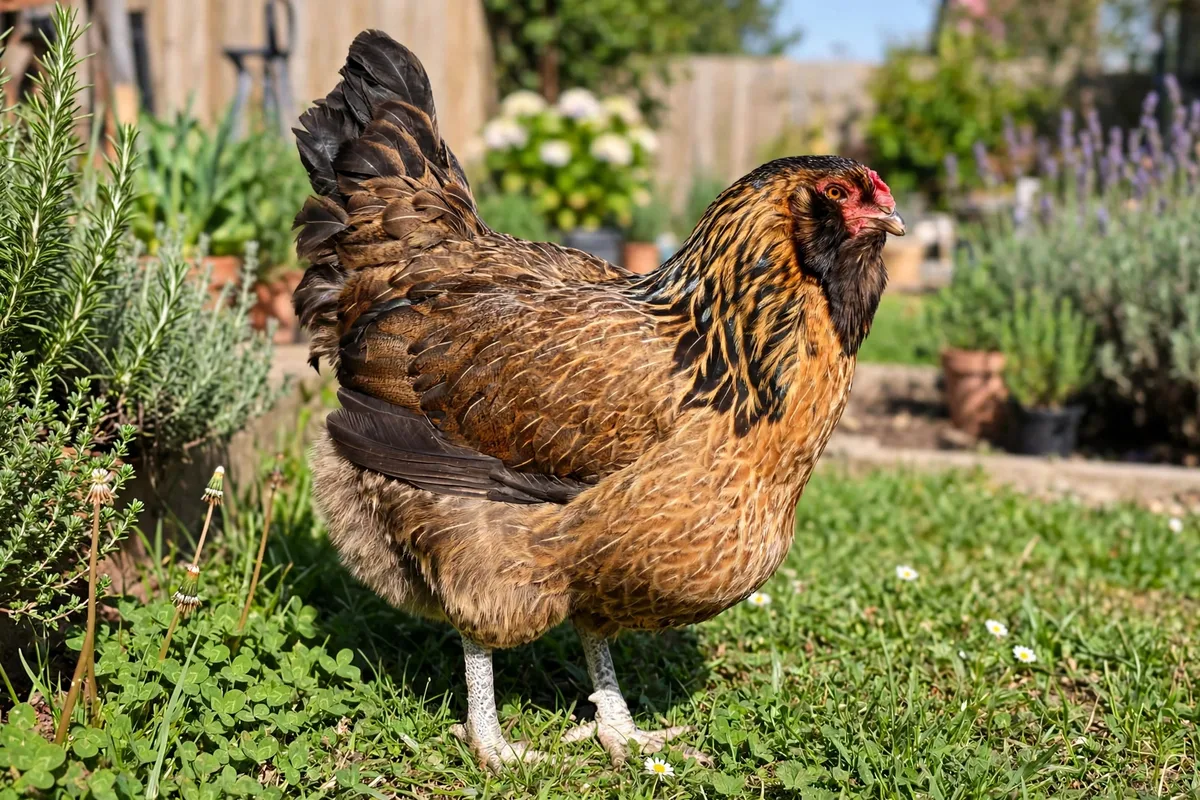
What is an Easter Egger chicken?
An Easter Egger chicken is a mixed-breed hen that carries the gene for blue eggshells, usually from Ameraucana or Araucana ancestry, crossed with another breed. Because Easter Eggers do not breed true to a written standard, the American Poultry Association has no standard for them and does not recognise them as a breed.
No two Easter Eggers look exactly alike. They may have beards and muffs, pea combs and slate or greenish legs, but none of those traits is guaranteed, and plumage can be almost any colour or pattern. Hens typically weigh 4–5 lb and roosters 5–6 lb, making them medium-sized birds.
Easter Eggers are often sold as Ameraucanas or Araucanas, but those are separate, standardised breeds with defined traits. If a hatchery sells a bird as an Ameraucana at a low price with no pedigree, it is almost certainly an Easter Egger, and that is fine, so long as you know what you are buying.
Easter Egger temperament
Easter Eggers have a well-earned reputation as friendly, easygoing hens. Hatcheries describe them as exceptionally friendly and usually good with children, and keepers report curious, alert birds that are active foragers without being flighty. They are one of the easiest hybrid types to keep, and they settle quickly into a new flock.
They tend to rank mid to low in the pecking order, which means they rarely bully other birds, though they can be picked on by more assertive breeds in a small run. They adapt well to free-ranging and to confined runs, and they settle into a mixed flock without much drama.
Because they are mixed, personality varies more than in a standardised breed: most hens are sweet, while roosters range from mellow to pushy. Handle chicks gently from a young age and they usually grow up tame, curious and happy to follow you around the yard.
Eggs and laying: how many eggs do Easter Eggers lay?
Easter Egger hens lay 200–250 blue, green or olive eggs a year, or about four to five a week in their prime, though sources give a wider range of 150–280 depending on the line. Productive hatchery lines are at the upper end, and individual birds vary more than in a standardised breed.
Each hen lays one shell colour for life, set by her genetics: blue, green, olive, and sometimes pink or cream, with green the most common. The exact shade is a surprise until she starts laying at 18–24 weeks old, which is part of the fun, and part of the reason to buy several hens if you want a range of colours.
The blue colour comes from a pigment laid down through the whole shell as it forms, so the inside of the shell is blue too. A green egg is a blue shell with a brown pigment coating on top. Use the Egg Production Calculator to work out how many hens your household needs.
Housing and space for Easter Eggers
Easter Eggers need about 3–4 square feet of coop floor per bird and 8–10 square feet of run, with roosts at a comfortable height for a medium bird. They are hardy in both cold and heat, and they do well in a run or on free range, so they suit most backyards.
They are active foragers that enjoy ranging and will cover a good amount of ground, but they are not strong fliers, so a fence of about 4–5 feet is usually enough. Give them a dust bath area and some cover from hawks, since their curiosity can take them into open ground.
Easter Eggers are rarely broody, which means they keep laying steadily instead of stopping to sit, and it also means they will not hatch their own chicks. Check the Chicken Breed Size Chart to compare their medium size with heavier breeds before planning nest boxes.
Feeding Easter Eggers
Easter Eggers do well on a standard layer feed of about 16 percent protein once laying, with grower feed before that and chick starter for the first six to eight weeks. A laying hen eats roughly a quarter of a pound of feed a day, and active foragers will find insects and greens on range.
Offer oyster shell in a separate dish so hens can take extra calcium for strong shells, and keep fresh water available at all times. Because Easter Eggers are medium birds, they are less prone to obesity than heavy breeds, but treats and scratch grains should still be limited to about a tenth of the diet.
Feed is the same as for any laying flock, and there is no special diet for coloured eggs: shell colour is set by genetics, not by feed, and no supplement will change the colour a hen lays. A balanced ration, clean water and enough daylight are what keep the eggs coming.
Health and common problems
Easter Eggers are hardy birds that commonly live five to eight years with good care, and hybrid vigour works in their favour: mixed-breed birds are often healthier and longer-lived than heavily inbred purebreds. They have no major breed-specific weakness, and that vigour is one reason they are so widely recommended to new keepers.
Their main risks are the ordinary ones of a backyard flock: mites, lice, worms and respiratory illness in damp housing. Because they are curious and active, they can also get into trouble free-ranging, so give cover from hawks and a secure coop at night.
Routine care covers most problems: vaccinate chicks against Marek's disease, keep bedding dry, provide a dust bath, and quarantine new birds for at least two weeks. Separate any bird that stands apart, goes off feed, or stops laying suddenly, and check it promptly.
Are Easter Eggers right for you?
Easter Eggers suit keepers who want colourful eggs, a friendly bird and an easy first flock. They are one of the best choices for beginners and families, and they fit suburban backyards, small farms and mixed flocks equally well, asking for little more than the standard care any laying flock needs.
They are a poorer fit only if you want a predictable bird that breeds true, since no two Easter Eggers look alike and their chicks will not match their parents, or if you want to show birds, since they have no standard. If you want guaranteed blue eggs from a recognised breed, compare them with the Ameraucana chickens; if you want olive eggs specifically, look at the Olive Egger chickens.
Buy from a reputable hatchery and expect to pay a modest price for chicks, since Easter Eggers are widely available. Buy several pullets if you want a range of egg colours, because each hen lays only one colour for life.
Buying Easter Egger chickens: chicks, pullets and what to check
Buy Easter Eggers from a reputable hatchery, where they are widely available and modestly priced. Check what you are buying, since some sellers label them as Ameraucanas, and buy several pullets if you want a range of egg colours, because each hen lays only one colour.
Chicks are the cheapest option, but they need six weeks in a brooder and you will wait five to six months for the first egg, and you will not know the egg colour until she lays. Started pullets cost more but lay within weeks, which suits a keeper who wants coloured eggs quickly. Straight-run chicks are cheaper still, but about half will be roosters, so only buy them if you can keep or rehome males. Whichever you buy, check that the birds are bright-eyed, active and clean around the vent, with smooth legs and no discharge from the eyes or nostrils.
Ask the seller what cross the birds come from, since that affects egg colour and temperament, and whether they were vaccinated against Marek's disease. A good hatchery will tell you the age of the birds and that Easter Eggers are hybrids, not a recognised breed. Be wary of sellers who promise a particular egg colour from a chick, since no honest seller can guarantee that, or who sell Easter Eggers at purebred Ameraucana prices. Buy from someone with a reputation to protect, and quarantine new birds for at least two weeks before mixing them with your flock.
Easter Egger breed facts at a glance
| Trait | Easter Egger |
|---|---|
| Origin | USA; hybrid carrying blue-egg genetics, usually Ameraucana or Araucana ancestry |
| Purpose | Eggs and pets |
| Hen weight | About 4–5 lb (1.8–2.3 kg) |
| Rooster weight | About 5–6 lb (2.3–2.7 kg) |
| Eggs per year | 200–250 (range 150–280 by line) |
| Egg colour and size | Blue, green or olive; large |
| Temperament | Friendly, curious, easygoing |
| Climate tolerance | Cold-hardy and heat-hardy |
| Broodiness | Rare |
| Good for beginners | Yes |
Egg figures vary by source because Easter Eggers are hybrids, not a standardised breed: most guides give 200–250 a year, some give 150–200 and others up to 200–280. The range above reflects real variation between hatchery lines.
Sources: breed facts on this page are drawn from the breed profiles published by the Livestock Conservancy and from university extension poultry guidance, including the University of Minnesota Extension and poultry.extension.org. Where sources give different figures for eggs per year, this page shows the range and says so, rather than presenting one number as settled.
Related tools and guides
For more on the same topic, see Chicken Breed Size Chart and Egg Production Calculator.
Frequently asked questions
How many eggs do Easter Egger chickens lay?
Easter Egger hens lay 200–250 eggs a year, about four to five a week in their prime, though the range by line is roughly 150–280. Productive hatchery lines are at the upper end of that range.
What colour eggs do Easter Eggers lay?
Easter Eggers lay blue, green or olive eggs, and sometimes pink or cream. Each hen lays one colour for her entire life, set by her genetics, and green is the most common colour.
Are Easter Eggers the same as Ameraucanas?
No. Easter Eggers are hybrids carrying the blue-egg gene, while Ameraucanas are a recognised breed with a defined standard, always laying blue eggs. Easter Eggers are often sold as Ameraucanas, but they are not the same bird.
Are Easter Egger chickens good for beginners?
Yes. Easter Eggers are one of the best choices for beginners: friendly, hardy, curious and reliable layers that adapt well to free-ranging and confined runs. They are usually good with children.
Do Easter Egger chickens go broody?
Easter Eggers are rarely broody, which is a plus if you want a steady egg supply. It also means they will not hatch their own chicks, so you need an incubator or a broody hen of another breed.
About the author
John Walker is the founder of PeckCalc and has kept backyard chickens in Dallas, Texas since 2017. He started PeckCalc to give backyard keepers free calculators and guides with every figure traced to a university extension source.