
Elector PSP for Chickens: Mites & Lice Guide
 By John Walker · Backyard chicken keeper in Dallas, Texas since 2017
Elector PSP for chickens is a spray treatment for mites and lice, and it has become the product many backyard keepers reach for when permethrin stops working. Its active ingredient is spinosad, a substance made by a soil bacterium, and it kills both adult mites and their eggs on contact. The label dose is 3 fluid ounces per 10 gallons of water, and there is no egg withdrawal period, which means eggs can still be eaten during treatment. This guide explains what Elector PSP is, how to mix and apply it, what it does and does not kill, and how it compares with permethrin.
What is Elector PSP for chickens?
Elector PSP is a premise and poultry spray made by Elanco, and its active ingredient is spinosad, a natural substance produced by the soil bacterium Saccharopolyspora spinosa. Some online sources wrongly list spinetoram as the active ingredient, but the label and the manufacturer confirm that spinosad is correct, and spinetoram is a different, related chemical.
Spinosad works by overstimulating the nervous system of insects and mites, which causes paralysis and death. It is effective against the northern fowl mite, red mite, and poultry lice, and it kills both adults and eggs, which is an advantage over products that only kill adults and need repeating as eggs hatch.
The product is sold as a concentrate that is mixed with water and sprayed onto the birds and into the coop. It is labelled for use in poultry houses, and it is widely used by backyard keepers, but the label directions should always be followed, and local rules on use should be checked before buying.
One of the main reasons keepers choose Elector PSP is that there is no egg withdrawal period on the label. Eggs laid during and after treatment can be eaten as normal, which is a practical advantage over some other treatments that require eggs to be discarded for days or weeks.
Elector PSP dose and how to mix it
The label dose for Elector PSP is 3 fluid ounces of concentrate per 10 gallons of water, and this ratio should be followed exactly rather than guessed. For a small backyard flock, the same ratio scales down, so a smaller batch can be mixed in a garden sprayer as long as the proportion stays the same.
Mix the concentrate with clean water in a sprayer and shake or stir it well before use. The solution should be used the same day it is mixed, and any leftover mixed solution should not be stored for later, because it loses strength and the label does not cover stored dilutions.
Wear gloves and eye protection while mixing and spraying, and avoid breathing in the spray mist. Keep the product away from children and pets, store the concentrate in its original container out of reach, and wash hands and any exposed skin after use.
Measure carefully with a proper measuring cup or syringe rather than estimating, because too weak a mix may not kill the mites and too strong a mix wastes product and increases exposure. If you are unsure about the maths for a small batch, ask your vet or the supplier for help before you start.
How to spray chickens with Elector PSP
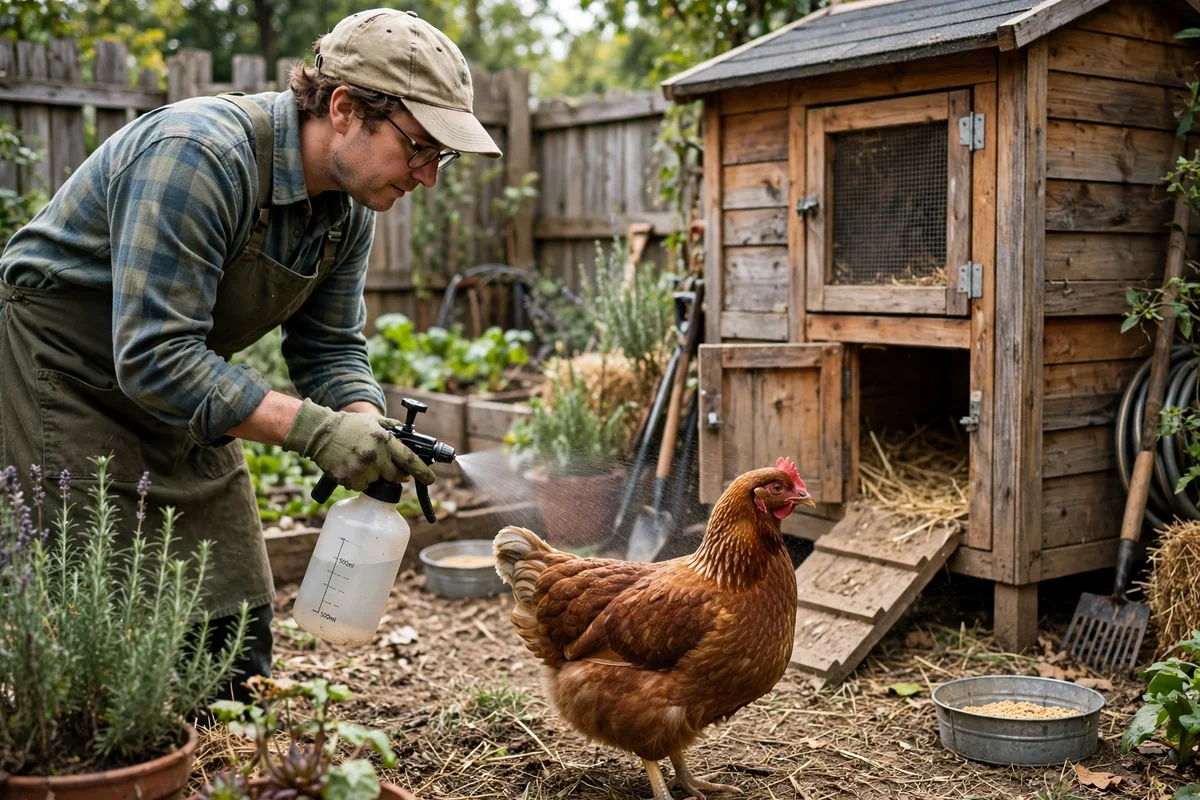
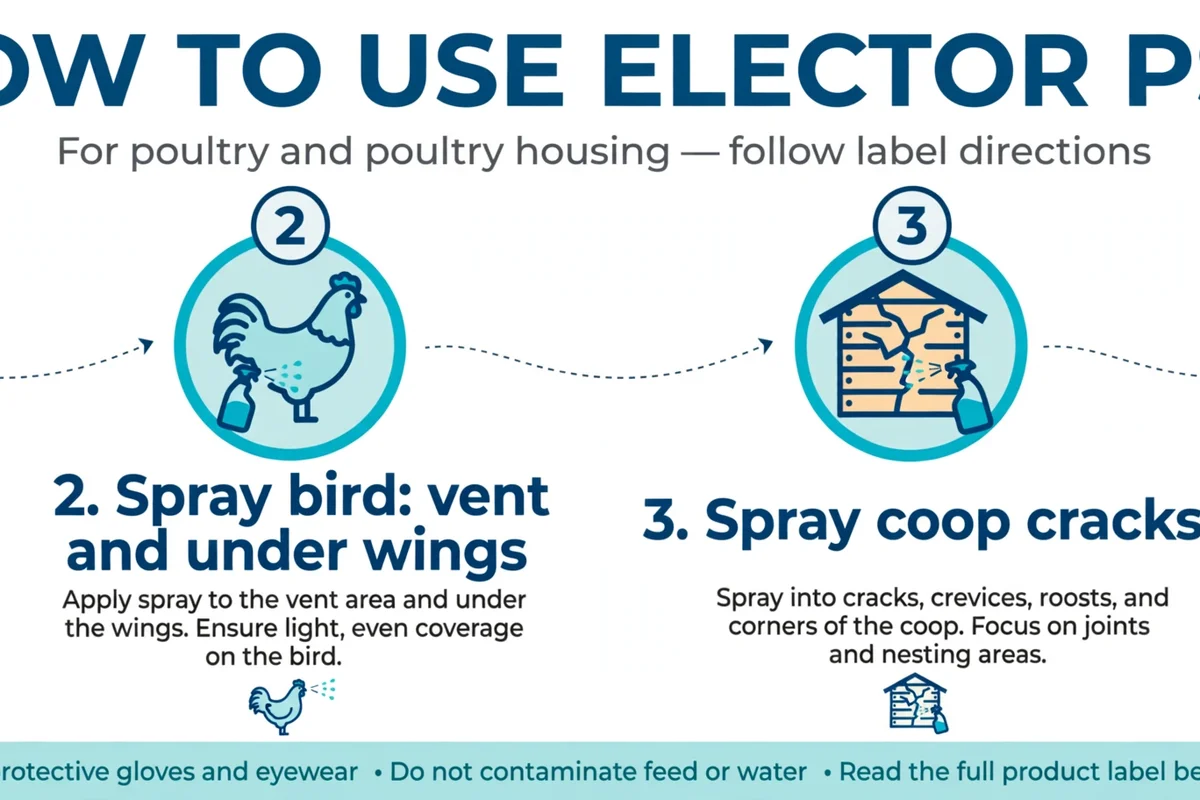
Spray each bird thoroughly, paying attention to the vent area, under the wings, and around the neck, because these are the places where mites and lice gather. The feathers should be damp all over, but the bird should not be soaked, and spraying is best done on a mild, dry day so the bird dries quickly.
Hold the bird gently and work in good light so you can see the skin under the feathers. Part the feathers at the vent and look for tiny moving mites or clusters of eggs at the base of the feather shafts, and spray directly onto these areas rather than just misting the outer feathers.
Treat every bird in the flock on the same day, even birds that look clean, because mites spread quickly and an untreated bird will reinfect the others. Treat the coop at the same time, spraying cracks, crevices, perches, and nest boxes where red mites hide during the day.
Repeat treatment only if the label allows it and live mites are still seen after the first application. Because spinosad kills eggs as well as adults, a single thorough treatment often works, but a heavy red mite infestation in the coop may need a second round and a deep clean of the housing.
Elector PSP vs permethrin for chickens
Permethrin is the older, cheaper treatment for mites and lice, and it works well when the mites are still sensitive to it. The problem is resistance: in many areas, northern fowl mites and red mites have become resistant to permethrin, and keepers find that it no longer clears an infestation even when applied correctly.
Elector PSP is the usual fallback when permethrin fails, because spinosad works in a different way and resistant mites are still killed by it. It is more expensive than permethrin, but a single bottle makes a large volume of spray, and for a small flock it can last a long time.
Permethrin has a short egg withdrawal period in many products, while Elector PSP has none, which is another reason keepers prefer it during laying season. Permethrin is also toxic to cats, so households with cats need extra care when using it, while spinosad is less of a concern in that respect.
The best approach is to use the right product for the situation rather than always reaching for the strongest one. Use permethrin first if it has worked for you before, keep Elector PSP for resistant cases, and rotate treatments only on veterinary advice, because overuse of any one product speeds up resistance.
What Elector PSP does not do
Elector PSP kills mites and lice, but it does not kill internal worms, and it does not treat respiratory disease, scaly leg mite deep in the scales, or skin infections. A bird with scaly legs needs a separate treatment, and a bird with a respiratory illness needs a vet, not a mite spray.
It also does not replace cleaning the coop. Red mites live in the housing, not on the bird, and they come out at night to feed, so spraying the birds without treating the coop will not clear a red mite problem. The coop must be emptied, cleaned, and sprayed in every crack and joint.
Elector PSP is not a preventative to be sprayed on a schedule. It should be used when mites or lice are found, and routine spraying without evidence wastes money and increases the chance of resistance. Regular checks of the vent, under the wings, and the perch ends are a better routine than routine spraying.
Finally, it does not work if the mix is wrong or the application is patchy. A light mist on the outer feathers will not reach the mites at the skin, and a mix that is too weak will not kill them. Thorough application at the label dose is what makes the difference between success and a repeat infestation.
Safety and egg withdrawal for Elector PSP
Elector PSP has no egg withdrawal period on its label, which means eggs can be collected and eaten as normal during treatment. This is one of its main advantages, but it is still worth checking the label on the bottle you buy, because labels can differ by country and the rules in your area may vary.
The product is approved for use in poultry housing, but it should not be sprayed directly into feed or water, and birds should not be sprayed while they are eating or drinking. Remove feed and water before spraying the coop, and put fresh feed and water back once the spray has dried.
Keep treated birds away from ponds and waterways, because spinosad is toxic to aquatic life, and do not pour leftover spray down drains or onto soil near water. Dispose of empty containers according to the label and local waste rules.
If a bird shows signs of distress after spraying, such as gasping, drooping, or refusing food, move it to fresh air and call a vet. Reactions are uncommon when the product is used at the label dose, but any bird that looks unwell after treatment should be watched closely for a day.
A note on health: this guide is general information, not veterinary advice. If a bird shows signs of illness or injury, separate it, keep it warm and dry, and consult a veterinarian — ideally one experienced with poultry — before treating it.
Sources: Elanco, Elector PSP label information and poultry.extension.org.
Related tools and guides
For more on the same topic, see Chicken First Aid Kit & Common Injuries.
Frequently asked questions
What is the active ingredient in Elector PSP?
Spinosad, a substance made by a soil bacterium. Some online sources wrongly list spinetoram, but the label and the manufacturer confirm spinosad is correct.
What is the Elector PSP dose for chickens?
The label dose is 3 fluid ounces of concentrate per 10 gallons of water. The same ratio scales down for a smaller batch, and the mix should be used the same day.
Is there an egg withdrawal period for Elector PSP?
No. The label has no egg withdrawal period, so eggs can be collected and eaten as normal during treatment. Always check the label on the bottle you buy, as labels can differ by country.
Does Elector PSP kill mite eggs as well as adults?
Yes. Spinosad kills both adult mites and their eggs, which is an advantage over products that only kill adults and need repeating as eggs hatch.
When should I use Elector PSP instead of permethrin?
When permethrin no longer clears an infestation, which usually means the mites have become resistant to it. Elector PSP works differently and still kills resistant mites, but it costs more, so it is best kept as the fallback.
About the author
John Walker is the founder of PeckCalc and has kept backyard chickens in Dallas, Texas since 2017. He started PeckCalc to give backyard keepers free calculators and guides with every figure traced to a university extension source.