
Hardware Disease in Chickens
 By John Walker · Backyard chicken keeper in Dallas, Texas since 2017
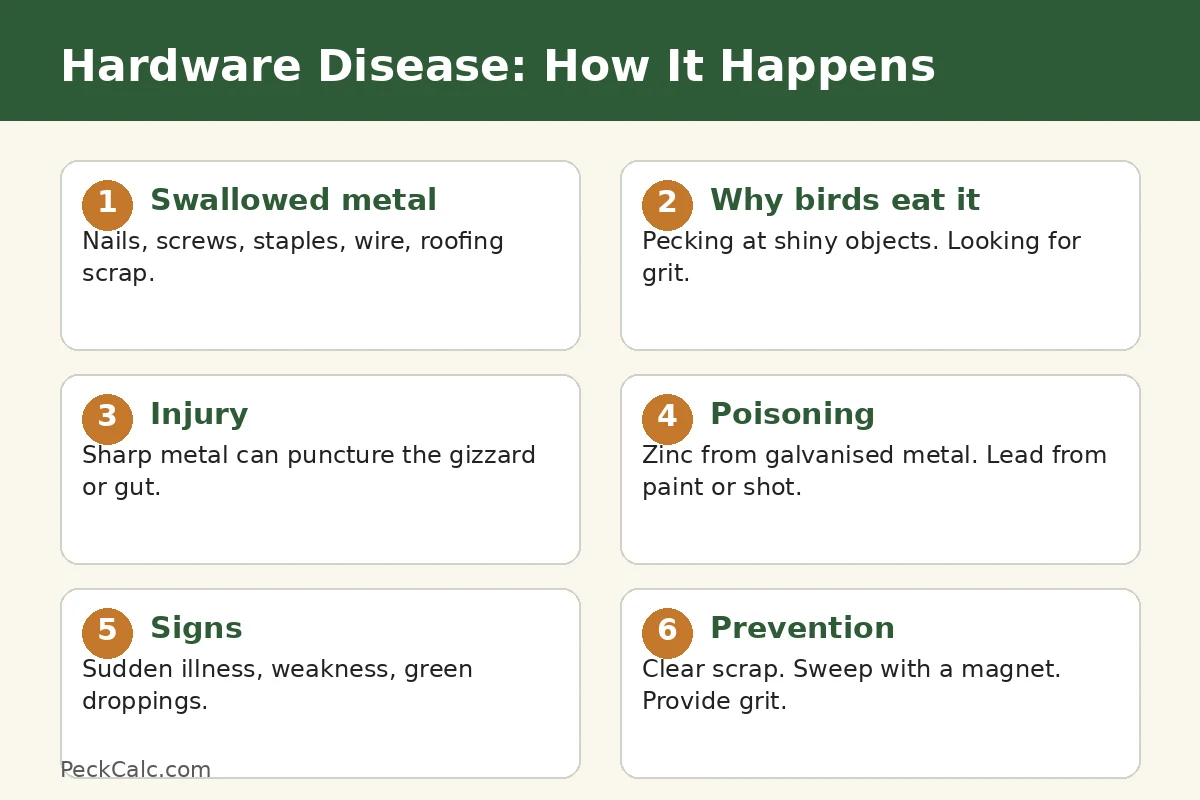
Hardware disease in chickens happens when a bird swallows a piece of metal, such as a nail, a screw, a staple, or a scrap of wire, and the metal injures the gut. Chickens peck at almost anything shiny or small, and a piece of metal in the run or the coop can be swallowed in seconds. The metal can puncture the gut, cause infection, or poison the bird with zinc or lead. This guide explains how hardware disease happens, the signs to watch for, and how to prevent it.
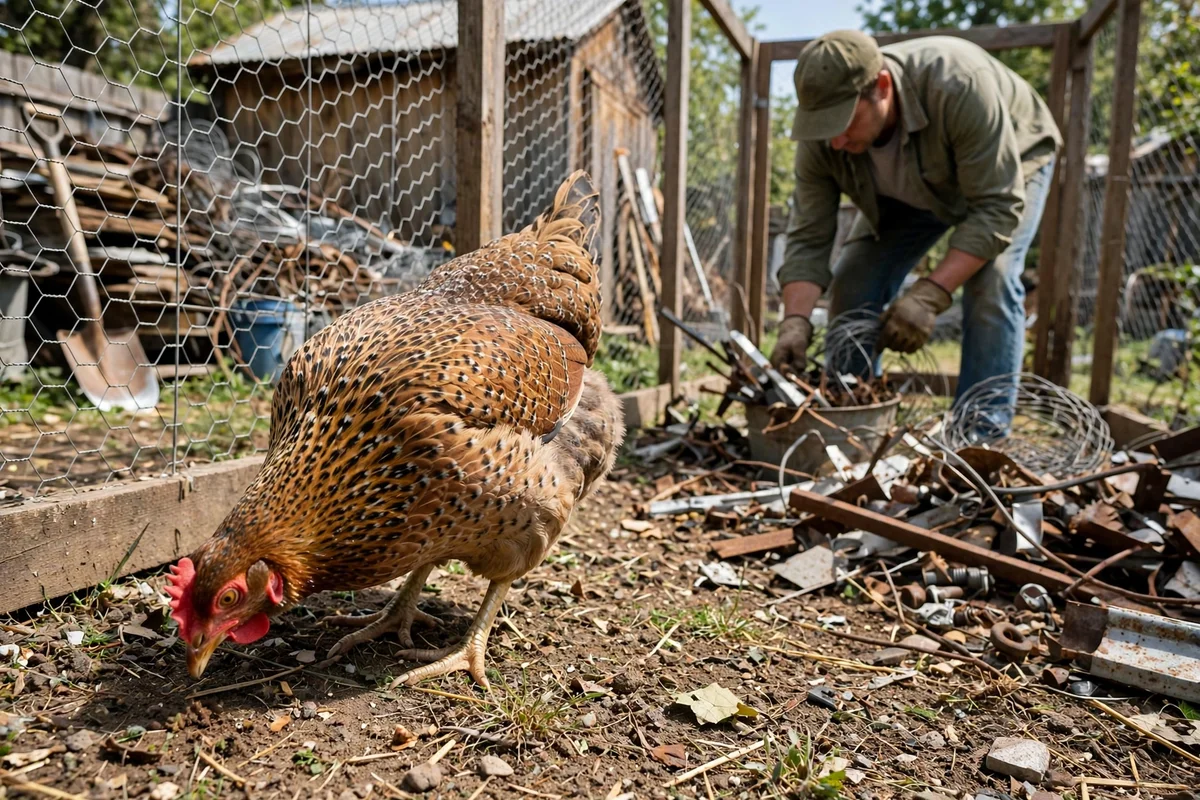
Hardware disease in chickens: what it is
Hardware disease in chickens is an injury or poisoning caused by swallowing a piece of metal, such as a nail, a screw, a staple, a piece of wire, or a scrap of roofing. The name comes from cattle, where the disease is well known, but chickens are just as vulnerable.
Chickens peck at small, shiny objects and swallow them without thinking.
When a chicken swallows metal, the object usually goes into the gizzard, which is the muscular stomach that grinds food. The gizzard is strong, and it can sometimes pass a small, smooth object without harm. But a sharp object can puncture the wall of the gizzard or the gut, and that can cause infection, internal bleeding, and death.
Metal can also poison the bird. Galvanised metal, which is coated with zinc, can release zinc into the gut, and zinc poisoning can damage the liver and kidneys. Lead, from old paint, lead shot, or lead flashing, is also poisonous, and it can cause weakness, green droppings, and death. Our guide on lead poisoning in chickens explains lead poisoning in detail.
Hardware disease is often a single-bird problem, because only one bird swallows the metal, but if the run is full of scrap, several birds can be affected over time. The disease is not contagious, and it cannot spread from bird to bird, but the risk stays until the metal is removed from the environment.
How chickens swallow metal objects
Chickens swallow metal objects because they explore the world with their beaks, and they peck at almost anything small and shiny. A nail, a screw, or a piece of wire looks like a seed or a grit particle to a chicken, and it is swallowed before the bird realises it is not food.
Chickens also swallow metal when they are looking for grit, which is the small stones they need to grind food in the gizzard.
Metal gets into a run in many ways. A fence repair leaves nails and staples on the ground, a roofing job leaves scraps and screws, and a broken feeder or drinker leaves sharp pieces behind. Old buildings, scrap piles, and bonfire ash can all contain metal, and a run built on ground that was once a yard or a workshop may have metal buried in the soil.
Chickens that free range are at higher risk, because they cover more ground and find more objects. But birds in a run are at risk too, especially if the run is built from scrap materials or if repairs have been done recently. A single nail dropped during a repair can be enough to cause a problem.
Chickens are more likely to swallow metal when they are short of grit, because they are actively looking for small, hard objects to eat. Providing grit in a separate container, and keeping the run free of scrap, are the two simplest ways to reduce the risk. A bird that has plenty of grit is less likely to pick up a nail by mistake.
Signs of hardware disease in chickens
The signs of hardware disease in chickens depend on what the metal does inside the bird. A sharp object that punctures the gut causes sudden illness: the bird becomes dull, stops eating, and may die within a day or two. There may be no warning at all, and the first sign may be the bird found dead.
A bird with zinc poisoning shows different signs. It may be weak, lose weight, and pass green or watery droppings. It may stop laying, and its comb may become pale. The signs come on gradually over days or weeks, and they overlap with many other problems, so zinc poisoning is hard to diagnose without a vet.
Lead poisoning causes weakness, loss of appetite, green droppings, and sometimes a drooping wing or leg. The bird may seem unsteady on its feet, and it may have fits in severe cases. Lead poisoning is a serious problem, and it needs a vet, because the treatment is specific and the bird may need to be tested for lead levels.
Some birds show no signs at all, and the metal is only found by chance, or after the bird dies of another cause. A small, smooth object may sit in the gizzard for months without causing harm, and the bird may never show any signs. But a sharp object can cause a sudden, fatal injury at any time, so the risk should not be ignored.
How hardware disease is diagnosed
Hardware disease is diagnosed by a vet, usually with an X-ray, which shows metal clearly. An X-ray can show where the metal is, how big it is, and whether it is sharp or smooth. A vet may also take a blood sample to check for zinc or lead poisoning.
The metal may be releasing poison even if it has not punctured the gut.
A vet will ask about the history: whether there has been building work nearby, whether the run has scrap in it, and whether other birds have been ill. The history often gives the clue, because hardware disease is usually linked to a specific event, such as a fence repair or a new building, that left metal on the ground.
In some cases the diagnosis is only made after the bird dies, when the metal is found in the gizzard during a post-mortem. This is a common story with hardware disease, because the signs are vague and the bird may die before a vet is called. If you lose a bird suddenly and there has been building work nearby, a post-mortem can give you the answer.
Do not try to diagnose hardware disease yourself. The signs overlap with many other problems, from coccidiosis to egg binding, and only a vet with an X-ray can be certain. If you suspect a bird has swallowed metal, call a vet promptly, and tell them what you think the bird may have swallowed.
Treatment for hardware disease in chickens
There is no home treatment for hardware disease in chickens, and a bird that has swallowed metal needs a vet. If the metal is small and smooth, the vet may advise watching the bird and hoping it passes the object naturally, but this is a gamble, and the bird should be watched closely for signs of illness.
If the metal is sharp, or if the bird is already ill, surgery may be needed to remove it. Surgery on a chicken is a major undertaking, and it is not always successful, especially if the gut has already been punctured. A vet can advise on whether surgery is worth trying, and what the chances are.
For zinc or lead poisoning, the treatment is to remove the source of the metal and to give medicine that binds the poison and helps the body get rid of it. This treatment, called chelation, is a job for a vet, and it needs to be started early to work well. A bird with severe poisoning may not recover, even with treatment.
The most important treatment is prevention, because once a bird has swallowed metal, the options are limited and the outcome is uncertain. Cleaning the run, removing all scrap, and providing grit are the steps that matter, and they are far more effective than any treatment after the event.
How to prevent hardware disease in chickens
Preventing hardware disease in chickens starts with keeping the run and coop free of metal. Walk the run regularly and pick up any nails, screws, staples, wire, or scrap you find. Check after any building work, fence repair, or roofing job, because these are the times when metal is most likely to be left on the ground.
Use a magnet to sweep the run, because a strong magnet will pick up nails and screws that are buried in the soil or hidden in the litter. A magnet on a stick, swept over the ground after building work, is a simple and effective way to find metal that your eyes might miss. Do this after every repair, and once a year as a routine check.
Provide grit in a separate container, so that birds looking for grit do not pick up metal instead. Grit is the small stones that chickens need to grind food in the gizzard, and a bird that has plenty of grit is less likely to swallow a nail by mistake. Keep the grit container topped up and clean.
Keep scrap, building materials, and bonfire ash away from the run, and do not build a run on ground that was once a yard, a workshop, or a rubbish tip without checking the soil first. If you are building a new run, clear the ground thoroughly, sweep it with a magnet, and cover it with fresh soil or sand. Our guide on lead poisoning in chickens explains another metal risk to watch for.
Sources: general flock health background from poultry.extension.org and the poultry pages at the University of Minnesota Extension, with case background from Texas A and M University Extension. This guide is general information, not veterinary advice; a vet should be consulted if a bird may have swallowed metal.
Related tools and guides
For more on the same topic, see Lead Poisoning in Chickens and Chicken First Aid Kit and Common Injuries.
Frequently asked questions
What is hardware disease in chickens?
Hardware disease happens when a chicken swallows a piece of metal, such as a nail, screw, staple, or wire. The metal can puncture the gut, cause infection, or poison the bird with zinc or lead.
Can chickens pass swallowed metal on their own?
Sometimes, if the object is small and smooth, it may pass through the gut without harm. But a sharp object can puncture the gut and kill the bird, so a bird that may have swallowed metal should be checked by a vet rather than left to chance.
What are the signs of hardware disease in chickens?
A sharp object causes sudden illness: dullness, loss of appetite, and sometimes death within a day or two. Zinc or lead poisoning causes gradual weakness, weight loss, green droppings, and a drop in laying. Some birds show no signs at all.
How is hardware disease diagnosed in chickens?
A vet usually diagnoses it with an X-ray, which shows metal clearly, and a blood test to check for zinc or lead poisoning. In some cases the metal is only found after the bird dies, during a post-mortem examination.
How do I prevent hardware disease in chickens?
Keep the run free of metal, pick up nails and screws after any building work, sweep the ground with a strong magnet, provide grit in a separate container, and keep scrap and building materials away from the run.
About the author
John Walker is the founder of PeckCalc and has kept backyard chickens in Dallas, Texas since 2017. He started PeckCalc to give backyard keepers free calculators and guides with every figure traced to a university extension source.