
How to Care for Chickens in a Snowstorm Safely
 By John Walker · Backyard chicken keeper in Dallas, Texas since 2017
How to care for chickens in a snowstorm is a question best answered before the storm arrives, because a snowstorm is not the time to discover that the waterer is frozen, the coop roof leaks, or the feed is running low. Chickens are hardier in cold weather than most keepers expect, and a healthy flock in a dry, draft-free coop can ride out a snowstorm well, but they need water, food, shelter, and a keeper who checks on them. This guide explains how to prepare before the storm, what to do during it, and how to help the flock recover afterwards.
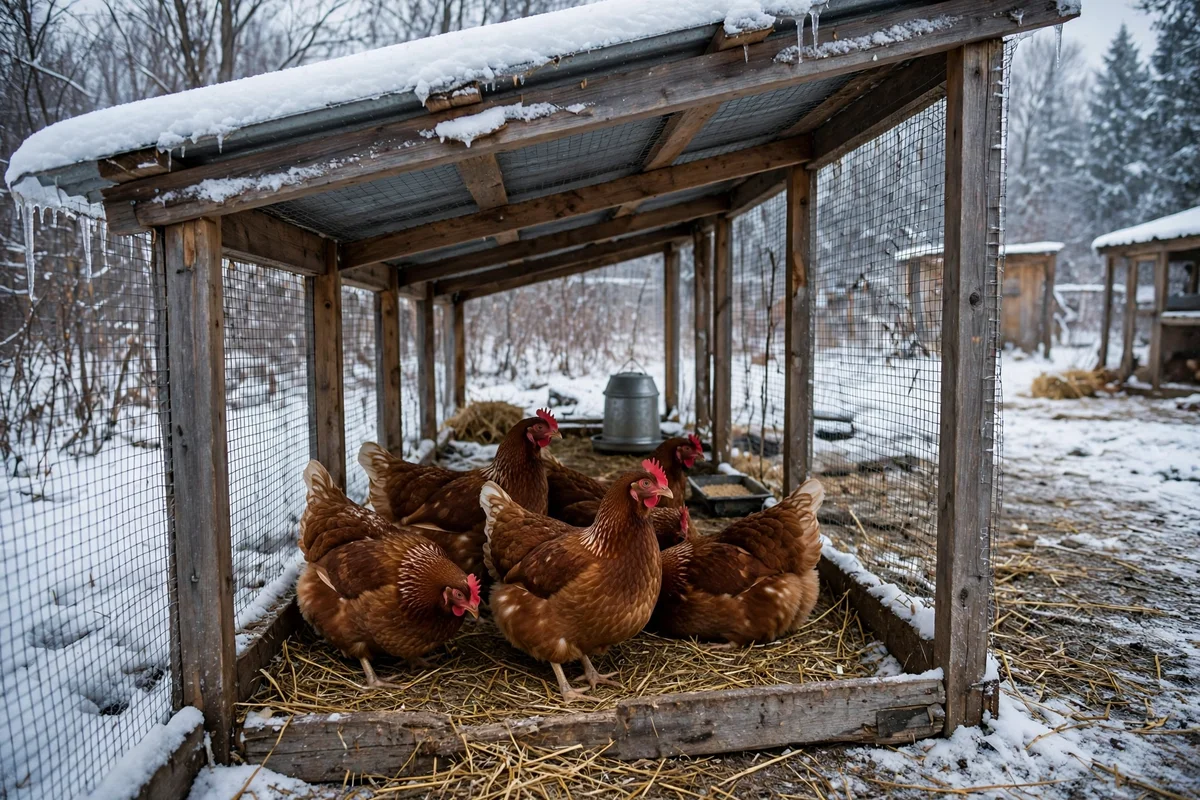
How to care for chickens in a snowstorm: prepare first
How to care for chickens in a snowstorm starts with preparation, and the best time to prepare is the day before the storm, not the morning it arrives. Check the forecast, and if a snowstorm is coming, stock up on feed and bedding, fill the waterers, and check the coop roof, the fencing, and the run cover.
A storm that lasts two days will use two days of feed and water, and you may not be able to get to the shops.
Check the coop for drafts and leaks. A coop that is dry and draft-free will keep the birds warm, while a coop with a leaking roof or a gap in the wall will chill them. Cover any gaps with boards or tarps, but do not seal the coop shut, because the birds still need ventilation. Good ventilation matters in a snowstorm as much as in any weather, because damp air makes the birds cold.
Clear a path to the coop, and keep a shovel, a torch, and extra feed and water where you can reach them. A snowstorm can make the garden impassable, and a keeper who cannot reach the coop cannot help the birds. Lay down a path of straw or boards if the ground is likely to ice over, and keep your boots and gloves by the door.
Water in a snowstorm: keeping it liquid
Water is the biggest problem in a snowstorm, because it freezes fast, and a chicken that cannot drink will dehydrate quickly. A heated waterer is the best solution, and it is worth the investment if you live where snowstorms are common.
A heated base under a metal waterer, or a heated waterer with a built-in element, will keep the water liquid through the storm.
If you do not have a heated waterer, change the water twice a day, and bring the waterer inside at night to thaw. Use a rubber waterer, which is easier to empty when the water freezes, and keep a spare waterer so you can swap a frozen one for a fresh one. Warm water, not hot, is a good idea, because it takes longer to freeze and the birds will drink it readily.
Do not let the birds eat snow for water. Snow is mostly air, and a bird that eats snow will use more energy to melt it than it gains in water, and it will chill itself in the process. Fresh, liquid water in the coop is essential, and it is the single most important job in a snowstorm.
Feed and warmth during the storm
Feed the birds well during a snowstorm, because they burn more energy to stay warm. Give them their normal layer feed, and add a little extra in the evening, so they go to roost with a full crop. A full crop generates heat overnight, and it helps the birds stay warm through the coldest hours.
Scatter some scratch grains in the bedding in the afternoon, so the birds scratch and move, which also generates heat.
Do not use a heat lamp in the coop during a snowstorm, unless you have no other choice, because a heat lamp is a fire risk, and a power cut will leave the birds suddenly cold. A dry, draft-free coop with deep bedding is safer and more reliable than a heat lamp. If you do use a heat lamp, secure it firmly, keep it away from bedding, and check it often.
Deep bedding helps. A thick layer of straw or wood shavings on the coop floor insulates the birds from the cold ground, and it gives them something to scratch in. Add fresh bedding before the storm, and add more during the storm if the bedding gets wet or soiled. A dry, deep bed is one of the best defences against cold.
Checking the flock during the storm
Check the flock at least twice a day during a snowstorm, and more often if the storm is severe. Look at the birds' combs and wattles for frostbite, which shows as pale, cold tissue that later turns dark. Check that the birds are eating and drinking, and that they are moving normally.
A bird that is hunched, lethargic, or not eating needs help.
Clear snow from the run, so the birds have a dry area to walk in, and clear snow from the coop roof, so the weight does not damage it. A run that is full of snow is a run the birds will not use, and they will stay in the coop, which makes the coop crowded and damp. A shovelled path and a covered run will keep the birds moving.
Watch for birds that get stuck outside. A bird that is caught in the snow, or that cannot find its way back to the coop, will chill quickly and may die. Count the birds at night, and make sure every bird is inside. A bird that is missing should be found at once, because a night in the snow is fatal.
| Storm job | What to do | How often |
|---|---|---|
| Water | Heated waterer, or change water twice a day | Morning and evening |
| Feed | Normal feed plus extra in the evening | Daily, with evening top-up |
| Bedding | Deep, dry straw or shavings, top up as needed | Before the storm and daily |
| Flock check | Combs, wattles, eating, drinking, movement | At least twice a day |
| Snow clearing | Clear run and coop roof | Daily during the storm |
| Night count | Count every bird inside before dark | Every evening |
Power cuts and emergencies
A snowstorm can cut the power, and a keeper should have a plan for it. If you use a heated waterer, have a backup plan for water, such as a spare waterer and a supply of warm water from the house.
If you use a heat lamp, have a plan for keeping the birds warm without it, such as extra bedding and a draft-free coop.
Keep a torch, extra batteries, and a first aid kit where you can reach them in the dark, and keep your phone charged. A power cut at night, in a snowstorm, is the worst time to discover that you cannot see or call for help. A little preparation will make the night far easier.
If the storm is severe and the coop is damaged, move the birds inside, to a garage, a shed, or a spare room, in a box or a crate with bedding, food, and water. A bird that is safe inside is better than a bird in a damaged coop, and the move is only temporary. Bring the birds back out when the storm has passed and the coop is repaired.
After the storm: recovery and checks
After the storm, check the flock carefully for frostbite, which may not show until a day or two later. Look at the combs, wattles, and feet for pale, swollen, or dark tissue, and watch for birds that are limping or not eating.
Frostbite damage takes weeks to heal, and the damaged tissue may fall off, which is painful but not fatal if the bird is kept warm and dry.
Clear the snow from the run and the coop roof, and let the birds out to range when the ground is clear. The birds will be keen to get out after days in the coop, and fresh air and sunshine will help them recover. Scatter feed on the cleared ground, so the birds can forage and move, which warms them up.
Check the coop for damage, and repair any leaks, gaps, or broken fencing before the next storm. A storm is a test of the coop, and any weakness it reveals should be fixed while the weather is clear. Our guide on keeping chickens warm in winter explains the long-term housing in full, and it is worth reading before the next storm.

Sources: poultry.extension.org.
Related tools and guides
For more on the same topic, see How to Keep Chickens Warm in Winter.
Frequently asked questions
How to care for chickens in a snowstorm?
Prepare before it hits: stock feed and bedding, check the coop for drafts and leaks, and keep water liquid with a heated waterer or by changing it twice a day. Check the flock at least twice a day during the storm.
Can chickens survive a snowstorm?
Yes, healthy chickens in a dry, draft-free coop with deep bedding, food, and liquid water can ride out a snowstorm well. The main risks are frozen water, frostbite, and a damaged coop, not the cold alone.
Should I use a heat lamp in a snowstorm?
A heat lamp is a fire risk and it leaves birds suddenly cold if the power fails. A dry, draft-free coop with deep bedding is safer and more reliable. If you use one, secure it firmly and keep it away from bedding.
How do I keep chicken water from freezing in a snowstorm?
Use a heated waterer or a heated base, or change the water twice a day and bring the waterer inside at night to thaw. Use a rubber waterer, which is easier to empty when frozen.
What should I check after a snowstorm?
Check the birds for frostbite on combs, wattles, and feet, clear snow from the run and the coop roof, and repair any coop damage before the next storm. Let the birds out to range when the ground is clear.
About the author
John Walker is the founder of PeckCalc and has kept backyard chickens in Dallas, Texas since 2017. He started PeckCalc to give backyard keepers free calculators and guides with every figure traced to a university extension source.