
How to Find a Poultry Vet
 By John Walker · Backyard chicken keeper in Dallas, Texas since 2017
How to find a poultry vet? Finding a vet who will see a chicken is one of the hardest parts of keeping backyard poultry, because many small-animal clinics do not treat birds, and many farm vets do not take on backyard flocks. The result is that keepers often search for a vet only when a bird is already sick, and then discover that the nearest poultry vet is hours away. This guide explains where to look, how to use the professional directories, what to ask when you call, and how to prepare for the visit, so that you have a vet in place before you need one.
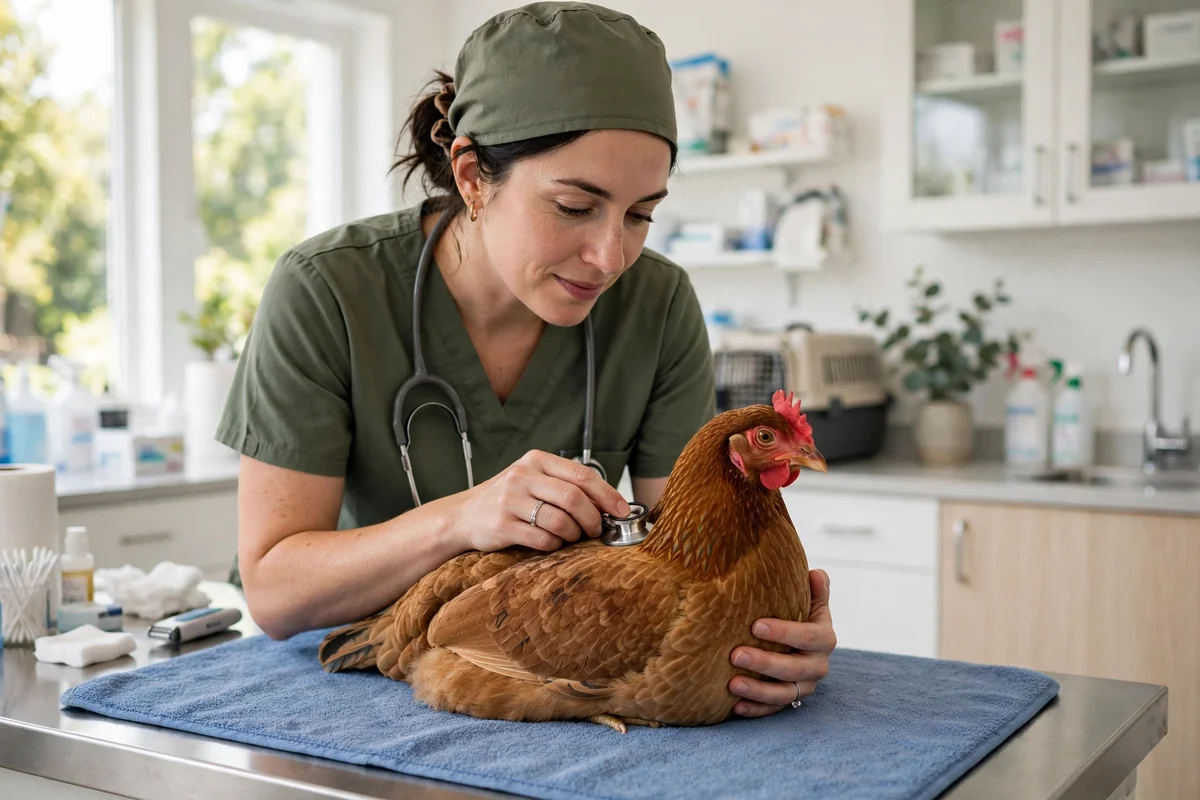
How to find a poultry vet near you
The fastest way to find a poultry vet is to use the professional directories. The American Board of Veterinary Practitioners, known as ABVP, lists vets who are board-certified in avian practice, and the Association of Avian Veterinarians, known as AAV, runs a find-a-vet directory of vets who see birds.
Both directories can be searched by location, and they are the best starting point because they list vets who have chosen to work with birds rather than vets who happen to accept them.
Start with the AAV directory, because it is the larger of the two and it includes vets who see birds regularly without being board-certified specialists. Search by your state or postcode, and make a list of every vet within a reasonable driving distance. Then check the ABVP directory for avian specialists, who have extra training in bird medicine and are the best choice for a difficult case, even if they are further away.
University veterinary schools are another good source. Many vet schools run a poultry or exotic animal service, and some offer advice to backyard keepers by phone. Your state university extension service, through poultry.extension.org, can also point you to poultry vets and to diagnostic laboratories in your area. Extension specialists know the local vets, and they are used to helping backyard keepers find one.
Local poultry clubs, breed societies and online forums such as Backyard Chickens are also useful, because other keepers in your area will know who they use. Ask in a local group rather than a general forum, because a vet in another state is no use to you. Make a shortlist of two or three vets, and then call each one to confirm that they see chickens, because a directory listing does not always mean the clinic is currently taking poultry patients.
What to ask when you call a poultry vet
When you call a vet, the first question is the simplest: do you see backyard chickens? Some clinics list birds on their website but only see parrots or other pet birds, and some see chickens only as part of a farm call, not as individual patients.
Ask directly, and ask whether there is a vet at the clinic who has experience with poultry, because a clinic may have one bird vet and several who do not see birds.
Ask about the practical details as well. How far ahead do you need to book, and is there an emergency service? What are the consultation fees, and is there an extra charge for a chicken? Can you bring the bird in, or does the vet visit the flock? Some vets prefer to see a sick bird at the clinic, and some prefer a farm visit so that they can see the coop and the rest of the flock, and knowing which one applies saves a wasted trip.
Ask what the vet can do for a chicken, because the range of services varies. Can they take a faecal sample and test it for worms and coccidia? Can they take a blood sample or a swab? Can they do an X-ray, and can they perform surgery if needed? A vet who can run basic tests in-house will give you an answer faster than one who has to send every sample away, and that speed matters when a bird is ill.
Finally, ask how the vet handles follow-up and advice. Can you call with a question between visits? Is there a charge for a phone consultation? Does the vet work with a diagnostic laboratory, and can they help with a post-mortem if a bird dies unexpectedly? A vet who is willing to talk on the phone and to work with a laboratory is far more useful than one who only sees the bird once and sends you home with a guess.
Avian vet vs farm vet vs general vet
An avian vet is a vet who specialises in birds, and a board-certified avian vet has passed extra examinations in bird medicine. Avian vets are the best choice for a sick chicken, because they know bird anatomy, bird diseases and bird-safe drugs, and they see birds every day.
The drawback is that they are rare, they may be far away, and they may charge more than a general vet.
A farm vet, also called a large-animal or production vet, works with poultry as part of a farm practice, and they are used to flock-level problems such as respiratory disease, worms and laying problems. They may be more practical and cheaper than an avian specialist, and they are often willing to visit the flock, but they may not take on a single backyard bird as a patient, and they may be less used to treating a pet chicken as an individual.
A general small-animal vet may be willing to see a chicken even without specialist training, and for a simple problem such as a wound, a broken toe or a crop check, a willing general vet is better than no vet at all. The key is willingness: a vet who is honest about their limits, who will look up the right drug and dose, and who will refer you to a specialist when needed, is a good vet for a backyard keeper. A vet who refuses to see birds at all is not.
The table below compares the three types of vet, so that you can decide who to call first. In practice, the best approach is to find an avian vet for difficult cases and a willing general or farm vet for routine problems, and to have both numbers saved before you need them. A keeper with two vet numbers is a keeper who can act fast when a bird is ill.
| Type of vet | Best for | Watch out for |
|---|---|---|
| Avian vet (AAV / ABVP) | Difficult illness, surgery, diagnosis | Rare, may be far away, higher fees |
| Farm / poultry vet | Flock problems, farm visits, testing | May not take single backyard birds |
| General small-animal vet | Wounds, simple problems, local access | May lack bird experience, may refuse birds |

When to call a vet vs when to wait
Knowing when to call a vet is as important as knowing how to find one, and the answer depends on the signs. Call a vet the same day if a bird is gasping or struggling to breathe, has stopped eating and drinking, has a swollen face or closed eye, has blood in its droppings, cannot stand.
Or has a wound that is deep or bleeding heavily. These are urgent signs, and a bird that shows them will not wait for a convenient appointment.
Call within a day or two if a bird has a persistent cough or sneeze, a drop in laying across several birds, a crop that does not empty overnight, feather loss with itching, or a lameness that does not improve. These are not emergencies, but they are problems that need a diagnosis, and waiting a week can turn a simple treatment into a flock-wide outbreak. A vet can confirm the cause and give the right treatment, which is almost always cheaper than treating the whole flock later.
Waiting is reasonable only for a mild, short-lived problem in a bird that is otherwise bright, eating and laying normally. A single sneeze, a single soft egg, or a day of slightly reduced appetite in one bird can be watched for a day, provided the bird is isolated and checked regularly. If the sign persists, spreads to other birds, or the bird becomes dull or stops eating, call the vet.
This guide is about finding a vet, not about deciding when to treat, and our guide on when to call a vet for a chicken covers the timing question in detail. The short version is this: if you are unsure, call. A vet would rather answer a phone call about a bird that turns out to be fine than see a bird that has been left too long.
How to prepare for a poultry vet visit
Prepare before the visit, because a vet can do far more with a good history than with a bird alone. Write down when the problem started, which birds are affected, what the signs are, and what has changed recently, such as new birds, new feed, a move, or a change in the weather.
Note what the bird is eating and drinking, how many eggs it is laying, and whether its droppings have changed. Bring the notes with you, and bring a photo of the droppings and the coop if you can.
Transport the bird safely. Use a cat carrier or a ventilated box lined with an old towel, and keep the bird warm and calm. Do not put food in the carrier, but offer water if the journey is long, and do not transport a bird in a hot car or in direct sunlight. Bring a faecal sample if you can, collected fresh that morning in a clean container, because a faecal test is one of the most useful tests a vet can run and it saves a second visit.
At the visit, be honest about what you have tried, including any treatments you have already given, because a vet needs to know what drugs the bird has had before prescribing more. Ask what the diagnosis is, what the treatment is, how to give it, and what the withdrawal period is for eggs. Write the answers down, and ask the vet to write them down too, because it is easy to forget a dose or a date once you are home.
Ask about cost before the vet starts, and ask what the options are if the cost is high. A vet can often offer a range of options, from a basic examination and a faecal test to a full work-up with blood tests and X-rays, and knowing the costs in advance lets you choose. Keep the vet's number saved in your phone, and keep a note of the visit in your health notebook, with the date, the diagnosis and the treatment.
If there is no poultry vet near you
If there is no poultry vet within driving distance, you still have options. Many vet schools offer a telephone advice service for backyard keepers, and some will accept a bird by post for a post-mortem examination, which can give a diagnosis that helps the rest of the flock.
Your state diagnostic laboratory can test faecal samples, swabs and dead birds, and your extension poultry specialist can tell you how to submit a sample and what it will cost.
Telemedicine is another option, and some avian vets offer video consultations, although they cannot examine a bird properly over a screen and they may not be able to prescribe without seeing the bird. A video call is still useful for advice on whether a bird needs to be seen in person, what to do while you are waiting, and what tests to ask a local vet to run. Check the rules in your state, because telemedicine rules differ.
A willing general vet is often the best practical answer when no poultry vet is available. Bring the vet good information: the bird's history, a faecal sample, and a clear description of the signs. Offer to pay for the vet's time to look up the right drug and dose, and ask the vet to call a poultry specialist or a diagnostic laboratory for advice. Many vets are willing to help if the keeper is organised and realistic about what can be done.
Finally, build a relationship with a vet before you need one. Call a local clinic, ask if they see chickens, and book a routine visit or a phone call to introduce yourself. A vet who knows you and your flock is far more likely to help in an emergency than a vet you have never spoken to, and a routine visit is a good time to ask about worming, vaccination and flock health. Finding a vet is a job to do now, not when a bird is already sick.
Building a flock health plan with your vet
Once you have a vet, use them to build a flock health plan. A plan covers worming, vaccination, quarantine, coop hygiene and what to do when a bird is ill, and it is tailored to your flock, your area and your local disease risks.
A vet who knows your flock can advise on which vaccines are worth giving, how often to worm, and which diseases to watch for in your region, and that advice is far more useful than a generic schedule from the internet.
Ask your vet about the diseases that matter in your area. Marek's disease, Newcastle disease, avian influenza and coccidiosis are all regional, and the right prevention depends on where you live. A vet can also advise on biosecurity, which is the set of habits that keeps disease out of your flock: quarantine, clean boots, clean equipment, and keeping wild birds away from feed and water.
Keep a health notebook and bring it to every vet visit. Record the date, the bird, the signs, the treatment and the outcome, and note the withdrawal period for any drug. A notebook turns a vague memory into a useful history, and a vet who can see the pattern will diagnose faster and more accurately. It also helps you notice patterns yourself, such as a problem that recurs every autumn or after every new bird.
The goal is not to call the vet for every sneeze, but to have a vet you can call when it matters, and to have a plan that keeps most problems from happening at all. A keeper with a vet, a plan and a notebook is a keeper whose flock is far more likely to stay healthy, and whose birds are far more likely to recover when they do fall ill. Start today: search the directories, make the calls, and save the number.
Sources: poultry.extension.org.
Related tools and guides
For more on the same topic, see Why Is My Chicken Yawning?. Browse the full list in our guides hub.
Frequently asked questions
How do I find a poultry vet near me?
Use the Association of Avian Veterinarians (AAV) find-a-vet directory and the American Board of Veterinary Practitioners (ABVP) directory, and ask your state extension poultry specialist and local poultry club. Always call to confirm the clinic currently sees chickens.
What is the difference between an avian vet and a farm vet?
An avian vet specialises in birds and is best for difficult cases, while a farm vet works with poultry flocks and is often practical for flock problems. A willing general vet can handle simple problems. Having two vet numbers saved is the best approach.
How much does a poultry vet visit cost?
Fees vary by clinic and by region, and there may be extra charges for tests, X-rays or a farm visit. Ask about consultation fees and test costs when you call, and ask what options are available before the vet starts.
What should I bring to a poultry vet visit?
Bring the bird in a ventilated carrier, a written history of the problem, a fresh faecal sample, and photos of the droppings and the coop. Note any treatments you have already given, and ask about the diagnosis, treatment and egg withdrawal period.
What if there is no poultry vet near me?
Try your state veterinary school, diagnostic laboratory and extension poultry specialist, and ask a willing general vet to help. Some avian vets offer video consultations, and a vet who knows you is more likely to help in an emergency, so build the relationship before you need it.
About the author
John Walker is the founder of PeckCalc and has kept backyard chickens in Dallas, Texas since 2017. He started PeckCalc to give backyard keepers free calculators and guides with every figure traced to a university extension source.