
How to Give Chickens Vitamins in Water
 By John Walker · Backyard chicken keeper in Dallas, Texas since 2017
How to give chickens vitamins in water? Vitamins in water are a quick way to top up a flock that is stressed, moulting, or coming off an illness, because a bird that will not eat much will often still drink. The method is simple: mix a poultry vitamin powder or liquid into clean drinking water, change it daily, and follow the label dose exactly. But there are rules that matter. Some products must never be mixed with the coccidiosis medicine amprolium, sold as Corid, because vitamins cancel the medicine out. And vitamins in water are a top-up, not a replacement for balanced feed. This guide explains which products to use, how to dose them, when they help, and what to avoid.
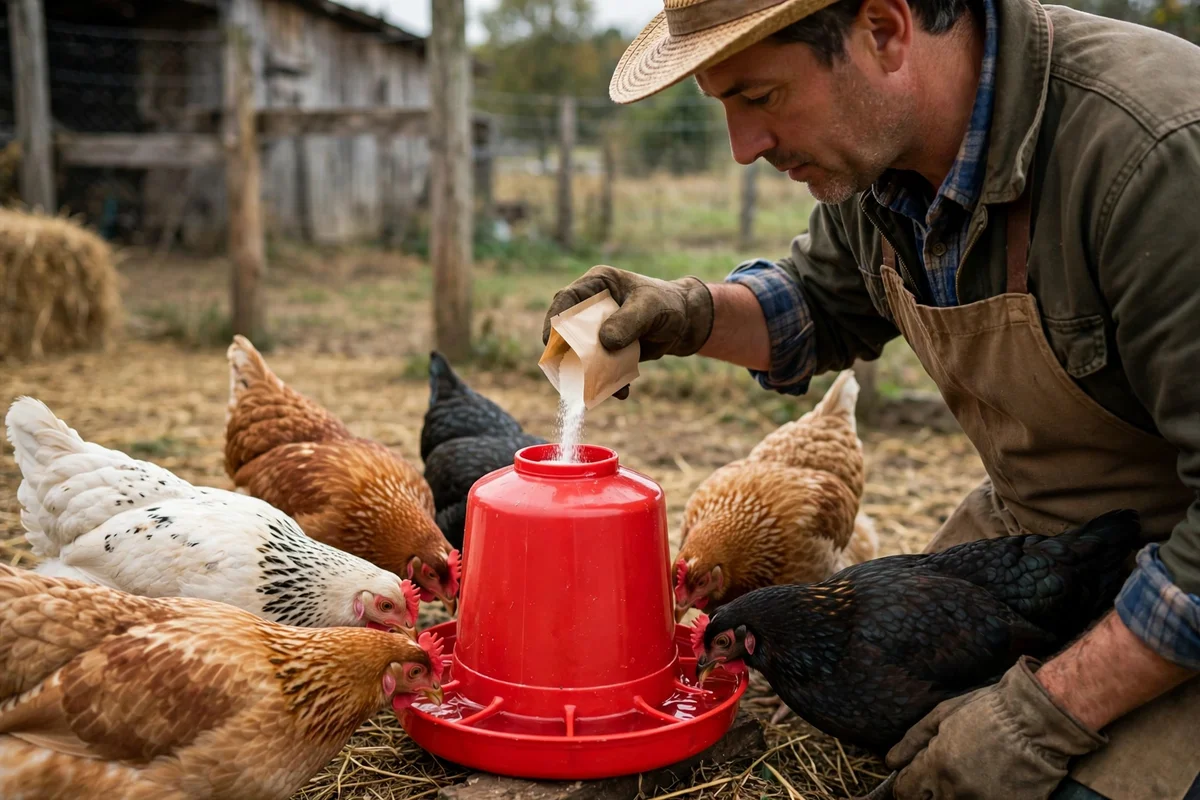
How to give chickens vitamins in water
Mix the vitamin product into clean drinking water at the label dose, stir well, and offer it as the only water source for the day. Make a fresh batch every morning. Use the vitamin water as the only water for that day, so every bird that drinks gets a share.
Start with a clean drinker. Rinse it out, fill it with clean water, and add the vitamin powder or liquid at the dose on the label. Stir or shake until it is fully mixed, and put the drinker where the birds can reach it easily. Use the vitamin water as the only water for that day, so every bird that drinks gets a share. Do not leave a second, plain drinker out at the same time, or the birds will drink the plain water and miss the vitamins.
Change the mix every day. Vitamins break down in light and air, and a batch left for two days has lost much of its value and may have grown bacteria. Wash the drinker before each fresh batch, and keep it out of direct sun where you can. If the birds will not drink the mix, check the taste: some products are bitter, and a weaker mix made to the label dose is better than a strong mix the birds refuse.
| Product | Label dose | Notes |
|---|---|---|
| Rooster Booster vitamins and electrolytes | About one third of a teaspoon per gallon | Popular all-round poultry vitamin |
| Durvet vitamins and electrolytes | About 5 grams per gallon | Powder, dissolves in water |
| Liquid poultry vitamins | Follow the pack, usually a few drops per litre | Easy to measure, check the label |
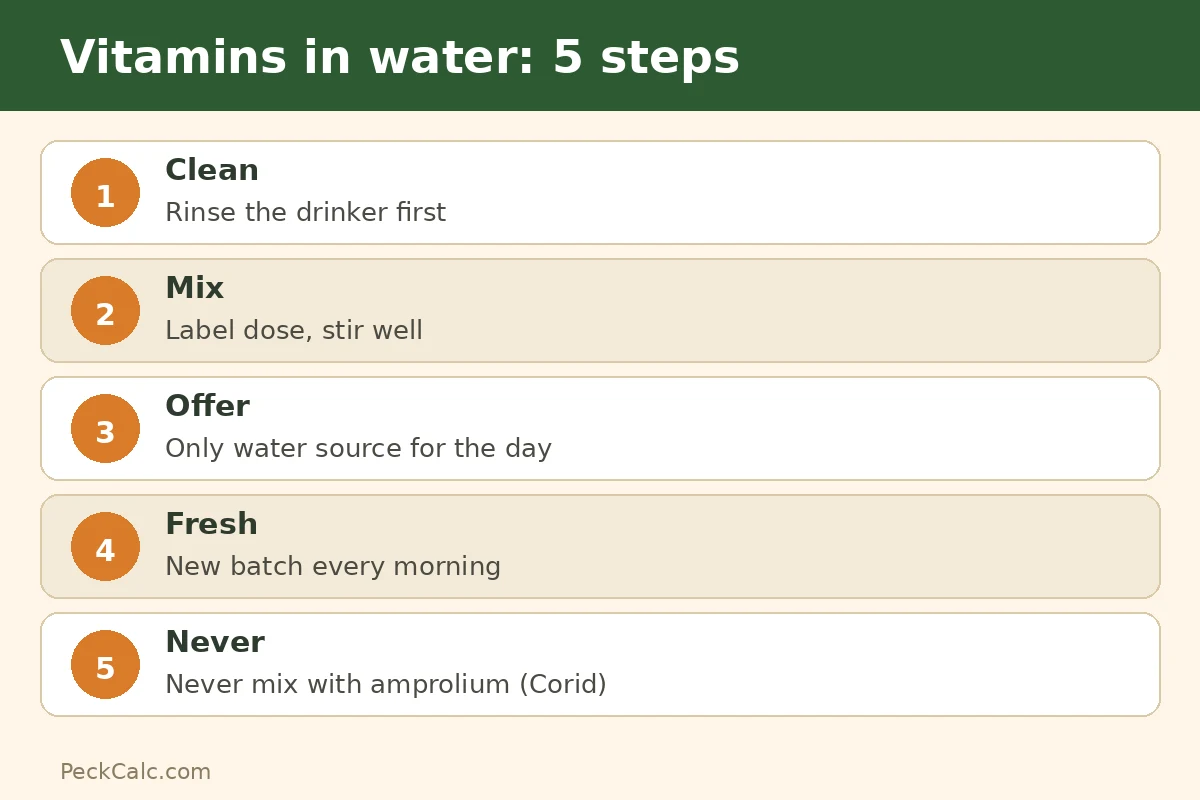
Mix fresh daily, follow the label dose, and never mix vitamins with amprolium.
Which vitamins do chickens need?
Chickens need vitamins A, D, E, and the B vitamins for growth, laying, and immunity. A balanced feed already covers them, so water vitamins are a top-up for stress, not a daily need. A good commercial feed contains all of these in the right amounts, so a flock on balanced feed does not need daily vitamins.
Vitamin A supports eyesight, egg production, and the lining of the gut and airways. Vitamin D helps the bird absorb calcium, which matters for strong shells. Vitamin E supports the immune system and muscle health. The B vitamins, including thiamine, riboflavin, and niacin, help the bird turn feed into energy and grow feathers. A good commercial feed contains all of these in the right amounts, which is why a flock on balanced feed does not need daily vitamins.
Water vitamins help when the bird needs more than the feed gives, or when the bird is not eating enough feed to get its share. That happens in heat stress, after transport, during moult, after an illness, or when a bird is off its feed for another reason. In those cases a short course of vitamins in water, for three to five days, can help the bird recover faster. Our guide on vitamin deficiency in chickens explains the signs that a bird is short of a specific vitamin.
Never mix vitamins with amprolium (Corid)
Never give vitamins in water at the same time as amprolium, the coccidiosis medicine sold as Corid. Vitamins cancel the medicine out and the coccidiosis goes untreated. This is the most important rule in this guide, and it is easy to break by accident during a coccidiosis outbreak.
Amprolium works by blocking thiamine, vitamin B1, which the coccidiosis parasite needs to grow. If you add vitamins to the water at the same time, you give the parasite the thiamine back, and the medicine stops working. The bird then has coccidiosis and a useless treatment, which is the worst of both worlds. This is the most important rule in this guide, and it is easy to break by accident if you reach for a vitamin powder during a coccidiosis outbreak.
If you are treating coccidiosis with amprolium, give plain water only, and wait until the treatment course is finished before starting vitamins. Our Corid dosage calculator helps with dosing the medicine itself, but the rule is simple: medicine first, vitamins after. The same caution applies to any product that contains thiamine, so check the label of every vitamin product before mixing it into water during treatment.
When to give vitamins in water
Give vitamins in water for three to five days during heat stress, moult, after transport, or after illness. Do not give them every day for months, because a good feed already covers daily needs. In all of these cases, three to five days is enough, and longer courses are not better for the birds.
Heat stress is the most common reason to use vitamins in water. In hot weather birds pant, drink more, and eat less, so they take in fewer vitamins from feed just when they need more. A short course of vitamins with electrolytes, the salts that replace what is lost in panting, helps the flock through a heat wave. Our guide on electrolytes for chickens covers the salt side of the same problem.
Moult is another good time, because growing new feathers takes a lot of protein and B vitamins. After transport or after an illness, a short course helps birds that are eating little but still drinking. In all of these cases, three to five days is enough. Longer courses are not better, and a flock that needs vitamins every day probably needs a better feed or a vet check, not a vitamin powder.
Vitamins in water vs electrolytes: what is the difference?
Vitamins are nutrients the body uses for growth and immunity, while electrolytes are salts that replace what is lost in heat and stress. Many products contain both, and the label tells you which. Read the label before you buy, so you know whether the product covers vitamins, electrolytes, or both.
Electrolytes are salts such as sodium, potassium, and chloride, which the body loses in sweat and panting. They matter most in heat, when birds lose salts fast. Vitamins are different: they are nutrients the body uses in tiny amounts to run its systems, and they matter most when the bird is not eating enough. Many poultry powders, including the Rooster Booster and Durvet products above, contain both vitamins and electrolytes in one mix, which covers both needs at once.
Read the label before you buy. A product that says electrolytes only will not cover a vitamin shortfall, and a vitamin-only product will not replace lost salts in a heat wave. If you already give electrolytes, check whether the product also contains vitamins before adding a second powder. Two products with the same salts can add up to too much salt, which makes birds drink more and pass wetter droppings.
Mistakes to avoid with vitamins in water
The common mistakes are overdosing, leaving old mix out for days, mixing with medicine, and using vitamins as a fix for a poor diet. Each one is easy to avoid. Follow the label dose exactly, and do not add a second vitamin product on top of the first.
Overdosing is the first mistake. More vitamins do not mean healthier birds: fat-soluble vitamins, A, D, and E, build up in the body and can reach harmful levels, and too much of any vitamin can upset the gut. Follow the label dose exactly, and do not add a second vitamin product on top of the first. If you are unsure of the dose, ask the supplier or a vet rather than guessing.
Leaving the mix out for days is the second mistake, because vitamins break down in light and the water grows bacteria. The third is mixing vitamins with medicine, especially amprolium, as explained above. The fourth is using vitamins to cover up a poor diet: if the main feed is wrong, no vitamin powder will fix it, and the money is better spent on better feed. Our chicken water calculator helps you check that the flock is getting enough water in the first place, which matters more than any supplement.
A note on veterinary advice: This guide is general information, not veterinary advice. If a bird is very ill, getting worse, or several birds are affected at once, contact a poultry veterinarian promptly. Do not start or stop any treatment on the basis of a web guide alone.
Sources: poultry.extension.org.
Related tools and guides
For more on the same topic, see the tools and guides below.
Frequently asked questions
How long should I give chickens vitamins in water?
Three to five days is enough for heat stress, moult, transport, or recovery from illness. Do not give vitamins every day for months, because a balanced feed already covers daily vitamin needs.
Can I give vitamins and electrolytes together?
Yes, many products contain both in one mix, such as Rooster Booster and Durvet. Check the label so you do not double up on salts, and do not add a second product on top of the first.
Why can't I mix vitamins with Corid?
Corid, or amprolium, works by blocking thiamine, vitamin B1, which the coccidiosis parasite needs. Adding vitamins gives the parasite thiamine back and stops the medicine working. Give medicine first, vitamins after.
Do laying hens need vitamins in water every day?
No. A good layer feed contains all the vitamins a hen needs. Water vitamins are a short-term top-up for stress, moult, or illness, not a daily routine.
How do I know if my chickens need vitamins?
Look for stress, moult, poor feathering, low laying, or recovery from illness. A vet can confirm a real deficiency, and our guide on vitamin deficiency in chickens lists the signs for each vitamin.
About the author
John Walker is the founder of PeckCalc and has kept backyard chickens in Dallas, Texas since 2017. He started PeckCalc to give backyard keepers free calculators and guides with every figure traced to a university extension source.