
How to Make a Frittata With Farm Fresh Eggs
 By John Walker · Backyard chicken keeper in Dallas, Texas since 2017
Learning how to make a frittata with farm fresh eggs is one of the best ways to use a glut of eggs, because a frittata turns a dozen eggs and a handful of vegetables into a meal that feeds the whole family. A frittata is an Italian egg dish, like a crustless quiche, made by cooking eggs, vegetables, cheese, and herbs in a pan, then finishing it under the grill or in the oven. It needs no pastry, no special equipment, and no precise timing, and it is forgiving enough for a beginner. This guide gives a simple recipe, explains how to adapt it to what is in the garden, and covers storage and serving.
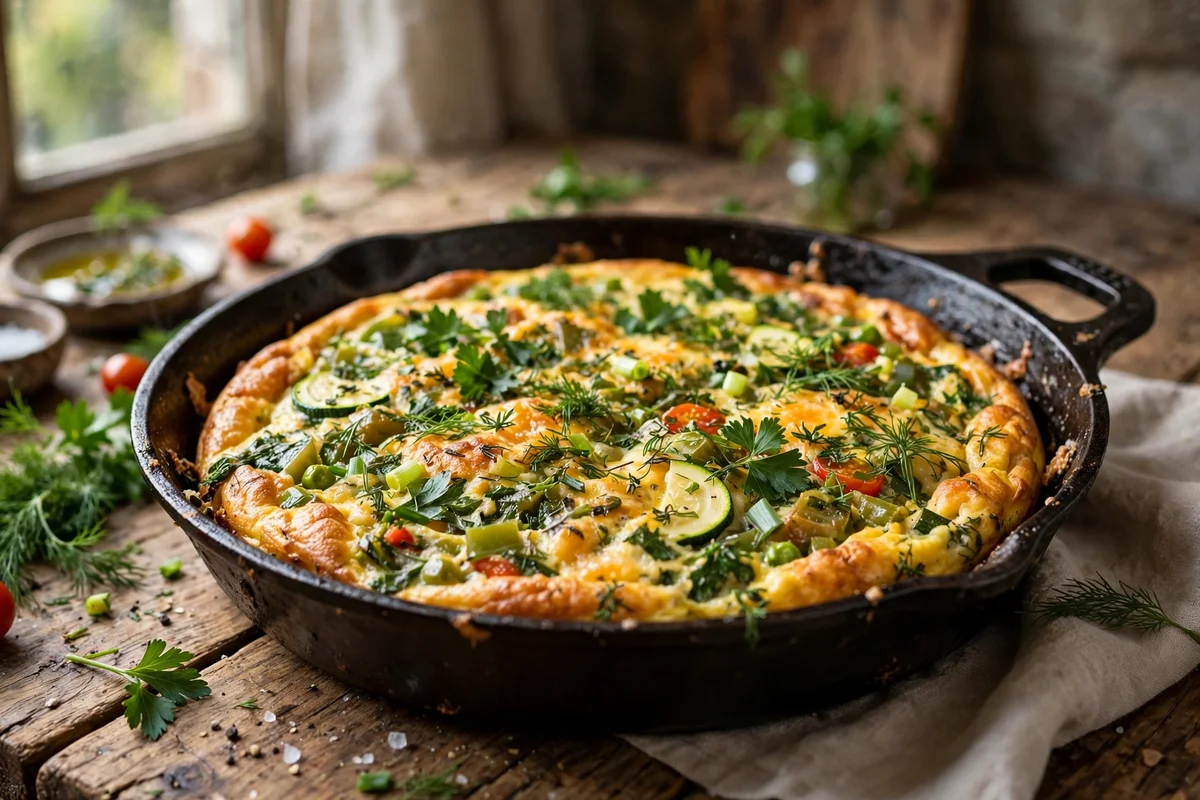
What is a frittata?
A frittata is an Italian egg dish made by cooking beaten eggs with vegetables, cheese, and herbs in a pan, then finishing it under the grill or in the oven. The word comes from the Italian verb friggere, which means to fry, and the dish is a cousin of the Spanish tortilla and the French omelette.
The key difference from a quiche is that a frittata has no pastry crust, so it is quicker to make and lighter to eat. The key difference from an omelette is that a frittata is cooked slowly, filled with ingredients, and served in slices, while an omelette is folded around a filling and served at once.
A frittata is a practical dish for a keeper with too many eggs, because it uses eight to twelve eggs at once, and it can be filled with whatever is in the garden or the fridge. Leftover vegetables, herbs, cheese, and even cooked potatoes all work, and the dish is forgiving of substitutions.
Farm fresh eggs make a particularly good frittata, because their yolks are rich and their flavour is stronger than shop eggs. A frittata is also a good way to use eggs that are near the end of their fridge life, as long as they are still fresh and have been stored properly.
Ingredients for a farm fresh egg frittata
The base of a frittata is eggs, and a standard recipe uses eight to twelve eggs for a pan that serves four to six people. Use the freshest eggs you have, and crack each one into a bowl before adding it to the mixing bowl, so that a bad egg can be discarded without spoiling the batch.
The filling can be any combination of vegetables, cheese, and herbs, and a good starting point is an onion, a pepper, a handful of spinach, and a handful of grated cheese. Cooked potatoes, mushrooms, courgettes, and tomatoes all work well, and the only rule is to cook wet vegetables first so the frittata does not become soggy.
Herbs add flavour, and fresh parsley, chives, basil, or dill all suit a frittata, while dried herbs can be used if fresh ones are not available. A pinch of salt and pepper is enough seasoning, and the cheese adds salt as well, so taste before adding more.
Butter or olive oil is used to cook the vegetables and to stop the eggs sticking to the pan, and a small amount is enough. A heavy pan, such as cast iron or a thick stainless steel pan with an ovenproof handle, is the best choice, because it goes from hob to oven without changing pans.
How to make a frittata with farm fresh eggs, step by step
Heat the oven to 180 degrees Celsius, and whisk the eggs in a bowl with a pinch of salt and pepper until the yolks and whites are fully mixed. Stir in the grated cheese and chopped herbs, and set the bowl aside while you cook the vegetables.
Heat a tablespoon of oil or butter in an ovenproof pan over a medium heat, and cook the onion and pepper for five minutes until they are soft. Add the spinach and cook for a minute until it wilts, then spread the vegetables evenly across the pan and pour the egg mixture over them.
Cook on the hob for three to four minutes, until the edges start to set but the centre is still runny, and use a spatula to lift the edges gently so that uncooked egg flows underneath. Do not stir the eggs, because a frittata is not scrambled egg, and the aim is a flat, even layer.
Move the pan to the oven and bake for 10 to 12 minutes, until the frittata is set all the way through and lightly golden on top. Let it rest for five minutes before slicing, because it firms up as it cools and is easier to cut when it has rested.
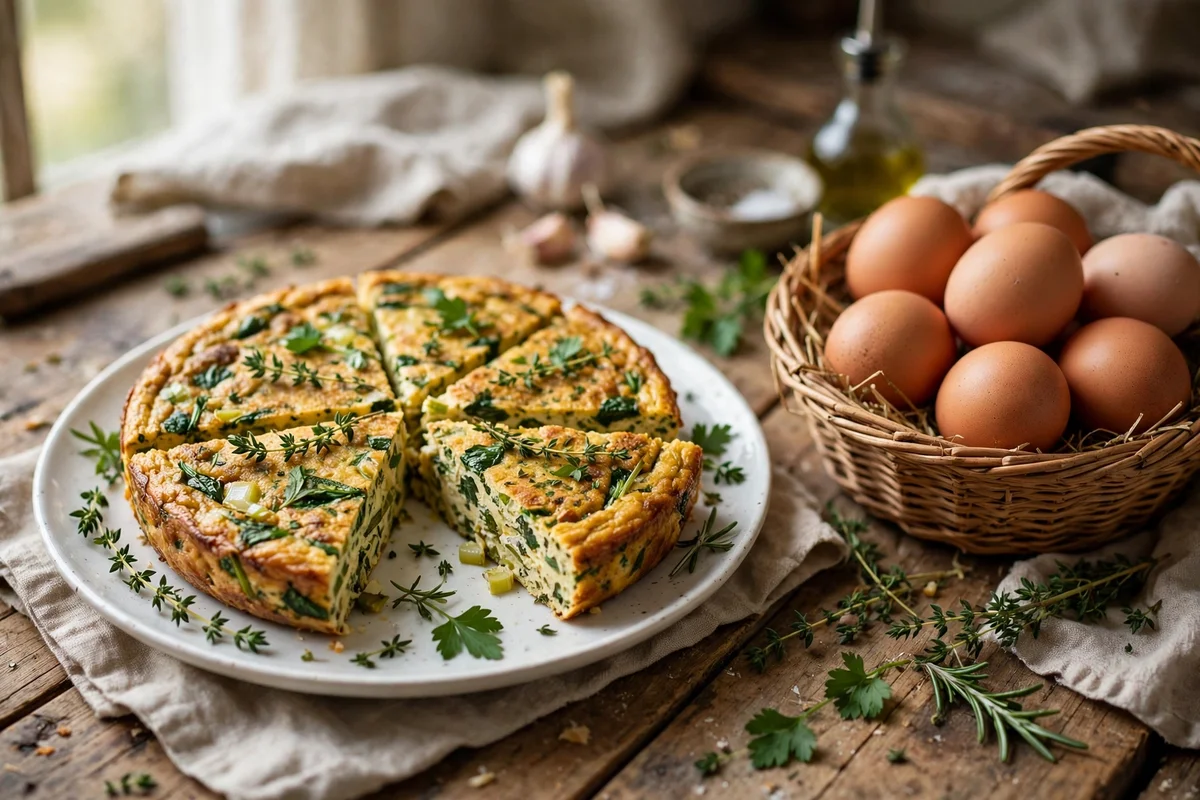
Frittata vs quiche: what is the difference?
A frittata and a quiche are both egg dishes, but the main difference is the crust, because a quiche has a pastry base and a frittata does not. A quiche is baked in a pastry case, which makes it richer and heavier, while a frittata is cooked in a pan and is quicker and lighter to eat.
A quiche usually contains cream or milk as well as eggs, which gives it a soft, custardy texture, while a frittata is made with eggs alone, or with a small amount of milk, and it has a firmer, more egg-like texture. A frittata is also cooked on the hob first, while a quiche is baked from the start.
For a keeper with a glut of eggs, a frittata is the more practical choice, because it uses more eggs, needs no pastry, and can be made in half an hour. A quiche is a better choice for a special occasion, when the pastry and the custard texture are part of the appeal.
Both dishes are good ways to use farm fresh eggs, and both can be filled with garden vegetables and herbs. If you have a pastry case ready, make a quiche, and if you want a quick, one-pan meal, make a frittata, and either way the eggs will be the star of the dish.
Serving and storing a frittata
A frittata can be served hot, warm, or cold, and it is good for breakfast, lunch, or a light supper. Serve it in slices with a salad, bread, or roasted vegetables, and it also works well in a lunchbox, because it holds its shape and tastes good cold.
Leftover frittata should be cooled quickly, covered, and stored in the fridge, where it keeps for three to four days. Reheat slices in the oven or a pan until they are hot all the way through, and do not reheat them more than once.
A frittata can also be frozen, although the texture changes slightly, and it is best frozen in slices wrapped tightly in foil or freezer bags. Thaw it in the fridge overnight and reheat it in the oven, and use it within three months for the best quality.
Do not leave a frittata at room temperature for more than two hours, because cooked egg is a perishable food and bacteria can grow quickly at warm temperatures. If you are taking it to a picnic, keep it in a cool bag and eat it within a couple of hours.
Frittata variations with garden produce
A frittata is a flexible dish, and the filling can change with the seasons and with what is in the garden. In spring, use asparagus, peas, and fresh herbs, and in summer, use courgettes, tomatoes, and basil, while in autumn, use mushrooms, squash, and sage.
Herbs from the garden are a natural fit, and a frittata is a good way to use a glut of parsley, chives, or dill. Our guide on best herbs for chickens covers the herbs that are safe for the flock, and many of the same herbs work well in the kitchen too.
Leftover cooked vegetables, potatoes, and even cooked chicken can go into a frittata, which makes it a good way to use up food that would otherwise be wasted. The only rule is to cook wet ingredients first and to avoid adding too much liquid, because a soggy frittata will not set properly.
Cheese can also vary, and cheddar, feta, goat cheese, and parmesan all work, either alone or in combination. A strong cheese adds flavour with a small amount, while a mild cheese adds creaminess, and the choice depends on what you have and what you like.
Sources: USDA Food Safety and Inspection Service, shell eggs from farm to table.
Related tools and guides
For more on the same topic, see How to Freeze Fresh Eggs.
Frequently asked questions
How do you make a frittata with farm fresh eggs?
Whisk 8 to 12 eggs with salt, pepper, cheese, and herbs, cook vegetables in an ovenproof pan, pour the egg over them, cook on the hob until the edges set, then bake at 180 degrees Celsius for 10 to 12 minutes until set and golden.
What is the difference between a frittata and a quiche?
A frittata has no pastry crust and is cooked in a pan then finished in the oven, while a quiche has a pastry base and usually contains cream, giving it a softer, custardy texture. A frittata is quicker, lighter, and uses more eggs.
How many eggs do you need for a frittata?
Eight to twelve eggs for a pan that serves four to six people. Crack each egg into a bowl first, so a bad egg can be discarded without spoiling the batch.
How long does a frittata keep in the fridge?
Three to four days, cooled quickly, covered, and stored in the fridge. Reheat slices until hot all the way through, and do not reheat them more than once.
Can you freeze a frittata?
Yes, in slices wrapped tightly in foil or freezer bags, for up to three months. Thaw in the fridge overnight and reheat in the oven. The texture changes slightly, but it still tastes good.
About the author
John Walker is the founder of PeckCalc and has kept backyard chickens in Dallas, Texas since 2017. He started PeckCalc to give backyard keepers free calculators and guides with every figure traced to a university extension source.