
How to Make Lemon Curd with Extra Egg Yolks
 By John Walker · Backyard chicken keeper in Dallas, Texas since 2017
How to make lemon curd with extra egg yolks is a question every keeper with a laying flock asks sooner or later, because a glut of eggs means a glut of yolks, and lemon curd is one of the best ways to use them up. Lemon curd is a smooth, tangy spread made from egg yolks, sugar, lemon juice, and butter, and it is cooked gently until it thickens, which makes it safe as well as delicious. A batch made from six yolks uses up the yolks from a week of baking, and it keeps in the fridge for a couple of weeks, or in the freezer for months. This guide gives a simple recipe, explains the food safety steps, and covers storage and uses.
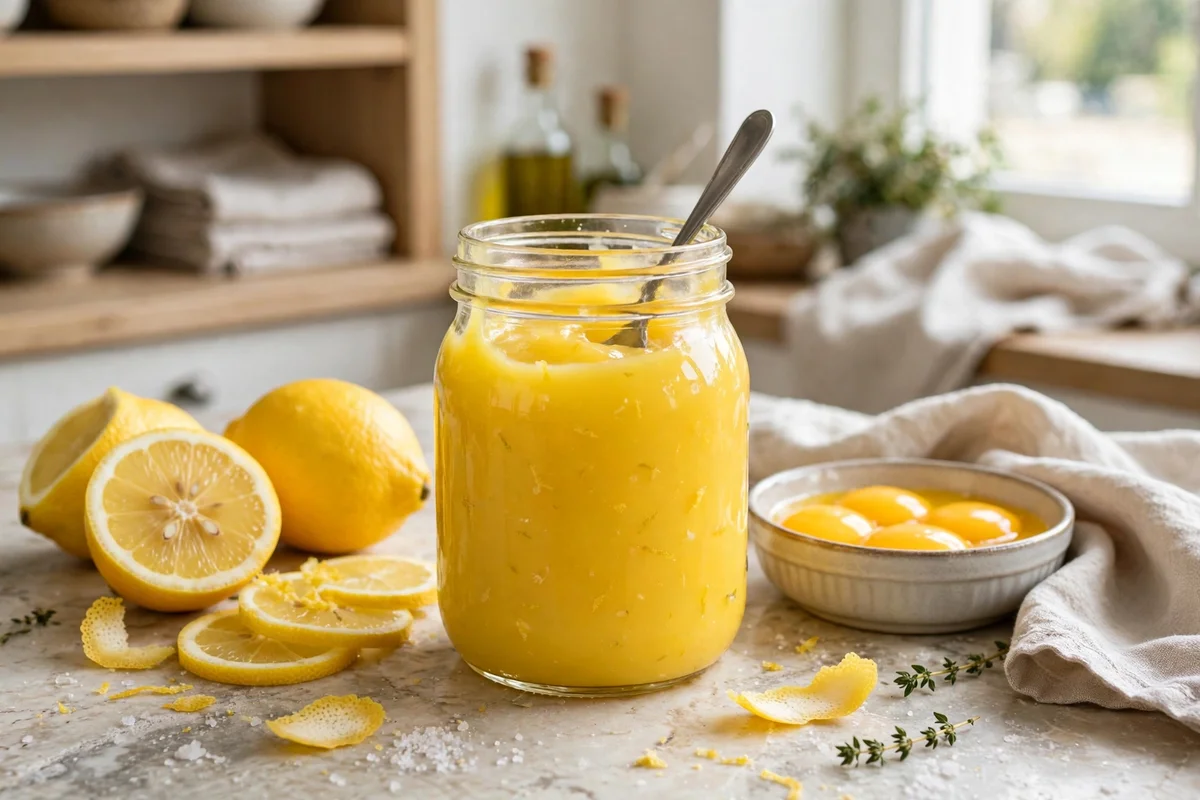
How to make lemon curd with extra egg yolks
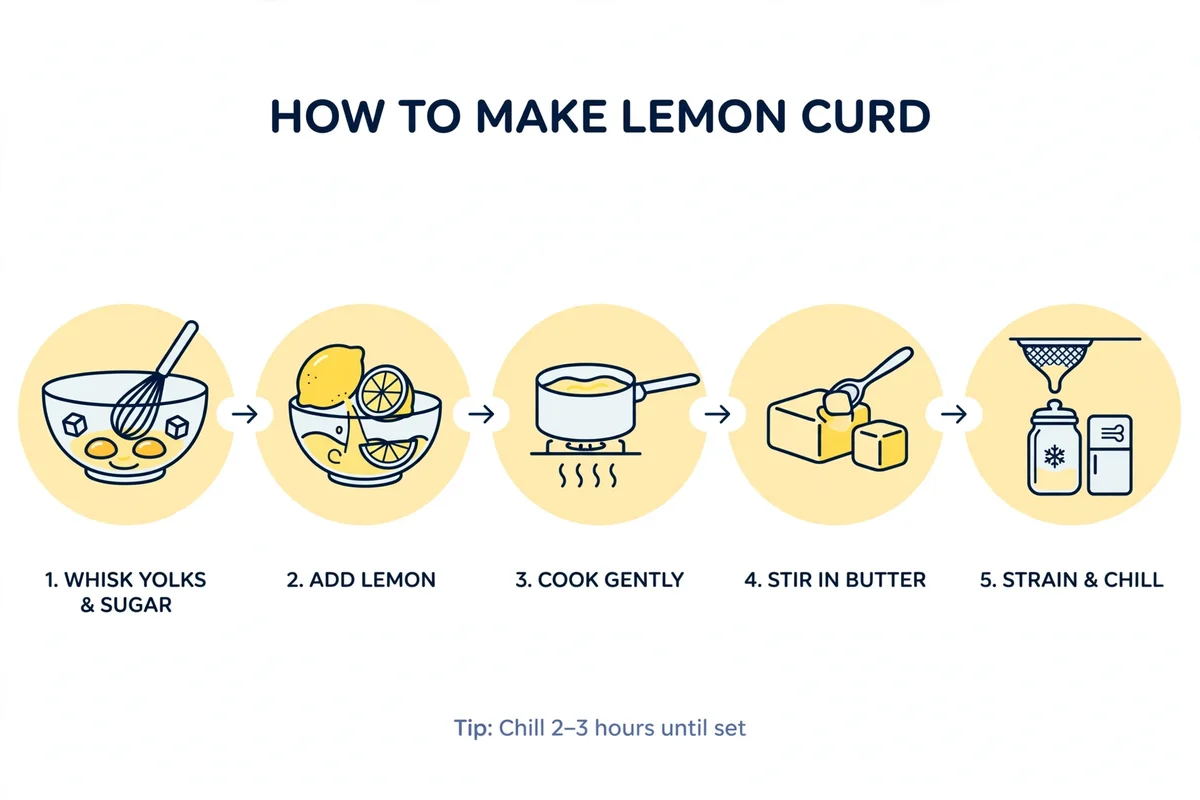
How to make lemon curd with extra egg yolks is simple: whisk egg yolks with sugar and lemon juice, cook the mixture gently over low heat until it thickens, stir in butter off the heat, strain it, and chill it.
The whole process takes about twenty minutes, and it uses six yolks, which is a good batch size for a keeper with a glut of eggs. The key is gentle heat and constant stirring, because yolks curdle if they get too hot.
Start with six egg yolks, half a cup of sugar, half a cup of fresh lemon juice, and a tablespoon of finely grated lemon zest. Whisk the yolks and sugar together in a heatproof bowl until the mixture is pale, then whisk in the lemon juice and zest. Set the bowl over a pan of simmering water, making sure the bowl does not touch the water, and stir constantly with a wooden spoon or a whisk.
Cook the mixture for about ten minutes, stirring all the time, until it thickens enough to coat the back of a spoon. The curd is ready when you can draw a line through it on the spoon and the line stays. Take the bowl off the heat, stir in four tablespoons of cold butter, a piece at a time, until it melts and the curd is smooth and glossy. Strain the curd through a fine sieve into a clean jar, and let it cool before putting the lid on.
Why lemon curd is a good use for extra yolks
Lemon curd is a good use for extra yolks because it uses yolks in bulk, and it keeps well. A keeper who bakes meringues, angel food cake, or egg-white omelettes will have yolks left over, and those yolks will go to waste if they are not used within a few days.
Lemon curd turns six yolks into a jar of something useful, and it uses up the yolks before they spoil.
Lemon curd is also versatile. It spreads on toast, scones, and pancakes, it fills tarts and cakes, it swirls into yogurt, and it makes a good gift in a small jar. A batch made from a glut of yolks can be shared with neighbours, which is a pleasant way to pass on the surplus from a laying flock.
The yolks in lemon curd are cooked, which matters for food safety. Raw yolks carry a small risk of Salmonella, and cooking the curd to a thick, steaming consistency reduces that risk. Lemon curd is not a raw-egg food, and that is part of why it is a good choice for using up yolks.
Food safety: cooking, cooling, and storage
Food safety starts with the eggs. Use fresh eggs from your own hens, and use them on the day you collect them if you can. Wash your hands before handling the eggs, and crack each yolk into a separate bowl before adding it to the mixture, so that a bad egg does not spoil the whole batch.
Discard any egg that smells bad or looks unusual.
Cook the curd gently but thoroughly. The mixture should reach a temperature where it thickens and steams, and it should coat the back of a spoon. Do not boil the curd, because boiling will curdle the yolks and make the curd grainy, but do not undercook it either, because undercooked curd will not set and will not keep as well. Constant stirring and low heat are the answer.
Cool the curd quickly and store it in the fridge. Pour the strained curd into a clean jar, let it cool to room temperature, and then put the lid on and refrigerate it. Lemon curd keeps in the fridge for one to two weeks, and it keeps in the freezer for several months. Label the jar with the date, and use the oldest jar first.
Troubleshooting: lumps, thin curd, and graininess
Lumps in lemon curd usually mean the yolks got too hot and started to curdle. If the curd has small lumps, strain it through a fine sieve, which will remove most of them, and the curd will still be usable.
If the curd has large lumps and a scrambled texture, it has curdled badly, and it is best to start again, using lower heat and more stirring.
Thin curd usually means it was not cooked long enough. If the curd is still runny after ten minutes, keep cooking it gently, stirring all the time, until it thickens. The curd will also thicken as it cools, so do not judge it while it is hot. A curd that coats the back of a spoon is ready, even if it still looks a little loose.
Graininess can come from the sugar not dissolving, or from the zest being too coarse. Use fine sugar, or caster sugar, which dissolves more easily, and grate the zest finely. Straining the curd at the end will remove any remaining graininess, and it will give a smooth, glossy finish.
| Ingredient | Amount for one batch | Notes |
|---|---|---|
| Egg yolks | 6 yolks | Fresh, from your own hens if possible |
| Sugar | Half a cup | Fine or caster sugar dissolves best |
| Lemon juice | Half a cup | Freshly squeezed, about 2 to 3 lemons |
| Lemon zest | 1 tablespoon, finely grated | Only the yellow skin, not the white pith |
| Butter | 4 tablespoons, cold | Stir in off the heat, a piece at a time |
Variations and uses
Lemon curd can be varied easily. Lime curd uses lime juice and zest instead of lemon, and it has a sharper, more aromatic flavour. Orange curd uses orange juice and zest, and it is sweeter and milder. Passion fruit curd uses passion fruit pulp, and it is tart and fragrant.
The method is the same for all of them, and the yolk count stays the same.
Use lemon curd as a spread, a filling, or a topping. It spreads on toast and scones, it fills tart shells and sponge cakes, it swirls into plain yogurt, and it tops pancakes and waffles. A spoonful in a bowl of fresh berries is a simple dessert, and a jar of lemon curd is a good gift for a neighbour who buys your eggs.
Lemon curd can also be frozen. Pour it into a freezer-safe container, leave a little room at the top for expansion, and freeze it for up to three months. Thaw it in the fridge overnight, stir it well, and use it within a week. Freezing does not change the flavour much, and it is a good way to keep a large batch from going to waste.
Storing eggs and yolks before you cook
Extra yolks can be stored in the fridge for a few days before you make lemon curd, but they need care. Put the yolks in a small container, cover them with a little water or a splash of lemon juice to stop them drying out, and use them within two days.
Yolks left uncovered in the fridge will form a skin and dry out, and they will not make good curd.
Yolks can also be frozen. Beat them lightly with a pinch of salt or sugar, pour them into an ice cube tray, and freeze them. Frozen yolks keep for several months, and they thaw quickly for cooking. Label the tray with the number of yolks and the date, so you know what you have.
The best plan is to make lemon curd on the day you have the yolks, rather than storing them. A batch of curd takes twenty minutes, and it keeps longer than raw yolks, so it is the better way to preserve the surplus. If you have a glut of whole eggs as well, our guide on how to freeze fresh eggs explains how to preserve those too.
Sources: National Center for Home Food Preservation.
Related tools and guides
For more on the same topic, see How to Freeze Fresh Eggs.
Frequently asked questions
How to make lemon curd with extra egg yolks?
Whisk six yolks with half a cup of sugar and half a cup of lemon juice, cook gently over simmering water until the mixture coats a spoon, stir in four tablespoons of butter off the heat, strain into a jar, and chill.
How long does homemade lemon curd keep?
Homemade lemon curd keeps in the fridge for one to two weeks, and in the freezer for up to three months. Label the jar with the date and use the oldest jar first.
Can I use yolks from my own hens for lemon curd?
Yes. Use fresh eggs, crack each yolk into a separate bowl before adding it to the mixture, and discard any egg that smells bad or looks unusual. The yolks are cooked in the curd, which reduces the risk of Salmonella.
Why is my lemon curd lumpy?
Lumps usually mean the yolks got too hot and started to curdle. Strain the curd through a fine sieve to remove small lumps, and use lower heat with constant stirring next time.
Can I freeze lemon curd?
Yes. Pour it into a freezer-safe container, leave a little room at the top, and freeze for up to three months. Thaw in the fridge overnight, stir well, and use within a week.
About the author
John Walker is the founder of PeckCalc and has kept backyard chickens in Dallas, Texas since 2017. He started PeckCalc to give backyard keepers free calculators and guides with every figure traced to a university extension source.