
How to Store Chicken Feed
 By John Walker · Backyard chicken keeper in Dallas, Texas since 2017
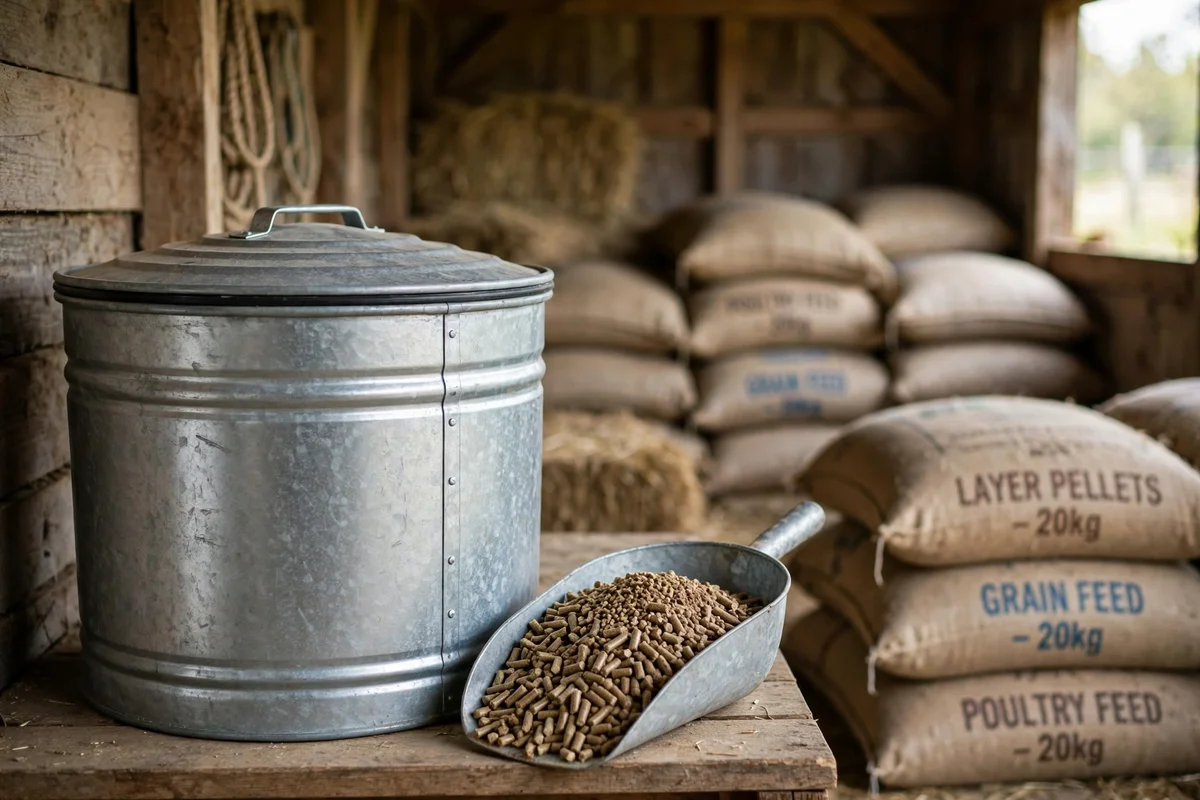
Store chicken feed in a cool, dry place in a sealed container with a tight lid, off the floor and away from the walls. A metal bin with a lid is best, because it keeps out rats and moisture, and it stops feed going stale. Keep the feed in its original bag inside the bin if you can, so the milling date and the label stay with it — and buy only as much as your flock will use in four to six weeks.
How to store chicken feed
Store chicken feed in a cool, dry place, in a sealed container with a tight-fitting lid, raised off the floor and away from the walls. A galvanised metal bin with a lid is the best choice, because it keeps out rats and mice, does not absorb moisture, and cannot be chewed through.
Keep the feed in its original bag inside the bin when you can, so the milling date and the feed label stay with the feed.
The reason storage matters is that feed loses its vitamins over time, and damp feed can grow mould that makes chickens seriously ill. A bag left open in a damp shed will go stale within weeks, and a bag that gets wet can be ruined in a day. Good storage is cheap insurance: a metal bin costs little, lasts for years, and protects every bag you buy.
The best containers for chicken feed
A galvanised metal bin with a tight lid is the first choice for most keepers. It is rat-proof, moisture-proof, and sturdy enough to last for years in a shed or garage. Choose a size that holds one bag of feed comfortably, with room to scoop, and make sure the lid fits tightly: a loose lid is no better than an open bag when it comes to mice and damp.
Food-grade plastic bins with a snap lid are a good second choice, especially if rats are not a problem in your area. They are lighter and cheaper than metal, and they seal well, but a determined rat can chew through plastic, so they are not the answer in a barn with a rat problem. Old chest freezers with a broken seal make excellent feed bins for large flocks, because they are rodent-proof and hold several bags, but they are heavy and hard to move.
Where to put the feed bin
Put the feed bin in a cool, dry corner of a shed, garage, or barn, off the floor on a pallet or a few bricks, and a few inches away from the wall so air can move around it. Heat and sunlight break down the vitamins in feed, so a hot garage in summer or a sunny corner of the barn is not a good store, and a damp shed is worse. A cool, dry place out of direct sun is what you want.
Do not store feed in the coop itself, because the damp and the dust from the birds will spoil it faster, and spilled feed in the coop attracts rats at night. Keep the bin near the coop for convenience, but not inside it. If you have no shed, a sealed bin under a covered porch or in a dry outbuilding works, as long as it stays dry and out of the sun.
Keeping rats and mice out
Rats and mice are the biggest threat to stored feed, and they will find any gap. A metal bin with a tight lid is the best defence, and it should be the first thing you buy if you have rats in the area.
Keep the area around the bin clean and free of spilled feed, because spilled grain is what draws rodents in the first place, and store bags off the floor so rats cannot nest underneath them.
Check the bin and the bags regularly for gnaw marks, droppings, and holes, and deal with a rodent problem promptly rather than letting it grow. Do not use poison near the feed bin, because a poisoned rat can contaminate the feed, and a poisoned bird is a real risk if a chicken finds a bait block. Traps and good storage are the safer combination, and a clean store is the best prevention of all.
Feed storage mistakes to avoid
The most common mistakes are buying too much feed at once, leaving the bag open, and storing feed in a damp place. A large sack that sits open for months will lose its vitamins and may go mouldy long before it is finished, and the saving on a bulk buy is lost if half the feed is spoiled.
Buy only as much as your flock will use in four to six weeks, and use the oldest feed first.
Other mistakes include storing feed in a plastic bag on a damp floor, where it will absorb moisture from below, and storing different feeds together without labels, so you cannot tell starter from layer feed. Keep each feed in its own labelled bin or bag, and check the milling date when you buy: feed is freshest in the first few weeks after milling, and our guide on how long does chicken feed last covers shelf life in detail.
Feed storage at a glance
This table sums up the main points: the right container, the right place, and the right amount to buy. If you get those three right, your feed will stay fresh and safe for as long as your flock needs it.
| Factor | Best practice | Avoid |
|---|---|---|
| Container | Sealed metal bin with tight lid | Open bag; torn or chewed sack |
| Location | Cool, dry, out of direct sun | Damp shed; hot garage; inside the coop |
| Position | Off the floor, away from walls | Directly on a damp floor; against a wall |
| Amount | 4 to 6 weeks of feed at a time | Bulk sacks that sit open for months |
| Pests | Clean area; sealed bin; check often | Spilled feed; poison near the bin |
| Freshness | Use oldest first; check milling date | Mixing old and new feed without labels |
Storing different types of feed
Different feeds have different storage needs, though the basic rule is the same for all of them: cool, dry, sealed, and used within a few weeks. Layer feed, grower feed, and starter feed all lose vitamins at about the same rate, and all of them can go mouldy if they get damp.
Keep each type in its own labelled container, and do not mix old and new feed in the same bin, because the old feed will be at the bottom and may be forgotten.
Medicated starter feed deserves extra care, because it has a shorter shelf life than plain feed and the medication loses strength over time. Buy it fresh, store it as you would any feed, and do not keep it past its date. Scratch grains and whole grains store longer than mixed feeds, because they have less added fat and fewer vitamins to lose, but they still need a sealed, dry container to keep out rats and moisture.
A simple feed storage routine
A simple routine keeps feed fresh with almost no effort: buy a fresh bag every four to six weeks, pour it into a labelled metal bin or keep it sealed in its bag inside the bin, check the bin for dampness and droppings once a week, and sweep up any spilled feed around the bin at once.
Use the Chicken Feed Calculator to work out how much feed your flock uses, so you buy the right amount and never end up with a stale sack.
If you find mouldy or damp feed, throw it away rather than feeding it to the flock. Mouldy feed can carry toxins that make chickens seriously ill, and no amount of drying will make it safe. The cost of a wasted bag is small next to the cost of a sick flock, and good storage makes a wasted bag rare. For more on feeding, see our guide on what to feed chickens.
Sources: University of Minnesota Extension — Poultry and poultry.extension.org.
Related tools and guides
For more on the same topic, see How Long Does Chicken Feed Last?.
Frequently asked questions
How to store chicken feed?
Store chicken feed in a cool, dry place in a sealed container with a tight lid, off the floor and away from walls. A metal bin with a lid is best, because it keeps out rats and moisture. Keep the feed in its original bag inside the bin if you can, so the date and label stay with it.
What is the best container for storing chicken feed?
A galvanised metal bin with a tight-fitting lid is the best container for chicken feed. It keeps out rats and mice, does not absorb moisture, and will not be chewed through. Food-grade plastic bins with a snap lid are a good second choice if rats are not a problem.
Can I store chicken feed in a damp shed?
No. Feed stored in a damp shed or an open bag will absorb moisture, go stale, and can grow mould. Mouldy feed can make chickens seriously ill. Always store feed in a sealed container in a dry place, and check it for dampness or a musty smell before feeding.
How much feed should I buy at once?
Buy only as much feed as your flock will use within four to six weeks, and store it sealed and dry. Smaller, fresher bags are better than a large sack that sits open for months. Check the milling date on the bag and use the oldest feed first.
Can I store chicken feed in the summer heat?
Yes, in a cool, dry place and in a sealed container. Heat and sunlight break down the vitamins in feed, so a hot garage or a sunny corner of the barn is not a good store. A cool, dry corner of a shed or garage, in a sealed metal bin, is ideal.
About the author
John Walker is the founder of PeckCalc and has kept backyard chickens in Dallas, Texas since 2017. He started PeckCalc to give backyard keepers free calculators and guides with every figure traced to a university extension source.