
Infectious Laryngotracheitis in Chickens: Signs
 By John Walker · Backyard chicken keeper in Dallas, Texas since 2017
Infectious laryngotracheitis in chickens is a highly contagious viral respiratory disease that causes gasping, coughing, and in severe cases bloody mucus that can block the windpipe and suffocate the bird. There is no cure, and birds that recover remain carriers for life, so prevention and vaccination matter more than treatment. This guide explains the signs, what to do in an outbreak, and how to keep it out of your flock.
This guide is general information, not veterinary advice. If a bird is sick, injured, or not improving, contact a poultry veterinarian, and always follow product labels and your veterinarian's instructions for any medication.
What is infectious laryngotracheitis in chickens?
Infectious laryngotracheitis in chickens, often shortened to ILT or called laryngo, is a viral respiratory disease caused by Gallid alphaherpesvirus 1, a herpesvirus that attacks the larynx and trachea — the voice box and windpipe. It affects chickens and pheasants, and occasionally turkeys, and it can affect birds of all ages.
The disease has two forms. The severe form causes gasping, coughing, and bloody mucus, and birds can die from suffocation when plugs of mucus and debris block the windpipe. The mild form causes watery eyes, mild coughing, and a drop in egg production, and it is easy to mistake for a cold. Both forms can occur in the same flock at the same time, and the incubation period is 6 to 14 days after exposure.
Infectious laryngotracheitis is a notifiable disease in some regions, including Saskatchewan in Canada, where it must be reported within 24 hours of confirmation. Check the rules where you live, because reporting requirements differ by country and state. Once a flock has had the disease, recovered birds carry the virus for life and can shed it again when stressed, which makes the disease very hard to eliminate from a property.
What are the symptoms of infectious laryngotracheitis in chickens?
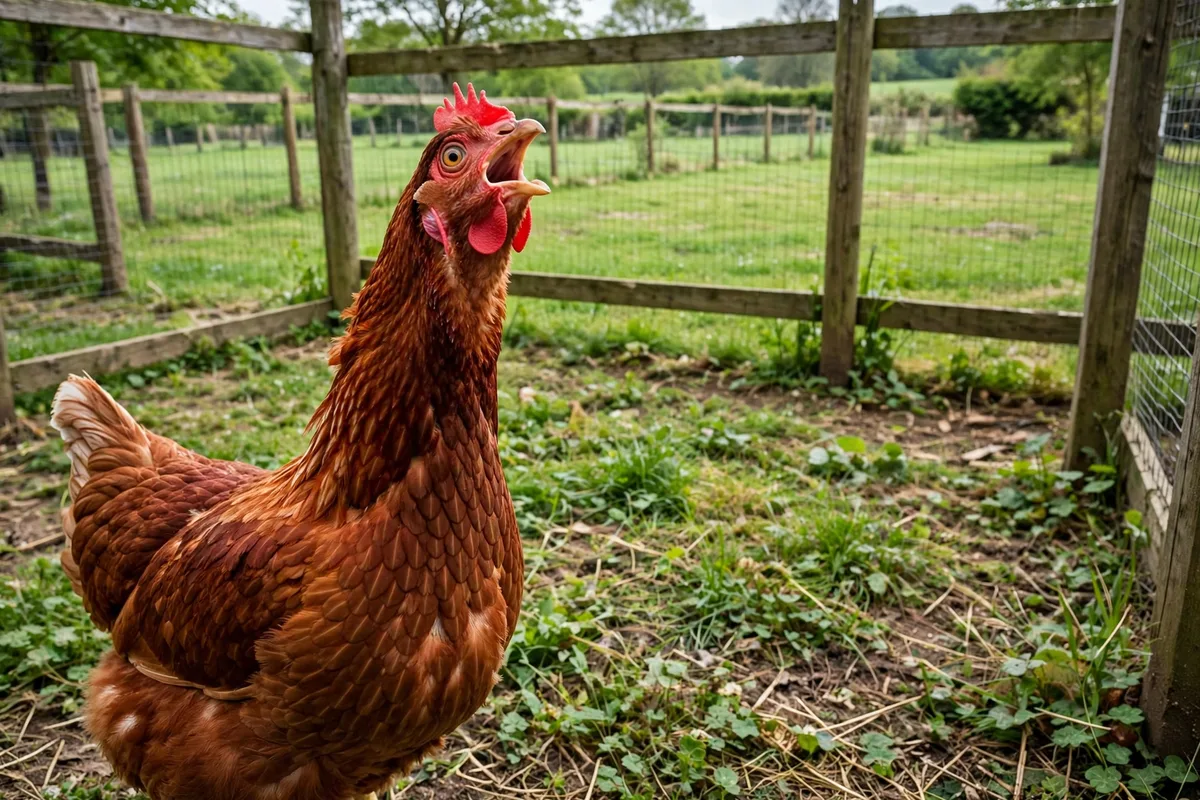
The first sign of infectious laryngotracheitis in chickens is often watery eyes. Affected birds then become quiet, because breathing is difficult, and progress to coughing, sneezing, and shaking the head to dislodge the cheesy plugs that form in the windpipe. Birds stretch their heads and necks out to breathe, and inhalation produces a wheezing and gurgling sound that can be heard from outside the coop.
In severe outbreaks the hallmark sign is bloody mucus. Affected birds cough or gasp and expel blood-tinged discharge, which can spatter on walls, feeders, and other birds. The eyes become swollen and watery, the face may swell, and egg production drops suddenly. Mortality in a severe outbreak can reach 10 to 20 percent of the flock in a short period, and many of the deaths are from suffocation as plugs block the windpipe.
Mild cases are harder to spot: a few birds with watery eyes, a slight cough, and a small drop in laying. These mild cases are dangerous in their own way, because they go unnoticed while the virus spreads through the flock, and because a mild strain can still leave carriers behind. Any respiratory illness with watery eyes that does not clear in a few days deserves a closer look.
| Sign | What to look for | How urgent |
|---|---|---|
| Watery eyes | Often the first sign; eyes watery, swollen, or closed | Isolate and monitor |
| Gasping | Neck stretched out, open-beak breathing, struggling for air | Act the same day |
| Bloody mucus | Blood-tinged discharge coughed up, spatter on walls and feeders | Call a vet |
| Coughing and head shaking | Harsh cough, head shaking to clear the windpipe | Isolate and monitor |
| Wheezing and gurgling | Noisy breathing, especially on inhalation | Isolate and monitor |
| Swollen face or sinuses | Swollen eyelids and face, nasal discharge | Call a vet |
| Sudden egg drop | Sharp fall in laying with lethargy and poor appetite | Isolate and monitor |
How does infectious laryngotracheitis spread?
Infectious laryngotracheitis spreads through the air in droplets from coughing birds, and through direct contact with infected birds, their droppings, and contaminated feed, water, and equipment. Infected birds shed the virus in respiratory secretions, and healthy birds inhale it. The virus can also travel on clothing, footwear, and hands, and on crates and vehicles used to move birds.
The most important feature of spread is the carrier state. Birds that recover from infectious laryngotracheitis remain infected for life, and they can shed virus again when stressed — by moulting, by a change in housing, by the onset of laying, or by another illness. This means a flock that has had the disease can never be considered free of it, and a healthy-looking bird bought from such a flock can start an outbreak in your coop weeks later.
Live vaccines can also spread. The live attenuated vaccines used against infectious laryngotracheitis contain a weakened form of the virus, and in some circumstances the vaccine virus can spread to unvaccinated birds and, rarely, revert to a more virulent form. This is why vaccination should only be used on veterinary advice, why the whole flock should be vaccinated at once, and why vaccinated and unvaccinated birds should not be mixed.
How is infectious laryngotracheitis diagnosed?
Infectious laryngotracheitis is suspected from the signs — gasping, bloody mucus, watery eyes, and a sudden drop in laying — but it can only be confirmed by laboratory testing. A veterinarian takes tracheal swabs from sick birds, and the laboratory identifies the virus. Post-mortem examination of a dead bird typically shows a swollen, blood-stained windpipe with plugs of mucus and debris.
Diagnosis matters because the disease is easily confused with other respiratory illnesses. Gasping is also the classic sign of gapeworm, and coughing with discharge is seen in infectious bronchitis, mycoplasma, and Newcastle disease. The difference is the bloody mucus and the tracheal plugs, which are distinctive to infectious laryngotracheitis, and the watery eyes that come first. Our guide on gapeworm in chickens explains how to tell the two apart, because treating a virus as a worm wastes the days that matter.
If you suspect infectious laryngotracheitis, isolate the sick birds immediately, stop moving birds and equipment, and call your veterinarian the same day. Do not wait for a laboratory result before isolating: the virus spreads fast, and every day of delay means more birds exposed. Our chicken first aid kit guide explains how to set up an isolation pen and what to keep in it. Ask your veterinarian whether the disease is notifiable where you live, and follow their advice on reporting.
How do you treat infectious laryngotracheitis in chickens?
There is no specific antiviral treatment for infectious laryngotracheitis in chickens. Management focuses on supportive care, biosecurity, and vaccination, and on preventing secondary bacterial infections. Antibiotics do not affect the virus, but a veterinarian may prescribe them to control secondary infections such as E. coli or mycoplasma, which commonly complicate the disease.
Supportive care means a warm, stress-free environment with clean water, good feed, and good ventilation. Reduce dust and ammonia in the coop, because both irritate the damaged windpipe, and keep the lighting dim to calm severely affected birds. For small flocks, the University of Kentucky Extension guidance notes that swabs can be used to remove plugs from the windpipes of gasping birds, which can save a bird that would otherwise suffocate — but this is a delicate procedure, and it is better done by or with a veterinarian than attempted alone.
Birds that are severely affected, unable to breathe, or not improving should be humanely culled rather than left to suffocate, and dead birds should be disposed of safely, away from other poultry. Remember that survivors are carriers for life: they will never be safe to sell or give away to another keeper, and they can start a new outbreak if stressed. Some keepers choose to cull the whole affected flock and start again with clean stock, and a veterinarian can advise whether that is the right choice for your situation.
How do you prevent infectious laryngotracheitis in chickens?
Vaccination is the primary control tool for infectious laryngotracheitis in areas where the disease is common. Two types of vaccine are used: live attenuated vaccines, usually given by eye drop, and newer recombinant vaccines. Live vaccines are effective but must be used carefully, because the vaccine virus can spread to unvaccinated birds. Our chicken vaccination schedule guide explains the timing, and your veterinarian can advise whether vaccination is appropriate for your area and your flock.
Biosecurity is the other half of prevention. Quarantine new birds for at least 30 days, buy birds only from sources you trust, and never buy birds from a flock that has had infectious laryngotracheitis, because carriers look healthy. Do not share equipment, crates, or clothing between flocks, and disinfect anything that has been near other poultry. Keep wild birds and their droppings away from feed and water where you can.
Because carriers shed virus when stressed, keep your flock calm and stable: avoid sudden changes in housing, feed, or flock composition, and manage moulting and the onset of laying with care. If you have had an outbreak, rest the property, clean and disinfect the coop thoroughly, and do not bring in new birds until your veterinarian advises it is safe. A flock that has recovered should be kept as a closed flock — no birds in, and no birds out to other keepers.
Infectious laryngotracheitis vs gapeworm
The most common confusion with infectious laryngotracheitis is gapeworm, because both cause gasping with the neck stretched out. The difference is in the details. Gapeworm causes gasping and head shaking, but the eyes are usually normal and there is no bloody mucus. Infectious laryngotracheitis starts with watery eyes, causes swollen sinuses and discharge, and in severe cases produces bloody mucus. Gapeworm usually affects one or a few young birds; infectious laryngotracheitis spreads through the flock and causes a sudden drop in egg production.
The other confusion is with infectious bronchitis and mycoplasma, which also cause coughing and discharge. Infectious bronchitis causes misshapen eggs and spreads in days; mycoplasma causes foamy eyes and spreads over weeks. Neither causes the bloody mucus or tracheal plugs of infectious laryngotracheitis.
Read our guides on gapeworm in chickens, infectious bronchitis in chickens, and mycoplasma in chickens to compare the signs side by side, and see chicken respiratory illness for a general guide to breathing problems.
| Condition | Gasping? | Eyes | Bloody mucus | Spread |
|---|---|---|---|---|
| Infectious laryngotracheitis | Yes, severe | Watery, swollen | Yes, hallmark sign | Fast, whole flock |
| Gapeworm | Yes, classic sign | Usually normal | No | One or a few birds |
| Infectious bronchitis | Mild, in chicks | Watery discharge | No | Fast, whole flock |
| Mycoplasma | Mild wheeze | Foamy, swollen | No | Slow, over weeks |
When to call a vet
Call a veterinarian immediately if birds are gasping, coughing up blood, or dying from breathing difficulty, or if mortality rises quickly in the flock. Infectious laryngotracheitis can kill by suffocation, and a veterinarian can confirm the diagnosis, advise on reporting, and help you decide whether to treat, cull, or close the flock.
Call a veterinarian the same day if several birds develop watery eyes and coughing together, if egg production drops suddenly with respiratory signs, or if a bird that seemed to recover starts gasping again. Recovered birds are carriers, so a second wave of signs is common, and veterinary advice is needed to manage it.
Ask your veterinarian whether infectious laryngotracheitis is notifiable where you live, and follow their advice on reporting and on whether vaccination is appropriate for your flock. Do not vaccinate without veterinary advice: live vaccines carry their own risks, and the wrong programme can make the problem worse.
Sources: for infectious laryngotracheitis signs, treatment, and control, see the University of Kentucky guidance at poultry.extension.org, the Alberta agriculture fact sheet at Alberta.ca. This guide is general information, not veterinary advice; consult a veterinarian for a sick flock.
Related tools and guides
For more on the same topic, see Chicken Vaccination Schedule for Backyard Flocks and Chicken First Aid Kit: What to Keep and How to Use It.
Frequently asked questions
What are the first signs of infectious laryngotracheitis in chickens?
Watery eyes are usually the first sign. Birds then become quiet, cough, sneeze, and shake their heads, and stretch their necks out to breathe with a wheezing or gurgling sound. In severe outbreaks they cough up bloody mucus, and egg production drops suddenly.
Is there a cure for infectious laryngotracheitis in chickens?
No. There is no antiviral treatment for infectious laryngotracheitis. Care focuses on warmth, clean water, good ventilation, and low stress, and a veterinarian may prescribe antibiotics for secondary bacterial infections. Severely affected birds may need to be humanely culled.
Do chickens that recover from infectious laryngotracheitis stay carriers?
Yes. Birds that recover remain carriers for life and can shed the virus again when stressed, for example during moulting or the onset of laying. A recovered flock should be kept closed, with no birds sold or given to other keepers.
How can I tell infectious laryngotracheitis from gapeworm?
Both cause gasping with the neck stretched out, but infectious laryngotracheitis starts with watery, swollen eyes and can produce bloody mucus, and it spreads through the flock with a sudden drop in laying. Gapeworm usually affects one or a few young birds, with normal eyes and no bloody mucus.
Should I vaccinate my flock against infectious laryngotracheitis?
Only on veterinary advice. Live vaccines are effective but the vaccine virus can spread to unvaccinated birds and rarely revert to a more virulent form. Vaccination is mainly used where the disease is already common, and the whole flock should be vaccinated at once.
About the author
John Walker is the founder of PeckCalc and has kept backyard chickens in Dallas, Texas since 2017. He started PeckCalc to give backyard keepers free calculators and guides with every figure traced to a university extension source.