
Is My Chicken Sick or Molting? How to Tell
 By John Walker · Backyard chicken keeper in Dallas, Texas since 2017
Is my chicken sick or molting? It is one of the most common worries for a keeper, because the two can look alike: feathers everywhere, a bird that looks thin and ragged, and fewer eggs in the nest box. The difference matters, because a molt is normal and needs patience and protein, while a sick bird needs help now. This guide gives you a clear way to tell them apart: the pattern of feather loss, the bird's energy and appetite, the colour of the comb, and the timing of the year. By the end, you will know which one you are looking at, and what to do next.
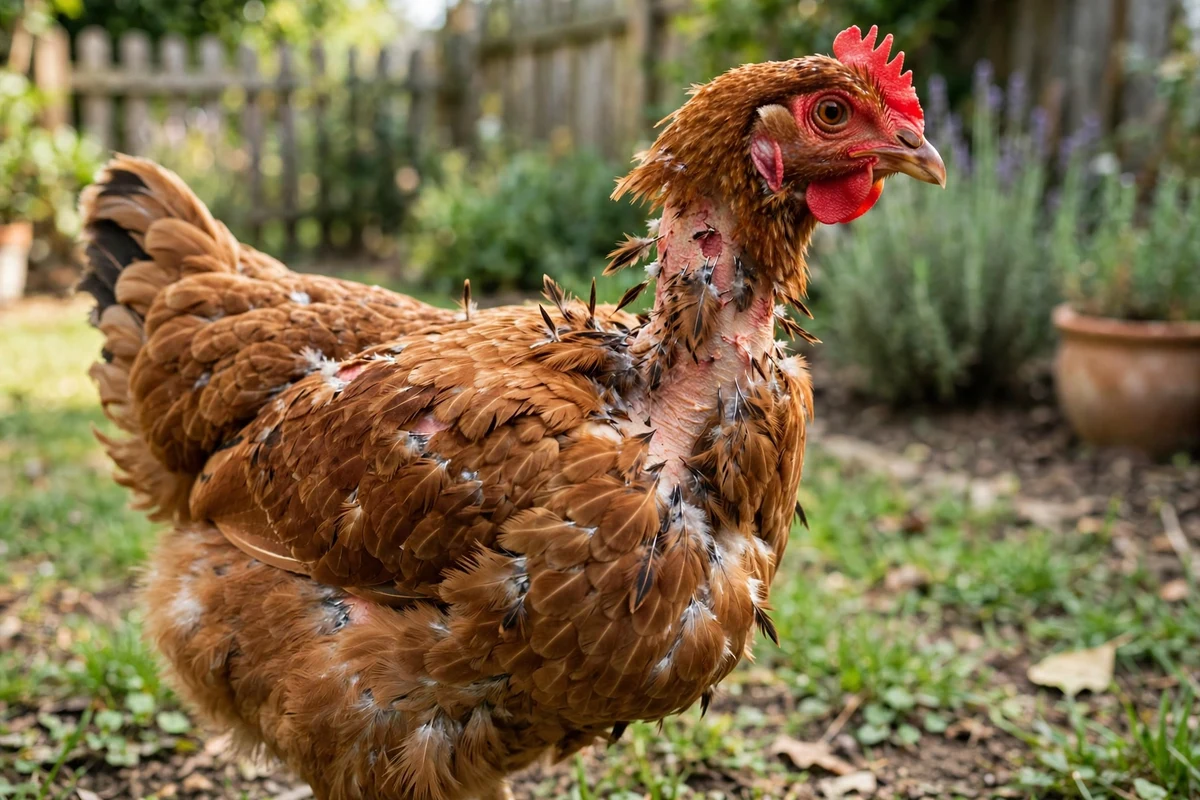
Is my chicken sick or molting? The quick check
Is my chicken sick or molting? Look at the pattern first: a molting bird loses feathers evenly and grows new pin feathers at the same time, while a sick bird loses feathers in patches, has no new growth, and shows other signs of illness.
A molting hen is usually still bright, alert, and eating well, even though she looks scruffy and has stopped laying. A sick hen is dull, quiet, off her food, or has a pale comb, runny droppings, or laboured breathing — and any of those signs means illness, not molt.
The timing is the second clue. A molt usually happens in late summer or autumn, after the first year of laying, and it lasts about eight to twelve weeks. A bird that starts losing feathers in spring, or a bird that has been losing feathers for months without regrowing them, is probably not molting. Young birds also molt as they grow, but that is a lighter, faster process than the adult annual molt.
Feather loss alone is never enough to diagnose a molt. Mites, lice, feather pecking by flockmates, and a lack of protein can all cause feather loss, and each of them needs a different fix. The question is not only whether feathers are falling out, but whether new feathers are coming in, whether the bird is eating and behaving normally, and whether anything else looks wrong. This guide works through each of those checks in turn.
If you are unsure after the checks below, treat the bird as possibly sick. A molt can wait, but an illness cannot. Separate a bird you are worried about, keep her warm, offer food and water, and watch her for a day. A molting bird will eat, drink, and behave normally in the separation pen, while a sick bird will usually show her illness more clearly once she is on her own.
What a normal molt looks like
A normal molt follows a pattern. It usually starts at the head and neck, moves to the breast and body, and finishes at the wings and tail. The bird loses old feathers and grows new ones at the same time, so you will see small, sharp pin feathers pushing through the skin, especially on the neck and breast.
The pin feathers look like tiny quills, and they are covered in a waxy sheath that the bird preens away as the feather opens.
The bird's behaviour stays mostly normal during a molt. She eats well, drinks normally, and moves around the run, though she may be a little quieter and less keen on being handled, because pin feathers are sensitive and can hurt when touched. She will usually stop laying, because growing feathers takes a lot of protein, and the body puts feathers first. A hen that stops laying during a molt is doing what she should, not falling ill.
A molt takes time. A fast molt, where the bird drops many feathers at once and looks almost bare, can finish in about eight weeks. A slow molt, where feathers are lost a few at a time, can take twelve weeks or more. Both are normal. Our Molting Calculator can estimate when your bird should finish based on when she started. What is not normal is a molt that drags on for months with no new feathers, or a bird that loses feathers and never regrows them.
Feed matters during a molt. Feathers are mostly protein, so a molting bird needs more protein than a laying bird. A feed with around twenty per cent protein, or a handful of high-protein treats such as mealworms or scrambled egg a few times a week, helps new feathers grow. Keep the treats small, because the balanced feed should still make up most of the diet, and make sure the bird has clean water and a dust bath, which keeps the skin healthy while new feathers grow.
Signs that mean sick, not molting
A pale comb is one of the clearest signs of illness. A healthy molting hen keeps a red comb, even though it may shrink a little when she stops laying. A comb that turns pale pink or white, or a comb that flops over, points to anaemia, mites, or another illness, not a molt.
Check the comb every day, and compare it with the other birds: if one bird's comb is pale while the rest are red, that bird needs attention.
Energy and appetite are the next check. A molting bird eats well and moves around normally. A sick bird sits hunched with her feathers puffed up, keeps her eyes closed, and moves little. She may stand apart from the flock, or stay in the coop while the others go out. A bird that has not eaten or drunk for a day is sick, whatever her feathers look like, and she needs to be separated, kept warm, and offered water at once.
Droppings tell a story too. A molting bird's droppings stay normal: firm, brown, with a white cap. Runny, watery, green, or bloody droppings are signs of illness, not molt. Bloody droppings in a young bird point to coccidiosis, which needs fast treatment. A bird with a dirty vent, a swollen abdomen, or a bad smell needs a closer look and probably a vet. Our guide on how to tell if a chicken is sick lists the full set of warning signs.
Breathing is the last quick check. A healthy bird breathes quietly with her beak closed. A bird that breathes with her beak open, wheezes, sneezes, or has discharge from the eyes or nostrils is ill. Respiratory illness spreads fast through a flock, so separate the bird at once and keep her warm. A molt never causes breathing problems, so any breathing sign rules out molt on its own.
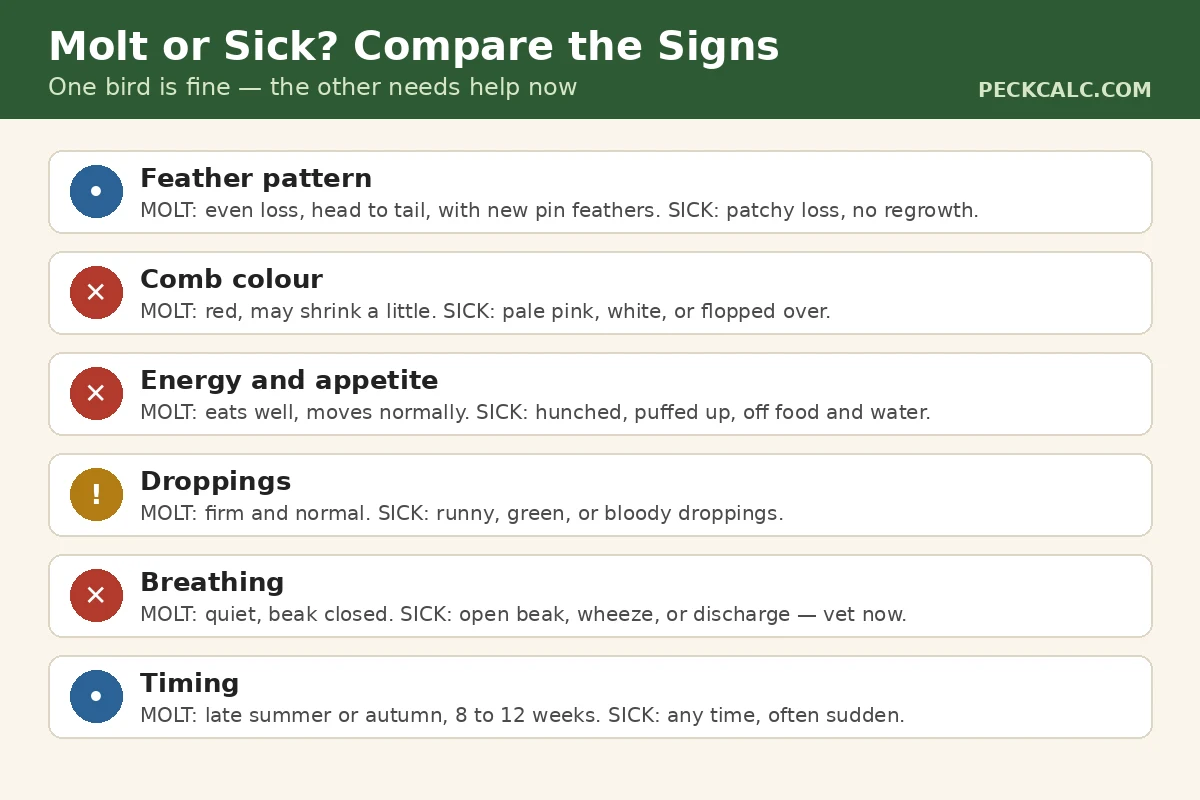
| Sign | Molt | Sick |
|---|---|---|
| Feather loss pattern | Even, head to tail, with pin feathers | Patchy, no new growth |
| Comb | Red, may shrink a little | Pale, white, or flopped |
| Energy | Normal, a little quiet | Hunched, puffed up, eyes closed |
| Appetite | Eating and drinking well | Off food or water |
| Droppings | Normal, firm | Runny, green, or bloody |
| Breathing | Quiet, beak closed | Open beak, wheeze, discharge |
| Timing | Late summer or autumn, 8 to 12 weeks | Any time, often sudden |
Feather loss that is not a molt
Mites and lice cause feather loss that looks like a molt but is not. The difference is that the bird scratches, preens constantly, and loses feathers in patches around the vent, neck, and under the wings, with no neat pattern and no new pin feathers.
Part the feathers around the vent and look for moving specks or grey-black debris at the feather bases. Our guide on how to treat mites and lice in chickens explains the check and the treatment.
Feather pecking by flockmates is another common cause. A bird that is pecked loses feathers on the back, tail, and vent, and the skin may be red or bleeding. The pecking is usually worst in a crowded coop, or when the birds are bored, or when the feed is low in protein. The fix is space, more feeders, and something to peck at, such as a hanging cabbage, plus separating the worst victim until her feathers regrow. A pecked bird is stressed, and stress alone can stop her laying.
A lack of protein in the feed can also cause feather loss and slow regrowth. Feathers are almost pure protein, and a bird on a low-protein diet, or a bird that fills up on scratch grains and kitchen scraps instead of her balanced feed, will not have the building blocks to grow new feathers. Check the feed label, cut the treats back to a small handful a day, and make sure the feed is fresh and stored dry. A bird that eats mostly scratch grains is not getting a balanced diet, however much she enjoys it.
A broody hen also loses feathers on her breast, but that is deliberate: she plucks her own breast feathers to warm the eggs. The bare patch is neat, on the breast only, and the bird sits on the nest and refuses to move. That is not a molt and not an illness, and it needs no treatment beyond deciding whether to let her hatch or break the broodiness.
What to do if it is a molt
If the checks point to a molt, the main job is patience and good feeding. Keep the bird with the flock if she is coping, because separation adds stress, but watch that she is not being pecked while her new pin feathers are coming in, since pin feathers bleed if they are pecked.
Provide a dust bath and clean bedding, because the skin is sensitive during a molt, and handle the bird as little as possible, because pin feathers hurt when touched.
Feed a higher-protein ration during the molt. A grower feed or a feather-fixer feed with around twenty per cent protein is a good choice, or add a small amount of high-protein treats to the normal layer feed. Mealworms, scrambled egg, and tinned fish in small amounts all help. Keep the treats to about a tenth of the daily food, because the balanced feed should still do most of the work. Fresh water matters too, because a molting bird still needs to drink normally.
Expect no eggs for a while. A hen stops laying during a molt, and she will not start again until her feathers are mostly grown back. That is normal, and it is not a reason to change the feed or add light to the coop. Adding light to force laying during a molt stresses the bird and produces poor feathers. Let the molt finish, and the eggs will come back on their own. Our Egg Production Calculator can help you track the flock's laying through the molt.
Watch for a molt that goes wrong. If the bird loses feathers for more than twelve weeks with no new growth, if she stops eating, or if her comb turns pale, something else is going on, and she needs a closer look. A bird that molts twice in a year, or a bird that never regrows her feathers, may have mites, a poor diet, or an illness that the molt was hiding. At that point, treat the bird as sick, not molting.
What to do if it is sickness
Separate the bird at once if you think she is sick. A separate pen, or a large box in a warm room, lets you watch her eating, drinking, and droppings, and it protects the rest of the flock if the illness spreads.
Keep her warm, because a sick bird loses body heat fast, and offer lukewarm water with a pinch of sugar and salt. Do not force water into her beak, because she can inhale it.
Check the basics: comb colour, breathing, droppings, vent, and appetite. Write down what you see, because a vet will ask, and the trend over a day matters more than any single check. Look for the specific signs in our guide on how to tell if a chicken is sick, and match what you see to the likely causes, such as coccidiosis, respiratory illness, or being egg-bound. A bird that is straining, with a swollen abdomen, may be egg-bound, and that is an emergency.
Call a vet if the bird does not improve within a day, or sooner if she is weak, not drinking, or has trouble breathing. Chickens hide illness well, and a bird that looks sick is often sicker than she appears. A vet can diagnose the problem, prescribe the right treatment, and tell you whether the rest of the flock needs treatment too. Do not start a leftover antibiotic from another animal, because the dose may be wrong and some drugs have egg withdrawal rules.
Protect the rest of the flock while you wait. Wash your hands and change your shoes after handling the sick bird, and do not share feeders or drinkers between the sick pen and the coop. Clean the coop and change the bedding, and watch the other birds for the same signs over the next few days. Many chicken illnesses spread fast, so a day of watching is worth more than a week of guessing.
Sources: poultry.extension.org
Related tools and guides
For more on the same topic, see How to Tell If a Chicken Is Sick.
Frequently asked questions
Is my chicken sick or molting?
Check the pattern: a molting bird loses feathers evenly with new pin feathers growing in, keeps a red comb, and eats well. A sick bird loses feathers in patches with no regrowth, has a pale comb, is dull and off her food, or has runny droppings or breathing trouble. Any of those signs means illness, not molt.
Do chickens stop laying eggs when molting?
Yes. A hen usually stops laying during a molt because growing feathers takes a lot of protein, and the body puts feathers first. She will start laying again once her feathers are mostly grown back, usually after eight to twelve weeks. Forcing laying with extra light during a molt stresses the bird.
How long does a chicken molt last?
A normal adult molt lasts about eight to twelve weeks. A fast molt, where many feathers drop at once, can finish in about eight weeks, while a slow molt takes twelve weeks or more. A molt that drags on for months with no new feathers is not normal and needs a closer look.
Why is my chicken losing feathers but not molting?
Mites, lice, feather pecking, and a low-protein diet all cause feather loss that is not a molt. Mites cause patchy loss with itching and debris at the feather bases. Pecking leaves red or bleeding skin on the back and vent. A bird that fills up on scratch grains instead of balanced feed may lack the protein to regrow feathers.
Should I separate a molting chicken?
Usually not, if she is coping and not being pecked. Separation adds stress, and a molting bird that eats and behaves normally does best with the flock. Separate her only if other birds peck her pin feathers, or if you are unsure whether she is molting or sick and need to watch her eating and droppings closely.
About the author
John Walker is the founder of PeckCalc and has kept backyard chickens in Dallas, Texas since 2017. He started PeckCalc to give backyard keepers free calculators and guides with every figure traced to a university extension source.