
Java Chickens
 By John Walker · Backyard chicken keeper in Dallas, Texas since 2017
Java chickens are one of the oldest chicken breeds developed in the United States, and one of the rarest. They are calm, hardy dual-purpose birds with glossy black or mottled plumage, and they lay a steady supply of brown eggs. If you want a heritage breed with a quiet temperament and a real place in American poultry history, the Java deserves a close look.
What are Java chickens?
Java chickens are a heritage dual-purpose breed developed in the United States during the 1800s, and they are among the oldest American breeds still kept today. They were once a common farm bird, valued for both meat and eggs, but their numbers fell sharply as commercial hybrids took over, and they are now one of the rarer heritage breeds in backyard flocks.
Javas come in two recognised colours, black and mottled, and both share the same sturdy build, calm nature and practical laying ability. They are not a flashy ornamental breed. Their appeal is quieter: a hardy, self-reliant bird that forages well, handles cold weather, and lays through the seasons without fuss. For keepers who value heritage breeds and want a bird with history, the Java is a genuine piece of American poultry heritage.
Because the breed is rare, the birds you find may vary more than a common breed would. Hatchery stock, breeder stock and conservation flocks can differ in size, colour quality and laying ability, so it pays to ask a seller what strain they keep and what they select for. A Java from a breeder who selects for the breed standard will look and behave a little differently from a hatchery bird, and neither is wrong, but it helps to know which you are buying.
History of the Java breed
The Java arrived in the United States from the island of Java in Asia during the 1800s, and American breeders developed it into a distinct breed over the following decades. It was one of the first breeds shaped on American farms, and it played a part in the development of later American breeds, including the Plymouth Rock, which drew on Java blood in its early history.
For much of the 1800s the Java was a respected farm bird, kept for meat and eggs on small farms across the country. The black variety was admitted to the American Poultry Association Standard of Perfection in 1883, with the mottled variety following later. That early recognition shows how established the breed was before industrial poultry breeding changed the landscape.
As the twentieth century went on, fast-growing commercial hybrids replaced slow-maturing heritage breeds on farms, and Java numbers collapsed. Conservation organisations now list the Java among the rare heritage breeds that need dedicated keepers to survive. Keeping Javas today is partly a practical choice and partly a conservation act, and every small flock helps keep the breed going.
What do Java chickens look like?
Javas are large, broad-bodied birds with a long, deep body and a sturdy, upright stance. They carry themselves with a calm, unhurried presence, and their size makes them look substantial next to lighter Mediterranean breeds. Hens are noticeably smaller than roosters but share the same long-backed, rectangular body shape.
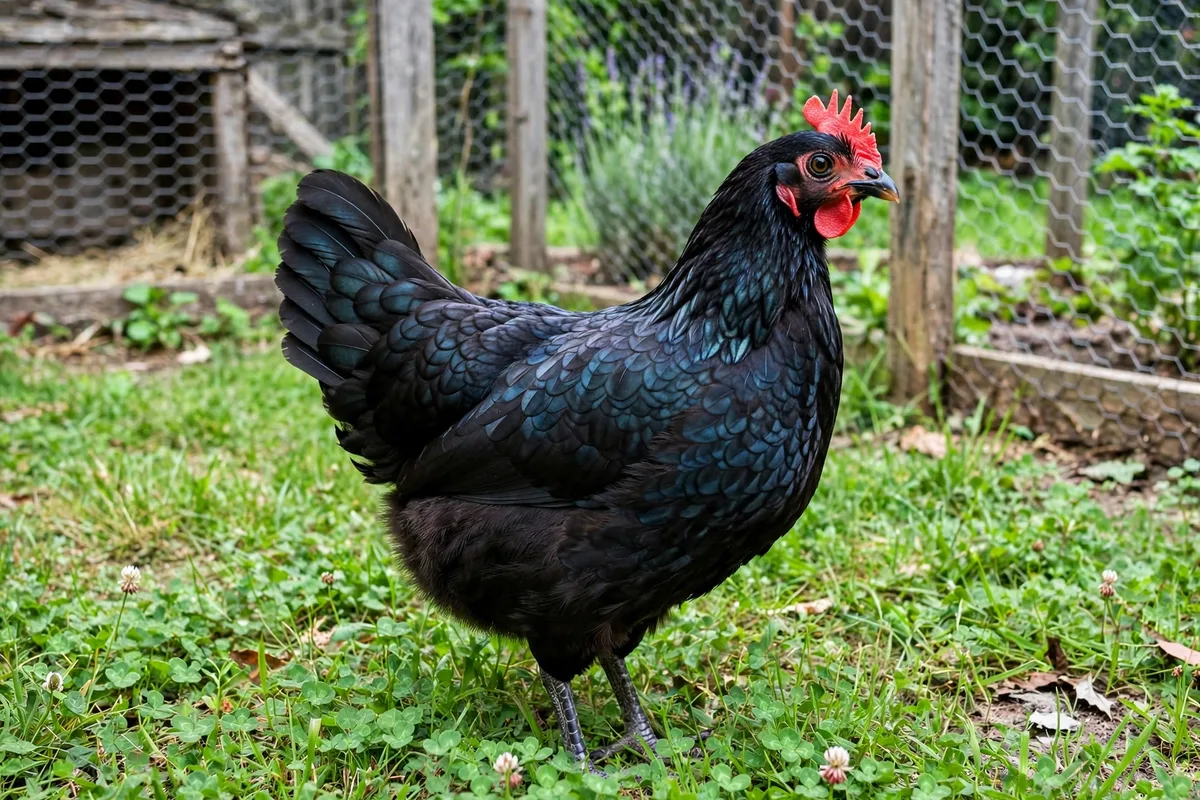
The black Java has glossy black plumage with a green sheen in sunlight, a single comb, and dark shanks. The mottled Java is black with white-tipped feathers, giving a speckled appearance that becomes more marked with age, as each moult adds more white. Both varieties have red wattles and earlobes, and their eyes are dark and alert.
One feature worth noting is the Java's single comb, which is medium sized and upright on both sexes. In very cold weather a large comb can be prone to frostbite, so a draught-free but well-ventilated coop matters, as it does for most single-comb breeds. Our guide on how to winterize a chicken coop covers the practical steps.
Java chicken temperament
Javas are known for a calm, gentle temperament, and they are one of the easier heritage breeds to handle. Hens are not usually flighty, they tolerate handling well once used to people, and they settle into a mixed flock without much drama.
Roosters are generally described as calm too, though as with any breed, individual roosters vary and need watching during the breeding season.
They are good foragers and enjoy ranging, but they are not restless birds that pace a fence looking for an escape. A Java flock will spend the day scratching, dust bathing and working through a run, and they do well in a setup with some space to roam. If you keep them in a smaller run, give them things to do, such as a pile of leaves to scratch through or a dust bath area, so boredom does not set in.
Javas tend to be quieter than many Mediterranean breeds, which makes them a reasonable choice for a suburban flock where noise matters. They are not silent, and hens still announce eggs, but they are not known as constant chatterers. If neighbour relations matter, check the rules first with our guide on backyard chicken laws.
How many eggs do Java chickens lay?
Javas are steady layers of medium to large brown eggs, and they are generally described as good rather than outstanding layers. Expect a useful supply through the laying season rather than the near-daily production of a commercial hybrid, and remember that figures vary a lot between strains, so any single number from a hatchery listing should be treated as a rough guide rather than a promise.
Laying usually starts at around five to six months of age, though this varies with the season, the strain and how the birds are fed. Pullets that mature in autumn may wait until the days lengthen in spring before laying regularly, which is normal for heritage breeds. A complete layer feed and a reliable water supply matter more than any supplement, and our egg production calculator can help you plan how many hens you need for your household.
Javas are not strongly broody as a rule, though individual hens do go broody, and a broody Java hen is usually a steady, attentive mother. If you want to hatch, that is a useful trait. If you do not want broody hens, collect eggs daily and keep nest boxes clean and inviting, so hens lay and move on rather than settling in.
Java chickens and cold weather
Javas are a hardy breed and handle cold weather well, thanks to their heavy build and dense plumage. They were developed on American farms without heated coops, and a healthy adult Java in a dry, draught-free coop will cope with a cold winter far better than a light, large-combed Mediterranean breed.
Cold hardiness does not mean the birds need no care in winter. The essentials are the same as for any flock: a dry coop with good ventilation above roost height, fresh water that does not freeze, and enough feed to cover the extra energy cold weather demands. A heated water base or a daily water check is more useful than a heat lamp, and our guide on how to keep chickens warm in winter explains the priorities.
In hot weather, Javas need shade, cool water and airflow, as any heavy breed does. Their dark plumage absorbs sun, so a shaded run and a cool dust bath area help them through summer. Heat is harder on heavy birds than cold is, so plan the run with summer in mind, not just winter.
Java chickens at a glance
The table below sums up the Java as a backyard breed, using the traits keepers most often ask about. Treat the laying description as a general guide, because strain and management move the real figure up or down.
| Trait | Java |
|---|---|
| Origin | United States, developed in the 1800s |
| Colours | Black and mottled |
| Egg colour | Brown |
| Laying | Good and steady, not a top commercial rate |
| Temperament | Calm, gentle, easy to handle |
| Climate | Cold hardy; needs shade in hot weather |
| Best for | Heritage keepers, small farms, calm flocks |
| Rarity | Rare heritage breed, conservation interest |
Are Java chickens right for you?
Javas suit keepers who want a calm, hardy heritage bird and are happy with a steady rather than spectacular egg supply. They fit well on a small farm or a large backyard, they mix well with other calm breeds, and they are a good choice if you want to keep a rare breed going.
They are also a sensible pick for a first heritage breed, because their temperament is forgiving.
They are less suited to keepers who want maximum eggs per week, or who need birds that start laying very early. If egg numbers are your main goal, a production hybrid or a breed such as the Australorp will out-lay a Java, and our guide on best chicken breeds for beginners compares the high-production options. Javas are also not the best choice for a very small run, because they are large birds that like space.
Think about your goals before you buy. If you want a living piece of poultry history, a calm flock and a reasonable egg supply, the Java fits. If you want the most eggs from the fewest birds, look elsewhere, and keep a Java or two as a side project instead.
Where to find Java chickens
Javas are rare, so you will not usually find them at a feed store. The usual sources are heritage breeders, conservation breeders and a small number of hatcheries that carry heritage breeds. The Livestock Conservancy breeder directory is a useful starting point, and breed clubs and BackYard Chickens forum threads often list breeders with Java stock.
When you contact a breeder, ask whether they keep black or mottled Javas, what they select for, and whether their birds are bred to the standard or kept as a utility flock. Both are fine, but the answer tells you what to expect. Ask about vaccination and whether chicks are sold straight run or sexed, since sexing is not always available for rare breeds.
Expect to pay more than for a common breed, and expect to wait, because small breeders often sell out early in the season. Order early, and have your brooder ready before the chicks arrive, using our chick brooder size calculator to size it. Keeping a rare breed takes a little more patience, but that is part of the point.
Sources: University of Minnesota Extension poultry pages and poultry.extension.org.
Related tools and guides
For more on the same topic, see Best Chicken Breeds for Beginners.
Frequently asked questions
Are Java chickens good layers?
Yes, Java chickens are good steady layers of medium to large brown eggs. They do not match the near daily output of commercial hybrids, and laying varies by strain, so expect a useful supply through the season rather than top production.
Are Java chickens friendly?
Yes, Javas are known for a calm and gentle temperament. Hens tolerate handling well once used to people, they settle into mixed flocks without much drama, and they are quieter than many lighter breeds.
What colours do Java chickens come in?
Javas come in two recognised colours, black and mottled. Black Javas have glossy black plumage with a green sheen, while mottled Javas are black with white tipped feathers that become more speckled with each moult.
Are Java chickens cold hardy?
Yes, Javas are cold hardy thanks to their heavy build and dense plumage. They still need a dry coop with good ventilation above roost height, fresh unfrozen water, and enough feed in winter.
Why are Java chickens rare?
Java numbers fell as fast growing commercial hybrids replaced heritage breeds on farms during the twentieth century. Conservation groups now list the Java among rare heritage breeds, and small flocks kept by dedicated keepers help preserve it.
About the author
John Walker is the founder of PeckCalc and has kept backyard chickens in Dallas, Texas since 2017. He started PeckCalc to give backyard keepers free calculators and guides with every figure traced to a university extension source.