
Keeping Chickens in the Suburbs
 By John Walker · Backyard chicken keeper in Dallas, Texas since 2017
Keeping chickens in the suburbs is possible in many towns, but it comes with rules: flock size limits, setbacks, rooster bans and HOA conditions are the norm, not the exception. A small, quiet flock of hens in a tidy coop, kept with consideration for neighbours, works well in most suburbs. A small flock also gives you fresh eggs and garden compost, which makes the effort worthwhile. This guide explains the rules to check, the breeds that suit suburban life, and how to keep the peace.
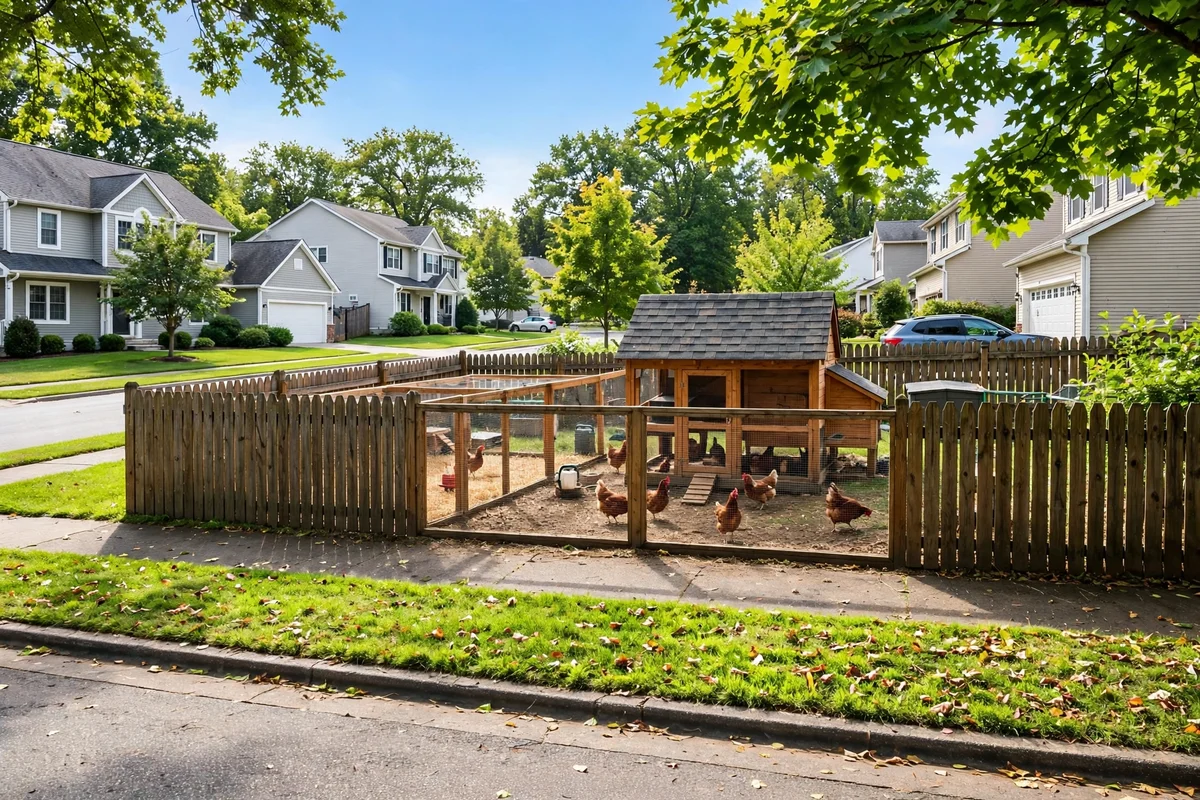
Can you keep chickens in the suburbs?
In many suburbs the answer is yes, with rules. Most suburban towns allow a small flock of hens, with limits on flock size, setbacks from the property line, and a ban on roosters, and many have HOA rules on top of the town rules that can be stricter.
A few suburbs ban chickens outright, so the first step is always to check your own town and your HOA.
The rules vary a lot from place to place. One suburb may allow six hens with no permit, the next may allow three hens with a permit, and the next may ban chickens altogether. Your lot size, your zoning, and your HOA all matter, and a rule that applies to a house on a large lot may not apply to a house on a small one.
This guide is general information, not legal advice, and it cannot replace checking your own local rules. The sections below explain what to check, what usually applies, and how to set up a suburban flock that stays within the rules and keeps the neighbours happy.
What the suburban rules usually say
The most common suburban rules are a limit on flock size, a ban on roosters, a setback from the property line and neighbouring houses, and a requirement for a coop and run that are clean and well kept. Some towns also require a permit, and some require the coop to be a certain distance from the street.
Flock size limits usually allow between three and six hens, but the number varies, and some towns allow more on larger lots. Roosters are banned in most suburbs, because they crow early and loudly, and a rooster is the single most common cause of a neighbour complaint about suburban chickens.
Check your town's animal ordinance and zoning rules, and check your HOA rules if you have them, because the HOA can be stricter than the town. Our guide on backyard chicken laws explains what to look for and where to find it, and our guide on do I need a permit to keep chickens covers the permit side.
Choosing a suburban flock
A small flock of three to six hens suits most suburbs, and it gives a steady supply of eggs without overwhelming a small yard. Hens lay without a rooster, so a rooster-free flock is quieter, easier to keep, and compliant with the rooster bans that most suburbs have.
Choose calm, quiet breeds that lay well and do not fly much. Orpingtons, Australorps, Plymouth Rocks and Wyandottes are popular suburban choices, because they are docile, hardy and good layers, and bantams suit small yards because they need less space and eat less feed.
Use the chicken flock planner to work out what fits your yard and your household, and read our guide on best chickens for small backyards for breed suggestions in detail. A flock that suits your yard is a flock you will enjoy keeping, and a flock that is too big for the yard is a flock that causes problems.
Placing the coop in a suburban yard
Place the coop in the back yard, away from the street and as far from neighbouring houses as the setbacks allow, because a coop that is visible from the street or close to a neighbour's bedroom window is far more likely to draw complaints than one tucked away at the back.
Check the setback rules before you build, because they set the minimum distance from the property line.
Keep the coop and run tidy, clean and attractive, with a fence that screens it from neighbours and a roof that keeps rain off the run. A neat coop is a good neighbour, and a scruffy one is a complaint waiting to happen, even when the flock itself is quiet and well kept.
Our guide on where to put a chicken coop in your yard covers placement in detail, including sun, shade, drainage and access, and our guide on can I keep chickens in my front yard explains why the back yard is usually the better choice.
Keeping neighbours happy
Talk to your neighbours before you get birds, not after they complain. Explain what you plan, show them the coop, and ask if they have any concerns. A neighbour who feels consulted is far less likely to report you than a neighbour who wakes up one morning to find chickens next door, and a neighbour who likes your hens is an ally.
Keep the coop clean and the run dry, because smell is the second most common cause of a neighbour complaint after noise. Clean the coop regularly, keep the bedding dry, and compost droppings away from the boundary, so the yard smells fresh and the neighbours have nothing to complain about. Sharing a few eggs with neighbours from time to time also helps, because it turns the flock into something they enjoy rather than something they tolerate, and a neighbour who looks forward to a small box of fresh eggs is far less likely to complain about a hen that clucks at dawn. Keep a simple record of any complaints or visits from the council, too, so that if a question ever arises you can show the dates, what was said, and what you changed.
Share eggs when you have spares. A dozen eggs now and then is a small price for a neighbour's goodwill, and it turns a potential complaint into a friendly relationship. A neighbour who enjoys your eggs is a neighbour who will tell you if a hen escapes, rather than reporting you.
Suburban chicken keeping at a glance
The table below sums up the usual suburban rules, but it is a general guide only. Your town may be stricter or more lenient, and the only way to know is to check your own town ordinance and your HOA rules before you buy birds.
A small, quiet flock of hens in a tidy coop, kept with consideration for neighbours, works well in most suburbs, and it gives you fresh eggs, garden compost and birds that are a pleasure to keep. Start with the rules, then choose the flock, and the rest follows naturally. The key is to check the rules first, choose the right flock, and keep the peace with the people next door.
For the city picture, which has its own rules and challenges, see our guide on keeping chickens in the city, and for the legal detail, see our guide on backyard chicken laws.
| Topic | Usual suburban rule | What to check |
|---|---|---|
| Flock size | Three to six hens | Town animal ordinance |
| Roosters | Banned in most suburbs | Ordinance and HOA rules |
| Coop placement | Back yard, within setbacks | Zoning and setback rules |
| Permit | Sometimes required | Planning office |
| HOA | May be stricter than the town | HOA rules and covenants |
Sources: poultry.extension.org and University of Minnesota Extension poultry pages.
Related tools and guides
For more on the same topic, see Backyard Chicken Laws.
Frequently asked questions
Can you keep chickens in the suburbs?
It depends on your town and your HOA. Many suburbs allow a small flock of hens with rules on flock size, setbacks and roosters, while some ban chickens outright. Check your town ordinance and your HOA rules before you buy birds.
How many chickens can I keep in the suburbs?
Most suburbs allow between three and six hens, but the number varies a lot. Some allow more on larger lots, some allow fewer, and almost all ban roosters. Check your own town's rules rather than relying on a general number.
Are roosters allowed in the suburbs?
Most suburbs ban roosters, because they crow early and loudly. If you want eggs, you do not need a rooster: hens lay without one, and a rooster-free flock is quieter and easier to keep in a built-up area.
What are the best chicken breeds for the suburbs?
Choose calm, quiet breeds that lay well and do not fly much. Orpingtons, Australorps, Plymouth Rocks and Wyandottes are popular suburban choices, and bantams suit small yards.
How do I keep my neighbours happy with suburban chickens?
Talk to them before you get birds, keep the coop clean and the flock small, and share eggs when you have spares. A neighbour who likes your hens is an ally, and a neighbour who is woken by noise or bothered by smell is not.
About the author
John Walker is the founder of PeckCalc and has kept backyard chickens in Dallas, Texas since 2017. He started PeckCalc to give backyard keepers free calculators and guides with every figure traced to a university extension source.