
Moving House With Chickens: A Keeper's Guide
 By John Walker · Backyard chicken keeper in Dallas, Texas since 2017
Moving house with chickens is mostly a planning job: sort out the new coop and run before moving day, transport the birds in ventilated carriers, and get them settled in their new home before dark. Chickens cope with a move well if the new setup is ready and the journey is short and calm.
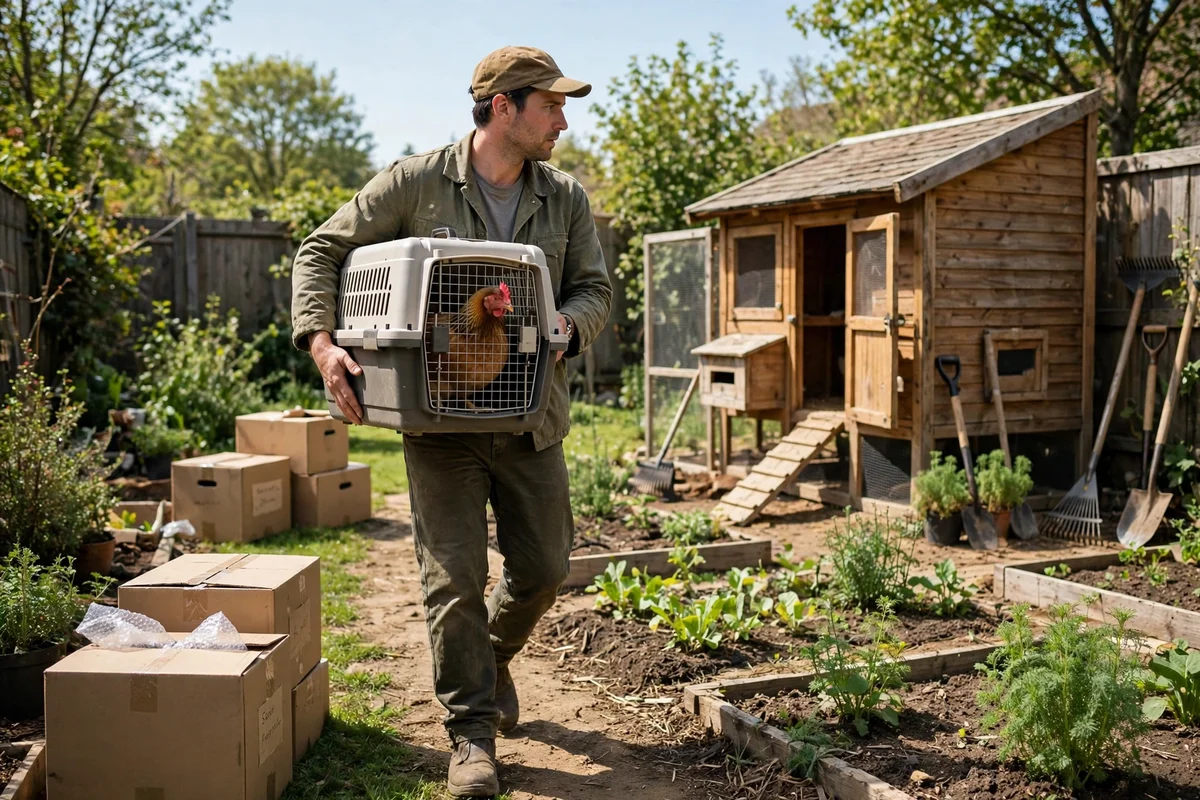
Moving house with chickens: where to start
Start by sorting out the new coop and run before moving day, because the birds need a ready home the moment they arrive. Check whether the new garden already has a coop, whether you are taking your old one with you.
Or Whether you need to build or buy a new one, and make sure it is assembled, predator-proofed and bedded before the birds travel.
Check the rules at the new house early, because chicken-keeping rules vary by city and county, and a property that allows chickens in one area may not allow them in another. Check the local ordinances, any homeowners' association rules, and the distance the coop must sit from the property line. Our guide on backyard chicken laws explains what to check.
Plan the timing so the birds travel on moving day itself, after the old coop has been emptied and before dark at the new house. Chickens travel best in the cool of the morning or evening, and they should never be left in a hot car or a closed carrier in the sun. If the journey is long, plan rest stops where you can check the birds and offer water.
How to transport chickens safely
Transport chickens in ventilated pet carriers, one or two birds per carrier, with a layer of straw or shavings in the bottom and a small dish of water if the journey is longer than an hour. Carriers keep the birds calm, prevent injury.
And Stop them from flying around the car, which is dangerous for both the birds and the driver.
Catch the birds the night before the move, after they have gone to roost, when they are calm and easy to handle, and put them straight into the carriers. Cover the carriers with a light cloth to keep them dark and calm, and secure them in the car so they cannot slide around. Do not feed the birds a large meal just before travel, because a full crop and a bumpy journey can cause vomiting.
Keep the car cool and ventilated, and check the birds at each stop. If a bird is panting, offer water and move the carrier to shade. Do not leave carriers in a parked car in the sun, even for a few minutes, because a closed car heats up fast and chickens overheat quickly. Our guide on signs of heat stress in chickens explains what overheating looks like.
Moving the coop and run
A small coop can usually be moved in one piece on a trailer or in a truck, but a large coop may need to be taken apart and reassembled at the new house. Empty the coop completely before moving it, remove the bedding, feeders and drinkers.
And Clean and disinfect it while it is empty, because a move is the best chance you will get to start with a clean coop.
If you are building a new coop at the new house, build it before moving day and let the birds move straight into it. Our guide on how to build a chicken coop covers the basics, and our guide on chicken coop size calculator will tell you how much space your flock needs. Make sure the run is fenced and predator-proofed before the birds arrive, because a new garden may have predators you have not met yet.
Take the feeders, drinkers, nest boxes and any familiar items with you, because familiar objects help the birds settle in a new place. A feeder they know, a perch they have used before, and a nest box that smells familiar all make the new coop feel less strange. Do not throw away old bedding, but do not take dirty bedding either: take a small handful of clean used bedding to scatter in the new coop, so it smells like home.
Settling chickens into a new home
Settle the birds into their new coop before dark on moving day, so they go to roost in the new home on their first night. Put them straight into the coop, not into the run, and keep them shut in the coop for the first day or two.
So they learn that the new coop is home and will return to it at dusk. This is the single most important step in a move.
Expect the birds to stop laying for a few days after a move, because stress interrupts laying, and a hen that has just travelled will often take a week to settle back into her routine. Do not worry about the gap, and do not try to force laying back with extra light or feed changes. Keep the feed, water and routine the same as before, and laying will return on its own.
Keep the birds in the run for the first few days before letting them free range, so they learn the boundaries of the new garden and do not wander off. Walk the garden first and check for gaps in the fence, toxic plants, and places where a bird could get stuck. Our guide on how to introduce new chickens to a flock covers the same settling principles, which apply to a new home as well as to new birds.
Moving chickens a long distance
A long-distance move needs more planning, because the birds will be in carriers for hours and will need water, ventilation and rest stops. Offer water at every stop, and if the journey is longer than a few hours, offer a small amount of feed as well.
Keep the carriers in the shade at stops, and never leave them in a parked car.
If the journey takes more than a day, book pet-friendly accommodation where the birds can spend the night in their carriers in a cool, quiet room, or plan to arrive before dark so they can roost in the new coop. Do not try to move chickens in extreme heat or cold, because temperature stress is the biggest risk on a long journey, and a heatwave or a cold snap is a good reason to delay the move by a day.
Check the rules for moving poultry across state lines, because some states require health certificates or testing for certain diseases, and the rules change from time to time. Contact the animal health authority in the destination state before you travel, and keep any paperwork with you in the car. A vet can advise on what is needed, and can check the birds before travel if a certificate is required.
What to do in the first week after the move
In the first week after a move, watch the flock closely for signs of stress, illness or bullying, because a move can trigger problems that were not visible before. Check that every bird is eating, drinking and laying, or at least eating and drinking.
And Look for birds that are standing apart, eating little or holding their tails low. Our guide on how to tell if a chicken is sick explains the signs to watch for.
Keep the routine as close to the old one as possible for the first week: the same feed, the same feeding times, the same treats, and the same handling. Chickens are creatures of habit, and a familiar routine helps them settle faster than any amount of fussing. Introduce new foods, new perches or new flock members only after the birds have settled, not in the first few days.
Expect a few escape attempts in the first week, because the birds do not yet know where home is, and a hen that gets out may not find her way back. Keep the run secure, check the fence daily, and count the birds every evening until you are sure they all return to the coop at dusk. Once they have roosted in the new coop for a week, they will have learned that it is home, and the move is done.
Sources: transport and housing guidance on this page follows the poultry housing and welfare guidance published by university extension poultry services. For poultry guidance, see the poultry pages at the University of Minnesota Extension and poultry.extension.org.
Related tools and guides
For more on coops, runs and settling in, see the guides below.
Frequently asked questions
How do I move house with chickens?
Sort out the new coop and run before moving day, check the rules at the new house, and transport the birds in ventilated carriers on moving day itself. Get them into the new coop before dark so they roost there on their first night.
How do I transport chickens in a car?
Use ventilated pet carriers, one or two birds per carrier, with straw in the bottom. Catch the birds the night before, cover the carriers to keep them dark and calm, secure them in the car, and never leave them in a parked car in the sun.
Will my chickens stop laying after a move?
Probably, for a few days. Stress interrupts laying, and a hen that has just travelled will often take a week to settle back into her routine. Keep the feed and routine the same, and laying will return on its own.
Should I keep chickens shut in the new coop after moving?
Yes, for the first day or two. Keep them shut in the coop so they learn that the new coop is home and will return to it at dusk. Then let them into the run, and only let them free range once they know the garden.
Do I need permission to keep chickens at a new house?
Check the local ordinances and any homeowners' association rules before you move, because chicken-keeping rules vary by city and county. Check setback distances for the coop too, and confirm whether roosters are allowed.
About the author
John Walker is the founder of PeckCalc and has kept backyard chickens in Dallas, Texas since 2017. He started PeckCalc to give backyard keepers free calculators and guides with every figure traced to a university extension source.