
Mycotoxin Poisoning in Chickens
 By John Walker · Backyard chicken keeper in Dallas, Texas since 2017
Mycotoxin poisoning in chickens is illness caused by poisons made by moulds that grow on feed, and it is one of the most common hidden causes of poor laying, slow growth, and weak immunity in backyard flocks. The moulds themselves are usually invisible, and the poisons they make, called mycotoxins, survive in grain long after the mould has gone. The four mycotoxins that matter most to chicken keepers are aflatoxin, ergot, fusarium toxins, and ochratoxin, and each damages the bird in a different way. This guide explains what mycotoxins are, how to spot the damage, how they differ from aspergillosis, and how to keep them out of your feed store.
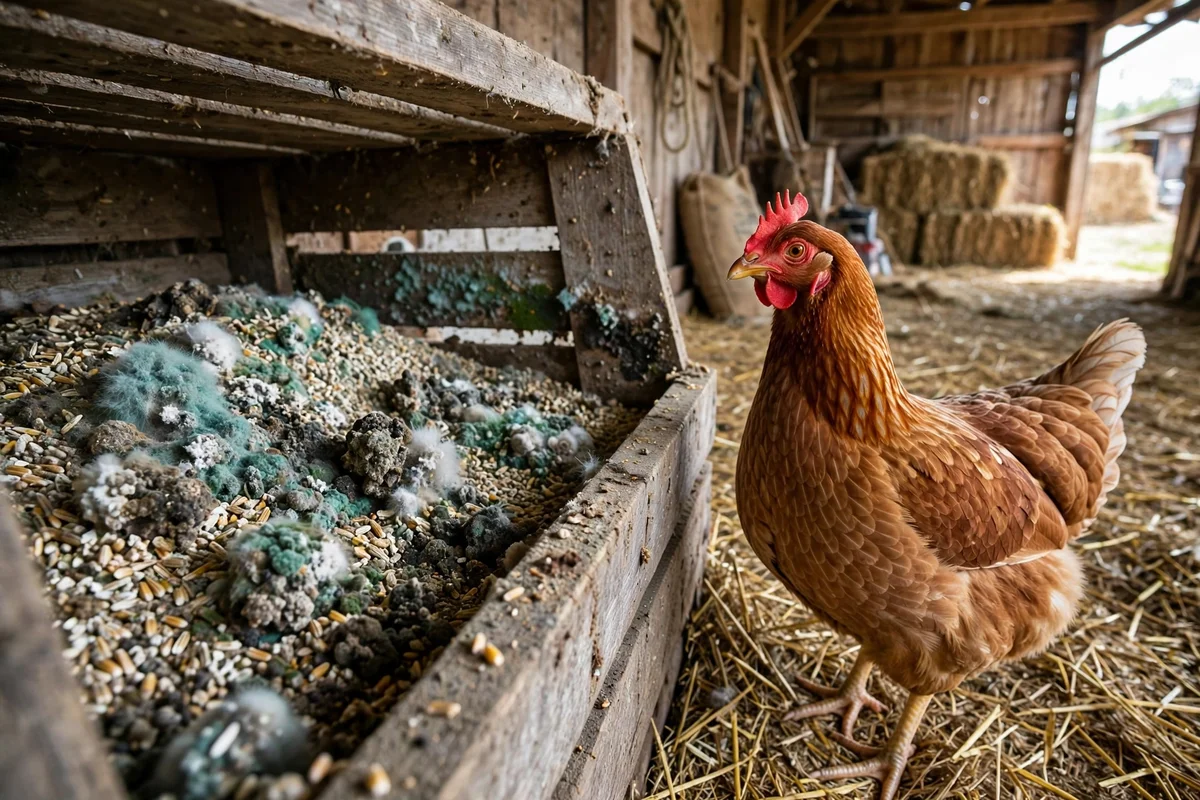
What is mycotoxin poisoning in chickens?
Mycotoxin poisoning in chickens is illness caused by toxic chemicals made by moulds that grow on grain and feed, and the key point is that the poison is not the mould itself but the chemical the mould leaves behind. A sack of feed can look and smell normal and still carry enough mycotoxin to harm a flock.
Because the toxins are invisible, tasteless, and stable in storage.
Mycotoxins form when grain is harvested damp, stored warm and wet, or kept for too long in a humid shed. The moulds that make them, mainly Aspergillus, Fusarium, and Penicillium species, grow best in warm, damp conditions, and they can start growing in the field before harvest as well as in the feed bin afterwards. Once the toxin is in the grain, no amount of cooking, drying, or mixing will remove it.
Chickens are sensitive to mycotoxins because they eat a grain-based diet every day, and even a low dose over weeks can cause damage. The liver is the main target, because it processes the toxins, but the immune system, the kidneys, and the gut are also affected. Young birds and high-laying hens are the most vulnerable, because they eat the most feed relative to their body weight.
The damage is usually slow and quiet. A flock on mildly contaminated feed may simply lay fewer eggs, grow more slowly, and catch every illness going around, and the keeper may blame the weather, the breed, or old age. That slow, vague pattern is what makes mycotoxin poisoning so easy to miss and so important to understand.
The four mycotoxins that affect chickens
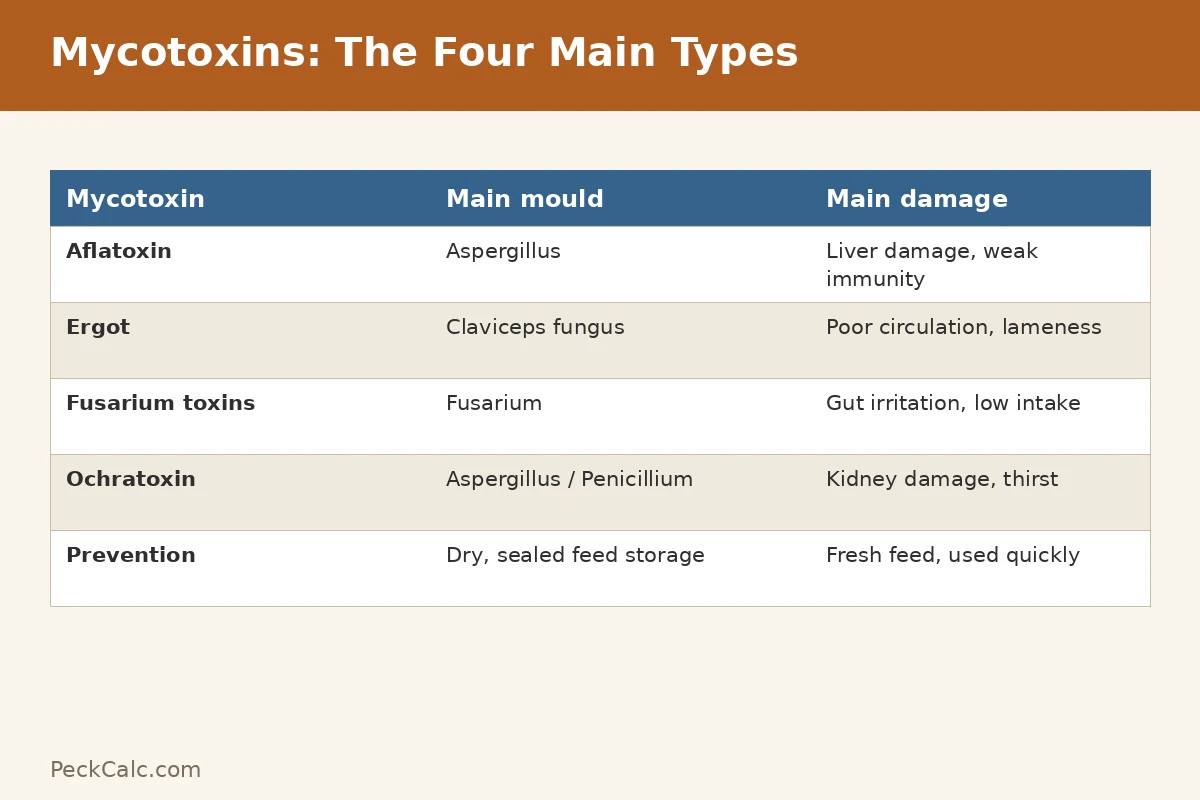
The four mycotoxins that affect chickens most often are aflatoxin, ergot, fusarium toxins, and ochratoxin, and each comes from a different mould and damages a different part of the bird. Knowing which one you are dealing with helps your vet and your feed supplier trace the source.
Aflatoxin is made by Aspergillus moulds that grow on maize, peanuts, and other warm-climate grains, and it is the most dangerous mycotoxin for chickens. It damages the liver, weakens the immune system, and causes poor growth, pale combs, and a drop in egg laying. At high doses it can kill birds outright, and at low doses it makes the flock vulnerable to every other disease.
Ergot is made by a fungus that replaces grain kernels with dark, hard bodies called sclerotia, and it is most often seen in rye and wheat. Ergot poisoning causes poor circulation, so birds develop cold, pale combs and wattles, lameness, and in severe cases gangrene of the toes and comb. It also reduces feed intake and egg laying, and it can cause nervous signs.
Fusarium toxins include deoxynivalenol, often called vomitoxin, and T-2 toxin, and they are made by Fusarium moulds on wheat, barley, and maize. They irritate the gut, reduce feed intake, and suppress the immune system, so birds eat less, grow slowly, and lay fewer eggs. Ochratoxin is made by Aspergillus and Penicillium moulds, and it mainly damages the kidneys, causing increased thirst, watery droppings, and poor growth. A single batch of feed can carry more than one mycotoxin at once, which makes the damage worse.
Signs of mycotoxin poisoning in chickens
The signs of mycotoxin poisoning in chickens are a slow fall in egg laying, poor growth, pale combs, reduced feed intake, and birds that catch illness easily, and the pattern that gives it away is that many birds are affected at once, soon after a new batch of feed is opened.
A single sick bird points to something else; a whole flock going off together points to the feed.
Egg laying is usually the first thing to fall. Hens on contaminated feed may drop from a full lay to half within a week or two, and the eggs they do lay may have thin shells and pale yolks. Young birds grow slowly, feather poorly, and stay small compared with their age, and the whole flock may look dull and off colour.
The immune system suffers too, so a flock on mycotoxin feed may develop respiratory infections, coccidiosis, or other problems that a healthy flock would fight off. This is one of the most confusing parts of mycotoxin poisoning: the keeper treats the cough or the diarrhoea, and it keeps coming back, because the feed is still undermining the birds' defences.
At high doses the signs become sharper: birds go off their feed, become weak and unsteady, and may die suddenly with a pale, enlarged liver. Ergot poisoning adds its own signs of cold, pale combs and lameness. If several birds sicken at once after a feed change, stop feeding that batch, keep a sample for testing, and call your vet or state diagnostic laboratory.
Mycotoxin poisoning vs aspergillosis
Mycotoxin poisoning and aspergillosis are often confused because both involve the same family of moulds, but they are different diseases: mycotoxin poisoning is a feed-toxin disease, while aspergillosis is a respiratory fungal infection. The distinction matters, because the two need different answers.
Mycotoxin poisoning happens when a bird eats feed that contains mycotoxins, and the damage is done by the poison in the gut, liver, and kidneys. The bird does not need to breathe in any mould spores, and the disease does not spread from bird to bird. The answer is to remove the feed.
Aspergillosis happens when a bird breathes in large numbers of Aspergillus spores, usually from mouldy litter, damp bedding, or a dirty brooder, and the fungus grows in the lungs and air sacs. The signs are respiratory: gasping, rattly breathing, and sudden deaths in young chicks, often called brooder pneumonia. It does not come from the feed, and changing the feed will not fix it.
The two can occur together in a damp, poorly managed setup, which is why the confusion persists. But the rule is simple: if the problem started after a feed change and affects laying and growth across the flock, think mycotoxins; if the problem is gasping and breathing trouble in chicks on mouldy litter, think aspergillosis. Your vet or diagnostic laboratory can confirm either one.
How to prevent mycotoxin poisoning in chickens
Preventing mycotoxin poisoning in chickens starts with buying good feed and storing it well, because once mycotoxins are in the grain they cannot be removed. Buy feed from a reputable supplier, check the milling date, and use it within a few weeks of milling, because old feed stored through a damp summer is the most common source of trouble.
Store feed in a cool, dry place in a sealed container with a tight lid, off the floor and away from walls where damp collects. A metal bin with a lid beats a sack on a damp floor every time. Keep the feed store ventilated, and never store feed in a hot, humid shed or in direct sun. Buy smaller amounts more often rather than a large sack that sits for months.
Inspect feed before you serve it. Look for clumps, damp patches, a musty smell, or visible mould, and throw away any feed that looks or smells wrong. Do not feed mouldy bread, mouldy grain, or garden waste that has gone mouldy, and do not assume that picking the mouldy bits out makes the rest safe, because the toxin spreads through the feed invisibly.
Keep the feeders clean and dry, and do not leave wet feed sitting in the run. Clean out old feed from feeders weekly, and store scratch grains and treats the same way you store the main feed. If you grow your own grain, dry it thoroughly before storage, and test it if you are unsure. Prevention is cheap; a poisoned flock is not.
What to do if you suspect mycotoxin poisoning
If you suspect mycotoxin poisoning, stop feeding the suspect batch at once, keep a sample of the feed in a sealed bag for testing, and switch the flock to a fresh batch from a different supplier. Do not mix the suspect feed with good feed to use it up.
Because dilution does not make a toxin safe and it only spreads the damage.
Call your vet or state diagnostic laboratory and describe the pattern: how many birds are affected, when the feed changed, and what signs you are seeing. The laboratory can test the feed sample for mycotoxins and, if a bird has died, examine the liver and kidneys for the characteristic damage. A feed test gives you an answer you can act on and a basis for a complaint to the supplier.
Support the flock while you wait. Give fresh, clean feed and water, add a poultry vitamin supplement if your vet advises it, and keep the birds warm, dry, and unstressed. Birds that have been on contaminated feed for weeks may take several weeks to recover laying after the feed is changed, because the liver needs time to heal, so be patient and keep records of laying and condition.
Tell your feed supplier what happened, with the batch number and the test result if you have one. A good supplier will want to know, and the information helps them trace the problem to a grain source. Do not buy from the same batch again, and consider changing supplier if the problem repeats. A flock that has recovered from mycotoxin poisoning can go on to lay well again, and the lesson, once learned, is rarely forgotten.
| Mycotoxin | Main mould | Main damage |
|---|---|---|
| Aflatoxin | Aspergillus | Liver damage, weak immunity, poor laying |
| Ergot | Claviceps fungus | Poor circulation, pale combs, lameness |
| Fusarium toxins | Fusarium | Gut irritation, low feed intake, weak immunity |
| Ochratoxin | Aspergillus / Penicillium | Kidney damage, thirst, watery droppings |
Please note: This guide is general information, not veterinary advice. Suspected feed poisoning should be reported to your vet or state diagnostic laboratory, and suspect feed should be kept for testing, not fed.
Sources: University of Georgia Extension, mycotoxins in poultry feed and poultry.extension.org.
Related tools and guides
For more on the same topic, see Aspergillosis in Chickens.
Frequently asked questions
What is mycotoxin poisoning in chickens?
Mycotoxin poisoning in chickens is illness caused by toxic chemicals made by moulds that grow on grain and feed. The toxins are invisible and survive in storage, and they damage the liver, kidneys, gut, and immune system.
What are the signs of mycotoxin poisoning in chickens?
A slow fall in egg laying, poor growth, pale combs, reduced feed intake, and birds that catch illness easily. The pattern that gives it away is many birds affected at once, soon after a new batch of feed is opened.
Is mycotoxin poisoning the same as aspergillosis?
No. Mycotoxin poisoning is a feed-toxin disease that damages the liver and kidneys, while aspergillosis is a respiratory fungal infection from breathing in mould spores. They need different answers: change the feed for mycotoxins, fix the litter and air for aspergillosis.
Can you remove mycotoxins from chicken feed?
No. Once mycotoxins are in grain, cooking, drying, or mixing will not remove them. The only answer is to stop feeding the suspect batch and replace it with fresh feed from a different source.
How do I store chicken feed to prevent mycotoxins?
Keep feed in a cool, dry place in a sealed container off the floor, buy small amounts often, use it within a few weeks of milling, and throw away any feed that is damp, clumped, or musty.
About the author
John Walker is the founder of PeckCalc and has kept backyard chickens in Dallas, Texas since 2017. He started PeckCalc to give backyard keepers free calculators and guides with every figure traced to a university extension source.