
Phoenix Chickens: Breed Profile and Care Guide
 By John Walker · Backyard chicken keeper in Dallas, Texas since 2017
Phoenix chickens are an ornamental long-tailed breed, famous for roosters whose tails can grow to several feet long. They are docile but aloof birds that lay only 52 to 126 small cream or tinted eggs a year, according to the Livestock Conservancy, and they need high perches. They suit keepers who value beauty over eggs.
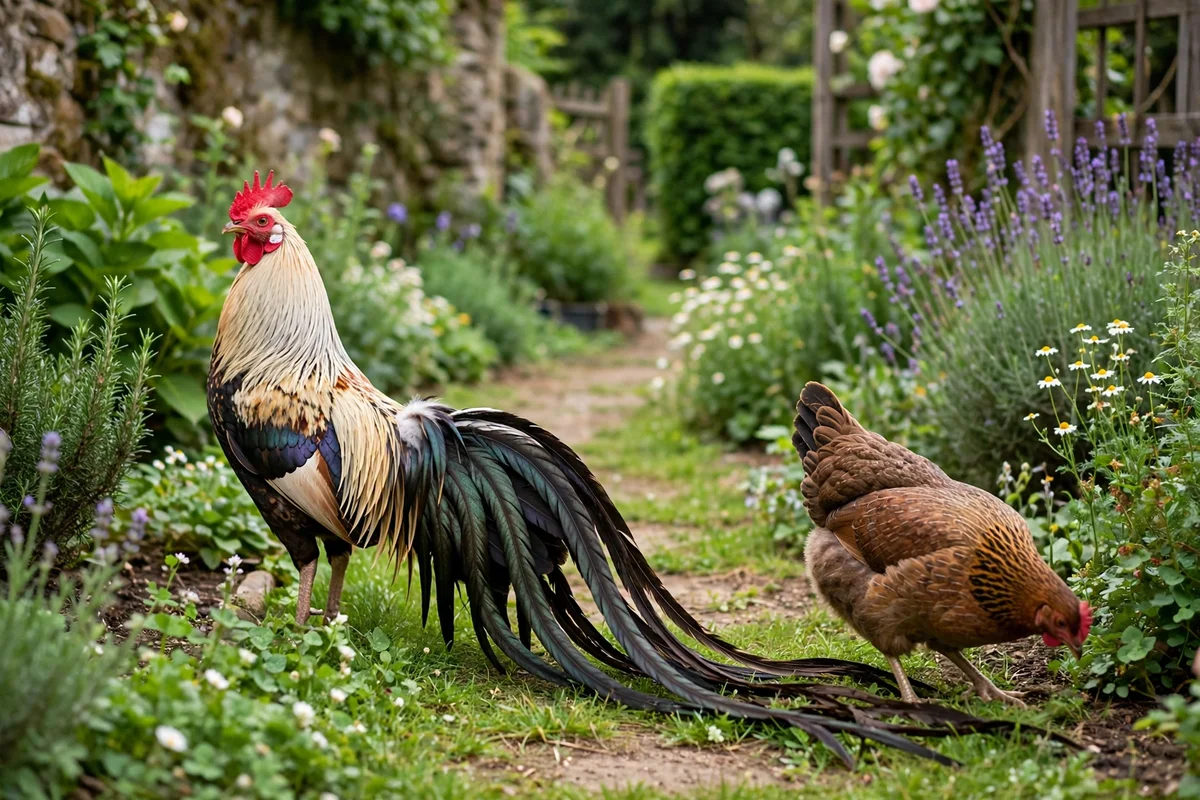
What is a Phoenix chicken?
A Phoenix chicken is an ornamental long-tailed breed developed in Germany from Japanese long-tailed birds, with the aim of creating a European breed with the extraordinary tail of the Japanese Onagadori. The result is a bird whose roosters grow tails that can reach several feet long, with flowing sickle feathers that trail behind them as they walk.
The breed was admitted to the American Poultry Association standard in stages: Silver in 1965, Golden in 1983, and Black-Breasted Red in 2018, and it is recognised in several colours, including Silver, Golden and Black-Breasted Red. The hens are much plainer than the roosters, with shorter tails and more subdued colouring, but they share the breed's elegant, upright carriage and long, flowing lines.
Phoenix chickens are a light, active bird, with hens weighing about 4 lb and roosters about 5.5 lb, and they have a single comb or pea comb, white earlobes, and slate-blue or yellow shanks depending on the variety. They are kept as an ornamental breed, and they are a bird for shows and for keepers who enjoy beautiful birds, not for keepers who want eggs.
Phoenix temperament
Phoenix chickens are docile but aloof birds that tolerate handling without enjoying it, and they are more independent than a friendly breed such as an Orpington. They are calm and quiet, and they do not panic easily, but they do not seek out human company.
And they are happiest when they are left to move around their run without being picked up.
They sit in the middle of the pecking order and mix well with other calm breeds, though they can be bullied by more assertive birds, because they are light and they do not fight back. Keep them with other gentle, ornamental breeds, such as Polish or Silkies, and give them enough space, enough feeders and a place to escape, so they are not pushed away from food.
Broodiness is common in Phoenix hens, and a hen that goes broody is usually a good mother, sitting well and raising her chicks with care. This makes the breed useful for keepers who want the option of natural hatching, though a broody Phoenix stops laying, and a bird that is broody for much of the year will lay even fewer eggs than her already low total suggests.
Eggs and laying: how many eggs do Phoenixes lay?
Phoenix hens lay 52 to 126 small cream or tinted eggs a year, according to the Livestock Conservancy, which is the authority this profile follows. Some retailer listings claim 200 to 280 eggs a year, but that figure contradicts the Conservancy and does not match the breed's ornamental purpose.
So this profile does not repeat it. Plan on the Conservancy figure, and expect the lower end in most flocks.
The eggs are small, with cream or lightly tinted shells, and the hens lay in a seasonal pattern, laying more in spring and summer and less in autumn and winter. Pullets usually start laying at about five to six months old, and the hens keep laying for several years, because they are a slow, steady layer rather than a production bird. Use the Egg Production Calculator to work out how many hens your household needs, and plan on very few eggs.
For a keeper who wants eggs, a Phoenix is not the right choice, and our guide on how many eggs per week by breed shows how Phoenixes compare with the laying breeds. For a keeper who wants a beautiful, ornamental bird, the egg count does not matter, and the Phoenix's long tail and elegant carriage more than make up for it.
Housing and care: high perches and tail care
Phoenix chickens need high perches, because the rooster's long tail must hang clear of the ground and the bedding, or it will become dirty, broken and matted. Provide perches at least a metre off the ground, with clear space below them, and keep the bedding clean and dry, because a tail that drags in dirty bedding will quickly become damaged.
The run should be covered and dry, because a Phoenix with a long tail cannot fly well, and a wet tail is heavy, cold and prone to breakage. Keep the run free of mud and puddles, and do not let the birds out in rain or snow, because a wet Phoenix will chill quickly and the tail will take a long time to dry. Our guide on how to keep chickens warm in winter covers the general principles.
Check the tail feathers regularly for breakage, dirt and parasites, and trim any badly damaged feathers carefully, because a broken tail feather can bleed and can attract pecking from other birds. A rooster with a very long tail may need a separate pen, or a pen with higher perches and more space, so the tail does not get stepped on or caught in wire. The roost space calculator works out how much roost length your flock needs.
Feeding Phoenix chickens
Phoenix chickens eat the same feed as other chickens: chick starter to eight weeks, grower to eighteen weeks, and layer feed once they start laying, with fresh water always available. They are light birds, so they eat less than a heavy breed.
But they need the same quality of feed, and they benefit from a feeder that is low enough for them to reach easily.
Extra protein can help during moult, because feather regrowth demands protein, and a Phoenix rooster regrowing a long tail needs more protein than a hen regrowing normal feathers. Offer a small amount of protein-rich treats, such as mealworms or scrambled egg, during the moult, and keep treats within the 10 percent rule. The chicken treats calculator can help you work out a sensible daily treat allowance.
Keep the feeders and drinkers clean, because a Phoenix with a long tail can knock over a drinker or step in a feeder, and wet bedding under a long-tailed bird is a problem. Use a drinker that is stable and a feeder that is raised off the ground, so the tail does not drag through the feed, and check the water daily, because a bird that cannot reach the drinker will dehydrate.
Are Phoenix chickens right for you?
Phoenix chickens are right for a keeper who wants a beautiful, ornamental bird, who has a dry, secure coop with high perches, who does not mind a very low egg count, and who is prepared to give the birds extra care with their tails.
They are ideal for show keepers, for keepers who enjoy beautiful birds, and for anyone who values looks over production.
They are not right for a keeper who wants eggs, who has a wet, muddy run, who keeps aggressive breeds, or who wants a bird that can free range and look after itself. A Phoenix in a wet run with Rhode Island Reds will be miserable, cold, bullied and unproductive, and the keeper will be disappointed, not because the Phoenix is a bad bird, but because she is the wrong bird for that setup.
If you decide on Phoenixes, buy from a reputable breeder, ask which variety you are getting, and give them high perches, a dry covered run, and gentle companions. Do that, and you will have a flock of birds that are as beautiful as they are distinctive, and that will reward the extra care with years of elegant, quiet company.
Phoenix breed facts at a glance
| Trait | Phoenix |
|---|---|
| Origin | Germany, developed from Japanese long-tailed birds |
| APA recognition | Silver 1965; Golden 1983; Black-Breasted Red 2018 |
| Purpose | Ornamental |
| Temperament | Docile but aloof; calm and quiet |
| Egg colour | Cream or tinted |
| Eggs per year | 52–126 (Livestock Conservancy; retailer claims of 200–280 are not repeated here) |
| Egg size | Small |
| Hen weight | About 4 lb (1.8 kg) |
| Rooster weight | About 5.5 lb (2.5 kg) |
| Distinctive feature | Rooster tail can grow to several feet long |
| Broodiness | Common; good mother |
| Hardiness | Needs dry housing and high perches; tail care essential |
| Good for beginners | No — high-maintenance ornamental breed |
Phoenix egg figures follow the Livestock Conservancy, at 52 to 126 small cream or tinted eggs a year. Some retailer listings claim 200 to 280 eggs a year, but that figure contradicts the Conservancy and does not match the breed's ornamental purpose, so it is not repeated here.
Sources: breed facts on this page are drawn from the breed profiles published by the Livestock Conservancy and from university extension poultry guidance, including the University of Minnesota Extension and poultry.extension.org. Where sources give different figures for eggs per year, this page shows the range and says so, rather than presenting one number as settled.
Related tools and guides
For more on ornamental breeds and long-tailed birds, see the guides below.
Frequently asked questions
How many eggs do Phoenix chickens lay a year?
52 to 126 small cream or tinted eggs a year, according to the Livestock Conservancy. Some retailer listings claim 200 to 280, but that figure contradicts the Conservancy and is not repeated here.
How long does a Phoenix rooster's tail grow?
Several feet long, with flowing sickle feathers that trail behind the bird as it walks. The tail needs high perches so it hangs clear of the ground and the bedding, or it will become dirty, broken and matted.
Are Phoenix chickens friendly?
They are docile but aloof. They tolerate handling without enjoying it, and they do not seek out human company. They are calm and quiet birds that are happiest when left to move around their run without being picked up.
Do Phoenix chickens need special housing?
Yes. They need high perches, a dry covered run, and clean bedding, because the long tail must hang clear of the ground. They should not be let out in rain or snow, and the tail feathers need regular checks for breakage.
Are Phoenix chickens good for beginners?
No. They are a high-maintenance ornamental breed, and they need extra care with their tails, their housing and their companions. They are best suited to show keepers and to keepers who enjoy beautiful birds.
About the author
John Walker is the founder of PeckCalc and has kept backyard chickens in Dallas, Texas since 2017. He started PeckCalc to give backyard keepers free calculators and guides with every figure traced to a university extension source.