
Prairie Bluebell Egger Chickens
 By John Walker · Backyard chicken keeper in Dallas, Texas since 2017
Prairie Bluebell Egger chickens are a friendly hybrid developed by Hoover's Hatchery to lay blue eggs. They are calm, productive and easy to keep, and they suit backyard flocks that want a colourful egg basket and a gentle bird. If you want blue eggs from a hen that is easy to handle, the Prairie Bluebell Egger is a strong choice.
What are Prairie Bluebell Egger chickens?
Prairie Bluebell Egger chickens are a hybrid developed by Hoover's Hatchery in the United States, created by crossing blue-egg laying breeds to produce a hen that lays blue eggs reliably. They are not a recognised show breed, and they are not a true breed in the strict sense, because they are a cross rather than a standardised breed, but they are sold as a distinct type with a consistent purpose: blue eggs from a friendly hen.
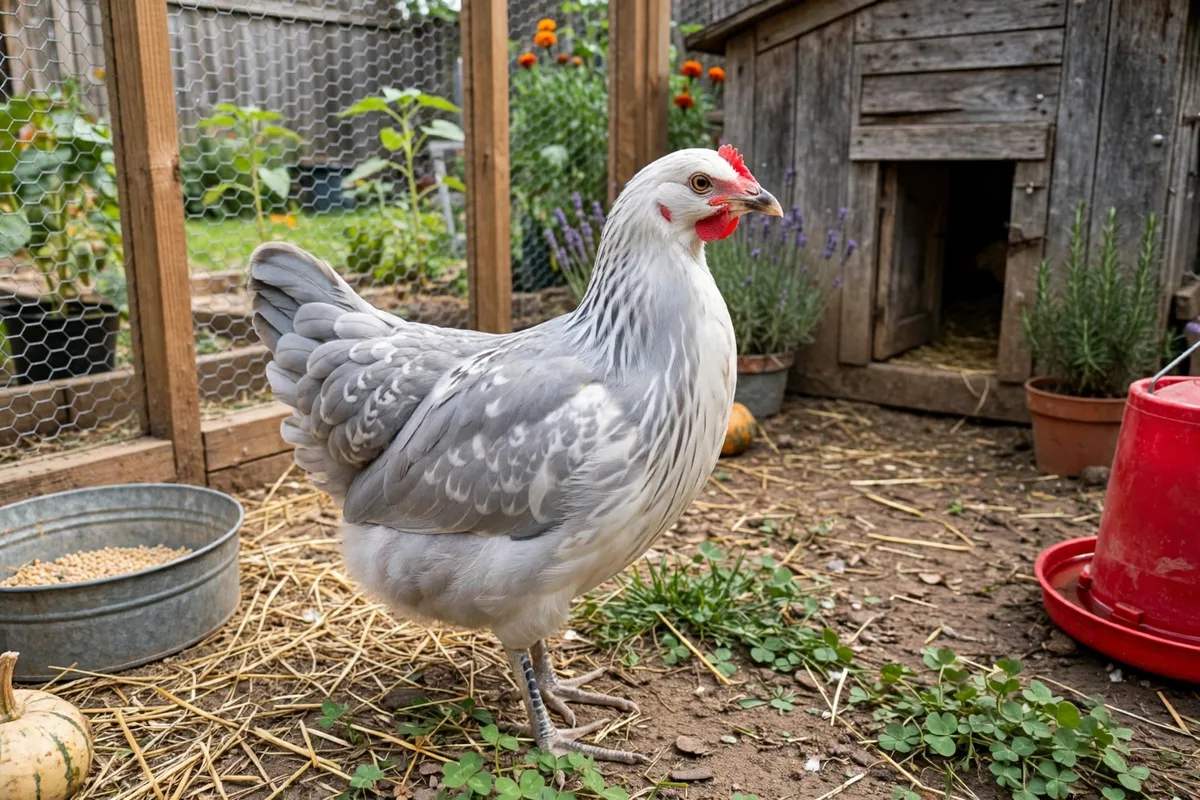
Prairie Bluebell Eggers are medium-sized birds with soft, variable plumage, often in shades of grey, white, brown or black, and many birds show a small crest or a muff. They are calm and easy to handle, which sets them apart from some other blue-egg layers, and they are popular with families and first-time keepers.
Because they are a hatchery hybrid, Prairie Bluebell Eggers are easy to find and reasonably priced, and they are a practical way to add blue eggs to a backyard flock without the cost or the variability of a rare breed.
History of the Prairie Bluebell Egger
Hoover's Hatchery developed the Prairie Bluebell Egger as part of a range of coloured-egg hybrids, alongside the Starlight Green Egger, which lays green eggs. The idea was simple: give backyard keepers a reliable coloured-egg layer with a friendly temperament, without asking them to pay show-bird prices or to deal with the variable egg colour of a generic Easter Egger.
The cross draws on blue-egg breeds, including Araucana and Ameraucana lines, combined with productive layer lines to keep egg numbers up. The result is a hen that lays blue eggs in good numbers and stays calm enough for a family flock, which is a combination that many keepers want.
The Prairie Bluebell Egger has become a popular hatchery offering, and it is now one of the better-known blue-egg hybrids in the United States. It is sold mainly as chicks through hatcheries, and it is often bought alongside the Starlight Green Egger so keepers get both blue and green eggs.
What do Prairie Bluebell Egger chickens look like?
Prairie Bluebell Eggers vary in appearance, because they are a hybrid rather than a standardised breed. Common colours include grey, white, brown, black and mottled, and many birds show a small crest, a muff or a beard, inherited from their Araucana and Ameraucana ancestors. No two birds look quite the same, and that variety is normal for this type.
They are medium-sized birds with a fairly upright carriage and a practical, working-layer build. They look like a friendly backyard hen rather than an ornamental bird, and there is nothing unusual to groom or maintain. Their legs are usually clean, and their combs are often small pea combs, which helps in cold weather.
If you want a uniform flock, a hybrid such as this one will surprise you, because variety is built in. If a fixed appearance matters, choose a standardised breed such as the Ameraucana instead, and read our guide on Ameraucana chickens to compare.
Prairie Bluebell Egger temperament
Prairie Bluebell Eggers are known for a calm, friendly temperament, and they are one of the easier blue-egg layers to handle. Hens are generally docile, they tolerate handling well, and they are a good choice for families with children, provided children are taught to handle birds gently.
They are not usually flighty, and they settle into a mixed flock without much fuss.
They are good foragers and enjoy ranging, but they are not restless birds that pace a fence. A Prairie Bluebell Egger flock will spend the day scratching, dust bathing and working through a run, and they do well in a free-range or large-run setup. In a smaller run, give them things to do so boredom does not set in.
They mix well with other calm breeds, and they are a good fit for a mixed flock that includes other coloured-egg layers. Avoid mixing them with very dominant breeds that might bully a gentle bird, and read our guide on how to introduce new chickens to a flock before adding birds.
How many eggs do Prairie Bluebell Egger chickens lay?
Prairie Bluebell Eggers are good layers of blue eggs, and laying is the trait they were developed for. They are generally described as productive, with a steady supply through the laying season, and they are one of the more reliable blue-egg layers available from hatcheries.
As with any hybrid, laying varies by hatchery line, season and feed, so treat any single figure as a rough guide.
Laying usually starts at around five months, and hens often keep laying well through their first two seasons. The eggs are blue, though the shade can vary from a pale blue to a deeper blue, and individual hens vary. If you want a consistent shade, ask the hatchery what their line produces.
Blue eggs are coloured through the shell by a pigment, so the colour runs all the way through, unlike brown eggs, which are coloured only on the surface. That makes a blue egg easy to tell from a brown one, and our egg colour calculator explains how egg colour is inherited. Use our egg production calculator to plan how many hens you need.
Prairie Bluebell Egger chickens and climate
Prairie Bluebell Eggers are hardy birds that cope with a range of climates. They were developed for practical backyard keeping in the United States, and they handle both heat and cold reasonably well, provided they have the basics: shade and cool water in summer, and a dry, draught-free coop in winter.
Many birds carry a small pea comb, which is less prone to frostbite than a large single comb, and that helps in a cold climate. In a hard freeze, check combs on the coldest mornings, and give the flock a dry coop with ventilation above roost height. Our guide on how to winterize a chicken coop covers the practical steps.
In hot weather, Prairie Bluebell Eggers need shade, airflow and cool water, as any active breed does. They are lighter than heavy dual-purpose breeds, so heat is less of a problem for them than for a heavy bird, but no chicken copes well with a hot, airless coop.
Prairie Bluebell Egger chickens at a glance
The table below sums up the Prairie Bluebell Egger for a backyard keeper. Laying is described in general terms because hatchery lines vary.
| Trait | Prairie Bluebell Egger |
|---|---|
| Origin | United States, developed by Hoover's Hatchery |
| Type | Hybrid, not a recognised show breed |
| Egg colour | Blue |
| Laying | Good and steady, bred for production |
| Plumage | Variable: grey, white, brown, black, mottled |
| Temperament | Calm, friendly, easy to handle |
| Climate | Hardy in heat and cold |
| Best for | Blue eggs, family flocks, beginners |
Are Prairie Bluebell Egger chickens right for you?
Prairie Bluebell Eggers suit keepers who want blue eggs from a calm, friendly hen. They fit well in a family flock, they mix well with other gentle breeds, and they are a practical choice if you are new to chickens and want a coloured-egg layer that is easy to handle.
They are also a good pick if you want to pair blue eggs with green eggs from the Starlight Green Egger.
They are less suited to keepers who want a uniform-looking flock, because plumage varies, or who want to show birds, because they are a hybrid rather than a recognised breed. If a fixed appearance matters, the Ameraucana is the better choice, and our guide on Ameraucana chickens explains the difference.
Think about what matters most. If blue eggs and a gentle temperament are the goal, the Prairie Bluebell Egger delivers. If you want to breed birds that look the same every generation, choose a standardised breed instead.
Where to find Prairie Bluebell Egger chickens
Prairie Bluebell Eggers are sold mainly through Hoover's Hatchery and through retailers that carry Hoover's chicks, which makes them easy to find in the United States. They are usually sold as chicks in spring, sexed or straight run depending on the seller, and they are often bought alongside Starlight Green Eggers.
When you order, ask whether chicks are sexed, because that matters if you cannot keep roosters. Check your local rules first with our guide on backyard chicken laws, because roosters are restricted in many areas. Ask about egg colour too, because shade varies between hatchery lines.
Have your brooder ready before chicks arrive, sizing it with our chick brooder size calculator, and plan the coop with our chicken coop size calculator. Order early in the season, because popular coloured-egg hybrids sell out.
Sources: University of Minnesota Extension poultry pages and poultry.extension.org.
Related tools and guides
For more on the same topic, see Starlight Green Egger Chickens.
Frequently asked questions
What colour eggs do Prairie Bluebell Egger chickens lay?
Prairie Bluebell Eggers lay blue eggs. The shade varies from pale blue to a deeper blue, and it can differ between hens and between hatchery lines.
Are Prairie Bluebell Egger chickens good layers?
Yes, Prairie Bluebell Eggers are good steady layers. They were developed by Hoovers Hatchery for blue egg production, and they lay well through the season, though laying varies by line and management.
Are Prairie Bluebell Egger chickens friendly?
Yes, they are known for a calm and friendly temperament. Hens tolerate handling well, they settle into mixed flocks without much fuss, and they are a good choice for family flocks.
Are Prairie Bluebell Eggers a real breed?
No, they are a hybrid developed by Hoovers Hatchery, not a recognised show breed. They are a cross of blue egg breeds with productive layer lines, sold as a distinct type for blue eggs.
What is the difference between Prairie Bluebell and Starlight Green Eggers?
Prairie Bluebell Eggers lay blue eggs, while Starlight Green Eggers lay green eggs. Both are friendly hybrids from Hoovers Hatchery, and many keepers buy both for a colourful egg basket.
About the author
John Walker is the founder of PeckCalc and has kept backyard chickens in Dallas, Texas since 2017. He started PeckCalc to give backyard keepers free calculators and guides with every figure traced to a university extension source.