
Spring Chicken Care Checklist
 By John Walker · Backyard chicken keeper in Dallas, Texas since 2017
Spring chicken care checklist is the list every keeper needs when the days lengthen, the hens start laying again, and the coop needs a fresh start after winter. Spring is the best time for a full coop clean, a health check, a mite check, and a refresh of the bedding, the feeders, and the run, because the birds are coming into the laying season and a clean, healthy start will help them lay well all summer. This guide gives you a step-by-step spring checklist, from the coop to the run to the birds themselves, so you can tick off each job and start the season right.
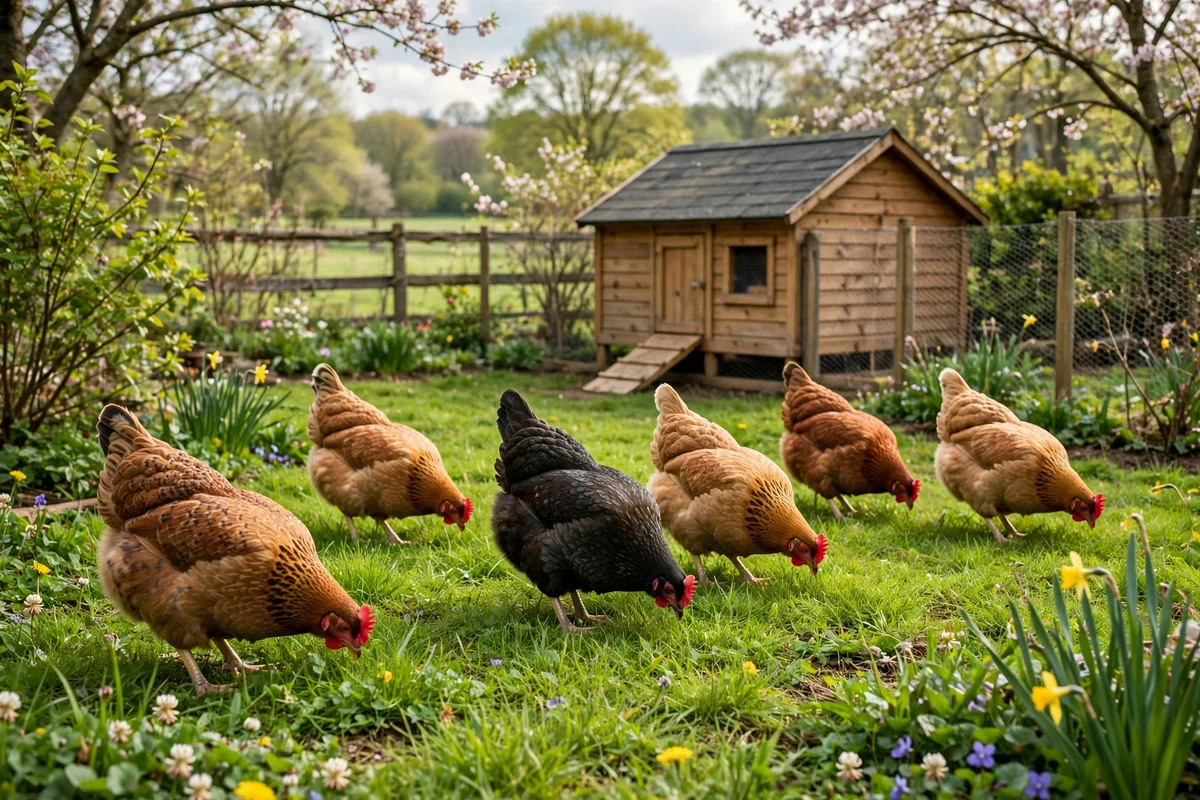
Spring chicken care checklist: the full list
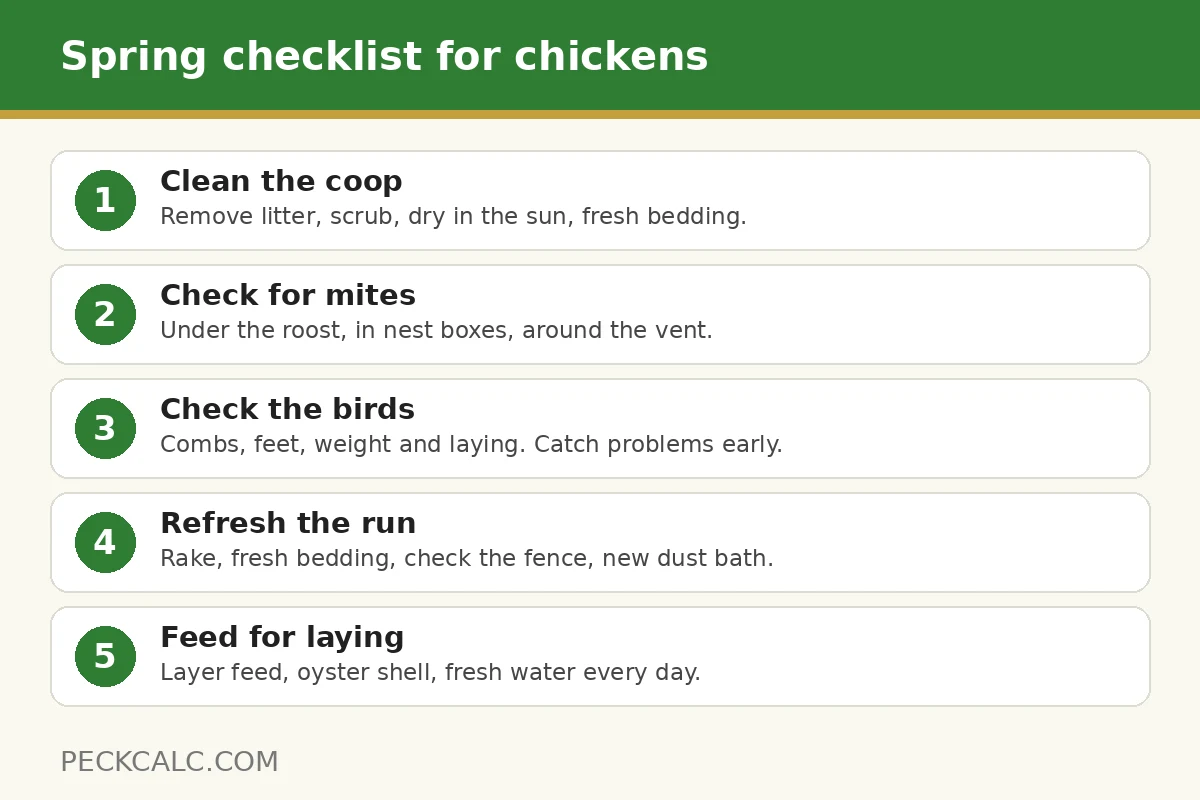
Spring is the season to clean the coop, check the birds, refresh the bedding, and get the run ready for the laying season. The checklist below covers the coop, the run, the birds, and the feed, and it can be done over a weekend, with a few hours of work each day.
Start with the coop: remove all the old litter, scrub the coop with hot, soapy water, let it dry in the sun, and put in fresh bedding. Check the roosts, the nest boxes, and the vents for damage, and repair anything that is broken. A clean coop is the foundation of a healthy flock.
Next, check the birds: look at each hen for mites, check the combs and wattles, check the feet for bumblefoot, and weigh the birds if you can. A hen that is thin, dull, or lame needs attention, and spring is the best time to catch a problem early.
Then, refresh the run: rake out the old litter, add fresh bedding or sand, check the fence for holes, and put in a fresh dust bath. A clean run is drier, healthier, and more pleasant for the birds, and it will stay that way if you rake it weekly through the summer.
Cleaning the coop in spring
Remove all the old litter from the coop, including the litter in the nest boxes and under the roost, and put it on the compost heap. Old litter harbours mites, bacteria, and ammonia, and removing it is the single most important spring job.
Scrub the coop with hot, soapy water, using a stiff brush, and pay attention to the corners, the joints, and the underside of the roost, where mites hide. Rinse the coop well, and let it dry in the sun, because sunlight kills many germs and mites, and a dry coop is a healthy coop.
Check the coop for damage: look at the roof for leaks, the walls for gaps, the door for a good fit, and the vents for blockages. Repair anything that is broken, because a coop that leaks or draughts will make the hens ill, and a coop with gaps will let in rats and mice.
Put in fresh bedding, such as straw, wood shavings, or hemp, and add a layer of diatomaceous earth under the bedding if you use it for mites. Put fresh bedding in the nest boxes, and the coop is ready for the laying season. Our guide on how to spring clean a chicken coop explains the method in full, step by step.
| Spring job | What to do | Why it matters |
|---|---|---|
| Clean the coop | Remove litter, scrub, dry, fresh bedding | Removes mites, bacteria and ammonia |
| Check for mites | Look under roost, in nest boxes, on birds | Mites become active in warm weather |
| Check the birds | Combs, feet, weight, laying | Catch problems early in the season |
| Refresh the run | Rake, fresh bedding, check fence | Dry, healthy run for summer |
| Fresh dust bath | Dry dust, sand and wood ash | Lets birds clean feathers and control mites |
| Check feeders and drinkers | Clean, repair, replace if worn | Clean feed and water for laying hens |
| Check the feed | Fresh layer feed, oyster shell | Hens need nutrients for laying |
Checking the birds for mites and health
Check each bird for mites in spring, because mites become active as the weather warms, and a mite infestation can spread fast in a flock. Look under the roost at night, with a torch, for tiny red mites, and look on the birds, especially around the vent, for grey mites and eggs.
Check the combs and wattles for frostbite damage from winter, and check the feet for bumblefoot, which is a swollen, sore foot caused by a cut or a bruise. A hen with a sore foot will limp, and she needs treatment, because bumblefoot can become serious if it is left.
Weigh the birds if you can, and note any bird that is very thin, because a thin bird may have worms, mites, or another health problem. A hen that has lost weight over winter needs a good diet and a health check, and she may need worming.
Check the laying, and note which hens are laying and which are not. A hen that has not started laying by spring may be old, ill, or broody, and she needs attention. A hen that is laying well is a healthy hen, and a spring health check will help her stay that way.
The run and the dust bath in spring
Rake the run in spring, removing the old litter, droppings, and debris, and add fresh bedding, sand, or wood chips. A clean run is drier, healthier, and more pleasant for the birds, and it will stay that way if you rake it weekly through the summer.
Check the fence for holes, gaps, and damage, because a fence that has been damaged over winter can let in predators, and a hole that is not fixed will soon become a bigger hole. Repair the fence, and check the gate, the hinges, and the latch.
Put in a fresh dust bath, with dry dust, sand, and wood ash, in a sunny, sheltered spot. A dust bath lets the birds clean their feathers, control mites, and enjoy themselves, and it is one of the most important things in the run. Our guide on chicken dust bath explains how to make one.
Add some greens to the run in spring, such as a patch of grass, a few lettuce leaves, or a hanging cabbage, because the birds will enjoy the fresh greens after a winter of feed alone. A few greens a day will help the hens lay well, and they will enjoy the variety.
Feeding the flock in spring
Feed a balanced layer feed in spring, because the hens are laying again and they need the protein, calcium, and vitamins for eggs. A layer feed has the right nutrients, and it is the foundation of a good laying season.
Offer oyster shell in a separate dish, because a laying hen needs extra calcium for strong eggshells, and a hen that does not have oyster shell will lay thin-shelled eggs. A hen that needs more calcium will eat the oyster shell, and a hen that does not need it will leave it alone.
Offer a little extra protein in spring, such as mealworms, scrambled egg, or a handful of sunflower seeds, because the hens are growing new feathers after the winter moult, and they need protein for feathers and eggs. A little extra protein will help the flock lay well.
Make sure fresh water is always available, and clean the drinker every day, because a dirty drinker can put birds off drinking, and a hen that does not drink will not lay. A clean drinker is one of the simplest and most important jobs in chicken keeping.
Adding new birds and planning the season
Spring is a good time to add new birds, because the weather is mild and the birds can settle in before the heat of summer. Quarantine new birds for two weeks, then introduce them slowly, with a fence between the birds at first, so they can see each other without touching.
Spring is also a good time to plan the laying season, and to decide how many eggs you need, how many hens you need, and whether to hatch chicks. A plan will help you keep the flock at the right size, and it will help you avoid a flock that is too large or too small.
Check the local rules in spring, because some places change their rules in spring, and a keeper who is not aware of a change can be caught out. Our guide on backyard chicken laws explains the rules, and it is worth checking before you add birds.
Spring is a fresh start for the flock, and a keeper who cleans the coop, checks the birds, refreshes the run, and feeds the flock well will have a healthy, happy flock that lays well all summer. The spring checklist is a few hours of work, and it pays off all season.
Sources: poultry.extension.org and University of Minnesota Extension, poultry resources.
Related tools and guides
For more on the same topic, see How to Spring Clean a Chicken Coop.
Frequently asked questions
What should I do for my chickens in spring?
In spring, clean the coop, check the birds for mites, refresh the bedding, check the feeders and drinkers, and get the run ready for the laying season. Spring is the best time for a full coop clean and a health check.
Should I spring clean the chicken coop?
Yes, spring is the best time to clean the coop, because the birds are laying again, the weather is warming, and a clean coop will keep the flock healthy through the laying season. Our guide on how to spring clean a chicken coop explains the method.
When should I check for mites in spring?
Check for mites in spring, because mites become active as the weather warms. Look under the roost, in the nest boxes, and on the birds, especially around the vent, and treat at once if you find them.
Can I add new chickens in spring?
Yes, spring is a good time to add new birds, because the weather is mild and the birds can settle in before the heat of summer. Quarantine new birds for two weeks, then introduce them slowly.
What should I feed chickens in spring?
Offer a balanced layer feed, fresh water, and a little extra protein, because the hens are laying again and they need the nutrients for eggs. A spring diet with greens and a little extra protein will help the flock lay well.
About the author
John Walker is the founder of PeckCalc and has kept backyard chickens in Dallas, Texas since 2017. He started PeckCalc to give backyard keepers free calculators and guides with every figure traced to a university extension source.