
Welsummer Chickens: Breed Profile and Care Guide
 By John Walker · Backyard chicken keeper in Dallas, Texas since 2017
Welsummer chickens are best known for one thing: large, dark terracotta-brown eggs, often covered in darker speckles, that look like traditional farm eggs. They are medium-sized Dutch birds with a classic partridge pattern, an active, curious nature, and a useful trick: day-old chicks can be sexed by their down colour, so you know which are pullets from the start.
What is a Welsummer chicken?
A Welsummer chicken is a medium-sized Dutch dual-purpose breed from the village of Welsum in the Netherlands, developed in the early 1900s from local fowl plus Rhode Island Reds, Barnevelders and Leghorns. It was bred for large, dark brown eggs, and it became famous for the speckled terracotta shells that helped define the look of traditional European farm eggs.
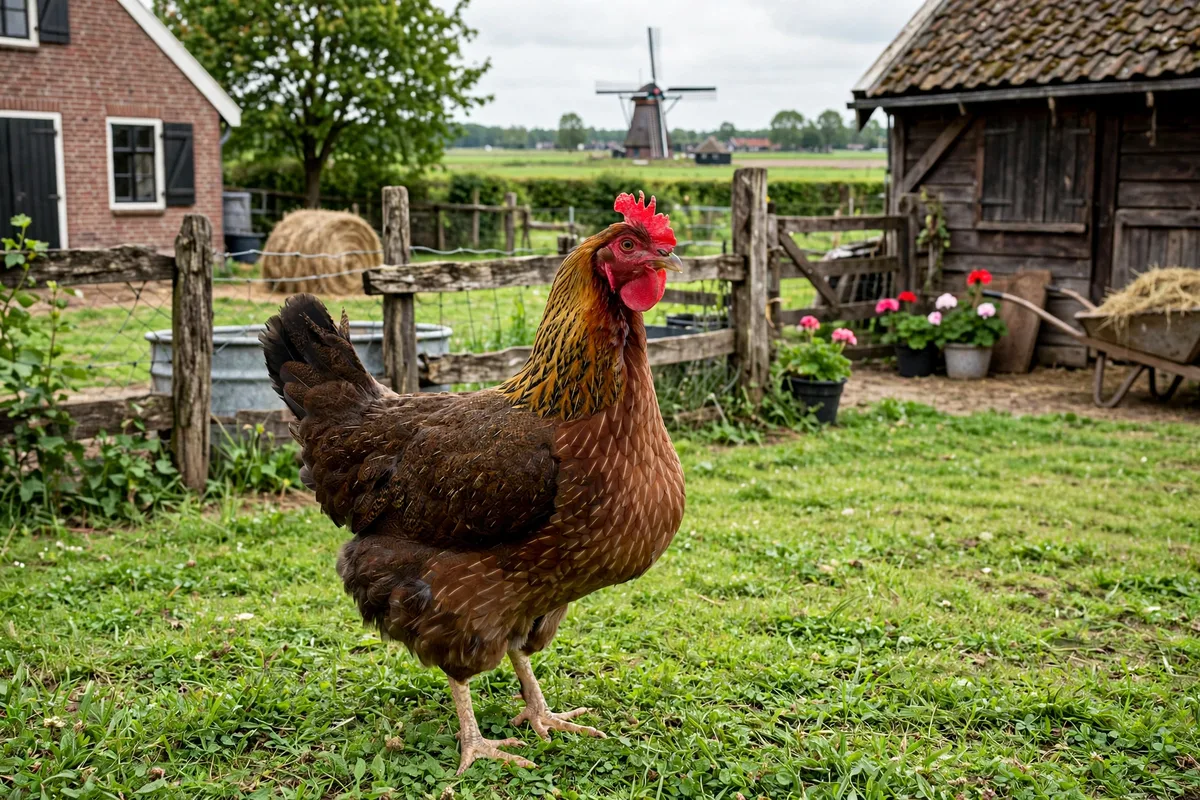
Welsummers are light to medium-sized birds with a sturdy frame, broad shoulders, a deep rounded chest and strong legs. Hens weigh about 5.5–6 lb and roosters about 6.5–7 lb, and they carry a single comb, yellow legs and a classic partridge colour pattern in rich browns, golds and blacks.
The American Poultry Association recognised the Welsummer in 1991, with one large-fowl variety, Red Partridge, and a Partridge bantam. The breed is the only one with that exact partridge pattern in the standard, and it is easy to recognise once you have seen it.
Welsummer temperament
Welsummers are calm, alert and curious birds that like having something to do. They are friendly without being needy, and they adapt well to backyard coops and open homesteads, though they are not the cuddliest breed and are unlikely to enjoy being held.
They are excellent free rangers with sharp awareness, and they love to forage, covering a good amount of ground in search of insects and greens. They are not generally aggressive, they integrate well with other breeds, and they fall somewhere in the middle of the pecking order without being bossy.
They can be quite vocal and communicative, and some keepers find them loud, especially the hens around laying time. Handle chicks gently from a young age and they usually grow up docile and easy to work around, though they stay more independent than a lap breed.
Eggs and laying: how many eggs do Welsummer chickens lay?
Welsummer hens lay 150–200 large dark brown eggs a year, or about four a week, with some guides giving a wider range of 160–250 depending on strain and management. They are moderate but reliable layers, and their eggs are the point: deep terracotta brown, often covered in darker speckles, and very large at 65–70 grams.
The dark colour comes from porphyrins deposited on the shell, and it becomes lighter as the laying period progresses, while the speckles keep their intensity. Bantam Welsummers lay paler, smaller eggs, so buy large fowl if egg colour matters to you.
Welsummers are seasonal layers that do not naturally lay well in winter, and they usually start laying at about 20–22 weeks old. Use the Egg Production Calculator to compare their output with other dark-egg breeds, and expect a winter break unless you add light.
Housing and space for Welsummers
Welsummers need about 3–4 square feet of coop floor per bird and 8–10 square feet of run, with roosts at a comfortable height for a medium bird. They prefer free range and cooler climates, but they are adaptable, and they do best with room to roam and forage.
They are hardy birds that handle cold reasonably well, though roosters' large single combs can suffer frostbite in cold weather, so keep the coop dry and draught-free in winter. They handle heat well too, provided they have shade and cool water, and they are active birds that need ventilation in summer.
Welsummers can fly, but they are not the best fliers, so confining them is not difficult, and a fence of about 5 feet is usually enough. Check the Chicken Breed Size Chart to compare their medium size with heavier breeds before planning nest boxes.
Feeding Welsummers
Welsummers do well on a standard layer feed of about 16 percent protein once laying, with grower feed before that and chick starter for the first six to eight weeks. A laying hen eats roughly a quarter of a pound of feed a day, and active foragers will find insects and greens on range.
Offer oyster shell in a separate dish so hens can take extra calcium for strong shells, and keep fresh water available at all times. Because Welsummers are active birds, they burn more energy foraging than a heavy breed, so do not restrict feed in the hope of keeping them lean.
Feed is the same as for any laying flock, and no supplement will darken egg colour beyond what genetics allow: shell colour is set by the hen, not by feed. A balanced ration, clean water and enough daylight are what keep a moderate layer producing steadily through the season.
Health and common problems
Welsummers are hardy birds that commonly live five to eight years with good care. They have no major breed-specific weakness, and their main risks are the ordinary ones of a backyard flock: mites, lice, worms and respiratory illness in damp housing.
The most likely seasonal problem is frostbite on the rooster's large single comb, so apply petroleum jelly to combs in severe cold and keep the coop dry and ventilated. Hens' combs are smaller and less at risk, but they still need a dry coop in winter.
Routine care covers most problems: vaccinate chicks against Marek's disease, keep bedding dry, provide a dust bath, and quarantine new birds for at least two weeks. Separate any bird that stands apart, goes off feed, or stops laying suddenly, and check it promptly.
Are Welsummers right for you?
Welsummers suit keepers who want beautiful dark speckled eggs, a calm and attractive bird, and the practical bonus of chicks that can be sexed at hatch. They are a good choice for free-range flocks, for families, and for anyone who wants a colourful egg basket.
They are a poorer fit if you want a lot of eggs in winter, since Welsummers are seasonal layers, or if you want a cuddly lap bird, since they are friendly but independent. If you want darker eggs from a bird that lays more steadily, compare them with the Marans chickens; if you want a similar Dutch breed with a calmer nature, look at the Barnevelder chickens.
Buy from a reputable hatchery or breeder, and ask about the laying line, since utility strains lay noticeably more than show strains. Buy sexed pullets if you cannot keep roosters, and a flock of four to six hens will keep a family in dark speckled eggs most of the year.
Buying Welsummer chickens: chicks, pullets and what to check
Buy Welsummers from a reputable hatchery or breeder, and ask whether the birds come from a utility laying line or a show line, since utility strains lay noticeably more eggs. Ask to see the eggs the parent hens lay, since shell colour varies by line.
Chicks are the cheapest option, but they need six weeks in a brooder and you will wait five to six months for the first egg. Started pullets cost more but lay within weeks, which suits a keeper who wants dark speckled eggs quickly. Welsummer chicks can be sexed at hatch by their down colour, so you can buy day-old chicks and know which are pullets. Whichever you buy, check that the birds are bright-eyed, active and clean around the vent, with smooth legs and no discharge from the eyes or nostrils.
Ask the seller whether the birds are utility or show strain, and what the parent hens lay, since that tells you more than any breed average. A good breeder will tell you the age of the birds and whether they were vaccinated against Marek's disease, and will show you the parent hens' eggs. Be wary of sellers who cannot show you a dark speckled egg from the parent hens, or who promise a fixed number of eggs a year, since no honest seller can guarantee that. Buy from someone with a reputation to protect, and quarantine new birds for at least two weeks before mixing them with your flock.
Welsummer breed facts at a glance
| Trait | Welsummer |
|---|---|
| Origin | Welsum, Netherlands; developed early 1900s |
| Purpose | Dual-purpose, primarily eggs |
| Hen weight | About 5.5–6 lb (2.5–2.7 kg) |
| Rooster weight | About 6.5–7 lb (2.9–3.2 kg) |
| Eggs per year | 150–200 (some guides give 160–250) |
| Egg colour and size | Dark brown to terracotta, speckled, large |
| Temperament | Calm, alert, curious, active, friendly |
| Climate tolerance | Prefers cooler climates; rooster combs can frostbite |
| Broodiness | Low; rarely broody |
| Good for beginners | Yes |
Egg figures vary by source: most guides give 150–200 a year, some give 160–250, and one breed profile gives 150–180 for large fowl. The range reflects strain differences and the breed's seasonal laying, which reduces the annual total in flocks without added light.
Sources: breed facts on this page are drawn from the breed profiles published by the Livestock Conservancy and from university extension poultry guidance, including the University of Minnesota Extension and poultry.extension.org. Where sources give different figures for eggs per year, this page shows the range and says so, rather than presenting one number as settled.
Related tools and guides
For more on the same topic, see Chicken Breed Size Chart and Egg Production Calculator.
Frequently asked questions
How many eggs do Welsummer chickens lay?
Welsummer hens lay 150–200 large dark brown eggs a year, about four a week. Some guides give a wider range of 160–250 depending on strain and management, and they are seasonal layers that slow down in winter.
Can you tell male from female Welsummer chicks at hatch?
Yes. Welsummers are one of the few breeds where chicks can be sexed at hatch by their down colour: female chicks have dark brown striping and a distinct head pattern, while males are paler with a fainter head spot.
What colour eggs do Welsummers lay?
Welsummers lay large, dark terracotta-brown eggs, often covered in darker speckles. The colour lightens as the laying period progresses, while the speckles keep their intensity.
Are Welsummer chickens good for beginners?
Yes. Welsummers are a good choice for beginners and free-range flocks: calm, friendly, hardy and easy to manage, with the practical bonus of chicks that can be sexed at hatch.
Do Welsummer chickens go broody?
Welsummer hens rarely go broody, which is good if you want a steady egg supply. It also means they will not hatch their own chicks, so you need an incubator or a broody hen of another breed.
About the author
John Walker is the founder of PeckCalc and has kept backyard chickens in Dallas, Texas since 2017. He started PeckCalc to give backyard keepers free calculators and guides with every figure traced to a university extension source.