
What to Do If Your Neighbour's Rooster Keeps Crowing
 By John Walker · Backyard chicken keeper in Dallas, Texas since 2017
What to do if your neighbour's rooster keeps crowing depends on where you live, what the rules say, and how well you get on with your neighbour. A rooster that crows at 3 am every day is a real problem, and you have a right to sleep, but the best fix is usually a calm talk, not a formal complaint. This guide explains the steps in order, from a friendly chat to the council, and what to do if nothing works.
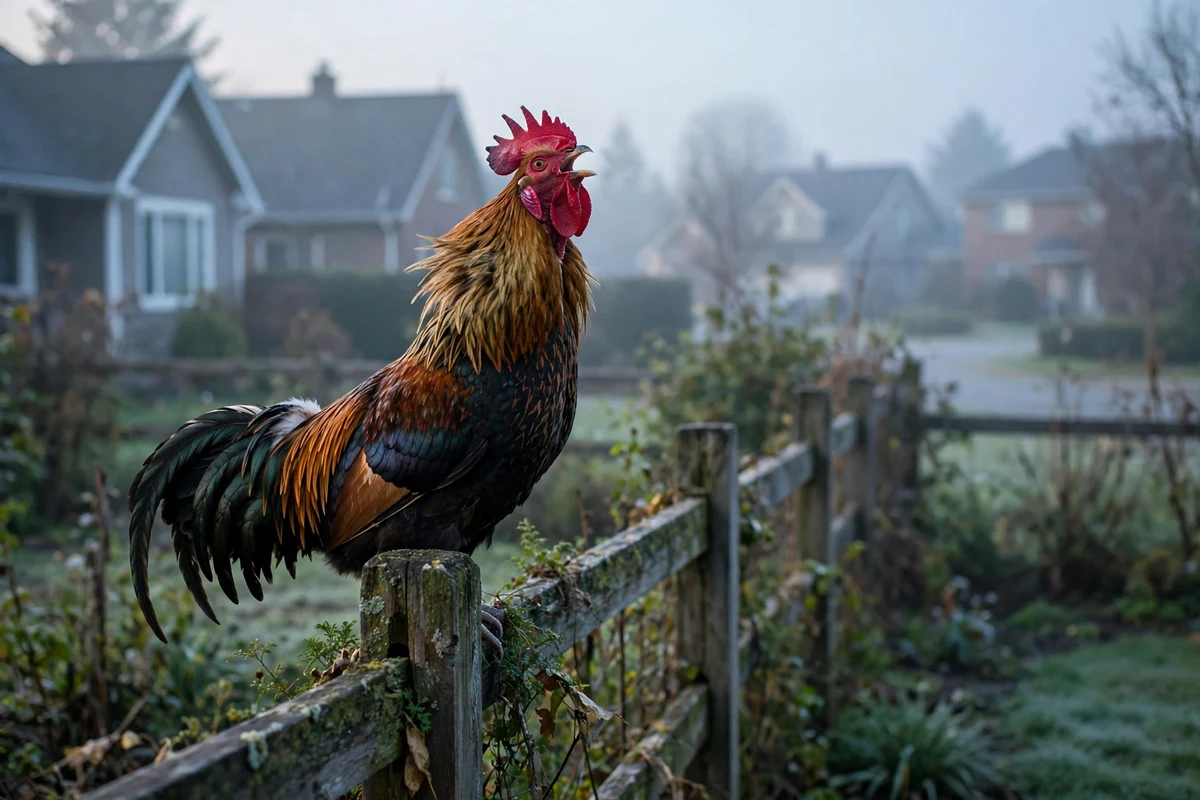
What to do if your neighbour's rooster keeps crowing
The first thing to do if your neighbour's rooster keeps crowing is to talk to your neighbour, calmly and in person. Go round during the day, explain that the crowing is waking you, and ask whether they know how early and how loud it is.
Many keepers do not realise how far the sound carries, because they are used to it, and a polite conversation is often enough.
Be specific about the problem, because a vague complaint is easy to dismiss. Tell them the rooster crows at 3 am, that it wakes you every day, and that it goes on for an hour. Ask them what they can do, and suggest practical fixes, such as a darker coop, a later release, or moving the coop further from your bedroom. A neighbour who feels respected is more likely to help.
Do not start with a formal complaint, a letter from a lawyer, or a call to the council, because these steps make the neighbour defensive and they can poison the relationship for years. A calm talk costs nothing, it keeps the peace, and it often works. If it does not work, you still have the formal steps to fall back on.
How loud is a rooster, and why does it wake you?
A rooster's crow is loud, and it can reach 90 decibels or more at close range, which is as loud as a lawnmower. The crow is designed to carry over a long distance, so it can be heard hundreds of metres away on a still morning.
This is why a rooster in a suburban garden is a problem, even if the garden is large.
The crow is worst in the early morning, when the air is still and the sound carries further, and when you are in light sleep. A crow at 3 am will wake you, because the night is quiet and the sound stands out. A crow at 7 am is less of a problem, because you are already awake and there is background noise.
Roosters crow most before dawn, between 3 and 5 am, and they keep crowing through the day. A rooster that crows all night is usually responding to a light or a disturbance, and fixing the light may stop the night crowing. Our what time do roosters start crowing guide explains the timing in detail.
Check the rules: are roosters allowed?
Check the rules before you do anything else, because the rules decide what you can ask for. In many towns and cities, roosters are banned in residential areas, and a neighbour who keeps one is breaking the rules. Your council or town office can tell you the rule, and it is usually in the animal control or zoning code.
If roosters are banned, you can ask the council to enforce the ban, but try the friendly talk first, because the neighbour may not know the rule. If roosters are allowed, there may still be a noise rule, and a rooster that crows at 3 am every day may break it. The noise rule usually covers unreasonable noise, and a daily 3 am crow is unreasonable.
Check whether the neighbour has a permit, or whether the area is zoned for agriculture, because these details matter. A rural property may allow roosters, while a suburban property next door may not. Your council can tell you the zoning, and it can tell you what counts as a noise nuisance in your area.
How to talk to your neighbour about the rooster
Talk to your neighbour in person, during the day, and when you are calm. Start by saying you like the neighbourhood and you do not want a dispute, and then explain the problem clearly. Tell them when the rooster crows, how loud it is, and how it affects your sleep.
Ask them if they have any ideas, and listen to what they say.
Suggest practical fixes, because a neighbour who is given a solution is more likely to act than one who is only given a complaint. A darker coop, a coop moved further from your house, or a later release from the coop can all help. A no-crow collar is another option, but it is uncomfortable for the bird, and many keepers will not use one.
Agree on a time to check back, so the neighbour knows you will follow up, but you are not threatening them. Say you will come back in a week to see if it is better, and thank them for listening. A neighbour who feels respected will try harder than one who feels attacked, and the relationship will survive the problem.

Keep a log of the crowing
Keep a log of the crowing, because a log is evidence, and it helps you and the council see the pattern. Write down the date, the time the crowing started, how long it lasted, and how loud it was. Note whether it woke you, and whether it went on through the day.
A log over two weeks is enough to show the pattern.
A log also helps you talk to your neighbour, because you can show them the times rather than relying on memory. A neighbour who sees that the rooster crows at 3 am every day is more likely to act than one who hears a vague complaint. Keep the log factual, without anger or exaggeration, because it may be shown to the council.
You can also record the crowing on your phone, because a recording shows the volume and the time. Keep the recordings with the log, and note the date and time of each one. A short recording at 3 am is powerful evidence, and it is hard to argue with. Do not record the neighbour's voice or conversations, only the rooster, because that is the noise you are complaining about.
When to involve the council or animal control
Involve the council or animal control if the friendly talk does not work, and if the crowing continues for more than a few weeks. Contact the animal control or noise team, and tell them the problem, the dates, and what you have already tried.
Give them the log and the recordings, because these show the pattern and they show that you tried to fix it yourself.
The council will usually visit, or write to the neighbour, and ask them to fix the problem. They may give the neighbour a time limit, and they may check again after a few weeks. If the neighbour does not act, the council can issue a fine, or order the rooster to be removed. The process takes time, and it is not instant, so be patient.
Do not exaggerate, and do not make a complaint you cannot back up, because the council will check the facts. A calm, factual complaint with a log and recordings is far more effective than an angry complaint with no evidence. Keep copies of everything you send, and keep a note of every call and visit.
What if the council cannot help?
If the council cannot help, because roosters are allowed and the noise does not break the rule, you still have options. Earplugs and a white noise machine can help you sleep, and they are cheaper and faster than a legal dispute.
A fan or a sound machine in the bedroom can mask the crowing, and it is a practical fix while you work on the problem.
You can also improve your own home, by fitting double glazing, or by moving your bedroom to the far side of the house, away from the rooster. These are not ideal, and they cost money, but they are faster than a legal fight, and they will help with other noise too. A thick curtain and a closed window will cut the sound a lot.
If the problem is severe and nothing works, you can talk to a mediator, who is a neutral person that helps neighbours reach an agreement. Mediation is cheaper and faster than court, and it often works when a direct talk has failed. As a last resort, you can talk to a lawyer, but this is expensive and it will damage the relationship, so it should be the last step, not the first.
How to stay on good terms with your neighbour
Staying on good terms with your neighbour matters, because you will live next to each other for years, and a dispute over a rooster can last longer than the rooster. Be polite, be patient, and give the neighbour time to fix the problem. A neighbour who is trying to help deserves patience, even if the fix is slow.
Thank the neighbour when they try something, even if it does not work fully, because encouragement works better than criticism. If they move the coop, or darken it, or try a new routine, tell them you noticed and you appreciate it. A neighbour who feels appreciated will keep trying, and the problem will get better.
If the problem is fixed, let it go, and do not hold it against the neighbour. A rooster dispute is a small thing in a long neighbourly relationship, and it is not worth years of bad feeling. Offer the neighbour eggs from your own hens, or invite them round for a coffee, and the relationship will be stronger than before.
Sources: USDA Animal and Plant Health Inspection Service and poultry.extension.org.
Related tools and guides
For more on the same topic, see How to Freeze Fresh Eggs.
Frequently asked questions
What to do if your neighbour's rooster keeps crowing?
Talk to your neighbour first, calmly and in person, and explain when the rooster crows and how it affects your sleep. Suggest practical fixes such as a darker coop. If that fails, check the local rules, keep a log, and then involve the council.
Are roosters allowed in residential areas?
In many towns and cities roosters are banned in residential areas, and the ban is in the animal control or zoning code. Your council can tell you the rule. Even where roosters are allowed, a daily 3 am crow may break the noise rules.
How do I prove a rooster is a noise nuisance?
Keep a log for two weeks with the date, start time, duration, and loudness, and record the crowing on your phone. A factual log with recordings is strong evidence for the council, and it shows you tried to fix the problem yourself first.
What can a neighbour do to stop a rooster crowing early?
A dark coop delays the first crow, because the rooster crows in response to light. Moving the coop further from your house, releasing the rooster later, and fixing lights that trigger night crowing can all help. Crowing cannot be stopped completely.
What if the council cannot help with a crowing rooster?
Use earplugs or a white noise machine, fit double glazing, or move your bedroom to the far side of the house. Mediation is a cheaper and faster option than court, and a lawyer should be the last resort, not the first.
About the author
John Walker is the founder of PeckCalc and has kept backyard chickens in Dallas, Texas since 2017. He started PeckCalc to give backyard keepers free calculators and guides with every figure traced to a university extension source.