
When Can Baby Chicks Eat Treats?
 By John Walker · Backyard chicken keeper in Dallas, Texas since 2017
Baby chicks can start tiny treats at two to four weeks old, once they are eating starter feed well and have chick-sized grit available. Before that, chicks should eat starter feed and nothing else, because their growth in the first two weeks is fast and their need for a complete ration is absolute. When treats do start, keep them tiny, soft, and rare — treats are a taste, not a meal, for a young chick.
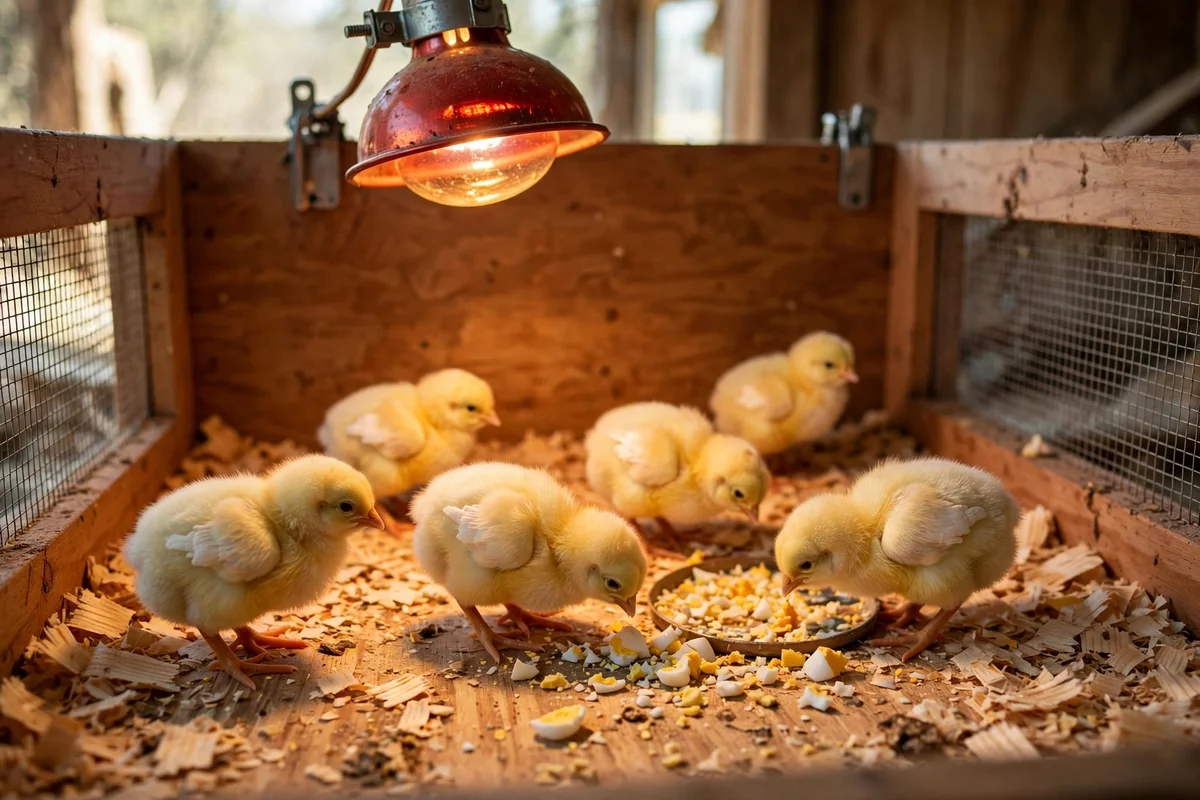
When can baby chicks eat treats?
Baby chicks can start tiny treats at two to four weeks old, once they are eating starter feed well and have chick-sized grit available. That is the common advice from most keepers and extension sources, though some feed makers say to wait until eight weeks or longer, and a few sources say ten weeks for kitchen scraps.
The disagreement is real, and it comes from different ideas about risk: a chick that eats treats too early can fill up on food that is not a complete ration, while a chick that waits too long misses nothing.
The safe middle ground is to wait until two to four weeks, offer only tiny amounts of soft, safe foods, and make sure chick-sized grit is available from the day treats start. A chick that is eating starter well, growing steadily, and active in the brooder is ready for a taste of something new. A chick that is small, slow, or off its feed is not, and should stay on starter alone.
Why sources disagree on the age
The disagreement on treat age comes from the fact that different sources are answering different questions. A feed maker that says to wait until eight weeks is protecting the chick's nutrition, because starter feed is a complete ration and any treat displaces it.
A keeper who offers treats at two weeks is usually offering a tiny amount of egg or yogurt as enrichment, not as food, and the chick's nutrition is barely affected.
Both views are reasonable, and the difference between them is the amount. A chick that eats a beakful of chopped egg at three weeks loses nothing, while a chick that fills up on bread or scratch at three weeks loses a lot. The rule that resolves the disagreement is the portion: treats for chicks should be tiny, occasional, and soft, and starter feed should always be available. Our guide on when do baby chicks need grit covers the grit side of the question.
Safe first treats for chicks
The best first treats for chicks are soft, small, and easy to digest. Chopped hard-boiled egg is the classic first treat, because it is a complete protein and chicks love it. Plain yogurt, offered in a small spoonful, is another good first treat, and finely chopped greens such as lettuce or dandelion leaves give the chicks something green to peck at. Small pieces of soft fruit, such as banana or melon, are safe too, in tiny amounts.
Offer only a little at a time: a teaspoon of chopped egg for a group of chicks is enough for a first treat, and a small pinch of greens is enough for a second. Put the treat in a shallow dish or on a clean piece of cardboard, and remove anything the chicks do not finish within an hour, because wet treats in a warm brooder go off fast. Use the chick feed calculator by age to check how much starter your chicks need at each age.
Treats to avoid for young chicks
Avoid bread, scratch grains, whole seeds, and raw vegetables for young chicks. Bread is low in nutrition and can form a doughy mass in the crop, scratch grains are too hard for a young gizzard, and whole seeds are a choking risk for small birds.
Raw vegetables are hard to digest, and long, stringy foods such as grass clippings can cause crop problems in chicks.
Avoid anything salty, sweet, or seasoned, and avoid citrus fruit, which is too acidic for young birds. Do not offer kitchen scraps to chicks under eight weeks, because scraps are unpredictable in size and salt content, and a chick that fills up on scraps will not eat enough starter. The full list of foods to avoid is in our guide on what not to feed chickens, and the same rules apply to chicks, with extra care.
Grit: the rule that comes first
Chicks need grit from the moment they start eating anything other than starter crumble, and that means grit must be available before the first treat, not after it. Chick-sized grit is smaller than adult grit, and it should be offered free-choice in a small dish, so the chicks can take what they need.
Without grit, a treat can sit in the crop undigested, and a chick with a slow crop can become ill quickly.
A mother hen teaches her chicks to pick up grit from the ground, but brooder chicks have no mother and no soil, so the keeper must provide it. Offer the grit from two weeks old, even if you are not planning treats yet, so the chicks are used to it when treats begin. Our guide on when do baby chicks need grit covers the timing and the sizes in detail.
Treats by chick age
This table gives a simple guide to treats by age. The ages are approximate, and the portion is more important than the exact week: tiny and occasional is the rule at every age.
| Age | Treats | Notes |
|---|---|---|
| Day 1 to 2 weeks | Starter feed only | No treats at all; fastest growth period |
| 2 to 4 weeks | Tiny soft treats: egg, yogurt, greens | Chick-sized grit must be available |
| 4 to 6 weeks | Small treats; mealworms, soft fruit | Keep portions tiny; starter still the main feed |
| 6 to 8 weeks | More variety; chopped vegetables | Grit available; treats still small |
| 8 weeks and older | Normal treats; seeds, scratch in small amounts | Grower feed; the 10 percent treat rule applies |
How much is too much for a chick
For a chick, too much is very little. A treat that is a tenth of a chick's daily intake is already at the limit, and most chick treats should be far less than that: a teaspoon of chopped egg for a group of chicks, or a small pinch of greens, is enough.
The starter feed should always be available, and the chicks should be eating it eagerly between treats. If the chicks are ignoring the starter and waiting for treats, you are offering too much.
Watch the droppings after a new treat: loose droppings for a day after a new food are common and usually settle, but watery droppings that persist, or a chick that goes quiet and fluffed up, mean the treat did not agree with it. Stop the treats, keep the starter and water available, and let the chick recover. A chick that is growing well on starter alone needs no treats at all, and there is no rush to start them.
Treats as enrichment, not food
The best reason to offer treats to chicks is enrichment, not nutrition. A brooder is a small world, and a tiny treat gives the chicks something new to peck at, which keeps them busy and reduces pecking at each other.
A few mealworms scattered in the bedding, a small piece of lettuce hung where the chicks can reach it, or a dish of chopped egg are all enrichment as much as food.
Keep the brooder interesting in other ways too: a low perch, a small mirror, or a change of bedding gives the chicks something to investigate without any food at all. Our guide on how to raise baby chicks covers brooder setup, and the brooder temperature calculator helps you keep the brooder at the right temperature while the chicks grow.
Sources: University of Minnesota Extension — Poultry and poultry.extension.org.
Related tools and guides
For more on the same topic, see How to Raise Baby Chicks.
Frequently asked questions
When can baby chicks eat treats?
Most sources say chicks can start tiny treats at two to four weeks old, once they are eating starter well and have chick-sized grit available. Some feed makers say to wait longer, but two to four weeks is the common advice for small, soft treats.
What are good first treats for baby chicks?
Good first treats are a little chopped hard-boiled egg, plain yogurt, finely chopped greens, and small pieces of soft fruit. Offer only a tiny amount, and make sure chick-sized grit is available from the day treats start.
Do chicks need grit before treats?
Yes, and it is essential. Chicks need grit to grind anything other than starter crumble, and without it a treat can sit in the crop undigested. Offer chick-sized grit free-choice in a small dish from two weeks old.
Can baby chicks eat mealworms?
Yes, in tiny amounts. A few mealworms are a good protein treat for chicks over three weeks old. Offer them sparingly, and only with grit available, because mealworms are hard food for a young gizzard.
Can baby chicks eat bread or scratch?
No. Bread, scratch grains, and whole seeds are too hard and too low in nutrition for young chicks. They can cause crop problems and displace the starter feed that chicks need for growth. Save those treats for birds over eight weeks old.
About the author
John Walker is the founder of PeckCalc and has kept backyard chickens in Dallas, Texas since 2017. He started PeckCalc to give backyard keepers free calculators and guides with every figure traced to a university extension source.