
Why do chickens flap their wings
 By John Walker · Backyard chicken keeper in Dallas, Texas since 2017
Why do chickens flap their wings? Chickens flap their wings for many reasons, and most of them are normal, healthy behaviour. A chicken may flap to stretch after sitting, to cool down on a hot day, to shake off dust after a dust bath, to show off to a hen, or to warn the flock of danger. The flap looks the same at a glance, but the context tells you what it means: a bird that flaps and stretches in the morning is waking up, while a bird that flaps and runs for cover is sounding an alarm. This guide explains the seven main reasons chickens flap their wings, and when a flap is a sign of a problem.
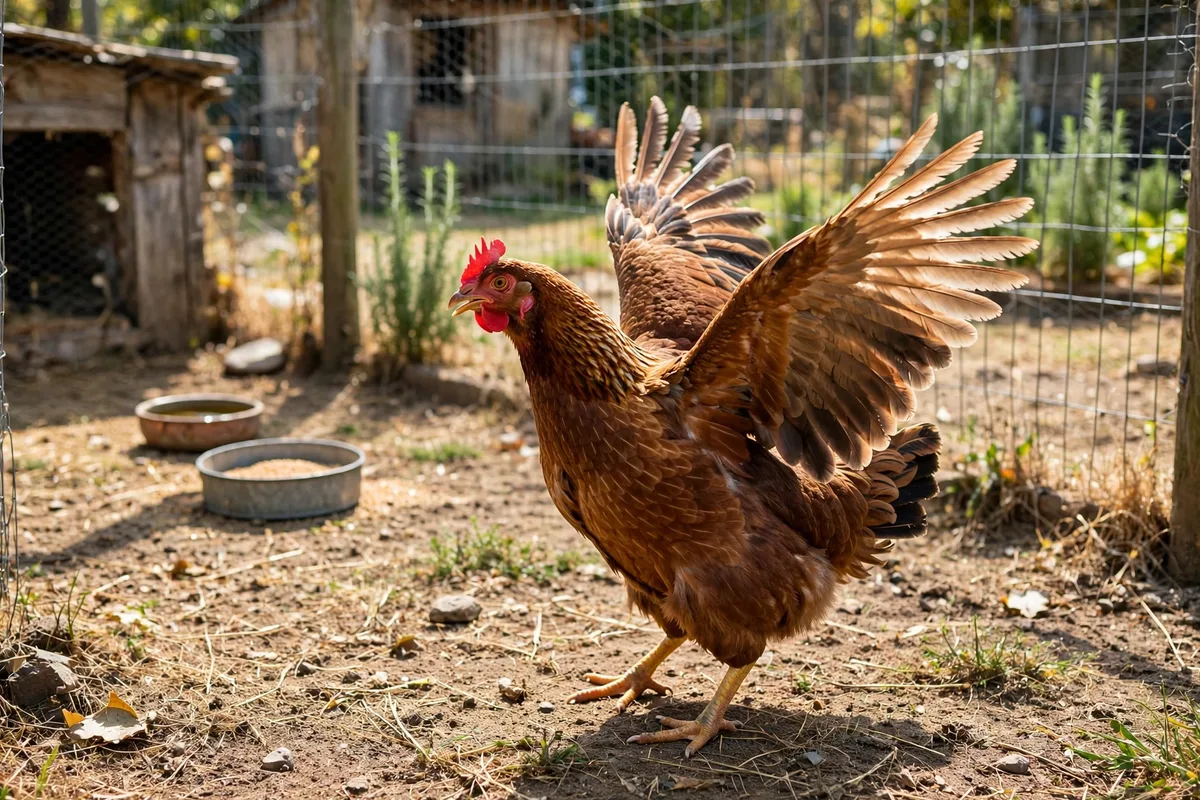
Why do chickens flap their wings? The main reasons
Why do chickens flap their wings? The most common reason is stretching. A chicken that has been sitting for a while will stand up, stretch one leg and one wing out to the side, and then flap both wings a few times.
That stretch is like a person stretching after sitting at a desk, and it is a sign that the bird is comfortable and healthy. You will see it often in the morning, when the birds come out of the coop, and after a dust bath.
Other common reasons include cooling down, shaking off dust, mating, showing dominance, and sounding an alarm. A flap can also be a sign of a problem, such as a bird that is too hot, a bird with mites, or a bird that is trying to fly. The context is what tells you which reason it is, and this guide works through each one in turn.
Stretching and waking up
Stretching is the most common reason for wing flapping, and it is a good sign. A chicken will stand, stretch one wing and the leg on the same side outwards, hold the stretch for a second, and then flap both wings.
That stretch wakes up the muscles after sitting, and it is a sign that the bird is relaxed and healthy. You will see it when the birds come out of the coop in the morning, after they have been sitting on the nest, and after a dust bath.
A bird that stretches often is a bird that is comfortable in its surroundings. If your birds never stretch, it may be because they do not have enough space, because a bird needs room to stretch its wings. Make sure the coop and run give the birds enough space to stretch, flap, and move freely, because a bird that cannot stretch is a bird that is stressed.
| Reason | What it looks like | Normal? |
|---|---|---|
| Stretching | Slow flap after sitting | Yes, healthy |
| Cooling down | Wings held out, gentle flap, panting | Yes, help with shade and water |
| Dust bathing | Hard flap after a dust bath | Yes, healthy |
| Mating display | Rooster circles hen, flaps | Yes, normal |
| Alarm | Sudden hard flap, running | Yes, check for danger |
| Mites or injury | Constant flapping, drooping wing | No, check the bird |
Cooling down on a hot day
Chickens flap their wings to cool down, because they cannot sweat. On a hot day, a chicken will hold its wings out from its body and flap them gently, which moves air over the skin and helps heat escape. You will also see the bird panting, which is breathing with its beak open.
And holding its wings away from its body even when it is not flapping.
If your birds are flapping to cool down, help them. Give them shade, cool water, and a shallow tray of water to stand in, and make sure the coop has good ventilation. Do not hose a chicken down, because wet feathers can chill a bird once the sun goes down. If a bird is panting heavily, holding its wings out, and looking dull, it may have heatstroke, and it needs shade and cool water at once.
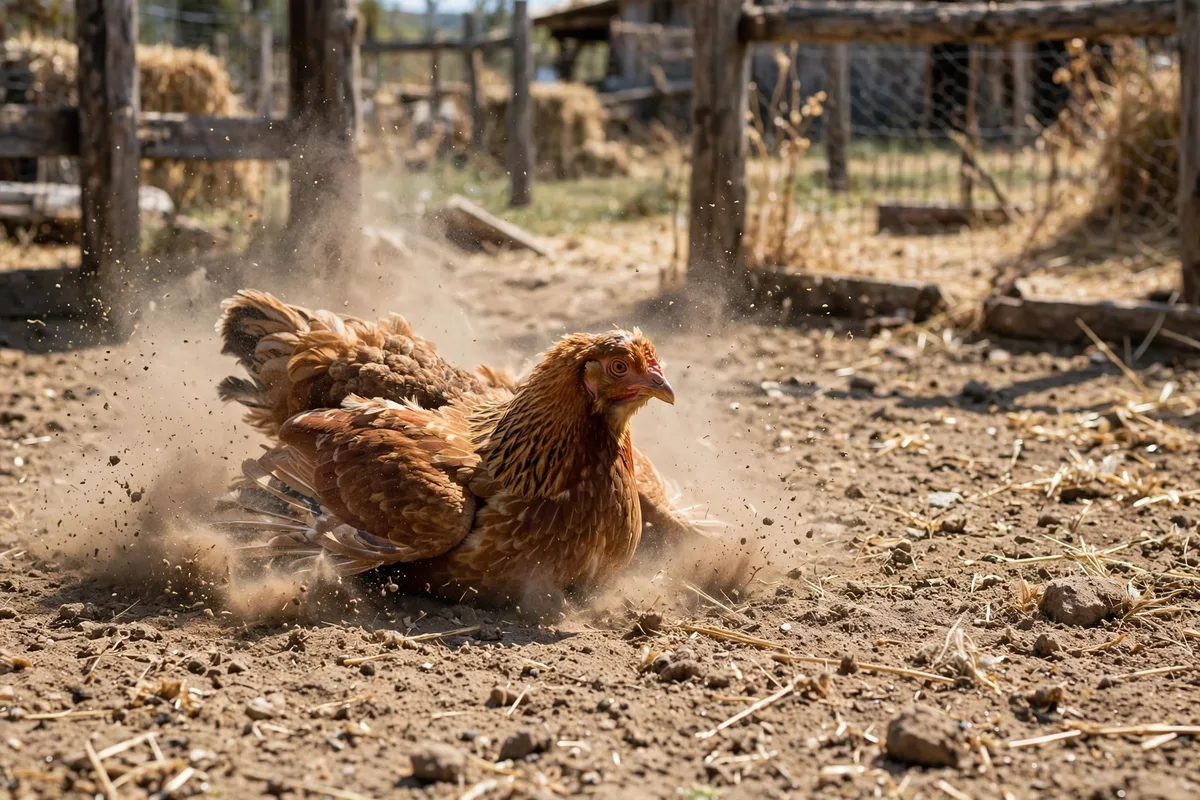
Dust bathing and shaking off
A dust bath is a chicken's way of cleaning itself, and it ends with a good wing flap. The bird digs a shallow hollow in dry soil or sand, lies in it, and kicks dust through its feathers. The dust absorbs oil and helps to control mites, which are tiny parasites that live on the skin.
After the bath, the bird stands up, shakes itself, and flaps its wings hard to shake the dust out of its feathers.
That flap is a sign of a healthy bird that is looking after itself. Make sure your birds have a dry, dusty place to bathe, because a bird that cannot dust bathe is more likely to get mites. A dust bath can be a patch of dry soil in the run, or a shallow tray filled with sand, wood ash, and a little diatomaceous earth, kept under cover so it stays dry.
Mating, showing off, and dominance
Roosters flap their wings to show off to hens and to show dominance to other roosters. A rooster that is courting a hen will drop one wing, circle her, and flap his wings, which is part of the mating dance.
A rooster that is challenging another rooster will stand tall, fluff his feathers, and flap his wings hard, which is a display of size and strength.
Hens also flap to show dominance, although they do it less often than roosters. A hen that is high in the pecking order may flap at a lower-ranking hen to make her move, and a hen that is defending a nest box may flap at another hen that comes too close. That flapping is normal flock behaviour, and it is only a problem if it turns into constant bullying or feather pecking.
Alarm and escape
A sudden, hard flap is often an alarm. If a chicken sees a hawk, a dog, or another danger, it will flap its wings, squawk, and run for cover, and the rest of the flock will follow. That flap is part of the alarm call, and it is a sign that the bird has seen something it fears.
You will also see it when a bird is startled by a sudden noise or movement.
If your birds flap and run often, look for what is scaring them. A hawk overhead, a dog at the fence, or a loud noise can all cause it. Make sure the run has cover, such as a roof or a bush, so the birds can hide when they are scared. A bird that is always nervous and always flapping may be stressed, and it needs a safer, calmer run.
When wing flapping is a sign of a problem
Most wing flapping is normal, but there are a few cases where it is a sign of a problem. A bird that flaps a lot, scratches, and has bare patches may have mites or lice, which are parasites that make the skin itch.
A bird that flaps one wing and holds it drooping may have a broken wing or a dislocated joint, and it needs a vet. A bird that flaps and pants on a hot day may have heatstroke.
A young bird that flaps and tries to fly over the fence is not ill, but it needs a taller fence or a covered run. A bird that flaps and cannot fly, even though it tries, may have clipped wings or an injury. Watch the context: a bird that flaps after a dust bath is healthy, while a bird that flaps and scratches all day needs checking for parasites.
Wing flapping is mostly normal, healthy behaviour, and it is a sign of a bird that is comfortable, active, and looking after itself. A flap after sitting is a stretch, a flap after a dust bath shakes the dust out, and a flap on a hot day helps the bird cool down. Learn to read the context: a bird that flaps and stretches in the morning is waking up, while a bird that flaps constantly, scratches, or holds a wing drooping needs checking for mites or an injury. Watch your birds, give them space to stretch, and most flaps will be a good sign.
Sources: poultry.extension.org.
Related tools and guides
For more on the same topic, see Why Do Chickens Bob Their Heads?. You can also browse the full list in our guides hub.
Frequently asked questions
Why do chickens flap their wings?
Most often to stretch after sitting, to cool down, to shake off dust after a dust bath, or to show off in mating. A sudden hard flap is usually an alarm at something scary.
Do chickens flap their wings when they are hot?
Yes. Chickens cannot sweat, so they hold their wings out and flap gently to move air over the skin. Give them shade, cool water, and ventilation on hot days.
Why does my rooster flap his wings at hens?
It is part of the mating display. The rooster drops a wing, circles the hen, and flaps to show off. It is normal behaviour in a healthy rooster.
Why do chickens flap after a dust bath?
To shake the dust out of their feathers. A dust bath ends with a good flap, and it is a sign of a healthy bird looking after itself.
When is wing flapping a problem?
If a bird flaps constantly, scratches a lot, holds a wing drooping, or pants heavily on a hot day, check for mites, a wing injury, or heatstroke, and call a vet if needed.
About the author
John Walker is the founder of PeckCalc and has kept backyard chickens in Dallas, Texas since 2017. He started PeckCalc to give backyard keepers free calculators and guides with every figure traced to a university extension source.