
Why Do My Eggs Have a Green Ring Around the Yolk?
 By John Walker · Backyard chicken keeper in Dallas, Texas since 2017
Why do my eggs have a green ring around the yolk? The ring appears when a hard-boiled egg is cooked for too long or at too high a heat, and the iron in the yolk reacts with the sulphur in the white to form a green-grey compound called ferrous sulphide. The ring is harmless, and the egg is safe to eat, but it is a sign that the egg was overcooked, and it can make the egg taste a little stronger. This guide explains the chemistry in plain words, how to prevent the ring, and how the cooked green ring differs from a raw egg that looks green inside.
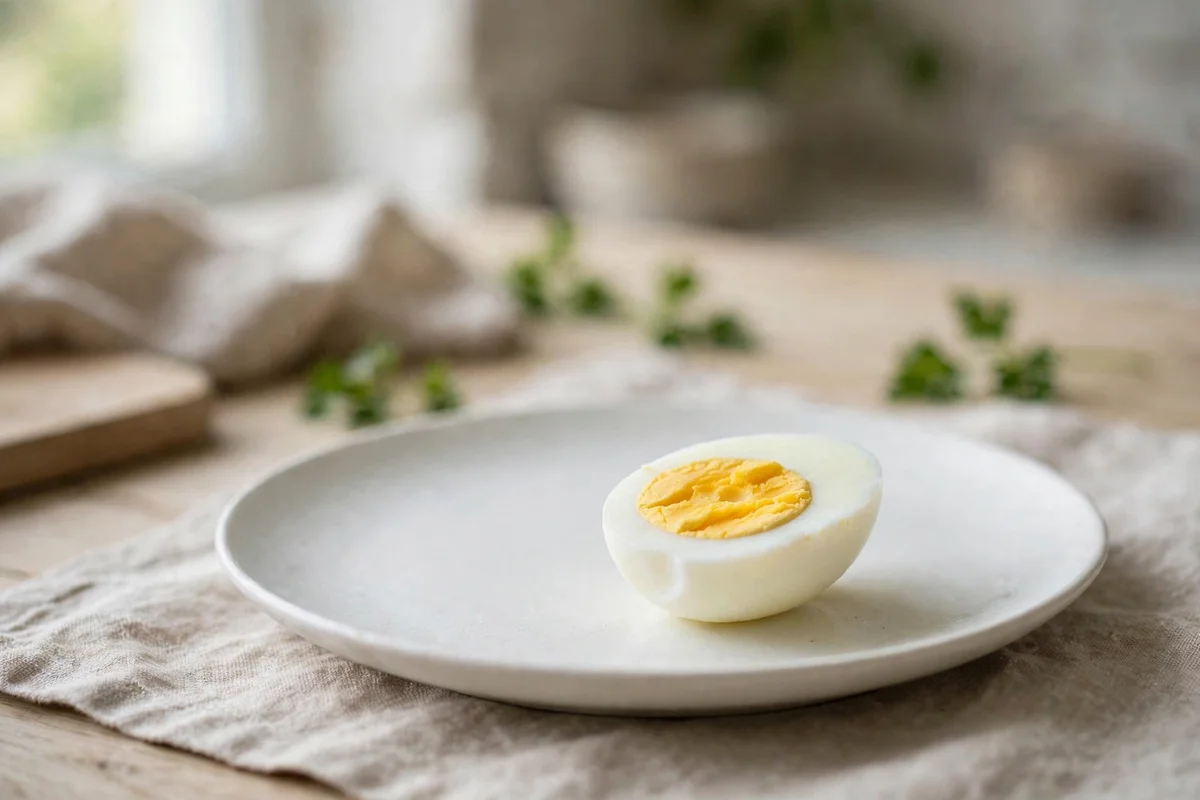
Why do my eggs have a green ring around the yolk?
A green ring around the yolk appears when a hard-boiled egg is cooked for too long or at too high a heat, and the iron in the yolk reacts with the sulphur in the white to form a green-grey compound called ferrous sulphide.
The ring forms at the boundary between the yolk and the white, where the two meet, and it is most obvious in an egg that has been boiled hard for a long time.
The reaction needs heat and time. When an egg is heated, the sulphur in the white is released as hydrogen sulphide, a gas that smells of rotten eggs, and it travels to the yolk, where it meets iron and forms the green ring. The longer the egg is cooked, and the hotter the water, the more gas is released and the darker the ring becomes.
The ring is harmless. Ferrous sulphide is not toxic, and the egg is safe to eat as long as it was fresh when cooked and has been stored properly. The ring does not mean the egg is rotten, and it does not mean the egg has gone bad. It is simply a colour change caused by overcooking.
The ring is a sign, not a danger. It tells you that the egg was cooked too long, and it can make the yolk a little dry and the taste a little stronger. But the egg is still good food, and there is no need to throw it away.
The chemistry of the green ring, in plain words
An egg white contains sulphur, which is a natural part of the protein in the white, and an egg yolk contains iron, which is a mineral the hen puts into the yolk. When the egg is heated, the sulphur is released as a gas, and the gas travels through the white to the yolk, where it meets the iron.
At the yolk surface, the gas and the iron join together to form ferrous sulphide, a green-grey compound that sits as a ring around the yolk. The ring is thin at first, and it grows thicker and darker the longer the egg is cooked, because more gas is released and more iron is reached.
The reaction is faster in older eggs, because the white becomes thinner and more alkaline with age, and the gas travels through it more easily. A fresh egg, with a thick white, is less likely to develop a ring, because the gas moves more slowly through the thick white.
The reaction also happens faster at high heat, which is why a rolling boil is worse than a gentle simmer. A gentle heat cooks the egg through without releasing as much gas, and the ring is smaller or absent. The chemistry is simple: heat plus time equals gas, gas plus iron equals a green ring.

How to prevent a green ring around the yolk
Cook eggs gently and do not overcook them. Put the eggs in a pan of cold water, bring the water to a gentle boil, then turn the heat down and simmer for nine to twelve minutes, depending on the size of the egg. A large egg needs twelve minutes, a medium egg needs ten, and a small egg needs nine.
Cool the eggs at once in cold water when the time is up. The cold water stops the cooking, which stops the gas from being released, and it stops the ring from forming. Leave the eggs in cold water for a few minutes, then peel them under cold running water.
Use fresh eggs for boiling, because fresh eggs are less likely to develop a ring. An egg that is a few days old is ideal for boiling: it is fresh enough to have a thick white, but old enough to peel easily. A very fresh egg is hard to peel, and a very old egg is more likely to develop a ring.
Do not leave boiled eggs in hot water after cooking, because they keep cooking in the hot water and the ring keeps growing. Take them out as soon as the time is up, cool them at once, and store them in the fridge. A boiled egg kept in the fridge will keep for a week, and the ring, if it forms, will not get worse in the fridge.
Green ring vs a raw egg that looks green inside
A green ring in a hard-boiled egg is different from a raw egg that looks green inside, and the two should not be confused. The green ring is a cooked-egg problem, caused by heat and time, and it is harmless. A raw egg that looks green inside is a different problem, with different causes, and it needs a different answer.
A raw egg can look green inside for several reasons, including a diet high in certain plants, a bacterial infection, or a hen that has eaten something unusual. Our guide on why are my eggs green inside explains the raw-egg causes in full, and it is worth reading if your raw eggs look green.
The key difference is the cooking. If the egg looks normal when you crack it open and only develops a green ring after boiling, the cause is overcooking, and the fix is gentler cooking and faster cooling. If the egg looks green when you crack it open raw, the cause is in the hen or the egg, not in the cooking.
Do not eat a raw egg that looks green and smells bad, because a bad smell is a sign of spoilage. A cooked egg with a green ring and no bad smell is safe, but a raw egg that smells bad should be thrown away, whatever colour it is.
Is a green-ringed egg safe to eat?
Yes, an egg with a green ring is safe to eat, as long as it was fresh when cooked and has been stored properly. The green ring is ferrous sulphide, which is not toxic, and it does not mean the egg is rotten or spoiled.
The egg is safe, but it may taste a little stronger and the yolk may be a little dry.
The egg should be eaten within a week of boiling, and it should be kept in the fridge. A boiled egg left at room temperature for more than two hours should be thrown away, because bacteria can grow on it, and the green ring does not protect it.
If the egg smells bad, throw it away, whatever the colour of the ring. A bad smell is a sign of spoilage, and no egg that smells bad should be eaten. The green ring is a colour change, not a smell, and a bad smell is a separate warning.
Children, pregnant women, and older people should eat only fully cooked eggs, and a green-ringed egg that is fully cooked is fine for them. The ring does not change the safety of the egg, and it does not make the egg unsafe for anyone.
How to boil eggs perfectly every time
Put the eggs in a single layer in a pan, cover them with cold water, and bring the water to a gentle boil over a medium heat. As soon as the water boils, turn the heat down to a simmer, cover the pan, and set a timer for nine to twelve minutes, depending on the size of the egg.
When the timer rings, take the eggs out at once and put them in a bowl of cold water with ice if you have it. Leave them for five minutes, then peel them under cold running water. The cold water stops the cooking and makes the shell easier to remove.
Store boiled eggs in the fridge, in their shells, and use them within a week. A peeled boiled egg should be eaten within a day, because it dries out and picks up smells from the fridge.
Our guide on how to store fresh eggs explains how to keep fresh eggs at their best, and our guide on are blood spots in eggs safe to eat answers another common egg question. A perfect boiled egg has a bright yellow yolk, no green ring, and a tender white, and it is easy to get right with a timer and cold water.
| Egg size | Simmer time | Result |
|---|---|---|
| Small | 9 minutes | Yolk set, no green ring |
| Medium | 10 minutes | Yolk set, no green ring |
| Large | 12 minutes | Yolk set, no green ring |
| Any size, 15 minutes or more | Too long | Green ring likely, yolk dry |
| Any size, left in hot water | Too long | Green ring likely, yolk dry |
Sources: USDA Food Safety and Inspection Service, shell eggs from farm to table and National Center for Home Food Preservation.
Related tools and guides
For more on the same topic, see Why Are My Eggs Green Inside?.
Frequently asked questions
Why do my eggs have a green ring around the yolk?
A green ring is caused by iron in the yolk reacting with sulphur in the white when an egg is cooked too long or at too high a heat. It is harmless, and it does not mean the egg is bad.
Are eggs with a green ring safe to eat?
Yes, eggs with a green ring are safe to eat. The ring is a colour change, not a sign of spoilage, and the egg is fine as long as it was fresh when cooked and has been stored properly.
How can I prevent a green ring around the yolk?
Cook eggs gently and do not overcook them. Boil for nine to twelve minutes, then cool at once in cold water. The cold water stops the cooking and stops the ring from forming.
Do older eggs get a green ring more easily?
Yes, a green ring is more likely in older eggs, because the white becomes thinner and more alkaline with age. Fresh eggs are less likely to develop a ring, so use the freshest eggs for boiling.
Does a green ring happen in fried eggs?
No, the ring is only in a hard-boiled egg, where the yolk and white are in contact for a long time at high heat. A fried or scrambled egg will not develop a ring.
About the author
John Walker is the founder of PeckCalc and has kept backyard chickens in Dallas, Texas since 2017. He started PeckCalc to give backyard keepers free calculators and guides with every figure traced to a university extension source.