
Why Is My Chicken's Foot Swollen?
 By John Walker · Backyard chicken keeper in Dallas, Texas since 2017
A chicken's foot swells for several different reasons, and the cause decides the treatment. Bumblefoot is the best-known cause — a black scab on the pad of the foot — but gout swells the joints, Mycoplasma synoviae swells the hock and foot joints, an injury swells one foot after a jump or a knock, and scaly leg mites thicken and swell the legs. Check the pad, the joints, and whether one foot or both are affected, and whether the bird is limping, eating and laying. This guide is the differential — for the bumblefoot treatment itself, see our bumblefoot guide.
This guide is for information only and is not a substitute for veterinary advice. If a bird is seriously ill, injured, or not improving, contact a poultry veterinarian. Drug names and doses are not given here because they must be matched to the bird, the diagnosis, and local rules by a vet.
Why is my chicken's foot swollen?
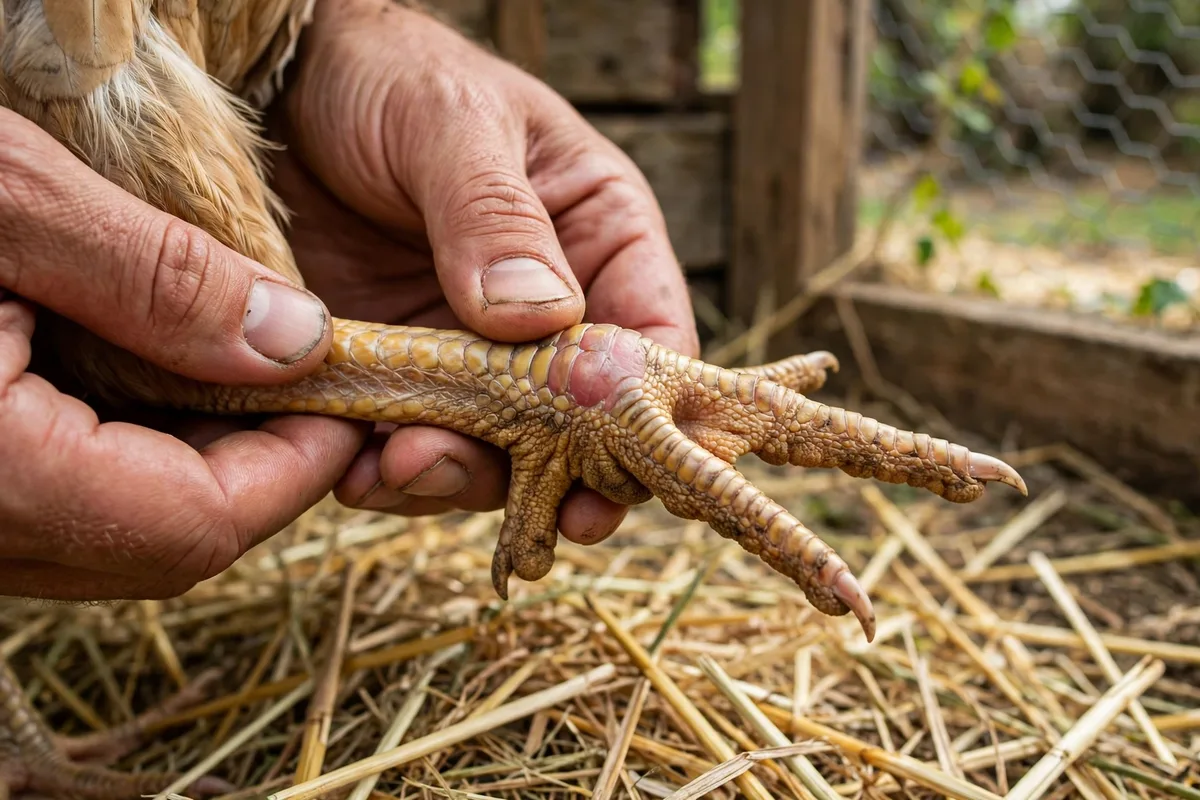
A swollen foot in a chicken has five usual causes, and they look different if you know where to look. Bumblefoot is an infection of the foot pad, and it shows as a swollen pad with a black scab in the middle.
Gout swells the joints, especially the toes and the hock, and the joints feel hot and look shiny. Mycoplasma synoviae, a respiratory disease that settles in the joints, swells the hock and the foot joints, often in both legs, and the bird is usually lame and dull. An injury swells one foot after a jump, a knock or a caught toe, and scaly leg mites thicken the scales on the legs until the whole leg looks swollen and crusty.
The pattern tells you which one it is. One foot swollen with a black scab on the pad is bumblefoot. Both feet swollen at the joints is gout or Mycoplasma. One foot swollen after a fall is an injury. Legs that are thick, crusty and raised in the scales are mites. Work through the causes in that order, and you will usually find the answer without guessing. Our guide on bumblefoot in chickens covers the treatment of the most common cause in detail.
| What you see | Most likely cause | Key clue |
|---|---|---|
| Swollen pad with a black scab | Bumblefoot | Scab on the pad, one foot |
| Swollen, hot toe and hock joints | Gout | Both feet, shiny joints, older bird |
| Swollen hock and foot joints, bird dull | Mycoplasma synoviae | Both legs, lameness, respiratory signs |
| One foot swollen after a fall | Injury or sprain | Recent jump or knock, leg looks straight |
| Thick, crusty, raised scales on the legs | Scaly leg mites | Crust, not soft swelling |
Bumblefoot: the swollen pad with a scab
Bumblefoot is an infection of the foot pad that starts with a small cut or bruise. A bird jumps from a high perch onto a hard floor, or stands on rough or wet ground, and bacteria get into the pad. The pad swells, a black scab forms in the middle, and the bird limps.
The infection can spread into the bones of the foot if it is left, which is why a swollen pad with a scab should not be ignored. The treatment is to soak the foot, clean the wound, and get a vet involved if the swelling is deep or the bird is very lame.
Bumblefoot is the cause to check first when one foot is swollen and there is a black scab on the pad. Look at the pad in good light, and compare it with the other foot. A small, early bumblefoot can sometimes be managed with soaking and clean bedding, but a large, deep or long-standing one needs a vet, because the infection sits in a hard core under the scab that soaking alone will not clear. Our guide on bumblefoot in chickens explains the signs, the treatment and the prevention, including perch height and soft landings.
Gout: swollen joints in an older bird
Gout in chickens is a build-up of uric acid in the joints, and it swells the toe joints and the hock, making them hot, shiny and painful. It usually affects older birds, and it is often linked to kidney problems, a diet too high in protein or calcium, or not enough water.
The bird is lame, the joints are swollen on both feet, and the bird may sit a lot and eat less. Unlike bumblefoot, there is no scab on the pad, and the swelling is in the joints rather than the pad.
Gout is a vet diagnosis, because the signs overlap with Mycoplasma and with arthritis, and because the cause is usually internal — the kidneys, the diet, or the water supply. A vet can feel the joints, check the bird's condition, and advise on the diet and the water. The keeper's part is to make sure the flock always has clean water, to feed a balanced ration rather than a high-protein or high-calcium diet, and to keep the bird comfortable. A bird with gout needs soft bedding and food and water close by, because walking hurts.
Mycoplasma synoviae: swollen joints and lameness
Mycoplasma synoviae is a bacterial disease that settles in the joints, and it swells the hock and the foot joints, often in both legs. The bird is lame, the joints are swollen and hot, and the bird is usually dull and off its feed.
It often comes with respiratory signs — sneezing, rattling, or swollen eyes — because the same organism causes respiratory disease, and it spreads through the flock on dust and on shared drinkers. Young, fast-growing birds are the most affected, and the disease can linger for weeks.
The pattern that points to Mycoplasma is swelling in both legs with lameness and dullness, especially if more than one bird is affected or if there are respiratory signs as well. It is a vet diagnosis, confirmed by blood testing, and it changes how the whole flock is managed, because birds that recover can carry the organism. Isolate the lame bird, keep it warm and dry, and call a poultry vet. Our guides on mycoplasma in chickens and chicken respiratory illness explain the disease and the flock management.
Injury and sprain: one foot, one event
An injury swells one foot after a single event: a jump from a high perch, a knock against a fence, a toe caught in wire, or a fight. The foot swells, the bird limps, and the swelling is usually worst in the first day or two and then eases.
The leg looks straight, there is no scab on the pad, and the joints are not hot and shiny the way they are with gout. A sprain improves with rest over a few days, while a fracture does not — a bird that will not put weight on the leg at all may have a broken leg rather than a sprain.
Rest is the treatment for a sprain. Keep the bird in a small pen with soft bedding, food and water close by, and no perch, and watch it for a few days. If the swelling eases and the bird starts putting weight on the foot, it was a sprain. If the swelling does not ease, if the bird will not bear weight, or if the leg looks bent, call a vet — our guide on chicken broken leg treatment explains the signs of a fracture and the first aid. Check the run for the cause: a high perch with a hard landing, loose wire, or a gap where a toe can catch.
Scaly leg mites: thick, crusty legs
Scaly leg mites are tiny parasites that burrow under the scales on a chicken's legs, and they make the legs thick, crusty and raised, which can look like swelling. The scales lift and separate, the legs look rough and grey, and the bird may be lame and uncomfortable.
The mites spread by contact, so several birds in a flock are often affected, and the legs get worse over weeks if they are not treated. The treatment is to smother the mites — a vet can advise on the right product — and to clean the coop, because the mites live in the cracks of the perches and the coop.
Scaly leg mites are the cause to check when the legs look thick and crusty rather than softly swollen, and when the scales are raised. Soaking the legs and gently brushing off loose scales helps, but the mites themselves need treatment, and the coop needs cleaning at the same time or they come back. Our guide on scaly leg mites in chickens explains the treatment and the coop clean-out in detail, and our guide on how to treat mites and lice in chickens covers the wider parasite picture.
When to call a vet
Call a poultry vet the same day if both feet are swollen, if the bird is very lame and will not bear weight, if the swelling is hot and the bird is dull and off its feed, or if more than one bird is affected.
These patterns point to gout, Mycoplasma, or a fracture rather than a simple sprain, and they need a diagnosis. A vet can feel the joints, test for Mycoplasma, and tell you whether the cause is in the foot or in the bird's body.
Also call a vet if a swollen foot does not improve after a few days of rest and clean bedding, if the pad has a large black scab, or if the swelling spreads up the leg. Bring a note of when the swelling started, whether one foot or both are affected, and what else you have seen — limping, dullness, respiratory signs, or a drop in laying — because the pattern is the most useful clue. A swollen foot is a symptom, and the vet's job is to find which of the five causes is behind it.
Sources: poultry.extension.org and University of Minnesota Extension poultry pages.
Related tools and guides
For the most common cause, see Bumblefoot in Chickens and Why Is My Chicken Limping?.
Frequently asked questions
Why is my chicken's foot swollen?
The usual causes are bumblefoot, gout, Mycoplasma synoviae, an injury, or scaly leg mites. A black scab on the pad points to bumblefoot, swollen joints on both feet point to gout or Mycoplasma, one swollen foot after a fall points to injury, and thick crusty scales point to mites.
Is a swollen foot always bumblefoot?
No. Bumblefoot is the best-known cause, but gout swells the joints, Mycoplasma swells the hock and foot joints, an injury swells one foot, and scaly leg mites thicken the legs. Check the pad for a scab, the joints for heat and swelling, and whether one foot or both are affected.
What does gout look like in a chicken's foot?
Gout swells the toe joints and the hock, making them hot, shiny and painful, usually on both feet. It often affects older birds and is linked to kidney problems, a diet too high in protein or calcium, or not enough water. It needs a vet diagnosis.
Can Mycoplasma cause a swollen foot in chickens?
Yes. Mycoplasma synoviae settles in the joints and swells the hock and foot joints, often in both legs, with lameness and dullness. It often comes with respiratory signs, and it needs a vet diagnosis by blood testing.
When should I call a vet about a swollen foot?
If both feet are swollen, if the bird will not bear weight, if the swelling is hot and the bird is dull and off its feed, if more than one bird is affected, or if the swelling does not improve after a few days of rest and clean bedding.
About the author
John Walker is the founder of PeckCalc and has kept backyard chickens in Dallas, Texas since 2017. He started PeckCalc to give backyard keepers free calculators and guides with every figure traced to a university extension source.