
Blackhead Disease in Chickens: Signs & Prevention
 By John Walker · Backyard chicken keeper in Dallas, Texas since 2017
Blackhead disease in chickens is a protozoal infection of the caeca and liver that causes sulphur-yellow droppings, drooping wings, and wasting, and it has no approved treatment in the United States — so prevention is the only defence. It reaches chickens through the eggs of the cecal worm, often carried by earthworms, and it hits hardest where chickens and turkeys are kept together. This guide explains the signs, the worm connection, and the prevention that works.
This guide is general information, not veterinary advice. If a bird is sick, injured, or not improving, contact a poultry veterinarian, and always follow product labels and your veterinarian's instructions for any medication.
What is blackhead disease in chickens?
Blackhead disease in chickens, also called histomoniasis or histomonosis, is caused by the protozoan Histomonas meleagridis, a single-celled parasite that infects the caeca, the two blind pouches at the end of the intestine, and the liver. The name blackhead comes from the bluish discolouration of the head seen in some birds.
Blackhead is most famous as a turkey disease, where it is often fatal, but it also infects chickens, peafowl, pheasants, and quail. Chickens are more resistant than turkeys and often show only mild signs, but they carry the parasite and pass it to other birds — which is why chickens and turkeys should never be kept together. In chickens, the disease most often affects young birds between 3 and 18 weeks of age, and it is often preceded by an outbreak of coccidiosis.
The parasite does most of its damage in two places: the caeca, where it causes thickening, ulceration, and cheesy cores that block the gut, and the liver, where it causes round, target-like areas of dead tissue that are yellow, grey, green, or red. These liver lesions are so distinctive that a veterinarian can often recognise blackhead on post-mortem examination alone.
What are the symptoms of blackhead disease in chickens?
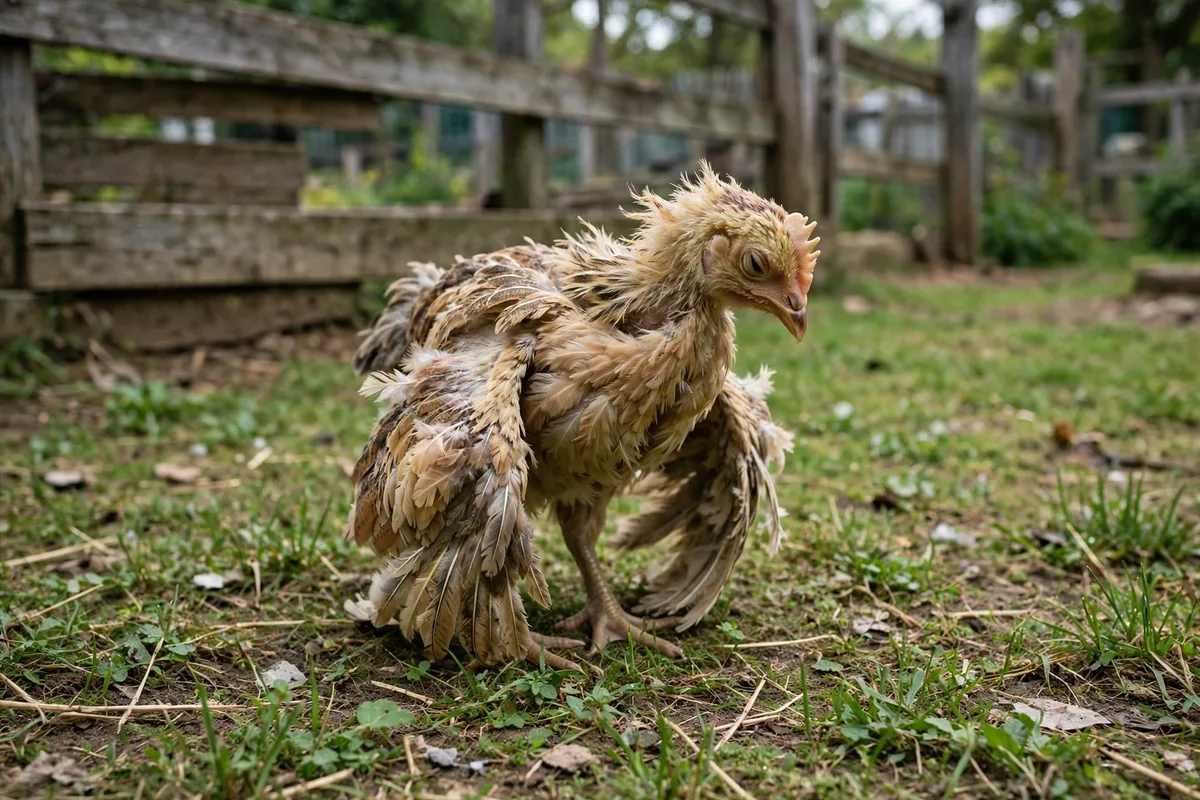
The symptoms of blackhead disease in chickens appear 7 to 12 days after infection, most commonly at about 11 days. Affected birds become depressed and listless, with drooping wings, a lowered head, and ruffled, unkempt feathers. They eat less, lose weight rapidly, and huddle with their necks drawn in. Thirst increases, and the droppings turn a distinctive sulphur-yellow colour, which is one of the most useful signs for a keeper.
The head may become cyanotic, bluish in colour, which is where the name blackhead comes from, but this is not seen in every bird, and its absence does not rule the disease out. In young chickens the disease can cause rapid weight loss and death in up to 10 percent of cases, while older birds may show only mild signs and recover. Birds that do recover may remain carriers, and the disease can return if the flock is stressed or reinfected.
Because the signs are vague — a quiet bird, drooping wings, yellow droppings — blackhead is easily mistaken for coccidiosis, worms, or a general failure to thrive. The combination of sulphur-yellow droppings with drooping wings and rapid weight loss in young birds, especially where turkeys are kept nearby or earthworms are plentiful, should raise suspicion. Only a veterinarian, with laboratory tests or a post-mortem examination, can confirm it.
| Sign | What to look for | How urgent |
|---|---|---|
| Sulphur-yellow droppings | Bright yellow, sulphur-coloured diarrhoea | Call a vet |
| Drooping wings and head | Wings and tail drooping, head sunk into the neck | Call a vet |
| Listlessness and depression | Birds huddled, quiet, not eating or foraging | Call a vet |
| Rapid weight loss | Prominent keel, thin birds, poor growth in young birds | Call a vet |
| Ruffled, unkempt feathers | Dry, unkempt feathers, soiled vent feathers | Isolate and monitor |
| Increased thirst | Drinking more than usual while eating less | Isolate and monitor |
| Bluish head (uncommon) | Head turning blue or dark — not seen in every bird | Call a vet |
How does blackhead spread in chickens?
Blackhead spreads through the eggs of the cecal worm, Heterakis gallinarum, a roundworm that lives in the caeca of chickens. The protozoan lives inside the worm's eggs, which are passed in droppings and can survive in soil for years. When a chicken swallows an infected worm egg, either directly from contaminated ground or inside an earthworm that has eaten the egg, the protozoan is released and infects the caeca and liver.
Earthworms are the key link. They eat cecal worm eggs from the soil and carry them, and chickens that eat earthworms swallow the infection in a concentrated form. This is why blackhead is most common in free-range flocks on ground that has been used by poultry for years, and why rotating pasture and keeping birds off heavily contaminated ground helps. Direct spread between birds through droppings is also possible, although it is less important than the worm route.
The other important route is mixing species. Chickens carry the cecal worm and the protozoan with relatively mild effects, while turkeys die from the same infection, so a mixed flock is a constant source of blackhead for the turkeys. The rule is simple and absolute: never keep chickens and turkeys together, and never run turkeys on ground where chickens have ranged. Our roundworms in chickens guide explains the cecal worm's role in more detail.
How is blackhead diagnosed in chickens?
Blackhead is diagnosed by a veterinarian using the signs, the flock history, and laboratory tests or post-mortem examination. The signs alone are not enough, because sulphur-yellow droppings and wasting also occur in coccidiosis and heavy worm burdens. A faecal examination can find cecal worm eggs, which supports the diagnosis, and a post-mortem examination of a dead bird typically shows the characteristic target-like lesions in the liver and cheesy cores in the caeca.
If you suspect blackhead, isolate the affected birds, note when signs started, which birds are affected, and whether the flock has had coccidiosis recently, whether earthworms are common in the run, and whether turkeys or other poultry are kept nearby. These details help the veterinarian, because blackhead in chickens is often preceded by a coccidiosis outbreak, and because the worm connection points to the control measures that work.
Do not attempt to diagnose blackhead from the colour of the head. The Purdue University guidance is clear that the name is a misnomer and most affected birds do not show a black head. The reliable signs are the sulphur-yellow droppings, the drooping wings, and the rapid weight loss, together with the history of the flock and the ground it ranges on.
Is there a treatment for blackhead disease in chickens?
There is no approved treatment for blackhead disease in chickens in the United States. The Purdue University Animal Disease Diagnostic Laboratory states plainly that no chemotherapeutic products are approved and available for treatment of histomoniasis in the US, and that control strategies are focused on prevention. Older drugs such as dimetridazole and nitarsone were used in the past, but dimetridazole has been withdrawn and arsenical drugs including nitarsone are no longer permitted in poultry in the US.
Some older sources still list drugs such as nitroimidazoles or nifurtimox, but these are not approved, not available, or not effective as treatments, and they should not be given to chickens. The honest position is that once a bird has blackhead, there is no drug a keeper can legally and safely use to cure it. Supportive care — warmth, clean water, good feed, and isolation — can help a mildly affected bird recover on its own, but it will not cure a severe case.
This is why the rest of this guide focuses on prevention, and why the control of the cecal worm is the real treatment for blackhead. A flock on an aggressive deworming programme with a benzimidazole-type wormer, on veterinary advice, breaks the cycle by removing the worm eggs that carry the protozoan. Use our chicken worming dosage calculator to plan a worming programme, and discuss the product and timing with your veterinarian. If your flock has had coccidiosis, treat that too: our Corid dosage calculator helps with the coccidiosis treatment that often precedes blackhead, and our coccidiosis in chickens guide explains the connection.
How do you prevent blackhead disease in chickens?
Prevention of blackhead disease in chickens rests on three measures: controlling the cecal worm, keeping chickens and turkeys apart, and keeping the ground clean. Routine deworming with a benzimidazole-type wormer, on veterinary advice, removes the cecal worms that carry the protozoan, and it is the single most effective step. Deworming should be regular, not a one-off, because worm eggs survive in soil for years and reinfection is constant on used ground.
Never keep chickens and turkeys together, and never run turkeys on ground where chickens have ranged. This is the rule that saves turkey flocks, and it applies even if the chickens look healthy, because chickens carry the infection with mild signs. Keep different species in separate housing with separate runs, and do not share equipment between them without cleaning and disinfecting it.
Rotate pasture where you can, keep runs dry, and remove droppings regularly so that worm eggs do not build up. Control earthworms by keeping birds off wet, heavily used ground, and avoid feeding birds from the ground where droppings accumulate. Good biosecurity, as described in our chicken first aid kit guide, completes the picture: quarantine new birds, buy from trusted sources, and keep records of deworming dates so the programme does not lapse. Keeping up with the routine vaccinations in our chicken vaccination schedule guide also helps, because a flock protected against Marek's disease and other infections is better able to cope with a parasite burden.
Blackhead vs coccidiosis and worms
Blackhead, coccidiosis, and roundworms all cause wasting and abnormal droppings, and they often occur together, which makes them hard to tell apart. The table below shows the features that help. Coccidiosis causes bloody droppings and mainly affects chicks under eight weeks, while blackhead causes sulphur-yellow droppings and affects young birds of 3 to 18 weeks. Roundworms cause pale combs, weight loss, and visible worms in droppings, without the yellow diarrhoea of blackhead.
The practical point is that these three conditions share a control measure: a clean, dry run and a regular deworming programme. A flock with blackhead almost always has cecal worms, and often has coccidiosis too, so a veterinarian will usually advise treating the worms and checking for coccidiosis at the same time.
Read our guides on coccidiosis in chickens and roundworms in chickens to compare the signs, and see chicken first aid kit for the quarantine and hygiene measures that help with all three.
| Condition | Droppings | Key signs | Treatment |
|---|---|---|---|
| Blackhead | Sulphur-yellow diarrhoea | Drooping wings, wasting, liver lesions | No approved treatment; prevention only |
| Coccidiosis | Bloody or watery droppings | Drooping wings, mainly chicks | Amprolium (Corid) in water |
| Roundworms | Diarrhoea, worms visible | Pale comb, weight loss, poor growth | Fenbendazole (Safe-Guard AquaSol) |
When to call a vet
Call a veterinarian if young birds develop sulphur-yellow droppings with drooping wings and rapid weight loss, especially if the flock has recently had coccidiosis or if turkeys are kept nearby. Blackhead needs a professional diagnosis, because the signs overlap with coccidiosis and worms, and because there is no approved treatment to try at home.
Call a veterinarian urgently if birds are dying, if the whole flock becomes listless, or if turkeys in a mixed flock start dying. Turkeys die fast from blackhead, and a mixed flock is an emergency that needs immediate separation of the species and veterinary advice.
Ask your veterinarian about a deworming programme for the cecal worm, and about testing the flock for coccidiosis. The control of blackhead is the control of the worm, and a veterinarian can advise on the product, the timing, and the egg withdrawal period for your flock and your country.
Sources: for blackhead disease signs, transmission, and control, see the Purdue University Animal Disease Diagnostic Laboratory technical report at addl.purdue.edu and the poultry pages at poultry.extension.org. No drug is approved to treat blackhead in poultry in the US; follow your veterinarian's advice. This guide is general information, not veterinary advice.
Related tools and guides
For more on the same topic, see Chicken Worming Dosage Calculator and Chicken First Aid Kit: What to Keep and How to Use It.
Frequently asked questions
What are the first signs of blackhead disease in chickens?
Depression, drooping wings, a lowered head, and ruffled feathers, appearing 7 to 12 days after infection, with sulphur-yellow droppings and rapid weight loss. The head does not usually turn black, despite the name, so do not rely on head colour to diagnose it.
Is there a treatment for blackhead disease in chickens?
No. There are no approved drugs to treat blackhead in poultry in the United States. Older drugs such as dimetridazole and nitarsone are no longer permitted. Control is by prevention: routine deworming to remove the cecal worms that carry the parasite, and keeping chickens and turkeys apart.
How do chickens catch blackhead disease?
Through the eggs of the cecal worm, Heterakis gallinarum, which carry the protozoan Histomonas meleagridis. Chickens swallow infected worm eggs from contaminated ground, or eat earthworms that have eaten the eggs. Direct spread through droppings is also possible.
Can chickens and turkeys be kept together?
No. Chickens carry blackhead with relatively mild signs, while turkeys often die from it. Never keep chickens and turkeys together, and never run turkeys on ground where chickens have ranged.
How can I prevent blackhead disease in chickens?
Run a regular deworming programme with a benzimidazole-type wormer on veterinary advice, keep chickens and turkeys apart, rotate pasture, keep runs dry, and remove droppings regularly. Treat coccidiosis promptly, because blackhead in chickens often follows a coccidiosis outbreak.
About the author
John Walker is the founder of PeckCalc and has kept backyard chickens in Dallas, Texas since 2017. He started PeckCalc to give backyard keepers free calculators and guides with every figure traced to a university extension source.