
Can Chickens and Turkeys Live Together?
 By John Walker · Backyard chicken keeper in Dallas, Texas since 2017
Can chickens and turkeys live together? Yes, they can, and many smallholders keep them in the same yard, but the combination carries a serious risk that every keeper should understand before mixing the two: blackhead disease, also called histomoniasis, a disease that chickens often carry without harm but that can kill turkeys quickly. Chickens are the reservoir for the parasite that causes blackhead, and turkeys are highly vulnerable to it, so a mixed flock is a flock where the chickens are healthy and the turkeys are at risk. That does not mean the two cannot live together, but it does mean the housing, the feed and the health management need to be planned, and some keepers decide the risk is not worth it. This guide explains the risk, the signs, and how to manage a mixed flock safely.
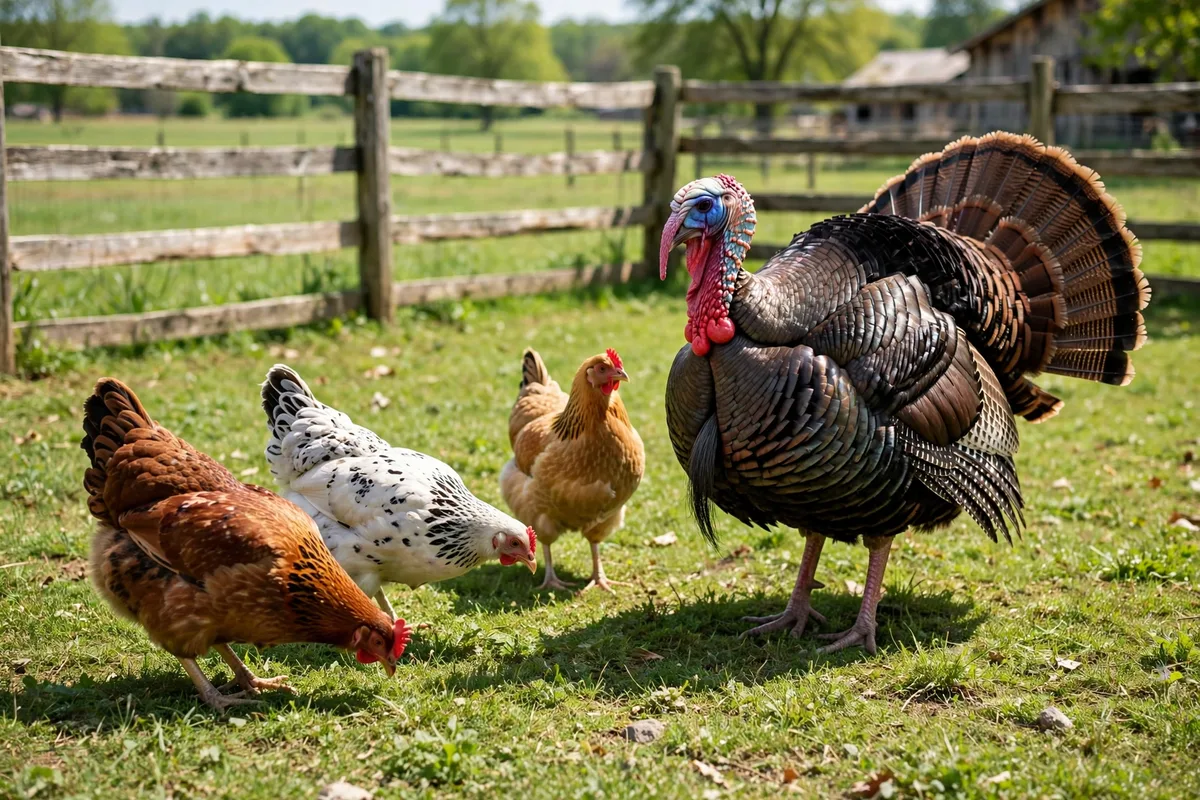
Can chickens and turkeys live together?
Yes, chickens and turkeys can live together, and many keepers do it, but the decision should be made with the blackhead risk in mind. Blackhead disease, or histomoniasis, is caused by a tiny parasite called Histomonas meleagridis, which lives in the gut of chickens without usually causing them harm, but which causes severe liver and gut damage in turkeys.
A turkey that catches blackhead becomes dull, stops eating, passes yellow droppings, and can die within days, and an outbreak can kill most of the turkeys in a flock.
The parasite spreads through droppings and through the soil, and it is carried by a gut worm, Heterakis gallinarum, the caecal worm, which lives in the chicken's gut and whose eggs protect the parasite in the soil for months or years. Chickens shed the worm eggs in their droppings, the eggs survive in the soil, turkeys peck at the ground and swallow the eggs, and the parasite is released in the turkey's gut, where it invades the liver and the caeca. The chain is hard to break once the ground is contaminated, which is why the risk persists for years in a yard where chickens have lived.
The risk is not the same everywhere. In some areas blackhead is common, and mixing chickens and turkeys is a serious gamble, while in other areas it is rare, and keepers mix the two without a problem. The difference depends on whether the parasite is present in the local soil and in the local chickens, and there is no easy way for a keeper to know without a history of the disease in the area. Asking local keepers and a poultry vet is the best way to find out, because the local picture matters more than the general advice.
That uncertainty is why many experienced keepers and many vets advise against mixing the two, or advise keeping them in separate housing with separate runs and no shared ground. The chickens can be healthy carriers, the turkeys can die, and the keeper may not know the risk until the first turkey falls ill. Our guide to blackhead disease in chickens explains the disease in full, including the signs and the treatment, which is limited and must come from a vet.
What is blackhead disease in turkeys?
Blackhead disease is a disease of the gut and the liver, caused by the parasite Histomonas meleagridis, and it is one of the most serious diseases of turkeys. The name blackhead comes from the darkening of the head and wattles that can occur in sick turkeys.
Although not every sick turkey shows it, and the name is misleading, because the disease is in the gut and the liver, not in the head.
The signs in a turkey are dullness, loss of appetite, drooping wings, and yellow, sulphur-coloured droppings, which are the classic sign that keepers are told to watch for. The bird becomes weak, it may stand with its eyes closed, and it can die within a few days of the first signs. On examination, the liver shows round, pale spots, and the caeca, the two blind pouches in the gut, are swollen and filled with a cheesy material, which is the picture a vet will look for.
Chickens can carry the parasite and the worm that spreads it without showing signs, or with only mild signs, which is why they are the reservoir. A flock of healthy-looking chickens can be shedding the worm eggs that carry blackhead, and the turkeys that share their ground can pick it up without any warning. That is the core of the risk: the chickens look fine, and the turkeys die.
Treatment is difficult, and prevention is far more effective. There is no vaccine for blackhead, and the drugs that treat it are limited, are prescription-only in many countries, and must be given by a vet early in the disease to have a chance. A turkey that is already very ill is unlikely to recover, which is why the emphasis in this guide is on preventing the disease by managing the housing and the ground, rather than on treating it after it appears.
How to keep chickens and turkeys together safely
The safest way to keep chickens and turkeys together is to keep them in separate housing, with separate runs, and no shared ground. That sounds like the opposite of together, but it is the practical answer for most keepers: the birds can be in the same yard.
In separate pens, where they can see each other but cannot share droppings, feed or water. That arrangement gives you both species without the blackhead risk, and it is the arrangement most vets recommend.
If you do let them share a run, the ground should be clean, dry and well drained, because the parasite and the worm eggs survive best in damp soil. Rotate the run, so the ground has a rest, and worm the chickens regularly on veterinary advice, because worming reduces the number of caecal worm eggs in the droppings, and that reduces the blackhead risk. Our chicken worming dosage calculator helps with dosing once a vet has confirmed worms are the problem.
Keep the feed and water separate, and keep them clean and raised, so droppings cannot fall in. Turkeys need a different feed from chickens, especially as poults, because they need more protein, and the two species should not share a feeder, because the feed will be wrong for one of them and the droppings will contaminate it. Use separate feeders and drinkers, in separate areas, and clean them regularly.
Quarantine new birds, whether chickens or turkeys, for at least two weeks before mixing them with your flock, and buy birds from a source you trust, because a new bird can bring the parasite or the worm into a clean yard. If you have had blackhead in your turkeys before, do not keep turkeys on the same ground again, because the worm eggs can survive in the soil for years, and the risk will remain. In that case, keep the turkeys on fresh ground, or do not keep turkeys at all.

Feeding chickens and turkeys together
Chickens and turkeys need different feed, and that is a practical problem in a mixed flock. Turkey poults need a starter feed with about 28 percent protein, which is far higher than a chick starter, and adult turkeys need a feed with more protein than a layer feed.
A turkey that eats layer feed will be short of protein, and a chicken that eats turkey starter will get too much protein and too much calcium in the wrong balance, so the two species should be fed separately.
The simplest way is to feed them in separate pens, at separate times, so each species eats its own feed without competition. Turkeys are larger and bolder than chickens, and they will push the chickens away from a shared feeder, so the chickens will eat less and the turkeys will eat the wrong feed. Separate feeding also keeps the droppings out of the feed, which reduces the blackhead risk, because the parasite spreads through droppings in feed and water.
Water is another shared risk. Turkeys drink more than chickens, and they foul the water faster, so a shared drinker will be dirty and will spread disease. Use separate drinkers, raise them off the ground, and clean them every few days. Our chicken water calculator helps you work out how much water a flock needs, and the turkey's needs are higher, so allow for that in the size of the drinker.
Grit and calcium also differ. Turkeys need grit, as chickens do, but the size should suit the bird, and the calcium needs of a laying turkey are different from those of a laying hen. Offer grit and oyster shell separately, in separate dishes, so each species can take what it needs, and do not mix the supplements into a shared feed, because the balance will be wrong for one species or the other.
| Need | Chickens | Turkeys |
|---|---|---|
| Starter protein | About 18 to 20 percent | About 28 percent for poults |
| Adult feed | Layer feed | Higher protein feed |
| Water | Moderate | Drinks more; fouls water faster |
Space, housing and behaviour in a mixed flock
Turkeys are much larger than chickens, and they need more space, stronger perches, and a taller, more secure run. A turkey can weigh several times as much as a hen, and it needs a roost that can hold its weight, a nest that it can fit in, and a run that it cannot jump out of.
A coop built for chickens will be too small for turkeys, and a run with a low fence will not hold them, so the housing needs to be built for the turkey, not for the chicken.
Behaviour also differs. Turkeys are generally calm, but a tom turkey, a male, can be aggressive, especially in the breeding season, and it can injure a hen by accident, because of its size and weight. A tom that displays, fans its tail and gobbles is a normal sight, but it can also chase and peck at chickens, and the chickens, being smaller, will lose. Keep the tom separate from the hens if he becomes aggressive, and give the chickens a place to escape to, such as a low opening that the turkey cannot fit through.
Roosting is another difference. Turkeys like to roost high, and they will roost on a roof, a fence, or a tree if they can, while chickens roost in the coop. A mixed flock may split at night, with the turkeys outside and the chickens inside, which leaves the turkeys exposed to predators and to cold. Train the turkeys to roost in the coop by putting them in at dusk for the first week, and make the coop big enough for them to roost comfortably.
The practical answer for most keepers is separate housing, even if the birds share a yard during the day. Separate coops, separate runs, and a shared yard for supervised free ranging gives you the best of both, without the housing compromises that a mixed coop forces. Our chicken coop size calculator can help you work out the space for each species separately.
Should you mix chickens and turkeys?
The decision depends on your area, your ground, and your appetite for risk. If blackhead is common in your area, or if you have had it before, do not mix the two on the same ground, because the risk is real and the consequence is dead turkeys.
Keep them separate, or keep only one species, and the flock will be healthier for it.
If blackhead is rare in your area, and you have clean, dry ground, and you are willing to worm the chickens, rotate the run, and keep the feed and water separate, a mixed flock can work, and many keepers do it successfully for years. But the risk is never zero, and it can appear without warning, because the parasite can be brought in by a new bird, by wild birds, or by earthworms that carry the worm eggs.
Ask a local poultry vet before you mix the two, because the local picture matters more than any general guide. A vet who knows your area can tell you whether blackhead is present, whether the soil is a risk, and what the local keepers do. That conversation is worth more than any article, because it is specific to your ground and your flock.
The bottom line is that chickens and turkeys can live together, but the combination needs planning, and the safest plan is separate housing with no shared ground. If you want both species, give each its own space, and let them share the yard only under supervision, and you will have the pleasure of both without the risk of losing your turkeys to a disease your chickens carry without harm.
A note on health: this guide covers general flock behaviour and management only. If a bird shows signs of illness or injury, separate it, keep it warm and dry, and consult a veterinarian — ideally one experienced with poultry — before treating it.
Sources: poultry.extension.org and USDA APHIS animal disease information.
Related tools and guides
For more on the same topic, see Blackhead Disease in Chickens.
Frequently asked questions
Can chickens and turkeys live together?
Yes, they can, but blackhead disease is the main risk: chickens often carry the parasite without harm, while turkeys can die from it quickly. Separate housing with no shared ground is the safest arrangement, and many vets advise against mixing the two on the same ground.
What is blackhead disease in turkeys?
Blackhead, or histomoniasis, is a gut and liver disease caused by the parasite Histomonas meleagridis, spread through droppings and soil by a gut worm. Sick turkeys become dull, stop eating, pass yellow droppings, and can die within days. There is no vaccine and treatment is limited.
Can chickens give turkeys blackhead?
Yes. Chickens are the reservoir: they carry the parasite and the caecal worm that spreads it, often without signs, and shed the worm eggs in their droppings. Turkeys that peck the same ground swallow the eggs and become infected.
Do chickens and turkeys eat the same feed?
No. Turkey poults need a starter with about 28 percent protein, far higher than chick starter, and adult turkeys need more protein than layer feed provides. Feed the two species separately, with separate feeders and drinkers, so each gets the right ration.
How can I prevent blackhead in a mixed flock?
Keep chickens and turkeys in separate housing with no shared ground, rotate the run, worm the chickens on veterinary advice, keep feed and water clean and raised, and quarantine new birds. If blackhead has occurred on your ground before, do not keep turkeys on that ground again.
About the author
John Walker is the founder of PeckCalc and has kept backyard chickens in Dallas, Texas since 2017. He started PeckCalc to give backyard keepers free calculators and guides with every figure traced to a university extension source.