
Can You Eat Eggs That Float in Water?
 By John Walker · Backyard chicken keeper in Dallas, Texas since 2017
Can you eat eggs that float in water? A floating egg is old, but it is not always bad, and the float test alone cannot tell you whether an egg is safe to eat. The test shows how much air is inside the shell, and older eggs have more air, so they float. This guide explains what the float test really measures, when a floating egg is safe, and the checks that matter more than the float.
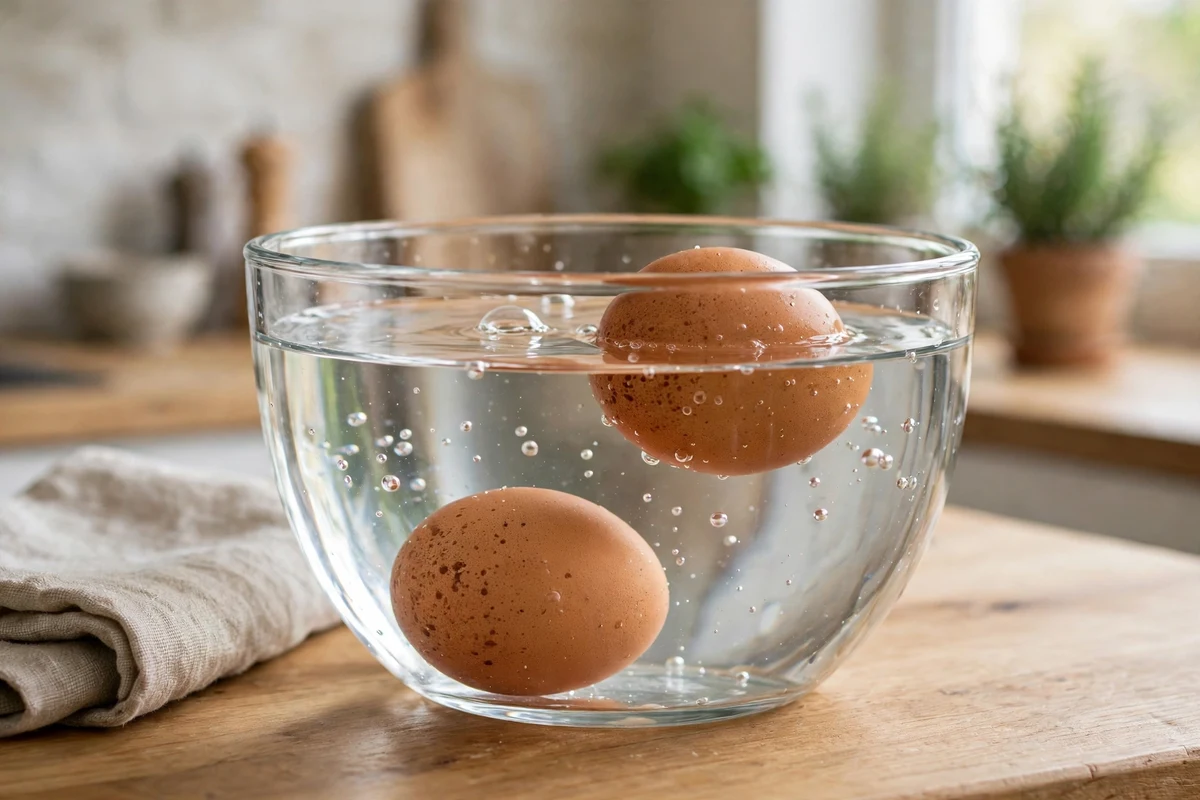
Can you eat eggs that float in water?
You can eat an egg that floats in water only if it passes the other safety checks, and the float test alone is not enough to decide. A floating egg is old, because air has entered through the shell over time, and the air cell has grown large enough to lift the egg.
An old egg may still be safe, but it may also be spoiled, and the float test cannot tell the difference.
The safe approach is to crack the egg into a separate bowl and check it with your eyes and nose. A good egg has a firm yolk, a thick white, and no bad smell. A bad egg smells of sulphur, the white is thin and watery, and the yolk is flat and breaks easily. If it smells bad, throw it away, whatever the float test said.
If the egg floats but looks and smells fine, cook it thoroughly before you eat it, and use it in baking or a cooked dish rather than raw. Do not use a floating egg in mayonnaise, mousse, or any dish where the egg stays raw, because the risk is higher with an old egg.
What does the egg float test actually measure?
The egg float test measures how much air is inside the egg, and nothing else. An egg shell has tiny pores, and air slowly passes through them over time. The air collects in a pocket at the wide end of the egg, called the air cell, and the pocket grows as the egg ages.
The bigger the air cell, the more the egg floats.
A fresh egg sinks and lies flat on the bottom, because it has almost no air inside. An egg that is a week or two old will sink but stand on its end, because the air cell has grown. An egg that floats has a large air cell, and it is usually several weeks old, although the exact age depends on how the egg was stored.
The test does not measure bacteria, and it does not measure safety. A fresh egg can carry salmonella, and an old egg can be free of it. The float test tells you about age, and age is only one factor in safety. That is why the crack-and-sniff check matters more than the float.
Why do eggs float as they get older?
Eggs float as they get older because air and moisture pass through the shell in both directions. Moisture leaves the egg, and air enters, and the air cell at the wide end grows. The egg loses weight as it loses moisture, and the air makes it lighter still, so it floats in water.
Storage makes a big difference. Eggs kept in the fridge lose moisture slowly, because the cold air is still and the shell pores are less active. Eggs kept on the counter lose moisture faster, especially in warm, dry air, and they float sooner. An egg kept in the fridge for three weeks may still sink, while an egg kept on the counter for a week may float.
The shell itself matters too. A thin or rough shell has more pores, and it lets air in faster. A thick, smooth shell holds air out longer. This is why two eggs laid on the same day can float at different times, and why the float test is a rough guide rather than a precise measure.
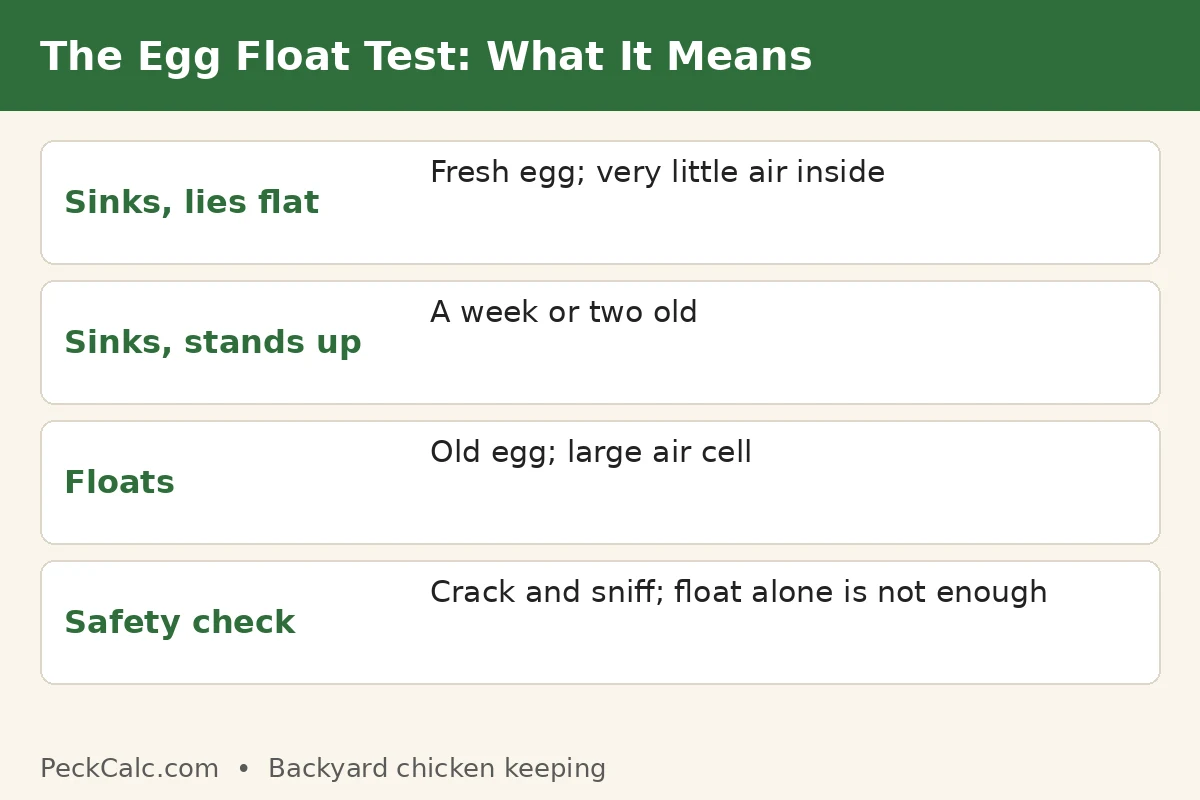
Is a floating egg always bad?
A floating egg is not always bad, and this is the point most people miss. The float test shows age, not spoilage, and an egg can be old but still safe. A floating egg that looks and smells fine, and is cooked thoroughly, is usually safe to eat, although the quality will be lower than a fresh egg.
The white of an old egg is thinner, and the yolk is flatter, so the egg will not fry as neatly or poach as well. It will still work in baking, scrambling, and hard boiling, where the shape does not matter. Use floating eggs in cooked dishes, and save your fresh eggs for frying and poaching.
That said, a floating egg is more likely to be spoiled than a sinking egg, because it has had more time for bacteria to grow. The risk is low if the egg was kept in the fridge, and higher if it was kept warm. When in doubt, throw it out. An egg is cheap, and food poisoning is not worth the saving.
How to check an egg properly before eating it
The best check is to crack the egg into a separate bowl, not straight into the pan or the mixing bowl. This stops one bad egg from ruining a whole dish, and it lets you see and smell the egg clearly.
A good egg has a yolk that stands up, a white that is thick around the yolk, and no smell at all.
A bad egg smells of sulphur or rotten egg, and the smell is strong enough to notice at once. The white is thin and watery, the yolk is flat and breaks easily, and the egg may look pink, green, or black in places. If you see any of these signs, throw the egg away and wash the bowl well.
Also check the shell before you crack the egg. A cracked shell lets bacteria in, so throw away any egg with a crack, even if it looks fine inside. A dirty shell should be wiped clean, not washed, because washing removes the bloom that protects the egg. Our how to store fresh eggs guide covers the best storage method.
How long do eggs last in the fridge?
Eggs last three to five weeks in the fridge, and they should be kept in their carton on a middle shelf, not in the door. The door is the warmest part of the fridge, because it opens often, and the temperature changes each time. The carton protects the eggs from absorbing smells from other food.
Do not wash eggs before you store them, because washing removes the bloom, the natural coating that seals the shell pores. An egg with its bloom intact keeps longer than a washed egg. If an egg is dirty, wipe it with a dry cloth, and wash it just before you use it if you must.
Write the collection date on the carton, so you know how old the eggs are, and use the oldest eggs first. A simple system, with the newest eggs at the back and the oldest at the front, stops eggs from sitting in the fridge until they float. Our how to freeze fresh eggs guide covers what to do with a glut.
What to do with eggs that float
If an egg floats but looks and smells fine, use it in a cooked dish. Baking is the best use, because the egg is mixed in and cooked through, and the quality of the white does not matter. Scrambled eggs, quiches, and frittatas are also good uses, because the egg is cooked and the texture is not important.
Do not use a floating egg raw, and do not use it for poaching or frying, because the thin white will spread in the pan and the yolk may break. Save your fresh eggs for those jobs, and use the older eggs where they will not be noticed. A floating egg is also a good candidate for hard boiling, because older eggs peel more easily than fresh ones.
If you have several floating eggs, check each one separately, because they will not all be the same. One may be fine and the next may be spoiled, so do not assume they are all good or all bad. Crack each one into a bowl, check it, and use the good ones at once.
The float test vs other egg freshness tests
The float test is the best-known egg test, but it is not the only one, and it is not the most useful. The crack-and-sniff test is more reliable, because it checks the egg itself rather than the air inside it.
The candle test, where you hold the egg up to a light, shows the size of the air cell and any dark spots inside, but it needs practice to read.
The shake test, where you shake the egg near your ear, is the least reliable. A fresh egg makes no sound, and an old egg sloshes, but the test is hard to judge and it does not tell you whether the egg is safe. It is better to crack the egg and look at it than to shake it and guess.
The best system is simple: store eggs in the fridge, use the oldest first, and crack each egg into a bowl before you use it. The float test is a useful extra check, but it should never replace the crack-and-sniff test. Our does the egg float test work guide explains the test itself in more detail.
Sources: USDA Food Safety and Inspection Service, shell eggs from farm to table and National Center for Home Food Preservation.
Related tools and guides
For more on the same topic, see How to Freeze Fresh Eggs.
Frequently asked questions
Can you eat eggs that float in water?
Only if they pass the crack-and-sniff check: no bad smell, firm yolk, thick white. A floating egg is old, not always bad, but cook it thoroughly and use it in baking or a cooked dish, never raw. When in doubt, throw it out.
What does it mean when an egg floats?
It means the air cell inside the egg has grown large, which happens as the egg ages. Air enters through the shell pores and moisture leaves, so the egg becomes lighter and floats. The test measures age, not safety.
Is a floating egg always bad?
No. A floating egg can be old but still safe, especially if it was kept in the fridge. The white will be thinner and the yolk flatter, so use it in baking or scrambled eggs rather than frying or poaching.
How can I tell if an egg is bad without the float test?
Crack it into a separate bowl and check it. A bad egg smells of sulphur, has a thin watery white, a flat yolk that breaks easily, and may look pink, green, or black. A good egg has no smell, a firm yolk, and a thick white.
How long do eggs last in the fridge?
Three to five weeks, kept in their carton on a middle shelf, not in the door. Do not wash eggs before storing them, because washing removes the bloom that seals the shell. Write the date on the carton and use the oldest eggs first.
About the author
John Walker is the founder of PeckCalc and has kept backyard chickens in Dallas, Texas since 2017. He started PeckCalc to give backyard keepers free calculators and guides with every figure traced to a university extension source.