
Denagard for Chickens: Uses, Dose and Warnings
 By John Walker · Backyard chicken keeper in Dallas, Texas since 2017
Denagard for chickens is the brand name of tiamulin, an antibiotic used mainly against mycoplasma, the bacteria behind chronic respiratory disease and infectious synovitis in poultry. It is also sold as Tiagard in some markets. It is a prescription-only medicine in many countries, and it carries a serious warning: it must never be given close to ionophore coccidiostats such as monensin, narasin, or salinomycin. This guide explains what Denagard does, when vets use it, and the rules you must follow.
Important: This guide is general information, not veterinary advice. If your bird is sick, injured, or not improving, contact a poultry veterinarian promptly, and always follow your vet's instructions and product labels for any medication.
What is Denagard for chickens?
Denagard for chickens is the brand name for tiamulin, an antibiotic in the pleuromutilin group. It works by stopping bacteria from making the proteins they need to grow, which slows or stops the infection so the bird's immune system can clear it. It is sold as a liquid concentrate that is mixed into drinking water.
Tiamulin is also sold under other brand names, including Tiagard, and as generic tiamulin. The product you can buy, and whether you need a prescription, depends on where you live. In the United States, tiamulin products for poultry are prescription medicines, and availability varies. In some other countries it is sold over the counter for poultry.
Denagard is not a general-purpose antibiotic for every sick chicken. Vets choose it for specific infections, mainly mycoplasma, and they choose the dose and length of treatment for the flock. Using it without a diagnosis wastes money, builds resistance, and can leave the real problem untreated.
What does Denagard treat in chickens?
Denagard is used mainly against Mycoplasma gallisepticum, the bacteria that causes chronic respiratory disease, and Mycoplasma synoviae, which causes infectious synovitis, a painful swelling of the joints and tendon sheaths. Birds with chronic respiratory disease sneeze, cough, have rattly breathing, and may have swollen eyes or a drop in laying.
It is also active against some gut bacteria, including Brachyspira, which causes intestinal spirochaetosis, and it is used in pigs against swine dysentery. In chickens it is sometimes used where a vet suspects a mixed mycoplasma and bacterial infection. It does not work against viruses, so it will not help birds with Newcastle disease, avian influenza, or Gumboro.
Because mycoplasma infections often come back after treatment, Denagard is usually part of a wider plan. The vet may also advise better ventilation, lower dust, and less crowding, because stress and poor air make respiratory disease worse. A flock that keeps relapsing may need testing to find out whether mycoplasma is really the cause.
How is Denagard given to chickens?
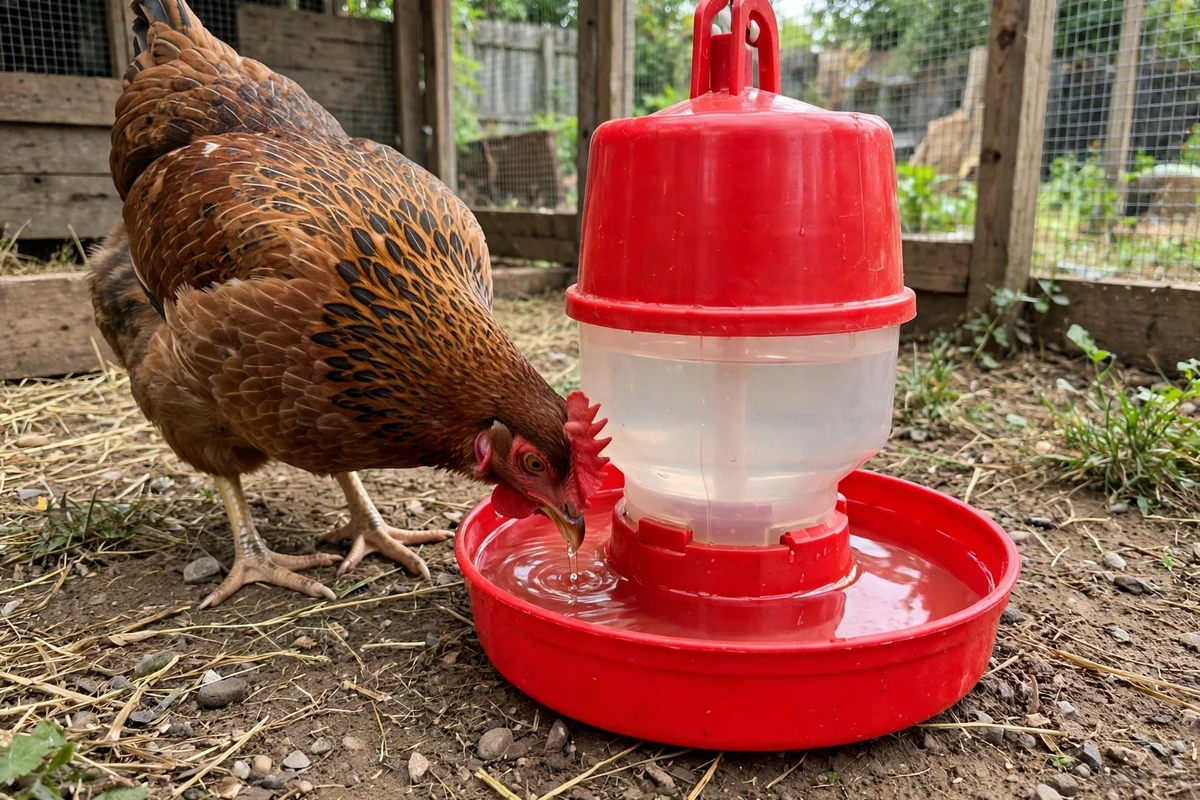
Denagard is usually given in the drinking water, mixed fresh each day at the strength your vet tells you to use. The birds must drink the medicated water as their only water source, so remove other drinkers during treatment. The usual course lasts three to five days, but your vet sets the length for your flock.
Fresh medicated water matters, because tiamulin breaks down in light and in stale water. Mix a new batch each morning, and use clean drinkers. If the birds are not drinking well, they will not get enough medicine, so check that the water is flowing and that weak birds can reach it. Sick birds drink less, which is one reason treatment sometimes seems to fail.
Never guess the dose. The dose depends on the product strength, the weight of the birds, and how much water they drink, which changes with the weather. Your vet will work it out from the label and the flock weight. Write down the start and finish dates, and keep the label for the withdrawal period.
The ionophore warning: a serious interaction
Denagard must never be given at the same time as ionophore coccidiostats, and this is the most important warning in this guide. Ionophores are drugs added to some feeds to prevent coccidiosis, and the common ones are monensin, narasin, and salinomycin. Tiamulin blocks the way the bird's liver clears these drugs, so they build up to toxic levels.
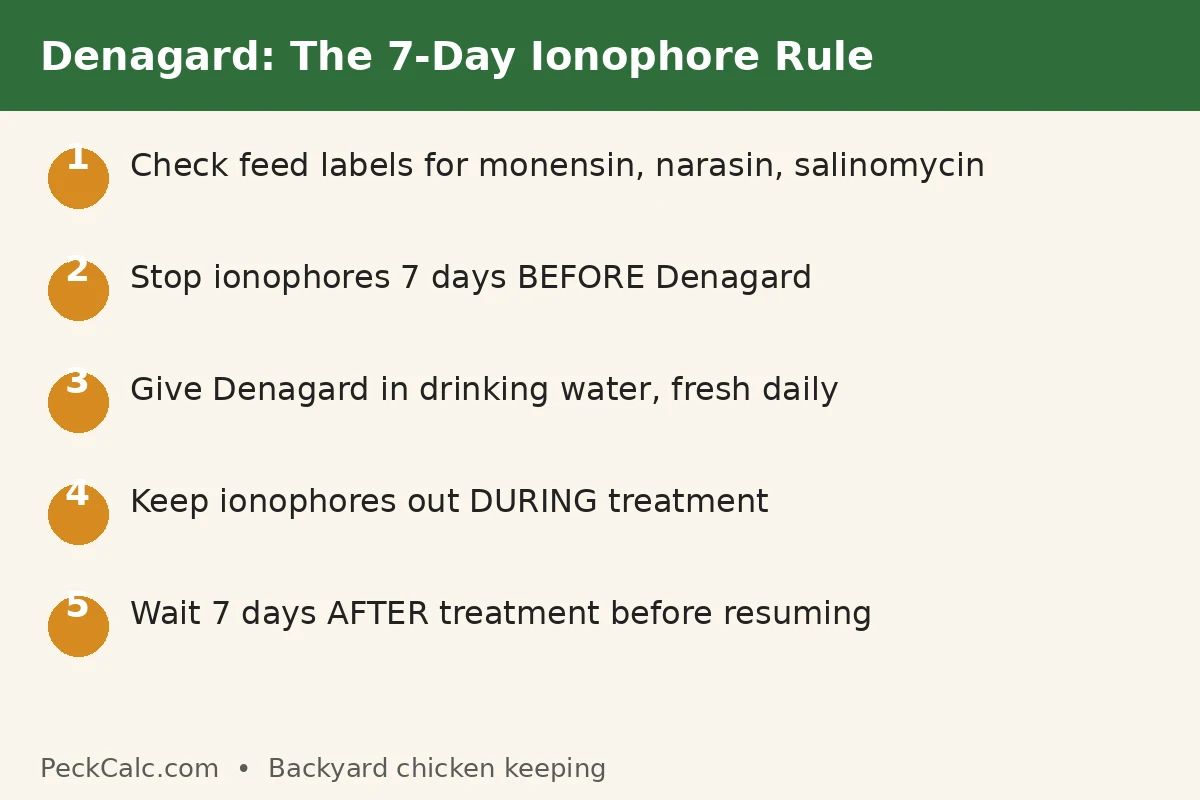
The rule is clear: do not give ionophores for seven days before Denagard treatment, during treatment, or for seven days after it. Birds that get both can develop muscle weakness, paralysis, and death, and there is no reliable treatment once the poisoning has happened. This interaction has killed poultry flocks, so it must be taken seriously.
Before you start Denagard, check every feed bag in your store for monensin, narasin, or salinomycin on the label. If your birds are on a medicated starter or grower feed, ask your vet whether it contains an ionophore, and switch to a plain feed for the full separation period. Tell your vet about every feed, supplement, and medicine the flock is getting.
Egg and meat withdrawal periods for Denagard
Every medicine has a withdrawal period, the number of days after the last dose before eggs or meat are safe to eat. For Denagard the withdrawal period depends on the product and the country, and you must follow the label on the product you actually bought. Do not use a withdrawal period you read online for a different product.
In many places the egg withdrawal for tiamulin in laying hens is short, but some labels say the product is not for use in laying hens at all. Read the label before you buy, and ask your vet or the supplier to confirm it. If the label says do not use in birds producing eggs for human consumption, follow that, even if the eggs are only for your family.
Throw away eggs laid during the withdrawal period, and mark the calendar with the date the eggs are safe again. Keep a written record of the treatment dates and the withdrawal end date. If you sell eggs, this record protects you and your customers, and it shows you followed the rules.
Side effects and safety of Denagard
Denagard is usually well tolerated at the correct dose, but birds can react if the dose is too high or if they are also getting an ionophore. Signs of trouble include weakness, reluctance to move, and birds sitting with their legs stretched out. Stop treatment and call your vet at once if you see this.
Tiamulin can also affect the taste of the water, and some birds drink less when it is added. If water intake drops sharply, the birds get less medicine and may become dehydrated, so watch the drinkers closely during treatment. Do not add other medicines to the same water unless your vet tells you to.
Store Denagard as the label directs, away from light and heat, and keep it out of reach of children. Wear gloves when mixing it, and wash your hands afterwards. Do not pour leftover medicated water where it can reach ponds or streams, and dispose of empty containers as the label directs.
When to call a vet about respiratory disease
Call a poultry vet if several birds sneeze, cough, or breathe noisily, or if laying drops suddenly with swollen faces or eyes. Respiratory disease has many causes, and Denagard only helps if mycoplasma or a susceptible bacterium is involved. A vet can test the flock and choose the right medicine, instead of guessing.
Also call a vet if birds treated with Denagard do not improve in three to four days, or if they get worse. The diagnosis may be wrong, the dose may be off, or a virus may be involved. A vet can take swabs and blood samples to find the real cause. Our guides on mycoplasma in chickens and infectious bronchitis in chickens explain the common look-alike diseases.
Keep records of every treatment: the product, the dose, the dates, and the result. This helps your vet, and it helps you avoid repeating a treatment that did not work. If you are unsure whether a feed contains an ionophore, take a photo of the label to your vet or feed store before starting any tiamulin product.
Denagard and antibiotic resistance
Antibiotics only keep working if they are used carefully, and tiamulin is no exception. Using Denagard for the wrong disease, at the wrong dose, or for too short a course lets resistant bacteria survive and spread. Those resistant bacteria can then be harder to treat in your flock and in other flocks.
This is why Denagard is prescription-only in many countries, and why vets want a diagnosis before they prescribe it. A faecal or swab test costs less than a flock-wide treatment that does not work, and it protects the medicine for the birds that really need it. Never share leftover Denagard with another keeper, and never use a product past its expiry date.
If your vet prescribes Denagard, finish the full course even if the birds look better after two days. Stopping early leaves the toughest bacteria alive, and the disease often comes back worse. Combine the medicine with better ventilation, dry litter, and less crowding, so the birds recover and stay well.
Sources: US Food and Drug Administration, animal and veterinary and poultry.extension.org.
Related tools and guides
For more on the same topic, see How to Freeze Fresh Eggs.
Frequently asked questions
What is Denagard for chickens?
Denagard is the brand name of tiamulin, an antibiotic used mainly against mycoplasma infections such as chronic respiratory disease and infectious synovitis. It is given in drinking water, and in many countries it is prescription-only, so a vet must diagnose the flock first.
Can Denagard be given with coccidiosis feed?
No. Denagard must not be given with ionophore coccidiostats such as monensin, narasin, or salinomycin. Keep ionophores out of the feed for seven days before, during, and seven days after treatment, or the birds can suffer fatal poisoning.
How long is the egg withdrawal for Denagard?
It depends on the product and the country, so follow the label on the product you bought. Some labels say not to use it in laying hens at all. Ask your vet to confirm the withdrawal period, and throw away eggs laid during that time.
Does Denagard treat viruses?
No. Denagard is an antibiotic, so it works against bacteria such as mycoplasma, not viruses. It will not help birds with Newcastle disease, avian influenza, or Gumboro. A vet test is the only reliable way to know whether the cause is bacterial.
Is Denagard the same as Tiagard?
Yes, both are brand names for the same active ingredient, tiamulin. The product name, strength, and label rules vary by country, so always read the label on the product you have and follow your vet's instructions for that product.
About the author
John Walker is the founder of PeckCalc and has kept backyard chickens in Dallas, Texas since 2017. He started PeckCalc to give backyard keepers free calculators and guides with every figure traced to a university extension source.