
Omphalitis in Chicks
 By John Walker · Backyard chicken keeper in Dallas, Texas since 2017
Omphalitis in chicks is an infection of the navel and the yolk sac, caused by bacteria entering through the navel before it has healed. It is often called mushy chick disease, because the chick's abdomen becomes soft, swollen, and mushy to the touch. The yolk sac stays large and infected instead of being absorbed in the first days.
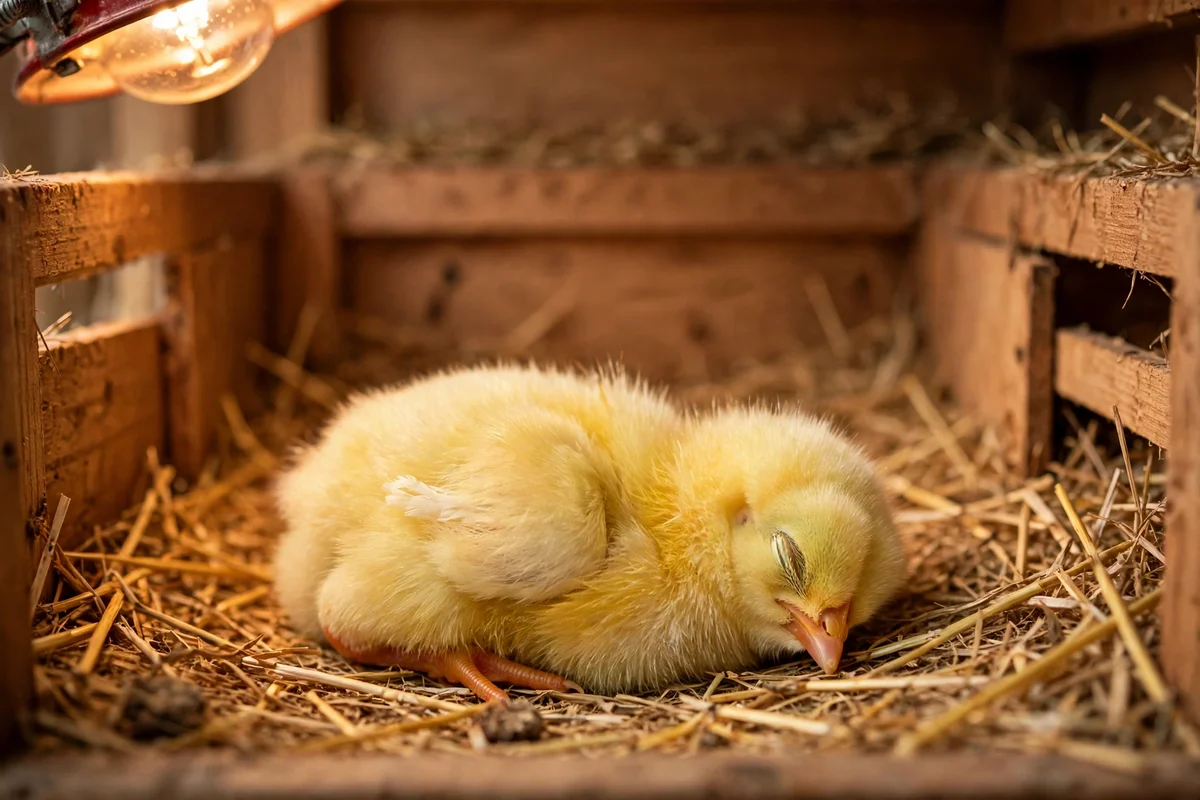
Important: This guide is general information, not veterinary advice. If your bird is sick, injured, or not improving, contact a poultry veterinarian promptly, and always follow your vet's instructions and product labels for any medication.
What is omphalitis in chicks?
Omphalitis in chicks is an infection of the navel and the yolk sac, caused by bacteria entering through the navel before it has healed. It is often called mushy chick disease, because the chick's abdomen becomes soft, swollen and mushy to the touch, and the yolk sac, which should be absorbed in the first days, stays large and infected.
The yolk sac is the chick's food supply for its first days, and it is normally absorbed into the body shortly after hatching. When bacteria enter through the navel, they infect the yolk sac, and the infection spreads into the abdomen. The chick becomes lethargic, stops eating and drinking, and often dies within a few days, sometimes with no warning beyond a swollen belly.
Omphalitis is one of the most common causes of death in chicks in their first week, and it is almost always a hygiene problem rather than a disease that spreads from chick to chick. The bacteria are always present in the environment, and they only cause disease when the navel is exposed to them in a dirty hatcher or brooder.
Signs of omphalitis
The first signs are usually a chick that is quieter than the others, that does not run to the feeder, and that sits hunched and fluffed up. The chick may have a swollen, soft abdomen that feels mushy, and the navel area may look red, swollen or wet, with a scab that has not dried properly.
Some chicks develop pasty butt, with droppings stuck to the vent, and a sour smell around the vent.
As the infection progresses, the chick stops eating and drinking, becomes cold, and lies on its side. The abdomen swells further, the chick's breathing becomes laboured, and death usually follows within a day or two of the first obvious signs. Chicks that die from omphalitis often have an unabsorbed yolk sac and a swollen, discoloured navel when examined.
Check every chick in the first few days, and compare them with each other: a chick that is smaller, quieter and less active than its hatchmates, with a swollen belly, is a candidate for omphalitis. Our guide on pasty butt in chicks covers the vent problem that often appears alongside it, and how to raise baby chicks covers the first-week routine.
What causes omphalitis?
The cause is bacteria entering through the navel, and the bacteria are almost always E. coli, Staphylococcus or a similar common organism from the environment. The navel is an open wound for the first day or two after hatching, and if the chick hatches into a dirty incubator the bacteria have a direct route into the body.
The cause is bacteria entering through the navel, and the bacteria are almost always E. coli, Staphylococcus or a similar common organism from the environment. The navel is an open wound for the first day or two after hatching, and if the chick hatches into a dirty incubator, or is moved to a dirty brooder, the bacteria have a direct route into the body.
Dirty hatching conditions are the main risk. An incubator that has not been cleaned between hatches, hatching eggs that were dirty or cracked, and a hatcher full of broken shells and droppings all raise the bacterial load. Eggs that are washed, or that are set dirty, are also at risk, because washing removes the protective cuticle and lets bacteria through the shell.
A long or difficult hatch increases the risk too, because the navel stays open longer and the chick is weaker. Chicks that hatch late, chicks that are helped out of the shell, and chicks from eggs stored badly are all more likely to develop omphalitis. Cold stress in the brooder makes it worse, because a cold chick's immune system is weaker.
Treatment and prognosis
Treatment of omphalitis is difficult, and the prognosis is poor once the chick is clearly ill. A vet can prescribe antibiotics, and some chicks respond if treatment starts very early, but by the time the abdomen is swollen and the chick has stopped eating, the infection is usually too advanced.
Supportive care with warmth, fluids and a quiet brooder can help, but it rarely saves a chick with advanced omphalitis.
Isolate any chick you suspect, so it does not infect the brooder and so it is not trampled by the others. Offer water with electrolytes by dropper if the chick cannot drink, and keep it warm: a cold chick cannot fight an infection. Do not give antibiotics on your own, because the choice of drug and the dose for a chick need vet guidance.
The honest answer is that most chicks with omphalitis die, and the value is in preventing the next case rather than saving the one you have. If several chicks from the same hatch are affected, the problem is in the hatching conditions, and the incubator and brooder need a thorough clean and a review before the next hatch.
How to prevent omphalitis
Prevention is about hygiene at every step. Clean and disinfect the incubator thoroughly between hatches, including the trays, the water channels and the fan, and let it dry completely before setting eggs. Set only clean, uncracked eggs, and do not wash them: washing removes the protective cuticle and lets bacteria in.
If an egg is dirty, brush it gently or leave it out.
Keep the hatcher clean during the hatch, and move chicks to a clean, dry brooder as soon as they are dry and fluffy. The brooder should be cleaned and disinfected before the chicks arrive, with fresh bedding, clean water and fresh starter feed. The brooder temperature calculator helps you keep the brooder at the right temperature, and the chick brooder size calculator helps you give the chicks enough space.
Dip the navel in iodine or a similar antiseptic if you hatch your own chicks, a practice many breeders use to seal the navel quickly. Handle chicks with clean hands, keep the brooder dry and draught-free, and check the chicks daily in their first week, so a sick chick is caught early and isolated before it contaminates the brooder.
Omphalitis or pasty butt?
Omphalitis and pasty butt are often confused, because both affect chicks in their first week and both can involve the vent area. The difference is in what is wrong and where it is: pasty butt is droppings stuck to the vent, blocking it, and it is fixed by cleaning the vent.
Omphalitis is an infection inside the abdomen, with a swollen, mushy belly, and it is not fixed by cleaning.
A chick can have both at once, and a chick with omphalitis often develops pasty butt as it becomes weak and stops moving. The table below summarises the differences. If a chick has a swollen, mushy abdomen as well as pasty butt, the omphalitis is the serious problem, and the chick needs a vet, not just a clean vent.
| Feature | Omphalitis (mushy chick) | Pasty butt |
|---|---|---|
| Where it shows | Abdomen, swollen and mushy | Vent, droppings stuck to it |
| Cause | Bacteria through the navel | Stress, cold, wrong feed, dehydration |
| Navel | Red, swollen or wet | Normal |
| Treatment | Vet antibiotics, often poor outlook | Clean the vent with warm water |
| Prevention | Clean incubator and brooder, navel dip | Correct brooder temperature, fresh water |
When to call a vet for omphalitis
Call a poultry vet as soon as you suspect omphalitis, especially if several chicks from the same hatch are affected. A vet can confirm the diagnosis, prescribe antibiotics if treatment is worth trying, and advise on whether the rest of the hatch is at risk. Early treatment gives the best chance, though the outlook is often poor.
Also call a vet if chicks are dying in their first week without an obvious cause, because the cause may be omphalitis, and the fix may be in the incubator rather than in the chicks. A vet can advise on cleaning and disinfection, and on whether the hatching eggs or the breeder flock need attention.
Do not wait to see if the chick improves on its own. Omphalitis progresses fast, and a chick that is lethargic with a swollen abdomen in the morning may be dead by the evening. Quick isolation, warmth, fluids and a vet call are the best you can do, and prevention before the next hatch is the most valuable step of all.
Sources: Sources: the disease and housing guidance on this page follows the poultry health material at the University of Minnesota Extension and poultry.extension.org. For diagnosis and treatment, always follow your poultry veterinarian.
Related tools and guides
For more on the same topic, see What to Feed Chickens and What Not to Feed Chickens.
Frequently asked questions
What is mushy chick disease?
Mushy chick disease is the common name for omphalitis, an infection of the navel and yolk sac in chicks in their first week. Bacteria enter through the unhealed navel, the abdomen becomes soft, swollen and mushy, and the chick becomes lethargic and usually dies within a few days.
What causes omphalitis in chicks?
Omphalitis is caused by bacteria, usually E. coli or Staphylococcus, entering through the navel before it heals. Dirty incubators, dirty or cracked hatching eggs, a dirty brooder and a long or difficult hatch all raise the risk. It is a hygiene problem, not a disease that spreads from chick to chick.
Can omphalitis in chicks be treated?
Treatment is difficult and the prognosis is poor once the chick is clearly ill. A vet can prescribe antibiotics, and some chicks respond if treatment starts very early, but most affected chicks die. Prevention, through a clean incubator and brooder, is far more effective than treatment.
How do I prevent omphalitis in my chicks?
Clean and disinfect the incubator between hatches, set only clean uncracked eggs and do not wash them, keep the brooder clean and dry, dip the navel in iodine if you hatch your own, and check chicks daily in their first week. Fresh bedding, clean water and the right brooder temperature all help.
Is omphalitis contagious between chicks?
Omphalitis itself is not contagious in the usual sense, because it is caused by bacteria from the environment entering through the navel, not by a virus spreading between birds. But if several chicks from the same hatch are affected, they share the same dirty hatching conditions, and the incubator and brooder need cleaning before the next hatch.
About the author
John Walker is the founder of PeckCalc and has kept backyard chickens in Dallas, Texas since 2017. He started PeckCalc to give backyard keepers free calculators and guides with every figure traced to a university extension source.