
Ulcerative Enteritis in Chickens
 By John Walker · Backyard chicken keeper in Dallas, Texas since 2017
Ulcerative enteritis in chickens is a bacterial disease of the gut that causes ulcers in the intestines and damage to the liver, and it is one of the most serious diseases of quail. Chickens can catch it too, but in chickens the disease is usually milder, and many keepers never see a case in a chicken flock at all. The germ behind it is a bacterium called Clostridium colinum, which lives in the droppings of carrier birds and spreads when birds peck at contaminated litter, feed, or water. This guide explains the signs to watch for, how a vet diagnoses the disease, what treatment looks like, and how to keep it out of your flock.
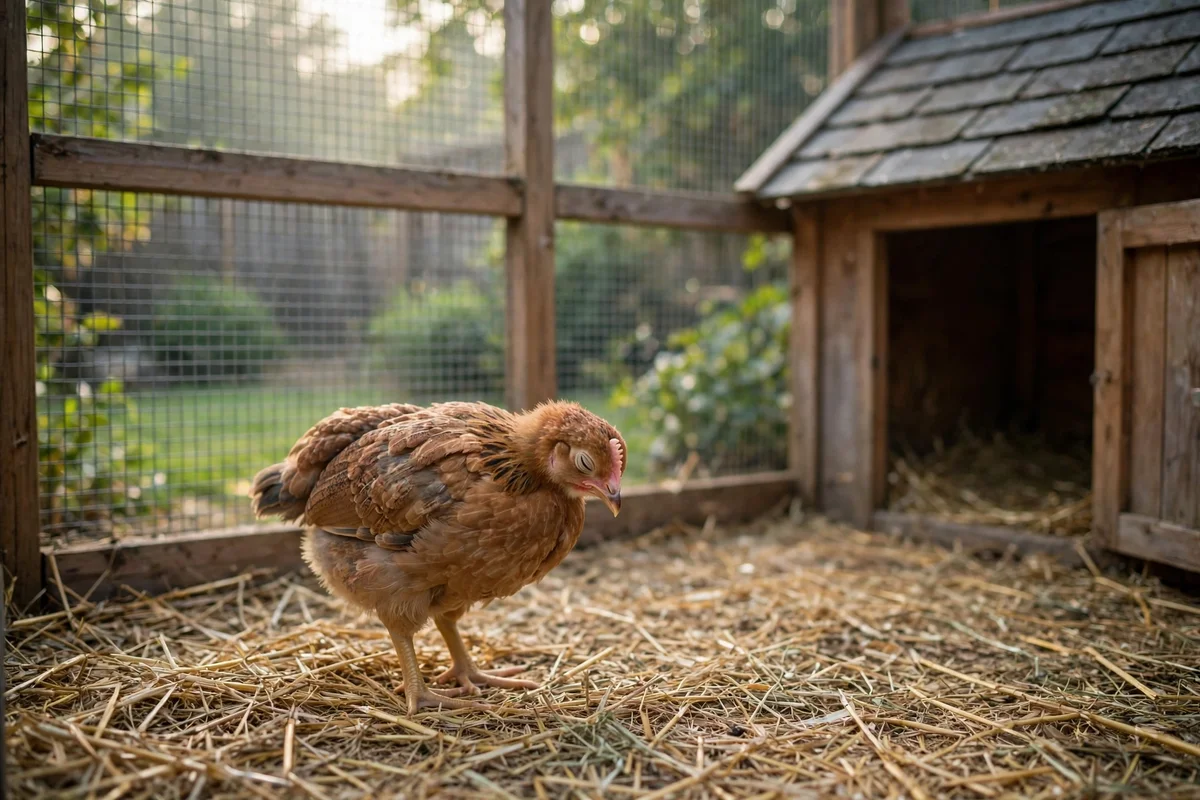
What is ulcerative enteritis in chickens?
Ulcerative enteritis is an infection of the intestines caused by the bacterium Clostridium colinum, which produces ulcers, meaning open sores, in the wall of the gut, and often causes pale spots of dead tissue on the liver. The disease is best known in quail, where it can kill quickly and
spread through a flock, but chickens, turkeys, and other game birds can be infected as well, usually with milder signs.
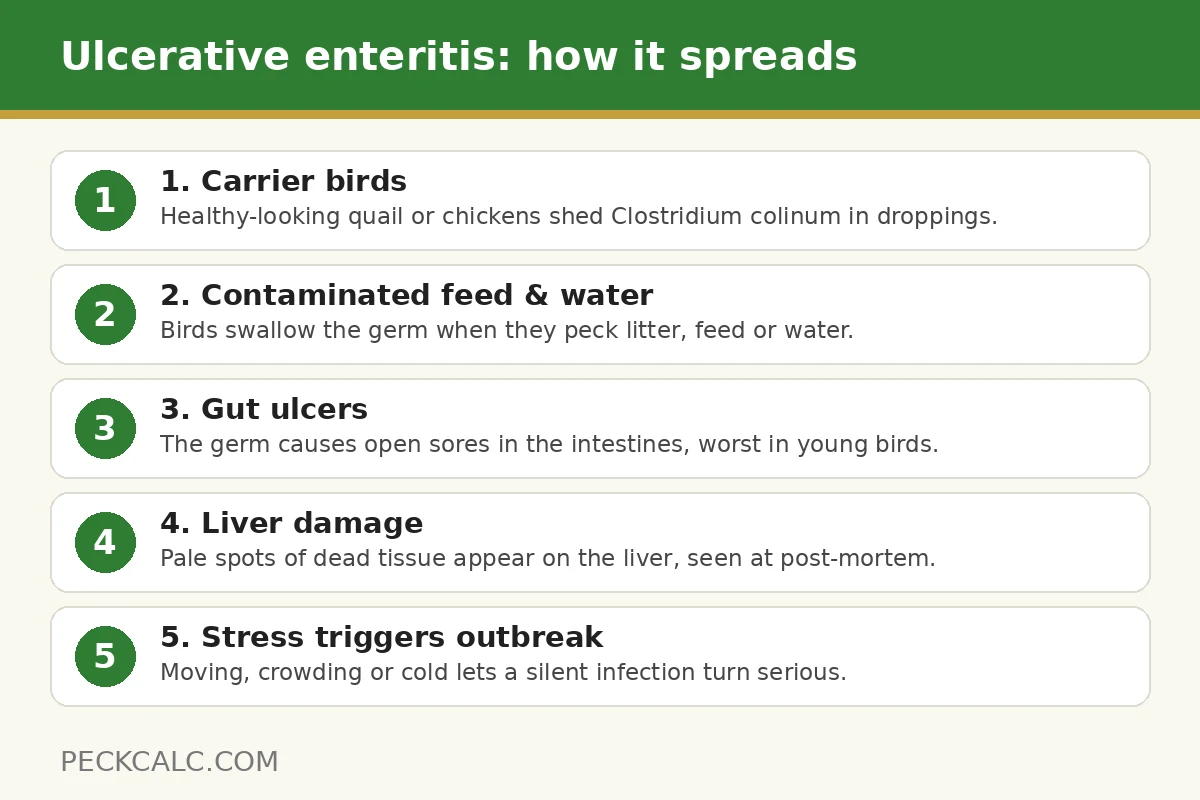
The bacterium spreads through droppings. A carrier bird that looks healthy can pass the germ in its faeces, and other birds pick it up when they peck at litter, feed, or water that has been contaminated. The germ can survive in soil and litter for some time, which is why outbreaks often follow stress, overcrowding, or a move to ground that has held infected birds before.
In chickens the disease is often so mild that it goes unnoticed, and a bird may show only a short spell of loose droppings before recovering on its own. In young birds, and in birds already stressed by a move, a change of feed, or another illness, the infection can take hold more firmly and cause real sickness. Quail are far more at risk than chickens, so a keeper who keeps both species should treat quail as the priority when this disease is suspected.
Ulcerative enteritis is sometimes called quail disease, and that name tells you where the risk sits. If you keep quail and chickens on the same ground, the quail can act as a source of infection for the chickens, even when the quail look well. Keeping the species apart, and not sharing equipment between them, is one of the simplest ways to lower the risk.
What are the signs of ulcerative enteritis?
The most common signs of ulcerative enteritis are sudden death with no warning, drooping and dullness, loss of appetite, and watery or bloody droppings. Affected birds often sit hunched with their feathers fluffed out, move slowly, and drink more than usual, and in quail the disease can kill within a day or two of the first signs.
In chickens the signs are usually softer. A hen may go off her feed for a day, pass loose droppings, and then seem to recover, which makes the disease easy to miss. Young chicks and growers are more likely to show clear signs than adult hens, and a group of young birds that suddenly goes quiet and stops eating should always be checked closely.
Inside the bird, the disease leaves clear marks that a vet can find at post-mortem examination, which is an examination of a dead bird to find the cause of death. The intestines show ulcers, often in the lower gut, and the liver shows pale yellow spots of dead tissue. These marks are the reason the disease is called ulcerative enteritis: ulcerative means causing ulcers, and enteritis means inflammation of the gut.
Sudden death is the sign that worries keepers most, and it is also the least helpful, because many diseases can kill a bird without warning. That is why a post-mortem matters so much. If you lose a bird suddenly, keep the body cool, not frozen, and ask a poultry vet about a post-mortem, because finding the true cause is the only way to protect the rest of the flock. Our guide on chicken necropsy explains what a post-mortem involves and how to arrange one.
| Sign | How it looks in chickens | How it looks in quail |
|---|---|---|
| Drooping and dullness | Mild, may pass in a day | Severe, birds sit hunched and still |
| Droppings | Loose, sometimes watery | Watery, may contain blood |
| Appetite | Slightly reduced | Birds stop eating and drinking |
| Deaths | Rare, usually young birds | Sudden deaths, can spread fast |
| Liver damage | Mild spots, found at post-mortem | Obvious pale spots on the liver |
What causes ulcerative enteritis and how does it spread?
Ulcerative enteritis is caused by Clostridium colinum, a bacterium that lives in the gut of carrier birds and is shed in their droppings. The infection spreads when healthy birds swallow the bacterium in contaminated feed, water, or litter, and it can also be carried on boots, tools, and shared equipment.
Stress is the usual trigger that turns a silent infection into a visible outbreak. Moving birds to new housing, mixing birds from different flocks, overcrowding, cold and damp, and a sudden change of feed all weaken the gut and give the bacterium a chance to multiply. Young birds are more at risk because their immune systems are still developing.
The bacterium can survive in soil and in old litter, so ground that once held infected quail or chickens can still be a source of infection months later. This matters most for keepers who use movable runs or who restock a pen that has stood empty. Cleaning out old litter, letting ground rest, and rotating runs all help to break the cycle.
Wild birds can also carry the germ, which is why a secure run with a roof or netting helps, and why feed and water should be kept under cover where wild birds cannot foul them. Good biosecurity, meaning the steps you take to keep disease out of your flock, is the best defence. Our guide on chicken biosecurity covers the basics in full.
How is ulcerative enteritis diagnosed?
Ulcerative enteritis is diagnosed by a vet, usually from a post-mortem examination of a dead bird, because the ulcers in the gut and the pale spots on the liver are distinctive. A vet can also grow the bacterium from a sample of gut tissue in a laboratory, which confirms the diagnosis beyond doubt.
In a live bird the diagnosis is harder, because the signs overlap with other gut diseases such as coccidiosis, which is a gut infection caused by a tiny parasite, and necrotic enteritis, another bacterial gut disease. A vet may test a droppings sample, look at the flock history, and rule out the more common causes before settling on ulcerative enteritis.
Do not try to diagnose this disease from a photo or a description online. Several gut diseases look the same from the outside, and the treatments differ, so a wrong guess can cost birds. If you have sudden deaths or a group of birds going downhill fast, call a poultry vet the same day and keep a dead bird cool for examination.
A vet will also ask about the flock: how old the birds are, whether quail are kept nearby, whether any new birds have been added, and whether the birds have been stressed recently. Those answers help the vet judge how likely ulcerative enteritis is, and whether the whole flock needs treatment or only the sick birds.
How is ulcerative enteritis treated?
Ulcerative enteritis is treated with antibiotics prescribed by a vet, and the usual choices are bacitracin or a penicillin-type antibiotic given in the feed or water. Treatment works best when it starts early, before the gut damage becomes severe, which is another reason to call a vet at the first sign of trouble rather than waiting.
Never treat a flock with antibiotics left over from another illness, and never buy antibiotics meant for other animals and guess the dose. The dose, the length of treatment, and the egg withdrawal period, meaning the time after treatment during which eggs must not be eaten, all depend on the drug and the bird, and only a vet can set them safely. Using the wrong drug can also make the disease harder to treat later.
Sick birds should be separated into a hospital pen, kept warm and dry, with easy access to clean water and feed. A bird that will not drink can dehydrate fast, so offer water by hand with a dropper if needed, and keep the pen quiet and dim so the bird can rest. Our guide on chicken hospital pen setup explains how to set one up.
After treatment, the vet may advise a period of rest for the gut, with a simple diet and clean water, and a check of the droppings to see whether the bacterium is still being shed. Birds that recover can still carry the germ, so do not mix recovered birds with a new flock until a vet says it is safe.
How can I prevent ulcerative enteritis in my flock?
Prevention starts with keeping quail and chickens apart, because quail are the main carriers of Clostridium colinum. Do not house them together, do not share feeders, drinkers, or tools between them, and wash your hands and change your boots between the two groups if you keep both.
Keep the coop dry and clean, with fresh litter and good ventilation, and avoid overcrowding, because damp, dirty, crowded housing stresses birds and lets gut germs build up. Clean feeders and drinkers every day, keep feed dry and under cover, and remove wet litter as soon as you find it.
Quarantine new birds for at least two weeks before mixing them with your flock, and buy birds only from a breeder or hatchery with a good health record. A new bird that looks healthy can still carry the bacterium, and two weeks in a separate pen gives any hidden illness time to show itself.
Reduce stress wherever you can: move birds gently, change feed gradually over several days, give young birds enough space and warmth, and keep the flock routine steady. A calm flock with a healthy gut is far less likely to suffer an outbreak, and if one does happen, the birds will be in better shape to fight it. Keep a chicken first aid kit ready so you can act fast when a bird goes off its feed.
A note on health: this guide covers general flock behaviour and management only. If a bird shows signs of illness or injury, separate it, keep it warm and dry, and consult a veterinarian — ideally one experienced with poultry — before treating it.
Sources: University of Minnesota Extension, poultry disease resources and poultry.extension.org.
Related tools and guides
For more on the same topic, see Chicken Necropsy: What a Post-Mortem Can Tell You.
Frequently asked questions
What is ulcerative enteritis in chickens?
Ulcerative enteritis is a gut infection caused by the bacterium Clostridium colinum. It causes ulcers in the intestines and pale spots of dead tissue on the liver. It is worst in quail, and usually milder in chickens.
Can ulcerative enteritis kill chickens?
Yes, but deaths are uncommon in adult chickens. Young birds are more at risk, and sudden death is more common in quail, where the disease can spread quickly through a flock.
How do chickens catch ulcerative enteritis?
Birds catch it by swallowing the bacterium in droppings, contaminated feed, water, or litter. Carrier birds that look healthy can shed the germ, and quail are the most common source of infection for chickens.
How is ulcerative enteritis treated?
A vet prescribes antibiotics such as bacitracin or a penicillin-type drug in feed or water, and sets the dose and egg withdrawal period. Sick birds should be separated into a warm, quiet hospital pen.
Can I prevent ulcerative enteritis?
Keep quail and chickens apart, keep housing dry and clean, avoid overcrowding, quarantine new birds for two weeks, and reduce stress. There is no vaccine for backyard flocks, so hygiene and biosecurity are the main defences.
About the author
John Walker is the founder of PeckCalc and has kept backyard chickens in Dallas, Texas since 2017. He started PeckCalc to give backyard keepers free calculators and guides with every figure traced to a university extension source.