
Why Do Chickens Hold Their Wings Out in Summer?
 By John Walker · Backyard chicken keeper in Dallas, Texas since 2017
Why do chickens hold their wings out in summer? They hold them out to cool down, and it is one of the clearest signs that a bird is hot. Chickens cannot sweat, because they have no sweat glands, so they cool themselves in other ways: they pant, they hold their wings away from their bodies, and they seek shade and water. The skin under the wing is bare, with few feathers, and holding the wing out lets air flow over that skin and carry heat away. A hen with her wings held out, her beak open, and her feathers slightly raised is a hen that is working hard to stay cool. This guide explains why it happens, when it is normal, and when it means the bird is in danger.
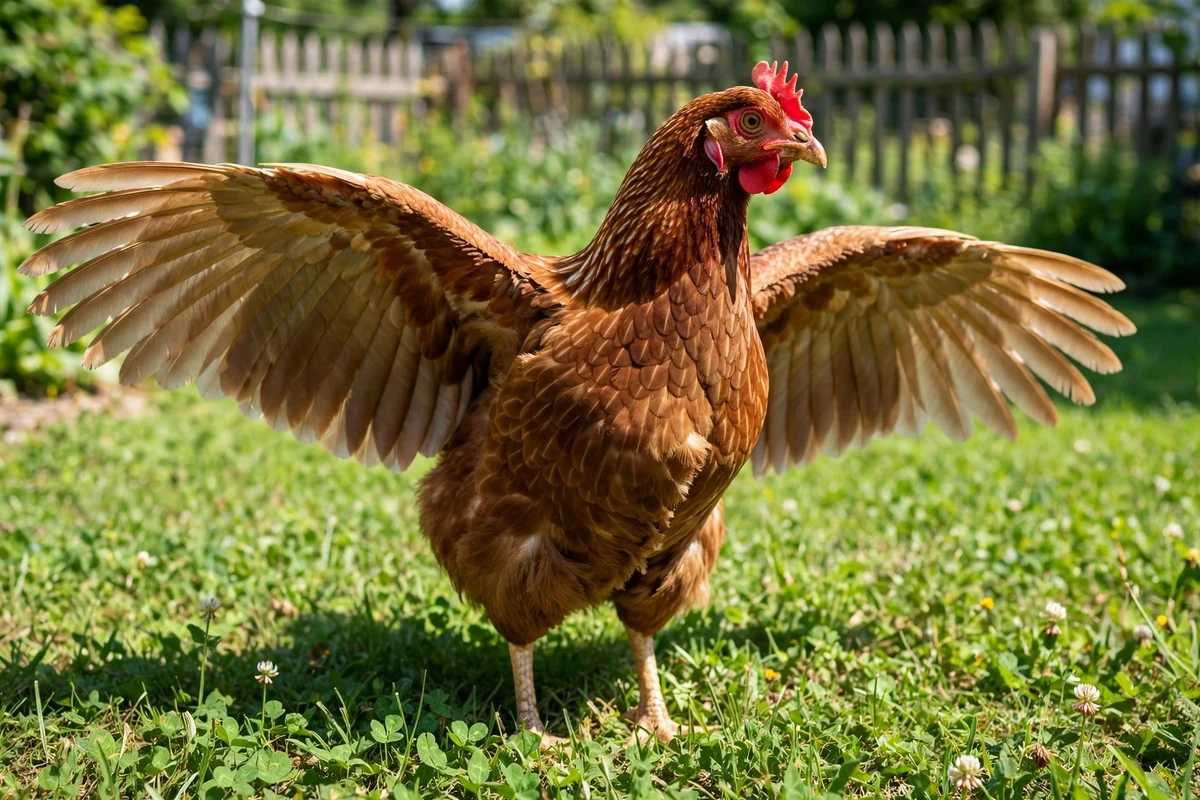
Why do chickens hold their wings out in summer?
Chickens hold their wings out in summer to cool down, because the skin under the wing is bare and lets heat escape. A chicken cannot sweat, so it must lose heat through its skin and its breath, and holding the wings out exposes more skin to the air.
The wings are normally held tight against the body, which traps a layer of warm air and keeps the bird warm in winter. In summer, the bird does the opposite: it lifts the wings away from the body, which lets the trapped air out and lets cooler air flow over the skin.
This is the same idea as a person taking off a jacket in the heat. The bird is not injured or ill, it is simply using its body to control its temperature, and a hen with her wings out on a hot day is a hen that is coping with the heat.
The behaviour is most common in the middle of the day, when the sun is strongest, and it stops in the evening when the air cools. If the wings stay out after dark, or the bird also pants heavily and lies down, the bird may be in heat stress and needs help.
How chickens cool down without sweat
Chickens cool down in three main ways: panting, holding their wings out, and seeking shade and water. Panting works like a dog's panting, by moving air over the moist lining of the mouth and throat, which carries heat away as the moisture evaporates.
Holding the wings out is the second way, and it works by exposing the bare skin under the wings to the air. The skin there has many blood vessels close to the surface, so heat from the blood can pass into the air, and a breeze makes this work even better.
The third way is behaviour: a hot chicken will seek shade, stand in water, or lie in a cool dust bath. A dust bath in the shade is cooler than the sun, and the soil draws heat away from the bird's body, which is why hens dust bathe more in summer.
Chickens also eat less in hot weather, because digesting food produces heat, and they drink far more water. A hen in summer may drink twice as much as in winter, and fresh, cool water is the most important thing you can give a hot flock.
Wings out vs heat stress: when to worry
Wings held out on a hot day, with the bird otherwise active and eating, is normal and nothing to worry about. The bird is cooling itself, and it will put its wings back when the air cools. This is a healthy response, not a sign of illness.
Heat stress is different, and it needs action. A bird in heat stress pants heavily with its beak wide open, holds its wings out and droops them, lies down and will not get up, and may have a pale comb and wattles. Its droppings may be very watery, and it may stop eating altogether.
A bird in heat stress can die quickly, because a chicken's body temperature is already high, about 41 degrees Celsius, and it does not take much extra heat to push it over the edge. A bird that is panting hard, lying down, and unresponsive needs to be cooled at once.
Move the bird to shade, offer cool water, and wet its feet, comb, and wattles with cool water, which helps it lose heat fast. Do not plunge the bird into cold water, because the shock can kill it, and call a vet if the bird does not recover within an hour.

Helping chickens stay cool in summer
Shade is the most important help you can give a hot flock. A tree, a tarp, or a shade cloth over the run gives the birds somewhere cool to stand, and it can drop the temperature in the run by several degrees, which is enough to stop heat stress.
Fresh, cool water is the second most important help. Change the water often, keep the drinker in the shade, and add ice to the water on very hot days. A hen that drinks cool water can cool herself from the inside, and she will drink far more if the water is cool.
Give the birds watery treats such as cucumber, melon, or lettuce, which help them stay hydrated. A melon half in the shade is a cooling treat and enrichment in one, and the birds will peck at it for hours.
Keep the coop ventilated, with air flowing through it, and do not shut the birds in a hot coop during the day. A coop that is cool and airy at night helps the birds recover from the heat of the day, and it keeps them laying well through summer.
Breeds that handle heat better
Light, Mediterranean breeds such as the Leghorn and the Minorca handle heat better than heavy breeds, because they are slim, active, and have large combs that help them lose heat. A large comb has many blood vessels, and it works like a radiator, shedding heat into the air.
Heavy breeds such as the Orpington, the Cochin, and the Brahma struggle in heat, because their thick plumage traps heat and their bodies are large. These breeds need extra shade and water in summer, and they are more likely to suffer heat stress.
Feather-footed breeds also struggle, because the feathers on their feet trap heat and get wet in mud, which can cause foot problems. A feather-footed bird in a hot, wet run is at risk of both heat stress and foot disease.
If you live in a hot climate, choose a light breed with a large comb and clean legs, and give the birds plenty of shade and water. A breed that suits your climate will lay better and stay healthier than a breed that fights the heat all summer.
Wings out in summer vs other wing behaviour
Wings held out in summer is a cooling behaviour, but chickens hold their wings out for other reasons too. A hen that has just dust bathed may hold her wings out to shake off the dust, and a rooster may drop one wing and drag it on the ground as part of a mating display.
A bird with a drooping wing on one side only, that does not lift it, may have an injury or a disease such as Marek's disease, which causes paralysis. A wing that droops on one side and does not move is a vet matter, not a cooling behaviour.
A chick that holds its wings out and pants is too hot, and the brooder temperature needs to come down. Chicks cannot cool themselves as well as adults, and a hot brooder can kill them quickly, so check the temperature and raise the lamp.
The key is to look at the whole bird. A bird that holds both wings out on a hot day, pants a little, and is otherwise active is cooling itself. A bird that holds one wing down, lies still, and will not eat is ill or injured, and it needs a vet.
Summer care checklist for chickens
Check the water twice a day in summer, and keep it cool and clean. A drinker in the sun heats up fast, and hot water does not cool a bird, so move the drinker to the shade and add ice on the hottest days.
Check the shade in the run at midday, when the sun is highest. A run that is shady in the morning may be in full sun at noon, so make sure there is shade all day, not just in the morning.
Do not handle the birds in the heat of the day, because handling stresses them and raises their body temperature. Do your coop work in the early morning or the evening, when it is cooler, and let the birds rest at midday.
Watch the flock for signs of heat stress, especially the heavy breeds and the older birds. A bird that pants heavily, holds its wings out, and lies down needs help at once, and a flock that is checked often is a flock that survives the summer in good shape.
| Sign | What it means | What to do |
|---|---|---|
| Wings out, active, eating | Normal cooling | Shade and cool water |
| Wings out, panting hard | Getting too hot | Move to shade, cool water |
| Wings out, lying down, unresponsive | Heat stress, urgent | Cool feet and comb, call vet |
| One wing drooping only | Injury or disease | Separate bird, call vet |
| Wings out at night | Still too hot or ill | Check coop heat, call vet if needed |
Sources: poultry.extension.org and University of Minnesota Extension poultry.
Related tools and guides
For more on the same topic, see How to Keep Chickens Cool in Summer.
Frequently asked questions
Why do chickens hold their wings out in summer?
Chickens hold their wings out to cool down. The skin under the wing is bare, and holding the wing out lets air flow over it and carry heat away. Chickens cannot sweat, so this is one of their main ways to lose heat.
Is it normal for chickens to hold their wings out in summer?
Yes, it is normal on a hot day. A hen with her wings out, panting a little, and otherwise active is cooling herself. It becomes a worry only if she also lies down, stops eating, or will not get up.
What are the signs of heat stress in chickens?
Heavy panting with the beak wide open, wings held out and drooping, lying down and not getting up, a pale comb, and very watery droppings. A bird in heat stress needs shade and cool water at once.
How can I help my chickens stay cool in summer?
Give shade all day, fresh cool water changed often, and watery treats such as cucumber and melon. Keep the coop ventilated, and do not handle birds in the heat of the day.
Which chicken breeds handle heat best?
Light Mediterranean breeds such as Leghorns and Minorcas handle heat best, because they are slim and have large combs that shed heat. Heavy breeds such as Orpingtons and Cochins struggle more and need extra shade.
About the author
John Walker is the founder of PeckCalc and has kept backyard chickens in Dallas, Texas since 2017. He started PeckCalc to give backyard keepers free calculators and guides with every figure traced to a university extension source.