
Can Chickens Eat Lettuce?
 By John Walker · Backyard chicken keeper in Dallas, Texas since 2017
Yes, chickens can eat lettuce. Plain, fresh lettuce is safe, and most flocks enjoy pecking at the leaves. Dark leafy types such as romaine and leaf lettuce are the best choice, because they carry more nutrients than pale iceberg. Keep the portion modest, wash the leaves first, and never feed lettuce that has gone slimy or mouldy.
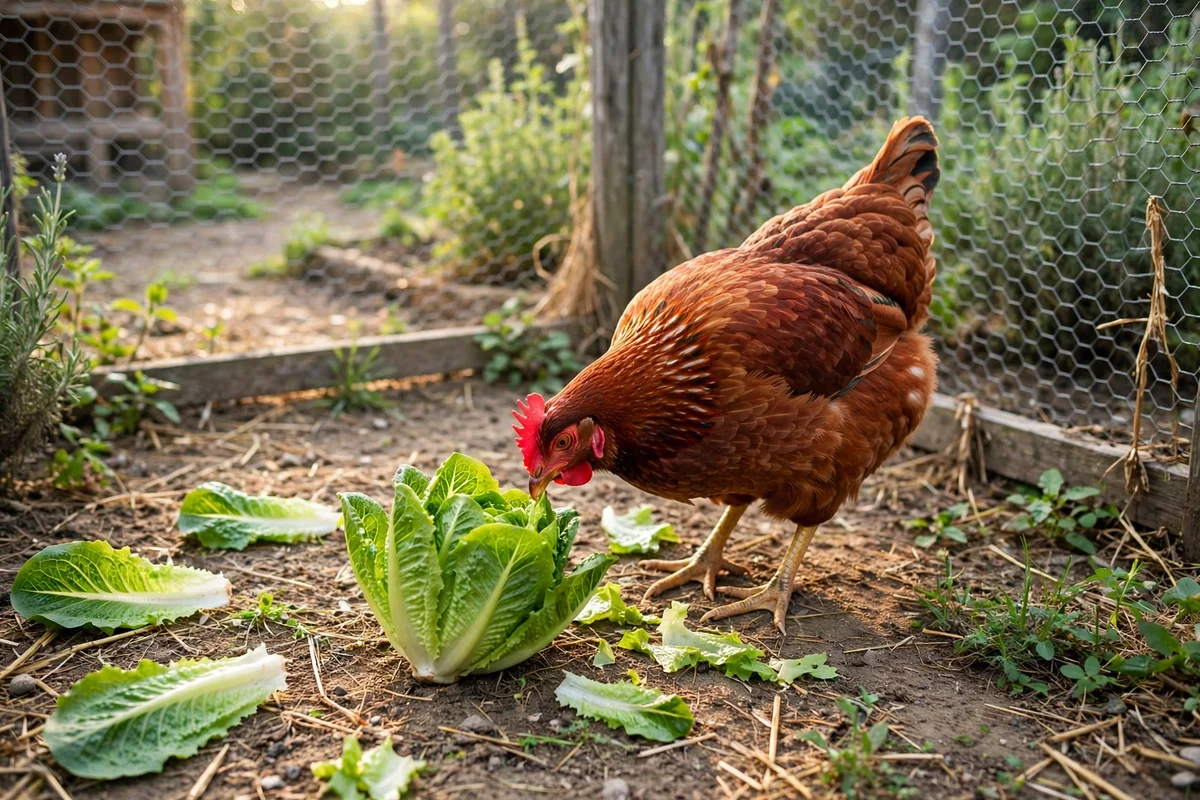
Can chickens eat lettuce?
Yes, chickens can eat lettuce, and it is a safe, everyday green for a backyard flock. All common lettuce types are non-toxic, and hens will peck at leaves happily. Offer it fresh and plain, in modest amounts, as part of the 10 percent of the diet that can come from treats and greens.
Lettuce is mostly water, with a small amount of fibre and a little vitamin A and vitamin K in the darker leaves. That makes it a hydrating, low-energy snack rather than a nutritious feed. It will not replace any part of a balanced layer feed, and it should not be expected to. Its value is as a fresh green that gives hens something to peck at, which matters in a run where boredom leads to feather pecking.
Serve lettuce the way you would serve any green: wash it first, tear or chop it into pieces the birds can manage, and put it where the flock can reach it. A whole head placed on the ground works well, because hens tear leaves off it themselves, which keeps them busy. Take away any leaves the flock has not finished by the end of the day, so they do not rot in the run.
The one caution is quantity. Lettuce is very wet, and a large amount at once can loosen droppings. That is not dangerous in itself, but watery droppings over several days can mean the flock is filling up on greens instead of feed. If droppings stay loose, cut the greens back for a few days and let the flock settle onto plain feed and water.
Which types of lettuce are best for chickens?
Dark leafy lettuces are the best choice for chickens, because they carry more nutrients than pale types. Romaine, green leaf and red leaf lettuce all have more vitamin A and more minerals than iceberg, and they hold up better in the run. If you grow your own, leaf lettuce is an easy, fast crop that the flock will finish happily.
Iceberg lettuce is safe, but it is the weakest choice. It is almost entirely water, with very little nutrition, and it is the type most likely to cause loose droppings when fed in quantity. A little iceberg now and then is harmless, but there is no reason to buy it specially for the flock when darker leaves are available.
Butterhead and little gem lettuces sit in the middle: soft, easy for hens to tear, and more nutritious than iceberg. Baby leaf salad mixes are fine too, as long as they are plain lettuce and leafy greens with no dressing, onion or garlic mixed in. Check a bagged mix before you offer it, because some contain leaves that are not suitable for chickens.
The table below sums up the common types and how they compare.
| Type | Nutrition | Verdict |
|---|---|---|
| Romaine | Good; more vitamin A than iceberg | Best choice; sturdy leaves hens enjoy tearing |
| Green and red leaf | Good | Best choice; easy to grow for the flock |
| Butterhead / little gem | Moderate | Fine; soft leaves, easy to eat |
| Iceberg | Low; mostly water | Safe but weakest; keep portions small |
| Bagged salad mix | Varies | Fine if plain lettuce and greens only; check for onion or dressing |
How much lettuce can chickens eat?
Greens and treats together should make up no more than about 10 percent of a chicken's daily diet. In practice that means a few leaves per bird, or a head shared between the flock, a few times a week. A laying hen's main food should always be a complete layer feed.
A hen that fills up on lettuce eats less layer feed, and layer feed is where the protein and calcium for eggs come from. Too many wet greens over a season shows up as fewer eggs and persistently loose droppings. Use the Chicken Treats Calculator to work out a sensible daily treat allowance for your flock size, so lettuce and other greens stay inside the 10 percent rule.
If you grow lettuce for the flock, harvest the outer leaves and leave the plant to keep growing, rather than pulling whole heads every time. A few outer leaves per plant, offered fresh, is a steady supply that never overwhelms the diet. In summer, a head of lettuce hung from a string in the run doubles as a treat and an activity, and it keeps the leaves off the ground where they would pick up dirt.
Can chicks eat lettuce?
Chicks can have small pieces of lettuce once they are about six to eight weeks old, but not before. Before that age, chicks should eat chick starter feed and nothing else, so they get the full benefit of a complete ration while they are growing fastest.
After six to eight weeks, offer soft leaves torn into pieces no bigger than a pea, with chick-sized grit available. Grit is what lets a chicken grind food in its gizzard, and chicks need it for anything other than starter crumble. See our guide on grit for chickens for the sizes and when to offer them. Romaine and leaf lettuce are better first greens than iceberg, because they are softer and more nutritious.
Watch the smallest chicks at first to make sure they are getting a share, because the boldest birds will claim the best pieces. If you want to check how much starter your chicks need at each age, use the chick feed calculator by age.
Can chickens eat lettuce that has gone bad?
No. Lettuce that has gone slimy, brown or mouldy should go in the compost, not in the run. Rotting greens can carry moulds and bacteria that make chickens ill, and a flock that eats spoiled food can develop an upset crop or loose droppings.
The rule is simple: if you would not eat the lettuce yourself, do not feed it to the flock. Fresh, crisp leaves are the right thing to offer. Leaves that have sat in the fridge for a week and turned to slime are not. The same rule applies to lettuce from the garden — wash off soil first, and do not offer leaves that have been sprayed with garden chemicals.
If a chicken eats a small amount of spoiled lettuce by accident, remove the rest at once and watch the flock for a day. Give fresh water and keep the flock on plain feed until droppings return to normal. A bird that stands apart, stops eating, or does not improve within a day should be seen by a poultry vet. Our guide on sour crop in chickens explains what an upset crop looks like.
Lettuce vs other greens for chickens
Lettuce is a fine green, but it is not the most nutritious one you can offer. Dark leafy greens such as kale, chard and dandelion leaves carry more vitamins and minerals than lettuce, and most flocks eat them just as readily. If you have a choice, rotate lettuce with those stronger greens rather than feeding lettuce every day.
Cabbage is another good option, and a whole cabbage hung in the run keeps a flock occupied for hours. Our guide on can chickens eat cabbage covers how to serve it and how much to offer. Grass and weeds from an unsprayed lawn are also good greens, and our guide on can chickens eat grass clippings explains the one real risk with clippings.
The best approach is variety within the 10 percent treat rule: a few leaves of lettuce one day, a different green the next, and layer feed as the constant base. That gives the flock fresh food to peck at without unbalancing the diet, and it keeps any single green from dominating. For the full picture of what a flock should eat, see what to feed chickens.
Growing lettuce for your chickens
Growing lettuce for your chickens is one of the easiest ways to supply the flock with fresh greens, because lettuce is fast, cheap and simple to grow. A row of leaf lettuce sown in spring will be ready to pick within a few weeks, and the outer leaves can be harvested while the plant keeps growing.
A small bed will supply a flock through the summer.
Grow the lettuce where the chickens cannot reach it. Hens will eat a lettuce bed to the ground in a day if they can get to it, and a flock let loose in a vegetable bed will strip it bare. Fence the bed off, or grow the lettuce in a part of the garden the birds cannot reach, and carry the leaves to the run yourself.
Harvest the outer leaves and leave the plant to keep growing, rather than pulling whole heads every time. A few outer leaves per plant, offered fresh, is a steady supply that never overwhelms the diet. In summer, a head of lettuce hung from a string in the run doubles as a treat and an activity. Our guide on how to grow fodder for chickens covers another way to grow fresh greens for the flock all year.
Sources: the feeding guidance on this page follows the treat rule used across PeckCalc — treats and greens should make up no more than about 10 percent of a chicken's daily diet, with a complete feed supplying the rest. For feeding guidance, see the poultry pages at the University of Minnesota Extension and poultry.extension.org.
Related tools and guides
For more on the same topic, see What to Feed Chickens and Kitchen Scraps for Chickens.
Frequently asked questions
Can chickens eat lettuce?
Yes. Plain, fresh lettuce is safe for chickens in small amounts. Dark leafy types such as romaine and leaf lettuce are the best choice, because they carry more nutrients than pale iceberg lettuce.
Is iceberg lettuce safe for chickens?
Yes, iceberg lettuce is safe, but it is the weakest choice. It is almost entirely water with very little nutrition, and large amounts are the most likely to cause loose droppings. Darker lettuces are better.
How much lettuce can chickens eat?
Greens and treats together should stay within about 10 percent of the daily diet. A few leaves per bird, or a head shared between the flock a few times a week, is a reasonable amount for a laying flock.
Can baby chicks eat lettuce?
Not before six to eight weeks old. Young chicks should eat chick starter feed only. After that age they can have small pieces of soft lettuce, with chick-sized grit available.
Can chickens eat lettuce that has gone slimy or mouldy?
No. Slimy, brown or mouldy lettuce should go in the compost. Rotting greens can carry moulds and bacteria that make chickens ill. Offer fresh, crisp leaves only.
About the author
John Walker is the founder of PeckCalc and has kept backyard chickens in Dallas, Texas since 2017. He started PeckCalc to give backyard keepers free calculators and guides with every figure traced to a university extension source.