
Kitchen Scraps for Chickens
 By John Walker · Backyard chicken keeper in Dallas, Texas since 2017
Kitchen scraps for chickens are a useful supplement, not a replacement for feed. Chickens can eat many plain, fresh leftovers, but scraps should stay within about 10 percent of the daily diet, and a few common foods are toxic and must never be offered.
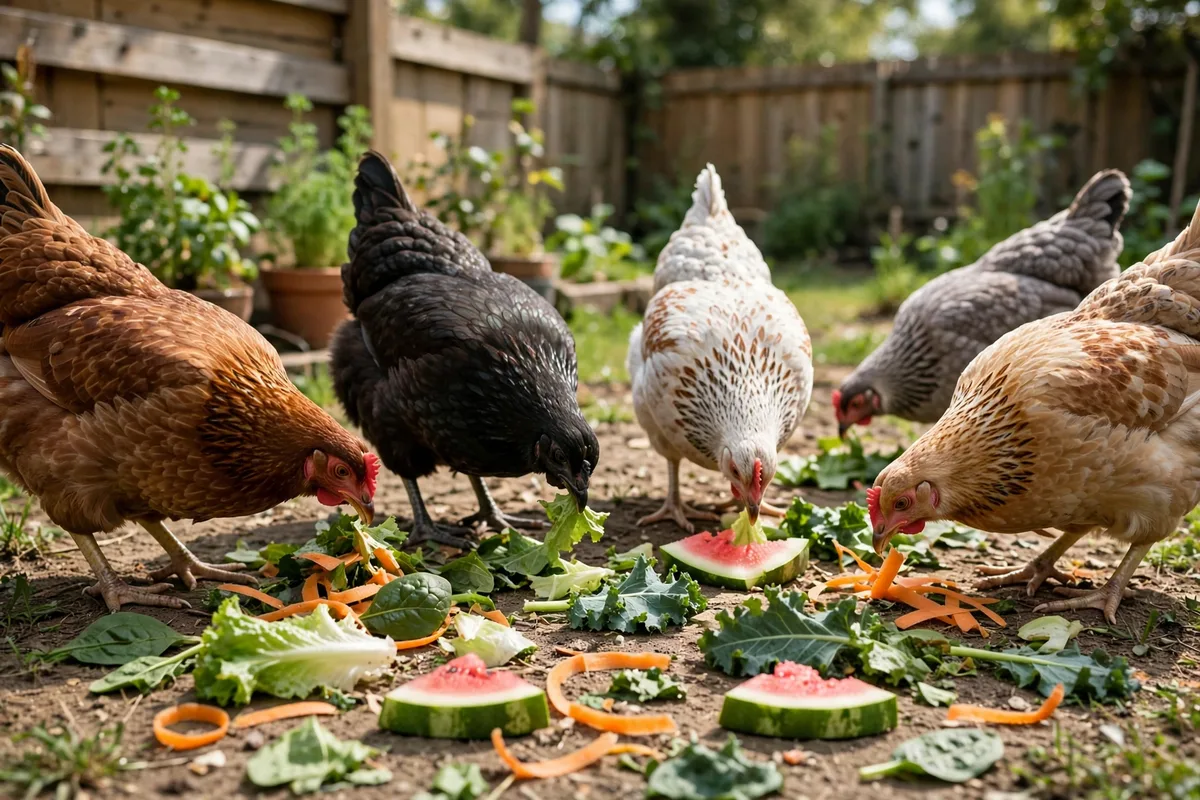
Can chickens eat kitchen scraps?
Yes, chickens can eat many kitchen scraps, because they are omnivores and their digestive system handles a wide range of plant and animal foods. Leafy greens, vegetable peelings, fruit, cooked grains and small amounts of plain cooked meat or fish are all fine for adult birds, and scraps give the flock variety and enrichment as well as nutrition.
The rule that keeps scraps safe is simple: feed the complete ration first and treat scraps as extras. A hen's layer feed is formulated to give her the protein, calcium and vitamins she needs to lay, and every beakful of scraps displaces a beakful of that balanced feed. Keep all extras combined, including scraps, scratch grains, mealworms and treats, to about 10 percent of what the birds eat each day.
Scraps should be plain, fresh and easy for the flock to finish quickly. Offer them in the morning after the birds have eaten some feed, scatter them on clean, dry ground rather than in the coop or the run bedding, and remove anything uneaten by the end of the day so it does not go sour or attract rats.
What kitchen scraps are safe for chickens?
Safe scraps start with vegetables: carrot peelings, cucumber, courgette, pumpkin and squash, cabbage, cauliflower leaves, broccoli stalks, peas, cooked green beans, bell pepper and lettuce are all good. Leafy greens such as kale, spinach and chard are popular and nutritious, and a whole cabbage hung from a string makes excellent enrichment on a dull day.
Fruit is safe in modest amounts: apple flesh, berries, melon, pear, mango and ripe tomato are all enjoyed, though fruit is sugary, so keep portions small. Remove stones from stone fruit, and do not feed apple seeds, which contain a cyanide compound. Melon rind and strawberry tops are useful scraps that would otherwise go in the bin.
Plain cooked grains are fine too: cooled rice, pasta and oats, and small amounts of stale bread, provided it is not mouldy. Plain cooked egg, scrambled or hard-cooked without salt or butter, is a good protein scrap, and a small amount of plain cooked meat or fish is acceptable where local rules allow it. Check local rules first, because some places restrict feeding meat scraps to poultry.
What kitchen scraps should chickens never eat?
Some common kitchen foods are genuinely toxic to chickens and must never be offered. Avocado skin and pit contain persin, which is toxic to birds. Raw dried beans contain lectins that are poisonous until the beans are thoroughly cooked. Chocolate contains theobromine, which is toxic, and raw or green potato peelings contain solanine.
Onions and garlic in quantity can cause anaemia, and rhubarb leaves contain oxalic acid, which is toxic. Citrus fruit is not poisonous but can reduce egg production and upset the gut, so most keepers avoid it. Coffee grounds, alcohol and anything containing xylitol have no place near a chicken at all.
Mouldy food of any kind is dangerous, even if it looks like only a small spot of mould. Moulds produce toxins that can cause liver damage and sudden deaths in chickens, so mouldy bread, grain, nuts or fruit should go in the bin, not the run. The same goes for anything heavily salted, fried or covered in rich sauces, because chickens have a low tolerance for salt and fat.
The 10 percent rule for scraps and treats
The 10 percent rule is the simplest way to keep scraps from harming the flock: all extras combined, scraps, scratch grains, mealworms, seeds and other treats, should make up no more than about 10 percent of what the birds eat each day. For a hen eating about a quarter of a pound of feed a day, that means roughly a small handful of scraps per bird.
Going over the limit has real consequences. Penn State Extension warns that table scraps and whole grains can reduce laying performance, promote excess weight and contribute to prolapse when they dilute a balanced layer ration. Fatty scraps are a particular concern, because overconditioned laying hens are at risk of fatty liver problems.
A practical way to stay inside the limit is to offer scraps once a day, in one small pile, and to stop when the flock has had a handful each. If scraps are still lying around after an hour, you offered too much. Use the chicken treats calculator to work out a sensible daily treat allowance for your flock size.
How to feed kitchen scraps safely
Feed scraps fresh, plain and chopped to a size the birds can manage. Large pieces of tough vegetable can cause blockages, so chop anything large, and remove stones, pits and bones before offering. Avoid anything with sauce, salt, oil, butter or seasoning on it, because the seasoning is the problem, not the food underneath.
Scatter scraps on clean, dry ground in the run or garden rather than piling them in the coop, which keeps the bedding dry and stops uneaten food going sour where the birds sleep. Offer grit alongside anything fibrous, because birds need grit for chickens to grind food other than complete feed, and keep a separate dish of oyster shell available for the layers.
Always provide grit and fresh water with scraps, and never feed scraps to chicks under about eight weeks old. Young birds have precise nutritional needs for growth, and scraps displace the starter feed they need most. Wait until the birds are on grower or layer feed before introducing scraps, and then start with small amounts of soft greens.
Scraps for laying hens vs chicks vs moulting birds
Laying hens are the main audience for scraps, and for them the 10 percent rule is the binding constraint. A laying hen that fills up on scraps eats less layer feed, and therefore less calcium and protein, which shows up as thinner shells and fewer eggs within a week or two. Keep scraps small and the layer feed available all day.
Chicks under eight weeks should not get scraps at all, because starter feed is formulated for fast growth and scraps dilute it. From eight weeks, small amounts of soft greens are fine, provided chick-sized grit is available. Our guide to how to raise baby chicks covers the feeding stages in full.
Moulting birds benefit most from protein-rich scraps, because regrowing feathers demands extra protein. Plain cooked egg, mealworms and sunflower seeds are useful during the moult, and our guide to mealworms for chickens explains how much protein a moulting hen actually needs. Even then, keep the total extras within the 10 percent limit.
Scraps, local rules and swill feeding
Before feeding kitchen scraps, check your local rules, because some places restrict what can be fed to poultry. In parts of Australia, for example, feeding meat, meat products and eggs to poultry as household waste falls under swill-feeding rules, and in Queensland the ban explicitly extends to backyard poultry, with penalties for breaking it.
The reason for these rules is disease control. Swill feeding bans exist to prevent the spread of diseases such as Newcastle disease and infectious bursal disease, which can travel in meat scraps and contaminated food waste. The rules vary by country and by state, so check your own local biosecurity rules before feeding household scraps.
A safe default wherever you are is to keep scraps vegetable-only: leafy greens, vegetables, fruit and plain cooked grains. That avoids the meat-scrap rules entirely, and it is also the healthiest pattern for the birds, because vegetable scraps are low in fat and salt and high in the fibre and variety that hens enjoy.
What to do with scraps the chickens will not eat
Chickens are picky in surprising ways, and a scrap they ignore today may be eaten tomorrow, but anything left uneaten should be removed the same day. Rotting food in the run attracts rats, flies and mould, and it can make birds ill if they peck at it after it has gone sour. Compost what they do not eat, and offer less next time.
Some foods are simply unpopular: citrus peel, onion skins, celery strings and tough stalks are commonly left behind. That is useful information, because it tells you what your flock actually likes, and you can stop offering the rest. A small compost heap beside the run is the natural partner to a scrap-fed flock.
If the flock suddenly stops eating scraps they used to enjoy, check the feed and water first. A drop in appetite can be an early sign of illness or heat stress, and scraps are often the first thing a sick bird refuses. See our guide on signs of heat stress in chickens if the weather is hot, and watch the birds closely for a day or two.
Kitchen scraps through the seasons
In summer, watery scraps such as watermelon, cucumber and melon rind help with hydration, and frozen fruit or vegetables make a cooling treat on hot days. Offer scraps in the morning or evening rather than the midday heat, and remove anything uneaten quickly, because food spoils fast in summer.
In winter, warm cooked grains and root vegetables are popular, and a small handful of scratch grains in the afternoon gives the birds slow-digesting energy that helps them keep warm overnight. Scraps do not replace the extra feed a flock needs in cold weather, though, and the birds should still have layer feed available all day.
Autumn brings garden gluts: courgettes, marrows, pumpkins and windfall apples are all useful scraps, and a halved pumpkin left in the run keeps a flock busy for hours. In spring, the first greens and dandelion leaves are welcome after a winter of dry feed, and they are a good way to reintroduce scraps gradually.
Safe and unsafe scraps at a glance
The table below summarises the most common kitchen scraps, so you can check a food at a glance before offering it. When in doubt, leave it out: no scrap is worth a sick bird, and a hen on a complete layer ration is already getting everything she needs without it.
Keep a printed copy of the unsafe list near the back door if several people in the household feed the chickens, because the most common accidents happen when a well-meaning family member offers something toxic without knowing. Children especially should know that avocado, chocolate and mouldy food never go to the chickens.
Our guide to what not to feed chickens covers the full list of foods to avoid, including garden plants and wild plants, not just kitchen scraps, and it is worth reading alongside this page.
| Scrap | Safe? | Notes |
|---|---|---|
| Leafy greens, kale, lettuce | Yes | Excellent daily scrap, chop large leaves |
| Carrot peelings, cucumber, courgette | Yes | Plain and fresh, chop large pieces |
| Pumpkin, squash, melon rind | Yes | Good in autumn, seeds fine |
| Apple flesh, berries, pear | Yes, small amounts | Remove seeds and stones, fruit is sugary |
| Cooked rice, pasta, oats | Yes, small amounts | Plain and cooled, no sauce or salt |
| Plain cooked egg | Yes | Good protein, no salt or butter |
| Stale bread | Yes, small amounts | Never mouldy, low in nutrients |
| Avocado skin and pit | No — toxic | Contains persin, toxic to birds |
| Raw dried beans | No — toxic | Contains lectins, poisonous raw |
| Chocolate | No — toxic | Contains theobromine |
| Raw or green potato peelings | No — toxic | Contains solanine |
| Onions, garlic, rhubarb leaves | No | Can cause anaemia and toxicity |
| Mouldy food of any kind | No — toxic | Mould toxins can cause liver damage |
| Salty, fried or sauced food | No | Low salt tolerance, fatty scraps risk liver problems |
When in doubt, leave it out. A hen on a complete layer ration already gets everything she needs, so no scrap is worth the risk.
Sources: the scraps guidance on this page — the 10 percent limit for all extras combined, and the warning that scraps can dilute a balanced layer ration — reflects extension guidance, including Penn State Extension. For feeding guidance, see the poultry pages at the University of Minnesota Extension and poultry.extension.org.
Related tools and guides
For more on the same topic, see What Not to Feed Chickens and What to Feed Chickens.
Frequently asked questions
Can chickens eat kitchen scraps every day?
Yes, in small amounts. Keep all extras combined, including scraps, scratch grains and treats, to about 10 percent of what the birds eat each day, and always feed the complete layer ration first so scraps do not displace balanced feed.
What kitchen scraps are toxic to chickens?
Avocado skin and pit, raw dried beans, chocolate, raw or green potato peelings, onions, garlic and rhubarb leaves are toxic or harmful. Mouldy food of any kind is also dangerous, because mould toxins can cause liver damage and sudden deaths.
Can chickens eat bread and pasta?
Yes, small amounts of plain stale bread and plain cooked rice or pasta are fine, provided they are not mouldy and have no sauce, salt or butter. They are low in nutrients, so keep portions small and within the 10 percent limit.
Can chicks eat kitchen scraps?
No, chicks under about eight weeks should not get scraps, because starter feed is formulated for fast growth and scraps dilute it. From eight weeks, small amounts of soft greens are fine, provided chick-sized grit is available.
Can I feed meat scraps to chickens?
A small amount of plain cooked meat or fish is acceptable in many places, but some countries and states restrict feeding meat scraps to poultry under swill-feeding rules. Check your local rules first, and keep scraps vegetable-only if you are unsure.
About the author
John Walker is the founder of PeckCalc and has kept backyard chickens in Dallas, Texas since 2017. He started PeckCalc to give backyard keepers free calculators and guides with every figure traced to a university extension source.