
Cornish Chickens
 By John Walker · Backyard chicken keeper in Dallas, Texas since 2017
Cornish chickens are the heavy, muscular heritage breed that gave the modern broiler industry its breast meat — but a standard Cornish is not the same bird as a Cornish Cross broiler. Hens lay only around 50 to 160 small to medium cream eggs a year, grow slowly, and live for years, while the Cornish Cross is a fast-growing hybrid harvested young. If you want a heritage meat bird with real character, the standard Cornish is worth knowing.
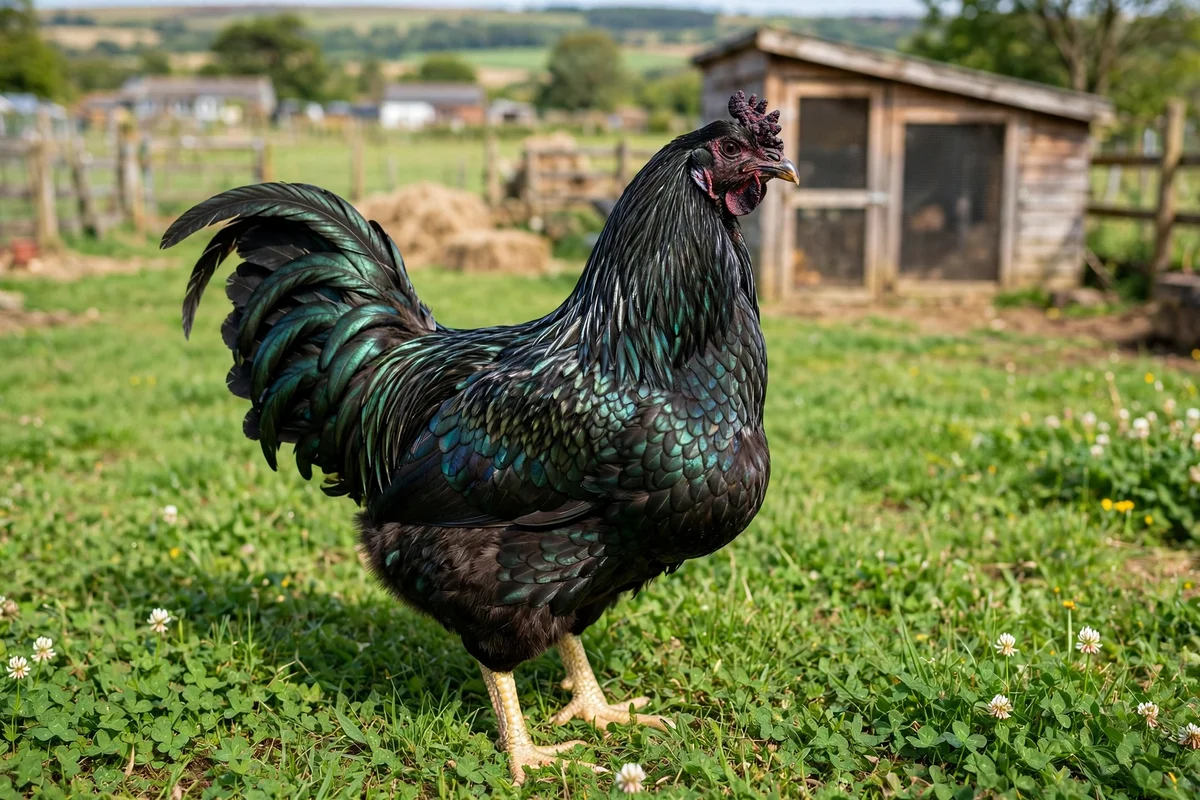
What is a Cornish chicken?
Cornish chickens are broad, deep and heavily muscled, with a short, thick, wide-set pair of legs, close, short and narrow feathers with little down, and a body that looks heart-shaped from above. A standard rooster weighs about 10. 5 lb and a hen about 8 lb, making the Cornish one of the heaviest heritage breeds.
The breed was developed in Cornwall, England, in the 1800s, originally known as Indian Game. The APA accepted the Dark variety in 1893 and the White in 1898, renamed them Cornish Indian Game in 1905, and renamed the breed Cornish in 1910. The Livestock Conservancy lists it as Watch. The Cornish Cross broiler, the bird most people mean when they say Cornish chicken, is a hybrid of Cornish and White Plymouth Rock — a different bird entirely.
Cornish chicken breed facts
| Fact | Detail |
|---|---|
| Origin | Cornwall, England, 1800s |
| Original name | Indian Game |
| APA recognition | Dark 1893; White 1898; renamed Cornish 1910 |
| Purpose | Meat, exhibition and breeding |
| Rooster weight | About 10.5 lb (4.8 kg) |
| Hen weight | About 8 lb (3.6 kg) |
| Eggs per year | About 50 to 160; the Livestock Conservancy gives fewer than 160, other sources give 50 to 80 or up to 180, so the range is wide |
| Egg colour | Cream to light brown |
| Egg size | Small to medium |
| Temperament | Docile, calm; some roosters can be aggressive |
| Climate tolerance | Poor to moderate in cold; moderate in heat |
| Broodiness | High; hens are doting, protective mothers |
| Good for beginners | No — slow growth, heavy feed bills and low egg numbers frustrate beginners |
| Conservation status | Watch (Livestock Conservancy) |
Figures are the breed standard or the range reported by the Livestock Conservancy and university extension sources. Where sources disagree, the table shows the range rather than a single figure.
History and origin of the Cornish
The Cornish was developed in Cornwall in the 1800s from crosses of local game fowl with Asiatic breeds, including Red Aseel brought from India. Sir Walter Gilbert is credited with the original cross, and the breed was first known as Indian Game. It was bred for meat quality and a compact, muscular carcass rather than for eggs.
The breed was imported into America in 1877 and accepted by the APA in 1893 as Indian Games. In the twentieth century, Cornish chickens became one half of the famous Cornish Cross broiler when crossed with White Plymouth Rocks — the hybrid that now dominates commercial meat production. The standard Cornish itself declined as the hybrid took over, and it survives as a heritage breed kept by exhibitors and homesteaders who value its meat quality and history.
What do Cornish chickens look like?
The Cornish is unlike any other backyard breed in shape: enormously broad across the chest, with short, thick legs set wide apart, a low, powerful stance, and a wide skull with deep-set eyes and a stout, curved beak. The feathers are close, short and narrow, with little or no down, which gives the bird a hard, muscular look. The tail is carried low, and the body is heart-shaped from above, broad at the front and narrow at the tail.
The APA recognises four large-fowl varieties: Dark, White, White Laced Red and Buff. In the Dark variety, the male is mainly glossy beetle-green black with traces of bay, while the female has black lacing on rich brown. Bantam Cornish are also recognised and are among the most popular bantam breeds in America. Compared with the Old English Game chickens, the Cornish is broader, heavier and lower, while the Old English Game is lighter and more upright.
How many eggs do Cornish chickens lay?
Cornish hens lay small to medium cream or light brown eggs, and not many of them. The Livestock Conservancy gives fewer than 160 a year, other sources give 50 to 80, and some give up to 180, so the honest planning figure is 50 to 160 a year. Hens are often broody, which reduces the total further, but they make doting and protective mothers when they do sit.
If you want eggs, do not buy Cornish. If you want a heritage meat bird, they are the breed to choose. Use the egg production calculator with 50 to 160 eggs per hen so you are not disappointed. Compared with the Orpington chickens, the other great heavy dual-purpose breed, the Cornish lays far fewer eggs but gives you a heavier, meatier carcass.
Cornish temperament and behaviour
Cornish chickens are generally docile and calm, with a slow, deliberate manner that matches their heavy build. They are not active foragers and they do not fly — they cannot, at their weight — which makes them easy to contain. Some roosters can be aggressive, so watch a young cockerel as he matures.
They are slow-moving, which makes them more vulnerable to land predators than a lighter breed, so a secure run matters. They are not a good choice for a mixed flock with flighty birds, since they cannot escape trouble, but they mix well with other calm, heavy breeds.
Are Cornish chickens good for beginners?
No, standard Cornish are not a good beginner breed. They grow slowly, eat a lot, lay few eggs, and need a keeper who understands what a heritage meat bird is. Our guide to the best chicken breeds for beginners recommends dual-purpose birds such as Delawares or Orpingtons for a first flock instead.
An experienced keeper who wants a heritage meat bird, or a breeder who wants to produce their own Cornish Cross, will find standard Cornish rewarding. A beginner who wants eggs and an easy first flock will be disappointed. If you do start with them, buy from a breeder who selects for vigour and fertility, since very broad show-type birds can have fertility difficulties.
Housing and space for Cornish chickens
Allow about 4 to 5 square feet of coop space and 10 to 12 square feet of run per standard bird — Cornish are heavy and need room to move without crowding. The chicken breed size chart puts the Cornish among the heaviest breeds, so build roosts low and strong, and nest boxes to take real weight.
Roosts should be low, since a heavy bird that jumps down from a high roost can injure its legs. One nest box per four hens is enough. Because Cornish cannot fly, a 4 to 5 foot fence will usually contain them, but the run must be secure against ground predators, since they cannot escape. Give them a dust bath and a dry, draught-free coop.
What to feed Cornish chickens
Feed starter, then grower, then layer feed from about 18 weeks, with free-choice calcium on the side. Cornish have large appetites and grow slowly, so feed costs are higher than for a light breed — budget for it before you buy. Chicks are slow-growing and ready for harvest at about seven months, not seven weeks like a Cornish Cross.
Do not feed a standard Cornish like a broiler: they are meant to live for years, and a high-energy broiler ration will make them fat and cause leg problems. Keep scratch to a small handful, and make sure they have grit available. In winter, when they are burning feed to stay warm, increase the ration slightly.
Cornish chickens in cold and hot weather
Cornish do best in temperate climates and do not do well in excessively cold or hot weather. Their close feathering with little down gives them less insulation than a fluffy breed, and their heavy build makes them prone to overheating in summer. Give them shade, cool water and good ventilation in a heatwave.
In winter they need a dry, draught-free coop with deep litter, and they should not be expected to range in snow. They are not as cold-hardy as a pea-combed breed such as the Buckeye, and not as heat-tolerant as a light Mediterranean breed, so they suit a mild, temperate climate best.
Health and common problems
Cornish are a generally healthy breed with a lifespan of five to seven years, but their heavy build brings specific risks: leg problems if they are overfed or kept on a broiler ration, and fertility difficulties in very broad show-type birds. Their slow movement also makes them more vulnerable to predators.
Keep them on a layer or grower ration, not a broiler ration, and do not let them get fat. Check legs and feet weekly, keep the coop dry, and buy from a breeder who selects for vigour and fertility. Ask about Marek's vaccination, and quarantine new birds for two weeks.
Cornish vs Cornish Cross broiler
The standard Cornish and the Cornish Cross are often confused, and the confusion matters: they are very different birds. The standard Cornish is a slow-growing heritage breed that takes about seven months to reach market weight, lives for years, and can breed true. The Cornish Cross is a commercial hybrid of Cornish and White Plymouth Rock that reaches market weight in about six to eight weeks and is not suited to long-term backyard living.
A standard Cornish hen lays 50 to 160 eggs a year and makes a good mother; a Cornish Cross is not kept for eggs at all. If you want a heritage meat bird that lives a normal chicken life, buy standard Cornish. If you want fast meat and are prepared to process the birds young, buy Cornish Cross chicks — but do not confuse the two. The Delaware chickens offer a middle path, with faster growth than a standard Cornish and a normal lifespan.
Keeping Cornish chickens with other breeds
In a mixed flock, Cornish chickens generally do best with birds of a similar size and temperament. A Cornish hen weighs about 8 lb (3.6 kg), and a rooster about 10.5 lb (4.8 kg), so they are large birds, and they hold their own against most standard breeds, but they still need enough feeder space so no bird is crowded out. The breed's temperament is described as docile, calm; some roosters can be aggressive, and that is the best guide to how they will settle in: a calm bird usually joins a flock quietly, while a more assertive one needs space and at least two feeding and watering stations so weaker birds can eat in peace. Watch the first week closely for feather picking or one bird being kept from the food.
Add new birds slowly, through a wire divider for a few days before mixing them fully, as described in our guide on how to introduce new chickens to a flock, and quarantine any new bird for two weeks first. Keep only one rooster per flock unless you have a large property and separate pens. Broodiness in this breed is high; hens are doting, protective mothers, so a hen that does go broody will need a quiet corner away from the main flock while she sits. With those basics covered, Cornish chickens usually settle into a mixed flock within a week or two and stay there happily for years.
Should you keep Cornish chickens?
Standard Cornish suit an experienced keeper who wants a heritage meat bird with exceptional breast meat and is willing to wait seven months for it. They are at their best on a homestead with a secure run and a keeper who understands the difference between a heritage breed and a broiler hybrid.
They are less suited to a beginner, a keeper who wants eggs, or a hot or very cold climate. For the right keeper, though, a standard Cornish is a living piece of poultry history — the bird that built the modern broiler industry, kept in its original form.
Sources: breed weights and egg figures on this page follow the Livestock Conservancy breed profiles and university extension poultry pages. For general poultry guidance, see the poultry pages at the University of Minnesota Extension and poultry.extension.org. For the Cornish breed profile, see the Livestock Conservancy Cornish page.
Related tools and guides
For more on the same topic, see Chicken Breed Size Chart and Egg Production Calculator.
Frequently asked questions
How many eggs do Cornish chickens lay per year?
Standard Cornish hens lay about 50 to 160 small to medium cream or light brown eggs a year. The Livestock Conservancy gives fewer than 160, and other sources give 50 to 80, so the range is wide.
What is the difference between a Cornish chicken and a Cornish Cross?
A standard Cornish is a slow-growing heritage breed that takes about seven months to reach market weight and lives for years. A Cornish Cross is a commercial hybrid that reaches market weight in six to eight weeks and is not suited to long-term backyard living.
Are Cornish chickens good for beginners?
No. They grow slowly, eat a lot, lay few eggs, and need a keeper who understands heritage meat birds. Dual-purpose breeds such as Delawares or Orpingtons are better for a first flock.
How big do Cornish chickens get?
A standard Cornish rooster weighs about 10.5 lb and a hen about 8 lb, making the Cornish one of the heaviest heritage breeds. Bantams are much smaller and are among the most popular bantam breeds in America.
Are Cornish chickens cold hardy?
Only moderately. Cornish do best in temperate climates and do not do well in excessively cold or hot weather, because their close feathering gives them less insulation than a fluffy breed.
About the author
John Walker is the founder of PeckCalc and has kept backyard chickens in Dallas, Texas since 2017. He started PeckCalc to give backyard keepers free calculators and guides with every figure traced to a university extension source.