
Dominique Chickens
 By John Walker · Backyard chicken keeper in Dallas, Texas since 2017
Dominique chickens are widely regarded as America's oldest established chicken breed, with barred black-and-white plumage, a low rose comb, and a history that reaches back to the colonial farmyard. Hens lay around 200 to 275 medium brown eggs a year, forage well, and handle cold weather better than most breeds their size.
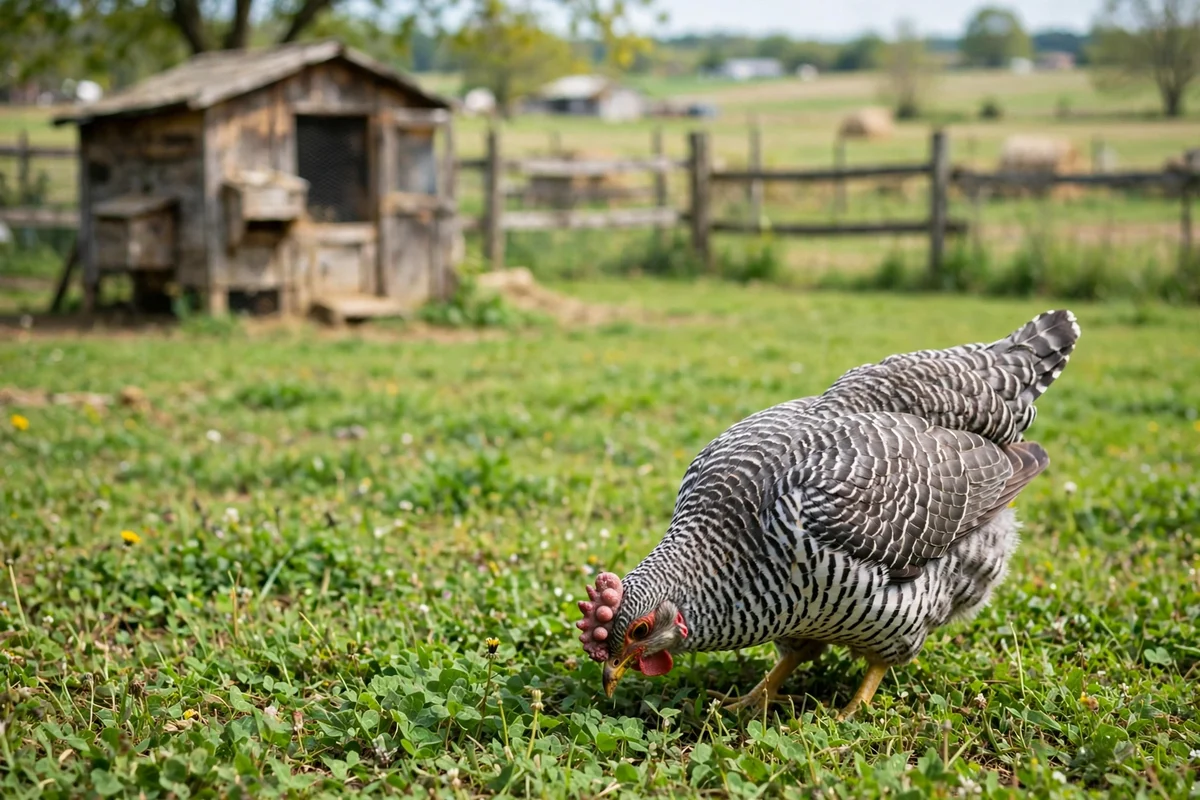
What is a Dominique chicken?
Dominique chickens are medium-sized dual-purpose birds, with a standard cock weighing about 7 lb and a hen about 5 lb. They are best known for two things: their cuckoo barring, a soft black-and-grey barred pattern rather than crisp black-and-white stripes, and their rose comb, a low cushion comb that sits close to the head and resists frostbite.
The breed is often confused with the Barred Plymouth Rock, and the comb is the reliable way to tell them apart: Dominiques have a rose comb, Barred Rocks a single comb. The Dominique was included in the first American Poultry Association Standard of Perfection in 1874, and the Livestock Conservancy lists it as Watch. Keeping Dominiques helps preserve the oldest American breed there is.
Dominique chicken breed facts
| Fact | Detail |
|---|---|
| Origin | United States; exact origin unknown, thought to derive from birds brought by colonists from southern England |
| Other names | Dominicker, Pilgrim Fowl, Old Grey Hen, Blue Spotted Hen |
| APA recognition | 1874, in the first Standard of Perfection |
| Purpose | Dual-purpose, kept principally for brown eggs |
| Rooster weight | About 7 lb (3.2 kg) |
| Hen weight | About 5 lb (2.3 kg) |
| Eggs per year | About 200 per year by some measures; the Livestock Conservancy gives 230 to 275 for well-selected historical lines, so sources disagree |
| Egg colour | Light to dark brown |
| Egg size | Medium |
| Temperament | Calm, genial, active forager |
| Climate tolerance | Very cold hardy; rose comb resists frostbite |
| Broodiness | Moderate; hens will raise a clutch or two |
| Good for beginners | Yes |
| Conservation status | Watch (Livestock Conservancy) |
Figures are the breed standard or the range reported by the Livestock Conservancy and university extension sources. Where sources disagree, the table shows the range rather than a single figure.
History and origin of the Dominique
The Dominique's exact origin is unknown, which is part of its history rather than a gap to be filled with a confident story. The birds were already well known on American farms before 1750, and the most common theory is that they descend from farmyard fowl brought from southern England by colonists. They were known by many names — Dominicker, Pilgrim Fowl, Old Grey Hen, Blue Spotted Hen — before the name Dominique settled.
At the first poultry show in Boston in 1849, rose-combed barred birds were entered as Dominiques, and in 1874 the breed entered the first Standard of Perfection. The twentieth century was unkind: by 1970 only four flocks remained in the United States, and the Dominique Club of America was founded in 1973 to save it. Numbers have recovered since, but the breed remains on the Conservancy's Watch list. The Plymouth Rock itself was partly developed from Dominique crosses in 1865, which is why the two breeds look so alike.
What do Dominique chickens look like?
Dominiques have barred plumage in dark slate and lighter grey, with a pattern that reads as soft cuckoo barring rather than the crisp black-and-white stripes of a Barred Rock. They have yellow legs and skin, a U-shaped back, and a rose comb that ends in a spike pointing backwards. The overall impression is a neat, medium, workmanlike bird rather than a showy one.
Hens and roosters look similar at a glance, though roosters are larger and carry lighter barring. Bantam Dominiques exist at about 32 oz for a cock and 25 oz for a hen. The rose comb is the key identification mark: if the bird has a tall single comb, it is not a Dominique, whatever the barring says.
How many eggs do Dominique chickens lay?
Dominique hens lay medium light-to-dark brown eggs. The production figure depends on which source you trust: the Livestock Conservancy reports about 230 to 275 eggs a year for well-selected historical lines, while other references give about 200 a year. The honest planning figure is 200 to 230 a year for a modern backyard flock, or about four eggs a week.
That is a respectable rate for a heritage dual-purpose breed, and Dominiques keep laying longer than many heavier birds. To plan your flock, use the egg production calculator with four eggs a week per hen. Compared with the New Hampshire Red chickens, the Dominique lays a smaller egg but often lays more of them over a longer life.
Dominique temperament and behaviour
Dominiques are calm, genial and easy to manage, with an active foraging habit that makes them good free-range birds. They are sweet-natured with people, including children, and they mix well in a flock without starting trouble.
Roosters are generally gentle for a heritage breed, though any rooster deserves respect as he matures. Hens are alert and good mothers when they go broody, and the breed's camouflage barring helps it avoid predators on range — a practical advantage that probably helped the breed survive centuries of farmyard life.
Are Dominique chickens good for beginners?
Yes, Dominiques are a good beginner breed. They are hardy, calm, good foragers, and they do not need special care beyond the basics. They feature in our guide to the best chicken breeds for beginners as one of the most forgiving heritage layers.
The main thing a beginner should know is that Dominiques like to range. If you keep them shut in a small run all day they will cope, but they are happiest and healthiest with space to scratch and forage. Give them room, a dry coop, and a rose comb that will not freeze, and they will reward you with years of steady eggs.
Housing and space for Dominique chickens
Allow about 4 square feet of coop space and 10 square feet of run per standard bird, with more run space if you can manage it, since this breed loves to forage. The chicken breed size chart puts the Dominique in the medium class, between the light Mediterranean layers and the heavy dual-purpose birds.
One nest box per four hens is enough, and a roost bar at a comfortable height suits them well. They are capable fliers when young, so a covered run or a fence of at least 6 feet is sensible if you have neighbours close by. Because they are camouflaged, they are less visible to hawks than a white bird, but a covered run is still the safest option.
What to feed Dominique chickens
Feed starter, then grower, then layer feed from about 18 weeks, with free-choice calcium on the side. Dominiques are excellent foragers and will find a good share of their own food on range in the warmer months, which keeps feed costs down and the birds busy.
Do not overdo scratch grains: a foraging bird that also gets a full ration of grain will put on fat and lay less. In winter, when foraging stops, increase the ration slightly and offer greens. As with all breeds, keep layer feed away from chicks — the extra calcium can damage young kidneys.
Dominique chickens in cold and hot weather
Dominiques are very cold hardy. The rose comb is the reason: it sits low and tight to the head, so there is almost nothing to freeze. Combined with their dense, close feathering, this makes them one of the best heritage breeds for a northern winter.
They handle heat reasonably well too, though they prefer shade and cool water in a heatwave like any bird. Their main climate weakness is damp rather than cold: wet bedding and a draughty coop cause more trouble than a dry frost ever will.
Health and common problems
Dominiques are a hardy, long-lived breed, often reaching six to eight years. They are not prone to any particular breed-specific disease, and their main risks are the standard backyard ones: mites, lice, worms and coccidiosis in chicks.
Because the breed went through a severe bottleneck in the 1970s, buy from a breeder who selects for vigour as well as type. Ask about Marek's vaccination, quarantine new birds for two weeks, and keep the coop dry. A Dominique that can forage, dust bathe and roost dry will usually stay healthy with very little intervention.
Dominique vs Barred Plymouth Rock
The Dominique and the Barred Plymouth Rock are the pair every new keeper confuses, and the confusion is understandable: both are barred, both are American dual-purpose birds, and the Rock was partly developed from the Dominique. The reliable difference is the comb — rose on the Dominique, single on the Rock — and the barring, which is softer and more cuckoo-like on the Dominique and crisper on the Rock.
The Dominique is the smaller, lighter bird, at 5 lb for a hen against about 7.5 lb for a Rock hen, and it is the better forager and the more cold-hardy of the two thanks to that rose comb. The Rock is the heavier bird and lays a larger egg. If you want a historic, hardy forager, pick the Dominique; if you want a bigger bird with bigger eggs, pick the Rock. The Delaware chickens also share some of this history, having been bred from Barred Rock and New Hampshire stock.
Keeping Dominique chickens with other breeds
In a mixed flock, Dominique chickens generally do best with birds of a similar size and temperament. A Dominique hen weighs about 5 lb (2.3 kg), and a rooster about 7 lb (3.2 kg), so they are medium birds, and they fit well with most standard breeds, provided the flock has enough space and more than one feeder. The breed's temperament is described as calm, genial, active forager, and that is the best guide to how they will settle in: a calm bird usually joins a flock quietly, while a more assertive one needs space and at least two feeding and watering stations so weaker birds can eat in peace. Watch the first week closely for feather picking or one bird being kept from the food.
Add new birds slowly, through a wire divider for a few days before mixing them fully, as described in our guide on how to introduce new chickens to a flock, and quarantine any new bird for two weeks first. Keep only one rooster per flock unless you have a large property and separate pens. Broodiness in this breed is moderate; hens will raise a clutch or two, so a hen that does go broody will need a quiet corner away from the main flock while she sits. With those basics covered, Dominique chickens usually settle into a mixed flock within a week or two and stay there happily for years.
Should you keep Dominique chickens?
Dominiques suit a keeper who wants a piece of American poultry history that still earns its keep: steady brown eggs, excellent foraging, real cold hardiness, and a calm nature. They are at their best on a property with room to range.
They are less suited to a keeper who wants the largest eggs, the most eggs, or a bird that will sit still for handling. For a homestead flock in a cold climate, there are few better choices — and keeping them helps preserve the oldest American breed.
Sources: breed weights and egg figures on this page follow the Livestock Conservancy breed profiles and university extension poultry pages. For general poultry guidance, see the poultry pages at the University of Minnesota Extension and poultry.extension.org.
Related tools and guides
For more on the same topic, see Chicken Breed Size Chart and Egg Production Calculator.
Frequently asked questions
How many eggs do Dominique chickens lay per year?
About 200 to 230 eggs a year is a realistic figure for a modern backyard flock. The Livestock Conservancy reports 230 to 275 for well-selected historical lines, while other references give about 200, so sources disagree on the top end.
How do you tell a Dominique from a Barred Plymouth Rock?
Look at the comb. Dominiques have a low rose comb, while Barred Plymouth Rocks have a tall single comb. Dominique barring is also softer and more cuckoo-like, while Rock barring is crisper black and white.
Are Dominique chickens cold hardy?
Yes, very cold hardy. Their rose comb sits close to the head and resists frostbite, and their dense feathering handles winter well, provided the coop is dry and ventilated.
Are Dominique chickens good for beginners?
Yes. They are calm, hardy, good foragers and easy to manage, which makes them a good first heritage breed, especially if you have room for them to range.
Are Dominique chickens rare?
They were nearly extinct by 1970, when only four flocks remained. The Livestock Conservancy now lists them as Watch, so numbers have recovered but the breed still benefits from dedicated keepers.
About the author
John Walker is the founder of PeckCalc and has kept backyard chickens in Dallas, Texas since 2017. He started PeckCalc to give backyard keepers free calculators and guides with every figure traced to a university extension source.