
Gout in Chickens
 By John Walker · Backyard chicken keeper in Dallas, Texas since 2017
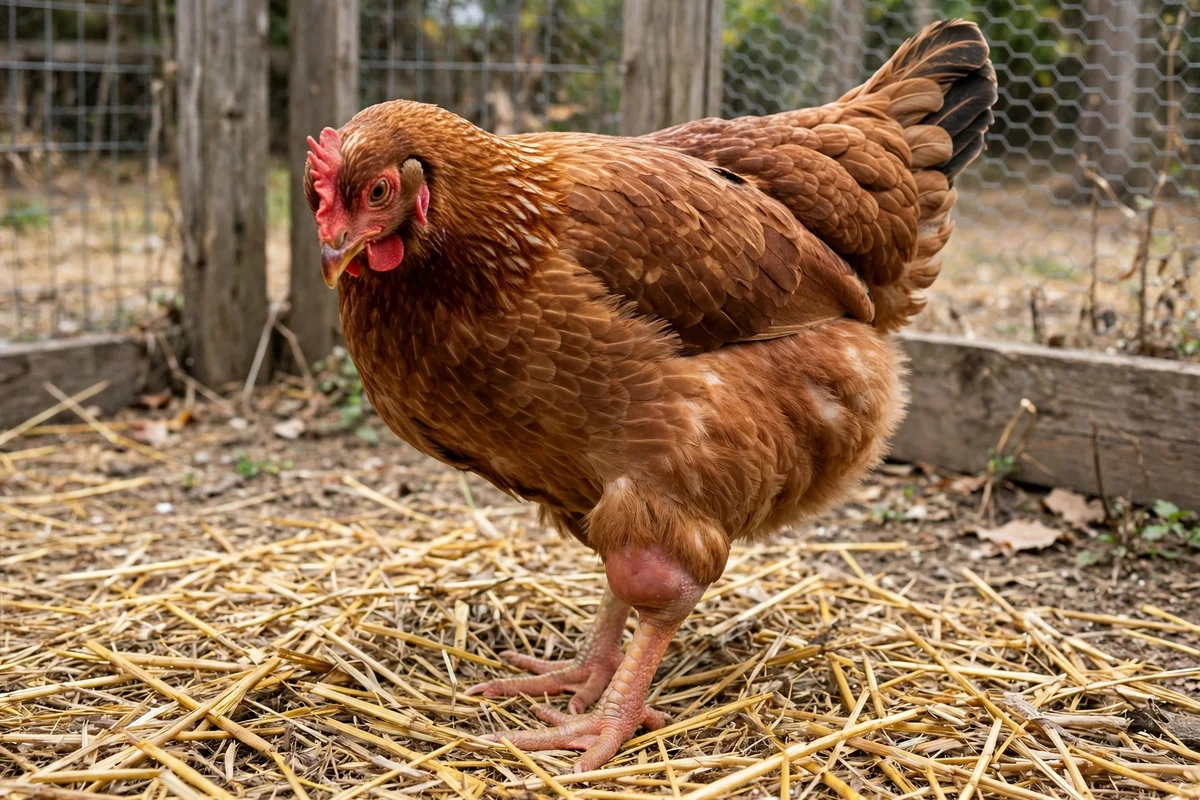
Gout in chickens is a condition in which uric acid, a waste product birds normally pass in their droppings, builds up in the body and forms crystals. In articular gout the crystals settle in the joints, usually the feet and legs, causing swelling, heat, and pain. There is also a visceral form, where crystals coat the internal organs.
Important: This guide is general information, not veterinary advice. If your bird is sick, injured, or not improving, contact a poultry veterinarian promptly, and always follow your vet's instructions and product labels for any medication.
What is gout in chickens?
Gout in chickens is a condition in which uric acid, a waste product that birds normally pass in their droppings, builds up in the body and forms crystals. In articular gout the crystals settle in the joints, usually the feet and legs, causing swelling, heat and pain.
In visceral gout the crystals settle on the internal organs, including the kidneys, liver and heart, and the bird becomes ill without obvious joint swelling.
Birds handle uric acid differently from mammals. A chicken's kidneys pass uric acid as a white, pasty part of the droppings, and the system works well as long as the kidneys are healthy and the bird is well hydrated. When the kidneys are damaged, or when the diet supplies far more protein or calcium than the bird needs, uric acid builds up faster than the kidneys can clear it, and crystals form.
Gout is not contagious, and it is not caused by an infection, though kidney damage from an infection can lead to it. It is a metabolic and management problem, which means the fix is usually in the diet, the water and the housing, together with vet treatment for the affected bird.
Signs of gout in chickens
Articular gout is the easier type to spot, because it swells the joints of the feet and legs. The joints feel hot and look red, and the bird walks reluctantly, limps or refuses to stand. The swelling is usually in several joints at once, which is one way it differs from bumblefoot.
Articular gout is the easier type to spot. The joints of the feet and legs swell, feel hot and look red, and the bird walks reluctantly, limps or refuses to stand. The swelling is usually in several joints at once, which is one way it differs from bumblefoot, where the swelling is usually on one footpad with a visible dark scab.
Visceral gout is harder to spot, because the crystals are inside the body. The bird becomes lethargic, eats less, loses weight and may pass watery droppings, and it can die suddenly if the kidneys fail. A bird with visceral gout often looks generally unwell without a clear local sign, which is why a vet examination matters.
Check the droppings as well: a bird with kidney problems may pass very watery droppings, or droppings with an unusual amount of white urate. And check the legs carefully, feeling each joint for swelling and heat, and comparing one leg with the other. Our guide on why is my chicken's foot swollen covers the other causes of swollen feet, and bumblefoot in chickens explains the condition gout is most often confused with.
What causes gout in chickens?
The most common cause is kidney damage, and the most common source of kidney damage is a diet that is wrong for the bird's age. Layer feed, with its high calcium content, can damage the kidneys of young chicks and non-laying birds, which is why chicks should eat starter feed and growers should eat grower feed, not layer ration.
The chick feed calculator by age helps you match the feed to the bird's age.
A diet too high in protein can also cause gout, particularly when the protein comes from animal sources or when the total protein is far above what the bird needs. Dehydration makes the problem worse, because the kidneys need water to flush uric acid out, and a bird that cannot reach water, or whose waterer has frozen or run dry, is at risk.
Other causes include infectious bronchitis, which can damage the kidneys in young birds, mycotoxins in mouldy feed, and certain medicines given at the wrong dose. Genetics plays a part too: some lines are more prone to gout than others. In older birds, a tumour or a kidney stone can block the kidneys and trigger visceral gout.
How is gout diagnosed and treated?
Diagnosis starts with the signs and the history, and a vet can confirm it by examining the joints. In visceral gout, blood tests or an examination after death may be needed. A vet will also check for bumblefoot and scaly leg mites, the two conditions most often confused with articular gout.
Diagnosis starts with the signs and the history, and a vet can confirm it by examining the joints and, in the case of visceral gout, by blood tests or by examining the bird after death. A vet will also check for bumblefoot and scaly leg mites, the two conditions most often confused with articular gout, because the treatment is completely different.
Treatment depends on the type and the cause. For articular gout, a vet may prescribe pain relief and advise on reducing the protein and calcium in the diet, and on making sure the bird has constant access to fresh water. For visceral gout, the priority is the kidneys: fluids, a corrected diet, and treatment of any underlying infection or toxin.
There is no home remedy that dissolves uric acid crystals, and human gout medicines are not safe for chickens. Do not give painkillers meant for people, and do not try to lance or drain a swollen joint yourself. Keep the bird in a soft-bedded, quiet pen with food and water within easy reach, and let a vet guide the treatment.
Gout, bumblefoot or scaly leg mites?
Gout, bumblefoot and scaly leg mites all cause swollen, sore feet, and telling them apart is the first step to the right treatment. Bumblefoot is an infection of the footpad, usually on one foot, with a dark scab on the sole and a hot, swollen pad.
Scaly leg mites cause raised, crusty scales on the legs and feet, with itching and thickened skin.
Articular gout usually affects several joints at once, on both legs, without a scab on the footpad. The joints feel hot and swollen, the bird is reluctant to walk, and there is no wound to find. The history helps too: a bird on the wrong feed, a bird that has been without water, or a bird that has had infectious bronchitis is more likely to have gout than a bird with a simple foot injury.
The table below summarises the differences. If you are unsure, a vet can tell them apart quickly, and the visit is worth it, because treating gout as bumblefoot, or bumblefoot as gout, wastes time and leaves the bird in pain.
| Condition | Where it shows | Key sign |
|---|---|---|
| Articular gout | Several joints, both legs | Hot swollen joints, no scab, reluctant to walk |
| Bumblefoot | One footpad, usually | Dark scab on the sole, hot swollen pad |
| Scaly leg mites | Legs and feet, scaly skin | Raised crusty scales, itching, thickened legs |
| Visceral gout | Internal organs | Lethargy, weight loss, watery droppings, no joint signs |
Preventing gout in your flock
Prevention is mostly about feed and water. Feed the right ration for the bird's age: starter for chicks, grower for young birds, and layer ration only for birds that are actually laying. Never feed layer ration to chicks or to non-laying birds, because the high calcium can damage their kidneys.
The chicken feed calculator helps you work out the daily ration, and our guide on chicken feed types explained covers the differences.
Keep fresh water available at all times, and check drinkers daily, especially in winter when water can freeze and in summer when birds drink far more. The chicken water calculator helps you check that your flock has enough water for its size and the season.
Store feed dry and throw away anything damp or mouldy, because mycotoxins damage the kidneys. Do not over-supplement with protein: a complete ration already contains the protein a chicken needs, and extra mealworms, meat scraps or high-protein treats add to the kidney load. Keep treats within the 10 percent rule, and vaccinate young birds against infectious bronchitis where the vaccine is available.
Prognosis for gout
The prognosis for gout depends on the type and on how early it is caught. Articular gout caught early, with the diet corrected and the bird given pain relief and rest, can improve, though the joints may stay slightly swollen and the bird may always walk a little stiffly.
Visceral gout carries a worse outlook, because by the time it is noticed the kidneys are often badly damaged.
A bird with gout needs a soft-bedded pen, food and water within easy reach, and protection from bullying by other birds, because a lame bird cannot escape pecking. Keep the bird warm and quiet, follow the vet's advice on diet and medication, and monitor the droppings and the appetite daily.
If the bird is not improving, or if it is clearly in pain and cannot eat or drink, talk to your vet about the kindest course. Gout is a painful condition, and a bird that cannot walk to food and water is suffering, even if it looks calm. Prevention, through the right feed and constant fresh water, is far kinder than treatment.
Sources: Sources: the disease and feeding guidance on this page follows the poultry health material at the University of Minnesota Extension and poultry.extension.org. For diagnosis and treatment, always follow your poultry veterinarian.
Related tools and guides
For more on the same topic, see What to Feed Chickens and What Not to Feed Chickens.
Frequently asked questions
What causes gout in chickens?
Gout is caused by uric acid crystals building up when the kidneys cannot clear them, usually because of kidney damage from the wrong feed, a diet too high in protein or calcium, dehydration, infectious bronchitis or mycotoxins in mouldy feed. It is not contagious and not caused by an infection in the joint itself.
How can I tell gout from bumblefoot?
Gout usually swells several joints on both legs, with no scab on the footpad, while bumblefoot usually affects one footpad, with a dark scab on the sole and a hot, swollen pad. A bird on the wrong feed or that has been without water is more likely to have gout. A vet can tell them apart quickly.
Can gout in chickens be cured?
Articular gout caught early can improve with vet-prescribed pain relief, a corrected diet and constant fresh water, though the joints may stay stiff. Visceral gout carries a worse outlook because the kidneys are often badly damaged by the time it is noticed. There is no home remedy that dissolves the crystals.
Is gout in chickens contagious?
No, gout is not contagious. It is a metabolic condition caused by diet, hydration and kidney health. But if one bird has gout, the rest of the flock shares the same feed and water, so check the ration and the drinkers for the whole flock.
What should I feed a chicken with gout?
Feed a complete ration matched to the bird's age and laying status, with no extra protein or calcium supplements, and keep treats within the 10 percent rule. Make sure fresh water is always available. Your vet can advise on the exact ration for your bird, and on whether a lower-protein feed would help.
About the author
John Walker is the founder of PeckCalc and has kept backyard chickens in Dallas, Texas since 2017. He started PeckCalc to give backyard keepers free calculators and guides with every figure traced to a university extension source.